HOME / GUIDES / EDIBLE GROWING
How to Grow Basil on a Windowsill
A complete guide to growing basil on a windowsill: the best varieties, the right pot and compost, how to sow from seed step by step, watering and feeding, how to harvest so it keeps producing, how to stop it bolting, and how to fix pests and disease.
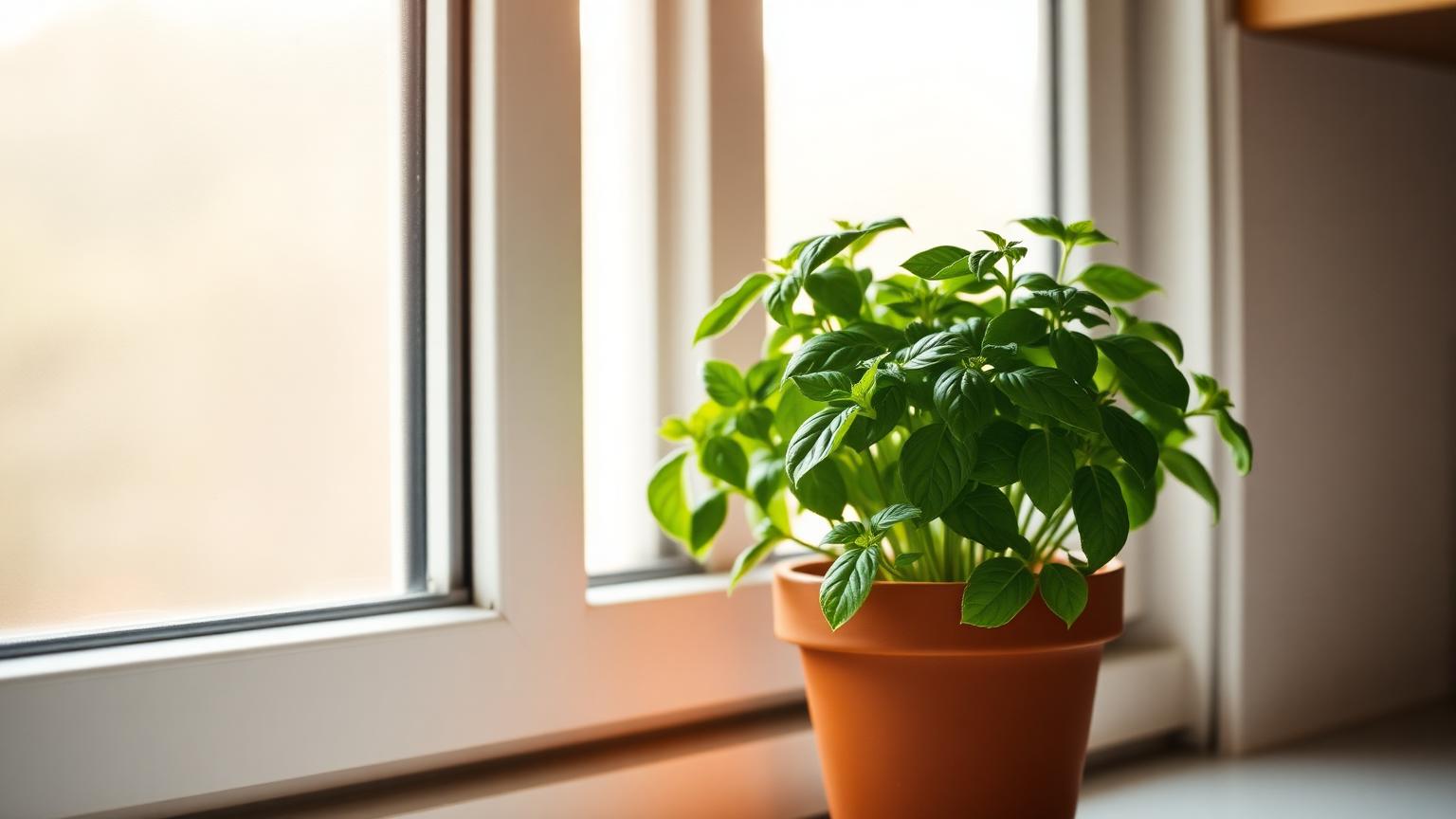
Why grow basil on a windowsill?
Shop basil is expensive, wilts within days, and tastes of very little. A pot on the windowsill puts the real thing — fragrant, peppery, picked minutes before it hits the plate — permanently within reach, in the smallest space imaginable. It's the herb most people try first, and the one most people give up on, because basil has a quiet reputation for dying on you.
Most of that reputation comes down to a bad start rather than basil being genuinely difficult. Grown properly from the beginning, it's straightforward and generous. This guide takes you from choosing your basil, through sowing, watering and feeding, all the way to harvesting, troubleshooting and a kitchen full of pesto.
Choosing how to start: seed, plant, or supermarket pot
You've got three ways in, and they're not equal:
From seed — the best option. Cheap, easy, and it gives you by far the toughest plants, because they're grown in your conditions from day one rather than forced soft under glass. A single packet gives you basil all season.
From a nursery plant. A well-grown single plant from a garden centre is a fine shortcut — sturdier than a supermarket pot, and a head start on seed.
From a supermarket "living basil" pot — the worst start. That lush pot isn't one plant; it's twenty-odd seedlings crammed together and forced for the shelf, already collapsing by the time you buy it. It can be rescued by splitting it up, but it's the hardest way to begin. If that's what you've got, see our companion piece on keeping windowsill basil alive for the full rescue.
Best basil varieties for a windowsill
Not all basil suits indoor life equally. Windowsill rating is out of three — the higher the score, the more forgiving of tight pots and imperfect light.
| Variety | Flavour & best use | Windowsill rating |
|---|---|---|
| Genovese (sweet) | Classic sweet basil — pesto, tomatoes, salads | ★★☆ wants the most light |
| Greek (bush) | Mild and peppery on a neat, compact plant | ★★★ most forgiving; best for beginners |
| Thai | Aniseed and liquorice — stir-fries, curries | ★★☆ sturdy, loves warmth |
| Purple ('Dark Opal') | Slightly clove-like; ornamental and edible | ★★☆ |
| Lemon / lime | Citrus-scented — fish, drinks, salads | ★★☆ |
If your sill is bright and warm, grow Genovese. If it's a bit shadier or you're new to this, start with Greek bush basil — it's noticeably tougher indoors.
Choosing your pot and compost
Get this right and everything afterwards is easier. Basil resents being crammed and resents wet feet, so give it room and good drainage.
The pot. Use one at least 15cm (6in) across, with drainage holes — bigger if you want a fuller plant. Terracotta breathes and dries out faster, which suits anyone who tends to overwater, but it'll need watering more often. Plastic and glazed pots hold moisture longer, handy on a hot sill but easier to overdo. Whatever you use, it must drain freely.
The compost. A peat-free multipurpose compost is ideal. Basil likes a soil that's moisture-retentive but never waterlogged, so mixing in a handful of perlite or fine grit improves drainage and cuts the risk of root rot. Avoid using garden soil in pots — it compacts and drains poorly.
One plant per pot. A single well-grown plant (or one small clump) per 15cm pot, never a crowd. Crowding is what dooms those supermarket tubs.
Light: the thing it wants most
Basil is a sun worshipper. It evolved in hot, bright places, and on a windowsill light is almost always the limiting factor. Give it the brightest sill you have — ideally south or west-facing — and aim for at least six hours of direct light a day.
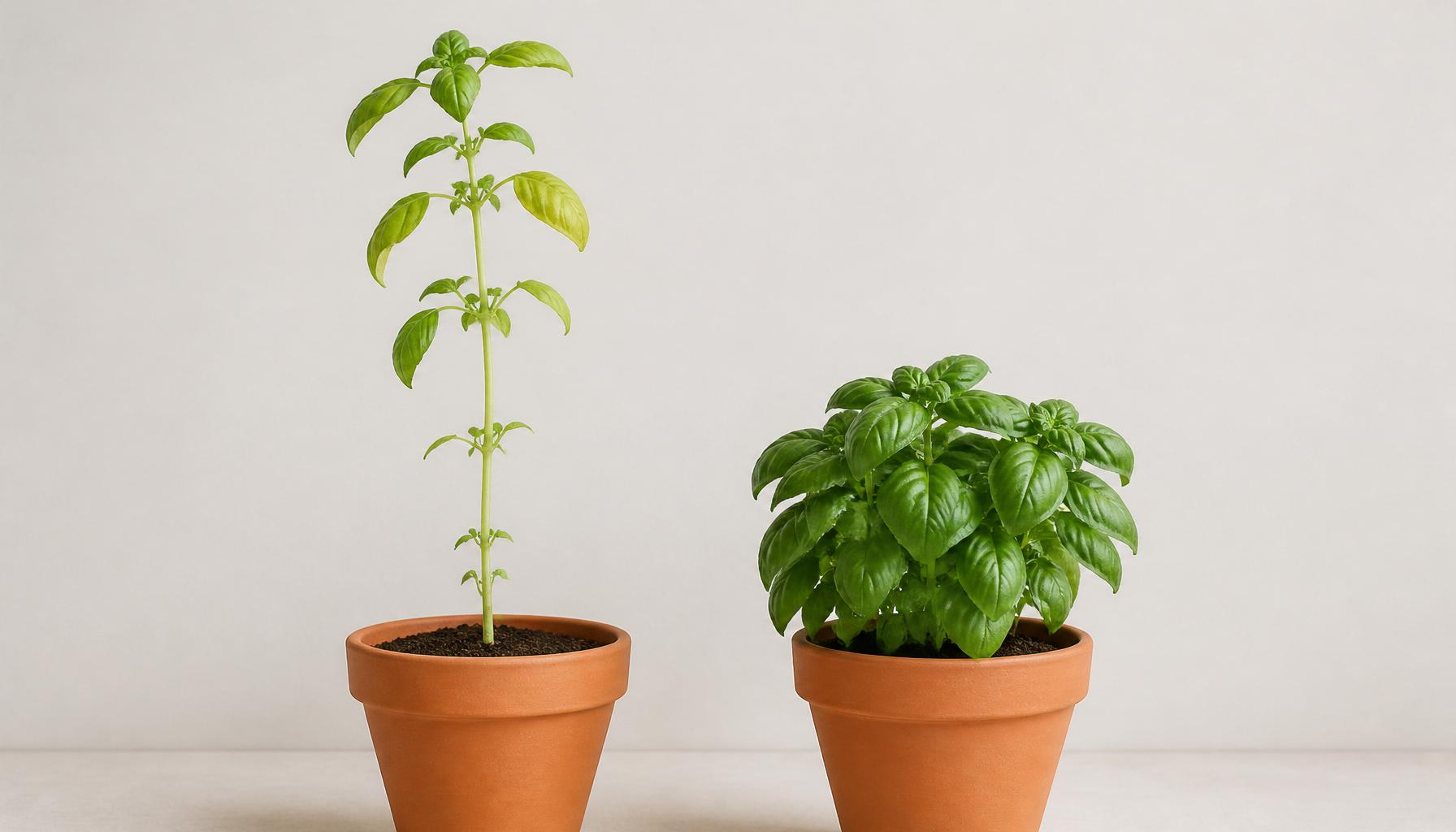
You can read the light off the plant. Pale, stretched, leggy growth with long gaps between the leaves means it's reaching for a sun that isn't there; short, sturdy, deep-green growth means it's happy. Turn the pot every couple of days so it grows evenly instead of leaning into the glass. In the depths of winter no windowsill gives quite enough light to keep basil truly thriving — that's the season, not your fault — and a small LED grow light is the honest fix if you want it going year-round.
Warmth: it's a tropical plant, treat it like one
Basil comes from the warm parts of Asia and Africa, and it never forgets it. It's tender — happiest between about 18 and 25°C and genuinely unhappy below roughly 10–12°C. The classic killer is the cold night-time windowsill: you draw the curtains, the plant gets trapped against freezing glass overnight, and it sulks, drops leaves and rots. Keep it off cold panes after dark, away from draughts and the cold blast of an opened winter window. If you ever move it outdoors in summer, wait until all danger of frost has passed and the nights are warm.
How to sow basil from seed, step by step
Sowing your own is cheap and gives you the strongest plants. You can sow indoors on a warm sill at almost any time of year, though spring and summer are easiest.
- Sow. Fill a small pot, module tray or seed tray with moist peat-free compost and firm it gently level. Scatter the seed thinly across the surface and cover with a fine 5mm layer of compost or vermiculite — basil germinates best with a little warmth and light.
- Water gently. Water from below (stand the pot in water until the surface darkens) or with a fine mist, so you don't wash the seed about.
- Keep it warm and humid. Cover with a clear bag or propagator lid and put it on a warm, bright windowsill at around 18–21°C.
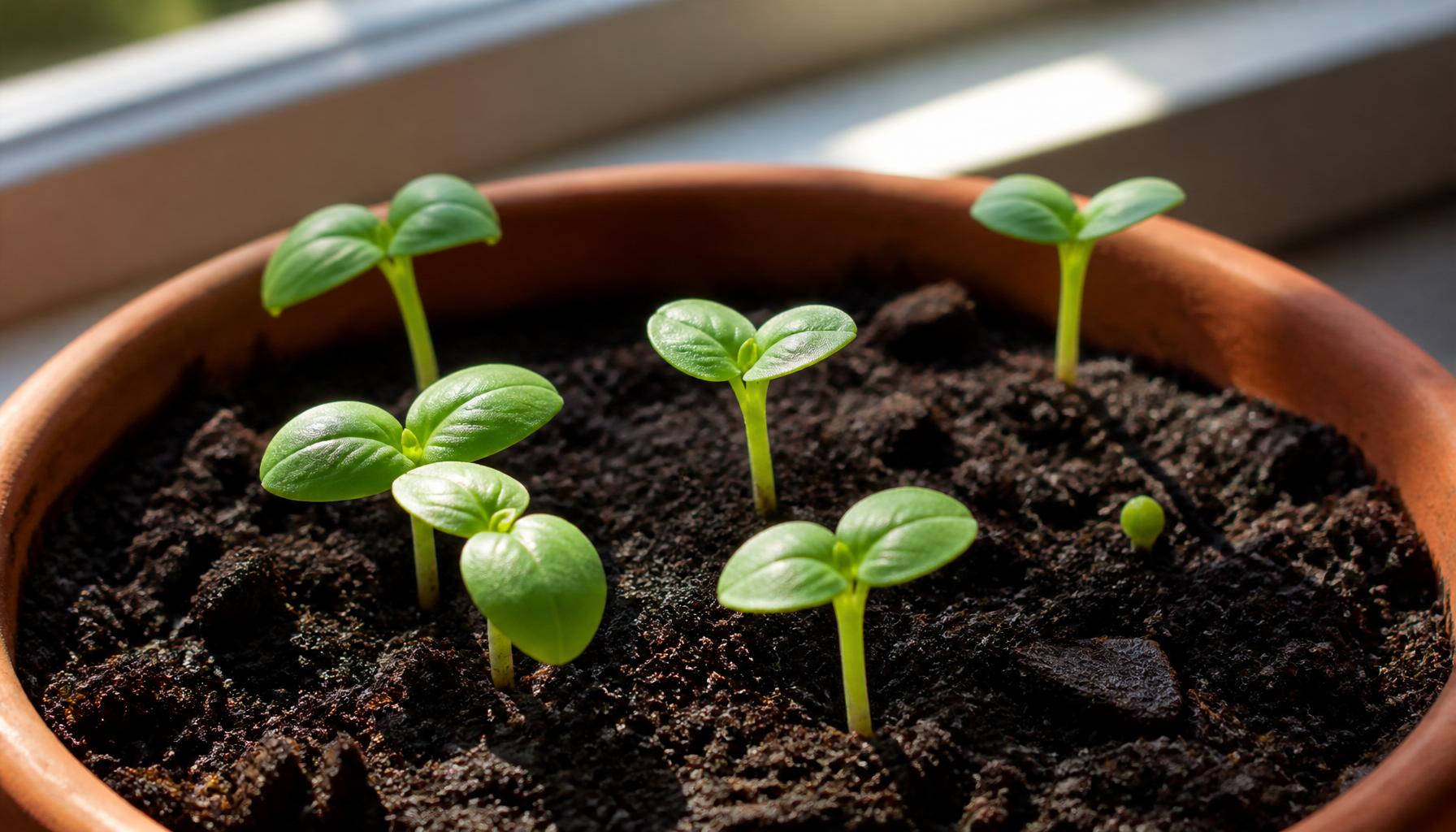
- Germinate. Seedlings appear in roughly 5–14 days. Take the cover off as soon as they're up, and make sure there's some air movement — stale, sodden conditions cause "damping off," where seedlings keel over at the base.
- Thin or prick out. When each seedling has its first pair of true leaves, thin to the strongest, or carefully prick them out into their own small pots (handle them by a leaf, never the fragile stem), a few to a pot at most.
- Pot on. As they grow and fill their pots, move them up into a 15cm pot of fresh compost. Once a plant has six to eight leaves, pinch out the very top to start it branching (see harvesting).
The single most useful habit is succession sowing: start a small fresh batch every three or four weeks rather than one big lot, so there's always a young, productive plant coming through.
Watering basil
Watering is where most basil quietly dies — usually from too much. With basil you're aiming for compost that's evenly moist, never soggy and never bone-dry. Check the top centimetre or two with a finger and water when it's just starting to dry. Water the compost, not the leaves, ideally in the morning so any splashes dry quickly.
Bottom-watering — standing the pot in a few centimetres of water for ten minutes, then letting it drain — is gentler and more even, and especially good for crowded or dried-out pots. Whatever you do, the pot must drain freely and must never sit in a saucer of water. Basil wilting in wet compost isn't thirsty, it's drowning, and the cure is the opposite of your instinct. In summer heat, small pots can dry out fast — check daily, and see watering in a heatwave for hot spells.
Feeding basil
In fresh compost, basil won't need feeding for the first few weeks. Once it's established and growing strongly, a fortnightly liquid feed at half strength keeps the leaves coming — a balanced feed, or even a tomato feed, both work. Don't overdo it: over-fed basil puts on soft, sappy growth that's more prone to disease and, some say, weaker in flavour. And never feed a struggling plant to perk it up — sort its light and watering first, because feeding a stressed plant just stresses it further.
How to harvest basil so it keeps producing
Here's the counter-intuitive bit: harvesting is how you keep basil bushy. Once a plant has several sets of leaves and is around 15cm tall, start pinching out the growing tips from the top, always just above a pair of leaves. Each cut prompts two new shoots from that point, so every harvest makes the plant fuller and more productive. Pinch early — even before you need the leaves — to build a bushy plant rather than a tall, sparse one.
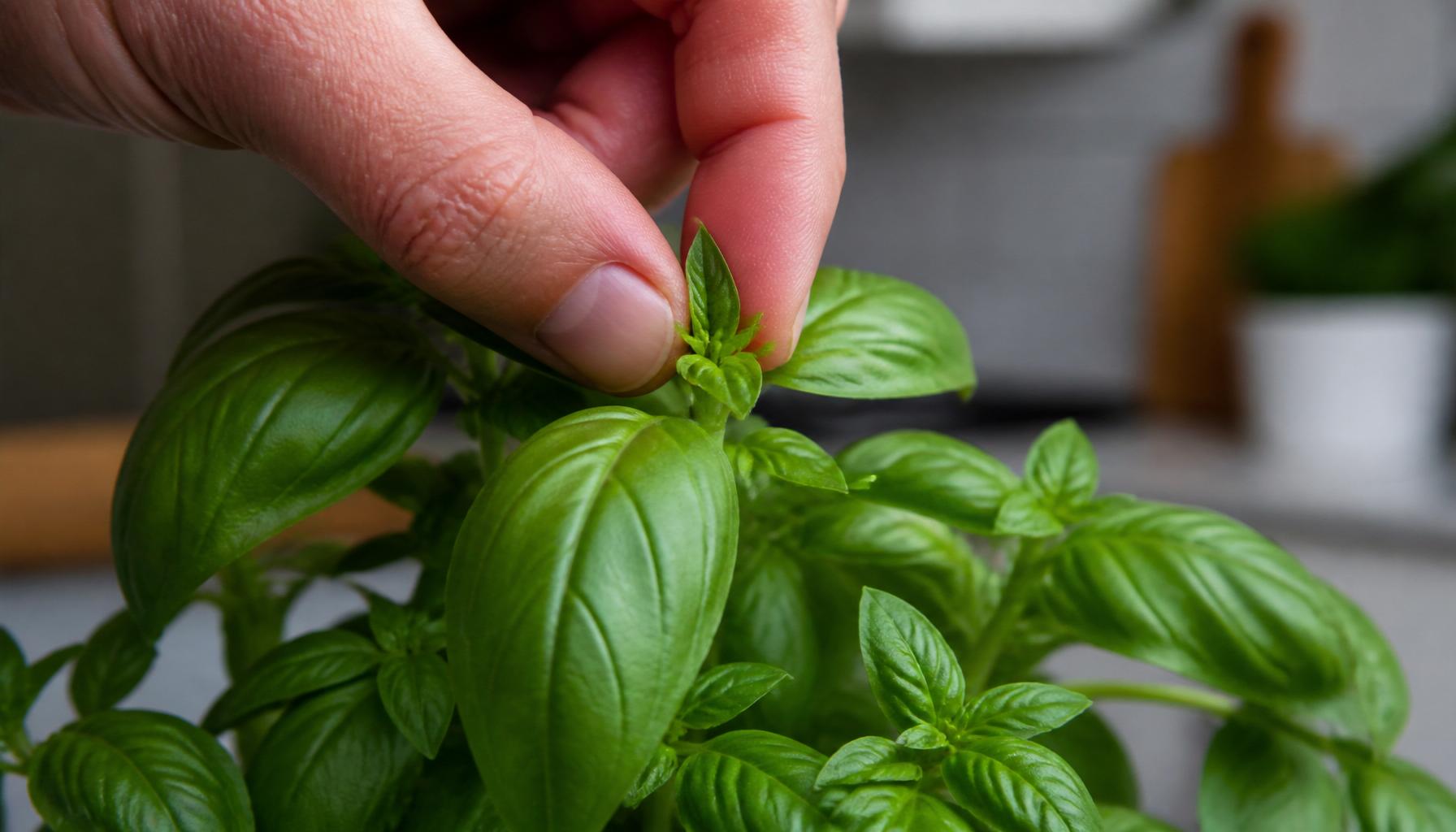
Never strip the lower leaves and leave a bare, leggy stalk — that exhausts the plant. Don't take more than about a third of the plant at once, and pick in the morning, when the aromatic oils are at their strongest. Little and often, always from the top, is the whole secret.
How to stop your basil bolting
"Bolting" is when basil runs to flower, and it's the thing that ends most plants' useful lives. Heat, stress and the long days of summer all push it to send up flower spikes — and the moment it does, it pours its energy into making seed instead of leaves. Growth slows, and the leaves turn tough and bitter.
To delay it as long as possible: pinch out the growing tips regularly (as above), and pinch off any flower buds the instant you spot them. Keep the plant unstressed with steady warmth, light and water, and keep succession-sowing so there's always a young plant coming on. If a plant has bolted completely, accept it's near the end — take one big final harvest and turn it into pesto, or let it flower for the bees and the chance to save seed.
Keeping basil going for months
Basil is an annual — it lives fast and won't last forever, however well you treat it. The way to have a continuous supply is that succession sowing: a fresh small pot every three or four weeks, so there's always a productive young plant as the older ones tire.
Through autumn and winter, light is the limiting factor and an unaided windowsill rarely gives enough, so growth slows right down. Treat any winter basil as a bonus, or use a grow light to keep it going properly through the dark months. Ease off watering and stop feeding in winter — the plant is barely growing and won't use it.
Pests and diseases
Basil is mostly trouble-free indoors, but a few problems are worth knowing. For a full troubleshooting walkthrough, see why your windowsill basil keeps dying; this is the quick reference.
| Problem | Cause | Prevention & fix |
|---|---|---|
| Downy mildew | Crowding, damp, still air | Space plants, improve airflow, water soil not leaves, water in the morning; remove affected leaves |
| Damping off (seedlings collapse at the base) | Overwet, overcrowded sowing | Sow thinly in clean compost, don't overwater, give airflow |
| Fusarium wilt (sudden wilting, browning stems) | Soil-borne fungus | No cure — bin the plant; use fresh compost next time |
| Aphids / greenfly | Sap-sucking pests on tips | Rinse off, squash, or use a soapy spray |
| Whitefly | Tiny white flies, mostly indoors | Sticky traps; wash the plant |
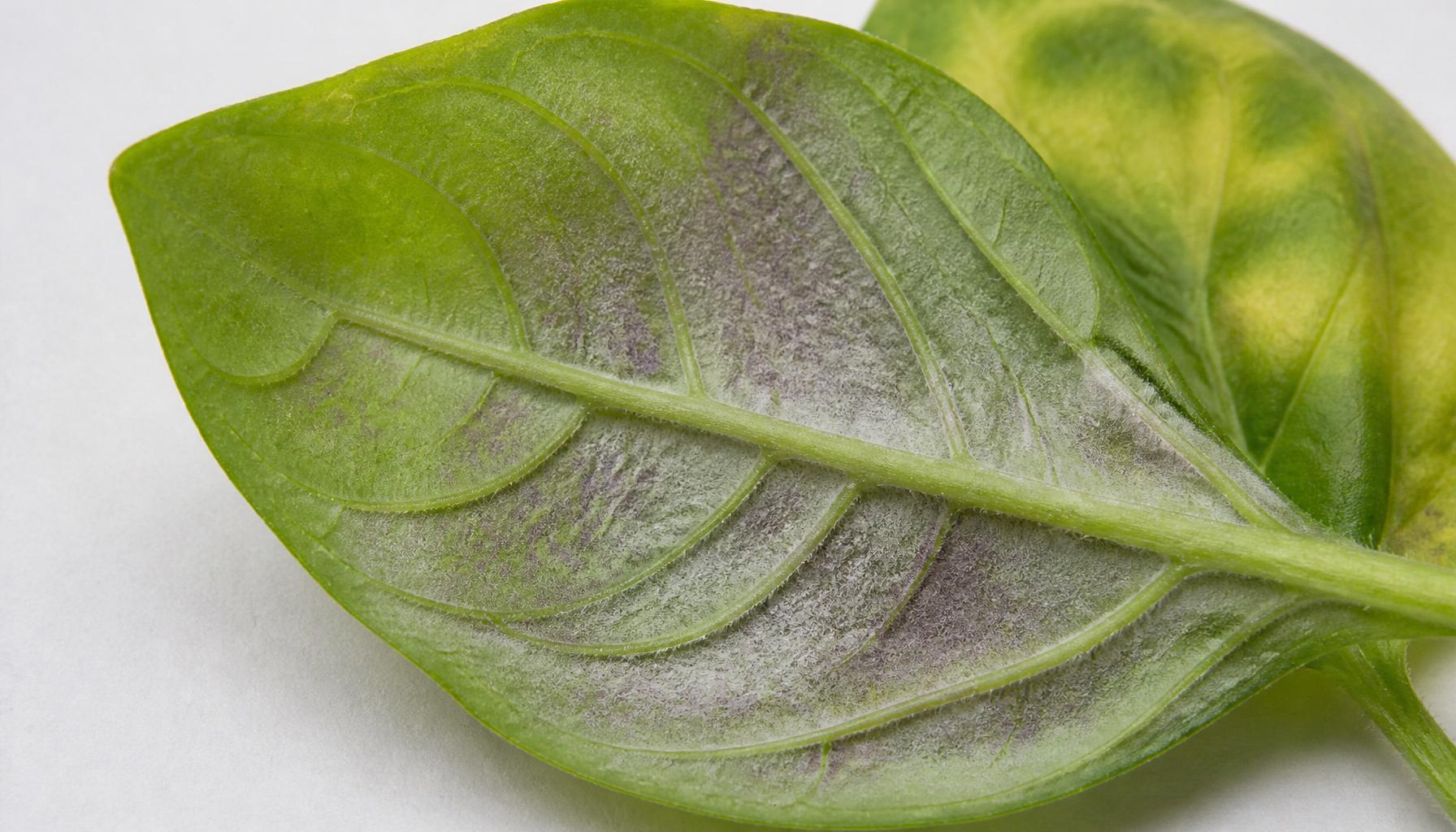
The standout is downy mildew — you'll see yellowing on the upper leaf and a grey-purple fuzz underneath. It's become much more common, it's hard to cure once it takes hold, and prevention is the whole game: airflow, spacing, watering the soil rather than the foliage, and watering in the morning so leaves dry fast.
Using and preserving your harvest
Basil is best fresh and added right at the end of cooking — heat destroys its aroma, so stir it in off the heat. Tear rather than chop where you can; bruising releases the oils.
Pesto is the classic way to use a glut: blitz a big handful of leaves with good olive oil, garlic, pine nuts (or walnuts), a hard cheese such as Parmesan, and a little salt. To store basil, freeze it in oil — blend the leaves with a little olive oil and freeze in ice-cube trays, ready to drop into sauces. (Freezing whole leaves just turns them black.) Basil dries poorly and loses most of its flavour, so don't bother with a jar of dried — freezing in oil beats it every time. The leaves also flavour oils and vinegars beautifully, and the flowers are edible too.
If you're in a tropical or warm climate… basil is in its element and will grow outdoors almost year-round — but it bolts far faster and fierce midday sun can scorch it. Give it some afternoon shade, water more often than these UK-tuned notes suggest, and pinch flowers relentlessly to keep it in leaf.
FAQ
How long does basil take to grow from seed?
Seed germinates in about 5–14 days on a warm sill, and you can usually start picking leaves three to four weeks after that. From sowing to a genuinely productive plant is roughly six to eight weeks.
Can basil grow on a windowsill in winter?
It can survive, but light is the problem — a winter windowsill rarely gives the six-plus hours basil wants, so growth is slow and weak. A small grow light makes year-round windowsill basil realistic; without one, treat winter basil as a bonus.
How often should I water windowsill basil?
Whenever the top centimetre or two of compost is starting to dry — aim for evenly moist, never waterlogged or bone-dry. In summer heat that may mean checking daily; in winter, far less often. Always go by the compost, not a fixed schedule.
Why is my basil tall, thin and leggy?
Too little light. When basil can't find enough sun it stretches towards it, with long gaps between the leaves. Move it to your brightest windowsill, or add a grow light, and pinch the top out to encourage bushier growth.
Do I need to feed basil?
Once it's established and growing well, yes — a liquid feed at half strength every couple of weeks keeps the leaves coming. Don't feed struggling or newly potted plants, though; sort their light and watering first.
How do I stop my basil flowering?
Pinch out the growing tips and any flower buds the moment they form, and keep the plant unstressed with steady warmth, light and water. Once it's fully flowered the leaves turn bitter, so take a final big harvest and make pesto.
Can I grow basil from a supermarket cutting?
Yes — it's a great free way to start. Snip a healthy stem about 10cm long, strip the lower leaves, and stand it in a glass of water on a bright sill. Roots appear within a week or two, and once they're a few centimetres long you can pot it up into compost.
Why does my basil taste bitter?
Usually because it has started to flower (bolt), which turns the leaves bitter — pinch the flowers out. Older, tougher leaves and plants grown in too little light can also taste harsher than young leaves from a healthy, well-lit plant.
FURTHER READING
- Getting Started
How to Propagate Plants
- Getting Started
The Complete Guide to Repotting
- Plant Problems
Pests and Diseases: A Small-Space Reference
Robin is a small-space grower writing for everyone working with a courtyard, balcony, window box, patio or sunny sill. Edible and leafy, both kept alive in the kind of light real small spaces actually get.
✦ Free with the newsletter — the small-space starter sheet
Grow Anywhere — a free weekly email.
The Potted Club newsletter. A short note from Robin — what to sow, one plant problem solved, and the best new guide.
FREE WEEKLY EMAIL · NO SPAM · UNSUBSCRIBE ANYTIME