Why Your Windowsill Basil Keeps Dying
Supermarket basil is built to die — it's two dozen seedlings crammed in one pot. Here's how to keep windowsill basil alive: light, water, warmth, pinching, and the rescue trick that turns a two-week plant into months of leaves.
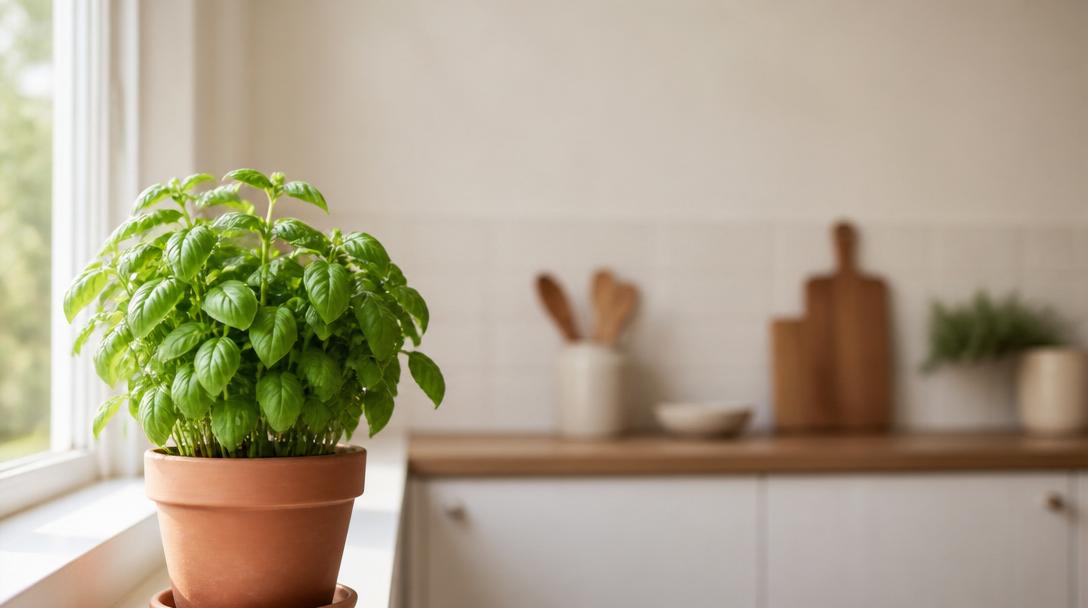
The real reason your basil keeps dying
Most basil advice opens with watering. That's the wrong place to start, because the number one reason a shop-bought basil plant collapses within a fortnight has almost nothing to do with how you're treating it. It's how it was sold to you.
That lush pot of "living basil" isn't a plant. It's twenty to thirty seedlings crammed into a thimbleful of compost, grown fast and soft under glass, and forced to look full and gorgeous for exactly as long as it takes to reach the shelf. They're already fighting each other for root room, light and food before they leave the shop. By the time it reaches your windowsill, you've bought a plant that was engineered to look perfect for a week and then give up.
Once you know that, everything else makes sense — because most of keeping basil alive is really about undoing that head start towards the compost heap.
Light: the thing it wants most
Basil is a sun worshipper. It evolved in hot, bright places, and on a windowsill light is almost always the limiting factor. Give it the brightest sill in the house — south or west-facing is ideal — and aim for at least six hours of direct light a day.
You can read the light off the plant. Pale, stretched, leggy growth with long gaps between leaves means it's reaching for a sun that isn't there. Short, sturdy, deep-green growth means it's happy. Turn the pot every couple of days so it grows evenly rather than leaning into the glass. In the depths of winter, no UK windowsill gives enough light to keep basil truly thriving — that's not your fault, it's the season, and a small grow light is the honest fix if you want it year-round.
Warmth: it's a tropical plant, treat it like one
Basil comes from the warm parts of Asia and Africa, and it never forgets it. It's tender — happiest between about 18 and 25°C, and genuinely unhappy below roughly 10–12°C. The classic winter killer is the cold night-time windowsill: you tuck the curtains, the plant gets trapped against freezing glass overnight, and it sulks, drops leaves and rots. Keep it off cold panes after dark, and away from draughts and the cold blast of an opened winter window.
Water: moist, never soggy, never bone-dry
Here's where that crowded supermarket pot really bites you. With so many roots in so little compost, it dries out in hours — then panics you into drowning it. That swing, parched to waterlogged and back, is what actually finishes most basil off.
Water the compost, not the leaves. Check the top centimetre or two with a finger and water when it's just starting to dry, aiming for evenly moist, never sitting wet. For a crammed shop pot, bottom-watering is gentler and more even: stand it in a few centimetres of water for ten minutes, then let it drain fully. Whatever you do, the pot must have drainage and must never sit in a saucer of water — basil that's wilting in soggy compost isn't thirsty, it's drowning, and the cure is the opposite of what your instinct says. Morning is the best time to water.
The rescue trick: split the pot
If you only do one thing with a supermarket plant, do this. Tip it out, gently tease the root mass into three or four clumps, and pot each clump into its own small pot of fresh compost. You've just given every plant room to breathe — and turned a doomed two-week pot into months of basil.
Harvest from the top, and keep pinching
Counter-intuitively, harvesting is how you keep basil bushy. Always pinch the growing tips out from the top, just above a pair of leaves — each cut prompts two new shoots, so every harvest makes the plant fuller. Never strip the bottom leaves and leave a bare, lollipop stalk; that's the fast track to a leggy, exhausted plant. A little and often, from the top, is the rule.
When it bolts (flowers)
Heat, stress and long summer days push basil to flower. The moment it does, it starts pouring its energy into seed instead of leaves — growth slows, and the leaves turn tough and bitter. Pinch out flower spikes the instant you spot them to keep it in leaf for as long as possible. If a plant has fully bolted, accept it's near the end: take one big final harvest and turn it into pesto.
Feeding
Once it's settled and growing well, a fortnightly feed at half strength — a balanced liquid feed, or even a tomato feed — keeps the leaves coming. But don't reach for feed to fix a struggling shop plant. A stressed, overcrowded basil wants light and space first; feeding it before you've sorted those just stresses it further.
Give it air (the disease bit)
Crowding plus damp plus still air is the perfect storm for basil downy mildew — you'll see yellowing on the upper leaf and a grey-purple fuzz underneath. It's become a lot more common, it's hard to cure once it takes hold, and prevention is the whole game: space plants out, keep the air moving, water the soil not the foliage, and water in the morning so leaves dry quickly. Indoors you may also meet aphids or whitefly; rinse them off, squash what you can, and keep the plant strong enough to shrug them off.
Honestly? Grow it from seed
A forced supermarket plant is always playing catch-up. A pinch of Genovese seed sown in a pot of fresh compost on a warm, bright sill costs pennies, comes up in days, and gives you a far tougher plant because it's grown in your conditions from the start. If your light is less than perfect, try Greek (bush) basil — smaller-leaved, naturally compact and noticeably more forgiving on a real-world windowsill. It's the one I'd point a struggling grower to first.
If you're in a tropical or warm climate… basil is in its element and will romp away outdoors — but it'll also bolt far faster, and fierce midday sun can scorch leaves. Give it a little shade in the hottest part of the day, pinch flowers relentlessly, and water more often than these UK-tuned notes suggest.
FAQ
Why does supermarket basil die so quickly?
Because it isn't grown to last. It's dozens of seedlings packed into one small pot and forced under glass to look full for the shelf. They're competing for everything from the moment you buy them, so without intervention — usually splitting the pot — they collapse within a week or two.
Can I save a basil plant that's already wilting?
Often, yes, if you act fast. First work out which wilt it is: dry compost means water it (ideally from the bottom); soggy compost means it's overwatered, so stop, let it drain and dry out a little. Then move it somewhere bright and warm, pinch off any flowers, and if it's a crowded shop pot, split it into smaller pots to take the pressure off.
How much light does basil really need?
At least six hours of bright, direct light a day, and more is better. A south or west-facing sill in summer is ideal. If growth is pale and stretched, that's a light problem, and in winter you may need a grow light to keep it going.
Why are my basil leaves turning yellow?
Usually overwatering or poor drainage, sometimes cold, sometimes hunger in exhausted compost — and if it's yellowing on top with grey fuzz underneath, that's downy mildew. Check the compost first: if it's wet, ease off the water and improve drainage and airflow before anything else.
Should I mist my basil?
No. Misting does little for basil and the damp, still conditions it creates actually encourage downy mildew. Basil wants light, warmth and airflow, not humidity.
My basil has flowered — is it ruined?
Not instantly, but it's on the way out. Flowering turns the leaves bitter and stops new growth. Pinch flower spikes off as soon as they appear to delay it; if it's fully bolted, harvest the lot and make pesto while the leaves are still worth eating.
RELATED POSTS
Robin is a small-space grower writing for everyone working with a courtyard, balcony, window box, patio or sunny sill. Edible and leafy, both kept alive in the kind of light real small spaces actually get.
✦ Free with the newsletter — the small-space starter sheet
Grow Anywhere — a free weekly email.
The Potted Club newsletter. A short note from Robin — what to sow, one plant problem solved, and the best new guide.
FREE WEEKLY EMAIL · NO SPAM · UNSUBSCRIBE ANYTIME