Why Is My Hydrangea Pink? (And Can I Turn It Blue?)
Hydrangea colour isn't the variety — it's your soil. Why pink hydrangeas mean alkaline soil, the science of aluminium and pH behind blue flowers, and how to actually shift the colour if you want to.
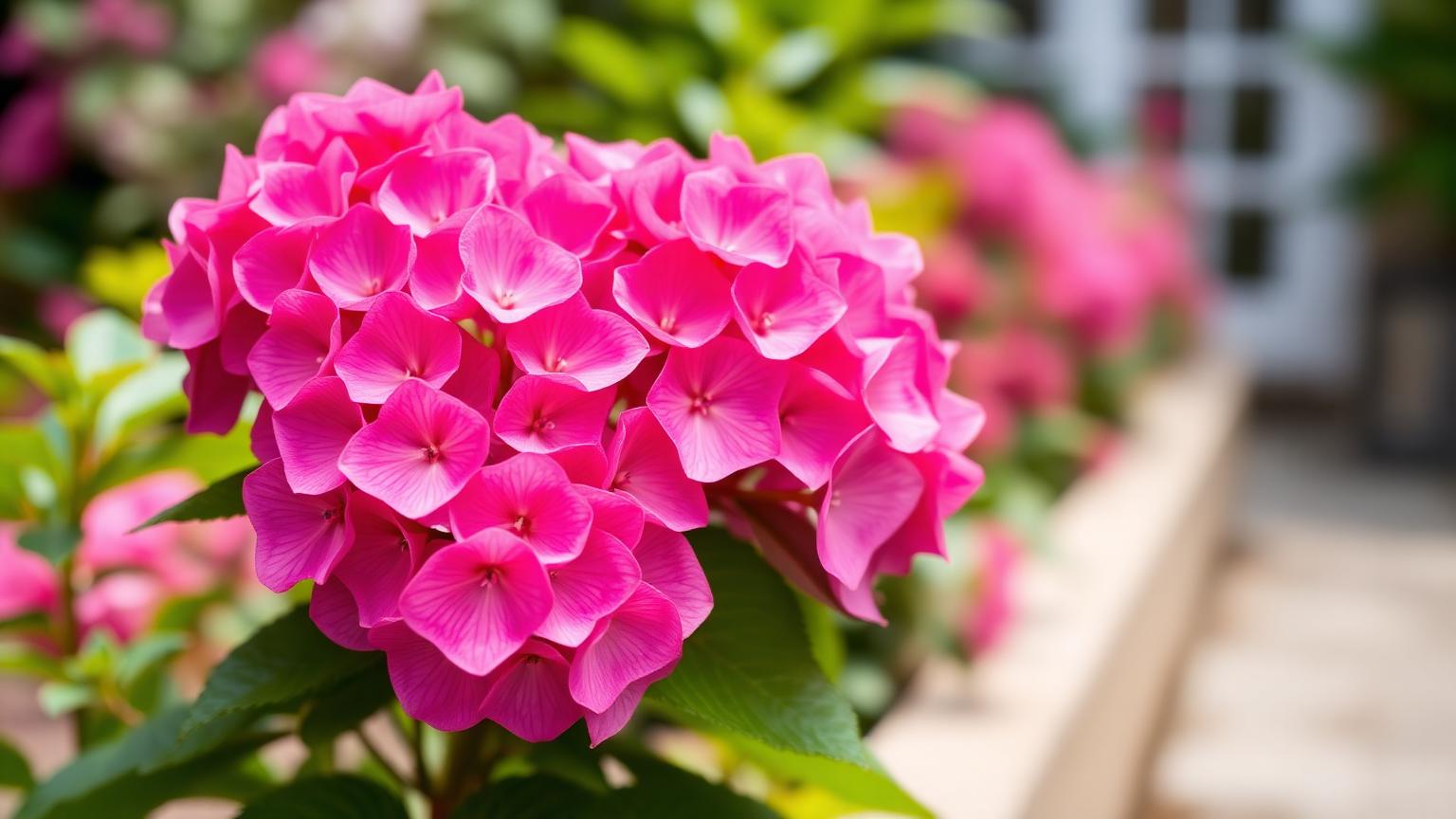
It's not the variety, it's the soil
If your hydrangea has turned pink and you don't remember choosing a pink one, you probably didn't — you just have alkaline or neutral soil. Most bigleaf hydrangeas are genetically capable of flowering blue, purple or pink depending on what's happening underground, and the colour on the label at the garden centre only tells you what conditions that particular plant was grown in, not what it's locked into forever.
So "why is my hydrangea pink" is really a soil question dressed up as a plant question, and once you understand the mechanism, the answer — and whether you can change it — gets a lot less mysterious.
The actual science: pigment, aluminium and pH
Hydrangea flowers get their colour from a pigment called anthocyanin, and here's the genuinely elegant bit: the same pigment produces both pink and blue, depending on how its molecules are arranged. When they're packed closely together, the flower reads blue; spread further apart, it reads pink.
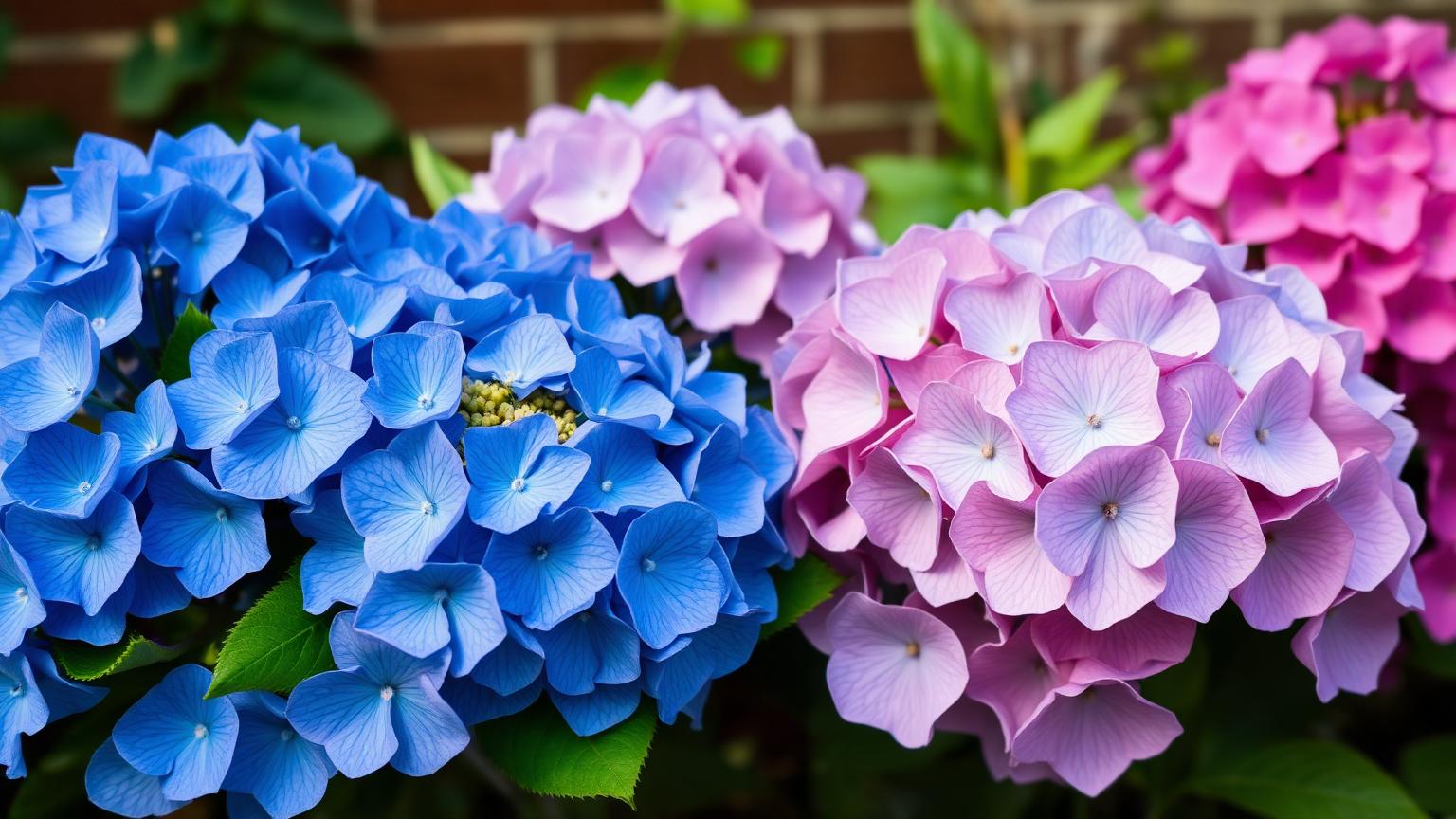
What controls the spacing is a metal — aluminium — binding to the pigment. Aluminium is one of the most common elements in soil, so nearly every garden has some. The question is whether the plant can actually get at it, and that comes down to pH:
- Acidic soil (roughly pH 5.5 or below) dissolves aluminium into a form the plant's roots can absorb. The plant moves it up into the flowers, the pigment molecules pack together, and you get blue.
- Neutral to alkaline soil (roughly pH 6.5 and above) binds the aluminium tightly to soil particles, locking it away from the roots. No aluminium reaches the flowers, the pigment molecules stay spread apart, and you get pink.
- Soil in between (around pH 5.5–6.5) tends to produce muddy purples, or a mix of both colours on the same plant — a useful tell that you're sitting right on the boundary.
It's worth being precise about what's actually happening, because it's commonly mangled: pH itself doesn't dye the flower. Think of pH as a tap controlling whether aluminium can flow to the plant at all. Acidic soil opens the tap; alkaline soil shuts it. The aluminium is there in the ground either way — the plant just can't reach it once the soil turns alkaline.
Why this doesn't apply to every hydrangea
This whole mechanism is specific to bigleaf hydrangeas — Hydrangea macrophylla (the classic mophead and lacecap types) and Hydrangea serrata. If your hydrangea is one of those and it's blooming pink, purple or blue, soil chemistry is genuinely the reason.
It does not apply to:
- Paniculata types (such as 'Limelight' or 'Vanilla Strawberry') — these bloom white, cream or greenish and shift with age and season, but never in response to soil pH.
- Arborescens types (such as 'Annabelle') — always white or pale green, regardless of what's in the ground.
- White bigleaf varieties — they don't carry the pigment that responds to aluminium, so they stay white in any soil.
If you've been trying to "fix" one of these with soil acidifier and nothing's happening, that's why — there's no colour to shift.
Three things actually have to line up for blue
Pink and blue aren't simply opposite ends of one dial. For a bigleaf hydrangea to bloom blue, three separate conditions all need to be true at once: the soil needs enough available aluminium in the first place, the pH needs to be low enough to let the plant absorb it, and the variety itself needs to be genetically capable of turning blue at all. Miss any one of those — say, acidic soil but very little aluminium actually present — and you won't get a true, vivid blue even with the pH sorted. It's the combination that matters, not pH alone.
So why is your soil alkaline?
A few common reasons a courtyard or cottage-garden bed ends up on the pink side:
- Naturally chalky or limestone-based soil — common across large parts of the UK, and the single biggest reason gardens default to pink hydrangeas.
- Nearby concrete, mortar or paving — leaches lime into the surrounding soil over years, which is especially relevant right against a courtyard wall or patio edge.
- Tap water — much of the UK has hard, alkaline tap water, and regular watering with it gradually pushes soil pH upward, undoing any acidifying you've done.
- Recent lime or lawn feed application nearby, which can drift into a border.
If your hydrangea was blue a few years ago and has drifted pink since, one of these slow, cumulative causes is usually the culprit rather than anything sudden.
Can you actually change it? Yes — but it's a project, not a fix
You can shift a bigleaf hydrangea from pink towards blue by lowering the soil pH and making aluminium available. It works, but it's genuinely slow, and how easy it is depends enormously on where the plant is growing.
In a pot, it's straightforward. Repot into an ericaceous (acid) compost, and water with rainwater rather than tap water wherever you can, since UK tap water is often alkaline and will quietly fight your progress. Because you control the whole growing medium in a container, colour can shift within a season.
In open ground, it's a longer game. Work in a soil acidifier — aluminium sulphate is the traditional, most reliable option, or garden sulphur, which acts more slowly through soil bacteria. Applied as a liquid drench around the roots in spring, this can start working faster than a dry, worked-in application. Either way, expect it to take one to two growing seasons to see the full effect, since existing blooms won't change colour mid-season — you're influencing next year's flowers, not the ones already open.
The catch with open ground is that soil doesn't stay put where you leave it. If your garden is naturally chalky, or your water is hard, the pH will keep drifting back towards alkaline once you stop treating it, so a genuine colour change means ongoing maintenance, not a one-off application.
Going the other way — blue to pink — is usually easier, since it just means raising the pH with garden lime, rather than fighting to keep aluminium available against a naturally alkaline soil.
Should you even bother?
Worth asking honestly. If your soil is strongly alkaline, you're working against your garden's natural chemistry indefinitely to keep a colour that isn't where the plant wants to sit. For many gardeners, it's easier — and just as rewarding — to lean into what the soil already gives you, or to grow a blue-flowering plant in a large pot of ericaceous compost specifically, rather than fighting an open border for years. If you love the mystery of it, though, a hydrangea that shifts and surprises you slightly each year, depending on feed and weather, is honestly part of the charm.
FAQ
Why did my hydrangea change from blue to pink?
Almost always a rise in soil pH — often from lime leaching in from nearby paving or concrete, hard tap water used over years, or naturally alkaline soil reasserting itself once any acidifying treatment stops.
Will all hydrangeas eventually turn pink in alkaline soil?
Only bigleaf hydrangeas (macrophylla and serrata) respond to soil pH at all. Paniculata types like Limelight, arborescens types like Annabelle, and white bigleaf varieties stay whatever colour they naturally are, regardless of soil.
How do I know if my soil is acidic or alkaline?
A cheap soil pH testing kit from a garden centre gives a reliable reading in minutes. As a rough clue without testing, hydrangeas already blooming pink or purple in your garden are a fair sign your soil leans neutral to alkaline.
How long does it take to turn a hydrangea from pink to blue?
Expect one to two growing seasons for a full, reliable shift. Existing open flowers won't change colour — you're influencing the following year's blooms, so it needs patience and repeated treatment rather than a single application.
Can I turn a hydrangea blue permanently?
In naturally alkaline or chalky soil, not really 'permanently' — you'll need to keep reapplying acidifier and using rainwater, since the surrounding soil chemistry keeps pulling it back towards pink. It's much easier to maintain long-term in a pot, where you fully control the compost.
Is coffee grounds or citrus peel a real way to turn hydrangeas blue?
They can help acidify soil slightly over time as they break down, but the effect is mild and slow compared with a proper soil acidifier or ericaceous compost. Fine as a small supporting habit, not a reliable method on its own.
RELATED POSTS
Robin is a small-space grower writing for everyone working with a courtyard, balcony, window box, patio or sunny sill. Edible and leafy, both kept alive in the kind of light real small spaces actually get.
✦ Free with the newsletter — the small-space starter sheet
Grow Anywhere — a free weekly email.
The Potted Club newsletter. A short note from Robin — what to sow, one plant problem solved, and the best new guide.
FREE WEEKLY EMAIL · NO SPAM · UNSUBSCRIBE ANYTIME