How to Water Your Plants in a Heatwave
Watering in a heatwave done properly: when to water, how deep, why pots may need it twice a day, and the midday wilt that fools everyone. Plus what to prioritise when you can't save everything.
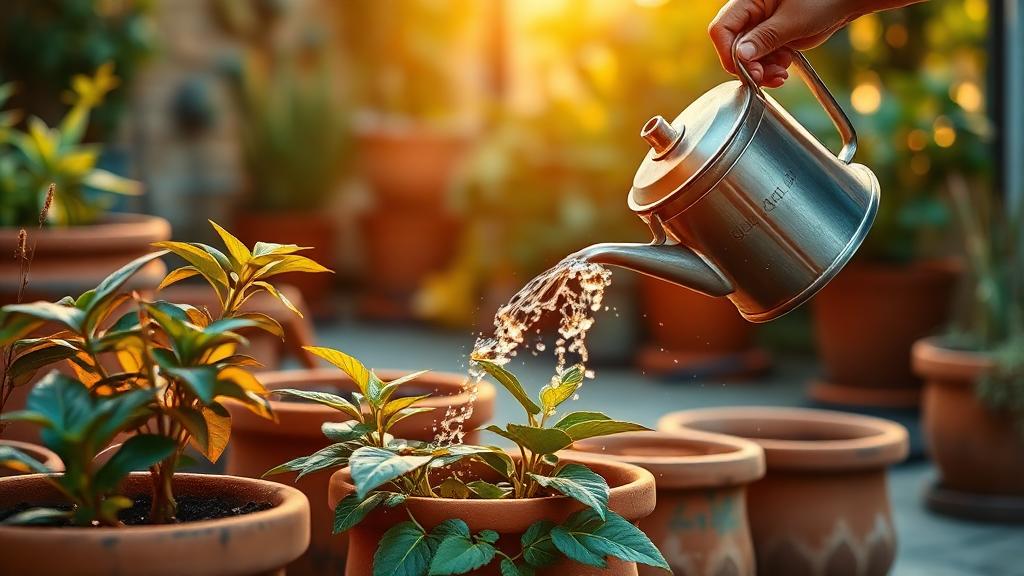
Water in the morning. Properly, once.
The single biggest improvement most people can make in hot weather is when they water. First thing in the morning is best: the plant goes into the heat of the day already hydrated, the soil has time to drink before the sun bakes it off, and any splashed foliage dries quickly so you're not inviting slugs or fungal trouble.
Evening is a reasonable second choice if mornings are impossible — but leaves and soil stay damp overnight, which slugs adore. Midday is the one to avoid, and not for the reason you've heard. The old warning that water droplets act like little magnifying glasses and scorch the leaves is mostly a myth; the real problem with watering at noon is simply waste — much of it evaporates before it ever reaches the roots. So: water early, water the soil, and make it count.
Deep and slow beats little and often
In a heatwave the instinct is to give everything a quick daily splash. It's the wrong instinct. A light sprinkle wets only the top centimetre, which encourages roots to sit shallow — exactly where the soil heats up and dries out fastest. You're training your plants to be fragile.
Water deeply instead. Pour it slowly at the base so it soaks down rather than running off, and keep going until the moisture has reached well below the surface. Deep watering pulls roots downward to cooler, damper soil, and a plant rooted deep can ride out a hot spell that finishes off a shallow-rooted one. Slow and thorough, aimed at the roots — not fast and all over the leaves.
Containers are the emergency
If you grow in pots, window boxes, hanging baskets or troughs — which, in a small space, is most of us — this is where your attention goes first. A pot has a tiny reservoir of compost and a lot of surface area, so it dries out staggeringly fast in heat. Small pots, terracotta and hanging baskets dry quickest of all, and in a genuine heatwave many containers need watering twice a day: a thorough soak in the morning and another in the evening.
There's a particular trap with a pot that's dried out completely. The compost shrinks away from the sides and turns water-repellent, so the water you pour in just runs straight down the gap and out of the bottom, leaving the rootball bone dry in the middle. Don't be fooled by water coming out of the holes. To properly rehydrate it, stand the whole pot in a bucket or tray of water for half an hour and let it drink from below, or water slowly in several small passes until the compost swells back and actually absorbs.
Read the plant before you react
Not every droop means thirst, and overwatering in a panic kills as surely as drought. Three things to tell apart:
-
Midday wilt that recovers. Lots of plants — courgettes, squashes, tomatoes, hydrangeas — wilt deliberately in fierce midday sun to cut water loss, then perk back up in the cool of the evening. That's the plant protecting itself, not dying. Check the soil: if it's moist below the surface, leave it be.
-
Real drought stress. Wilting that doesn't recover by evening, dry compost, and crispy brown leaf edges — that one needs a deep, thorough water.
-
Overwatering. Wilting in soil that's wet and heavy is not thirst; it's roots suffocating or rotting. The fix is to stop watering and let it drain, not to give it more.
The habit that saves plants: feel the soil before you water, every time.
Make the heat easier (so you water less)
A few things cut how much watering you need to do at all:
-
Mulch. The best single move in a heatwave. A few centimetres of compost, bark, or even gravel over the soil and the tops of pots keeps roots cooler and dramatically slows evaporation.
-
Shade the vulnerable. Move pots that are catching the full afternoon sun into a bit of shade, or rig up temporary shade (a parasol, some shade netting) over the plants that are struggling most.
-
Group pots together. Huddled in a shadier spot, containers shade each other's compost and create a slightly humid pocket, so they dry more slowly than they would standing alone and exposed.
When you can't save everything, prioritise
In a serious heatwave you may not be able to keep everything perfectly watered — so spend the water where it matters. Top priority: containers, anything newly planted (not yet rooted in), leafy salads (which bolt and wilt in a blink) and anything fruiting, like tomatoes, where irregular watering causes splitting and blossom end rot. Bottom of the list: established trees and shrubs, which have deep roots and will cope, and the lawn — a brown lawn isn't dying, it's dormant, and it'll green up again with the next proper rain. Don't pour precious water on grass.
A few don'ts
Don't feed heat-stressed plants — fertiliser asks them to grow when they're trying to survive, and can scorch roots. Don't repot or hard-prune in the middle of a heatwave. And don't drown a midday wilter on sight — check the soil first.
Saving water while you're at it
Rainwater from a butt is better for plants than tap and kinder on the bills. Cooled, soap-free washing-up or bath water (grey water) is fine for ornamentals in a pinch, though I'd keep it off edibles. And every bit of mulch and every well-timed morning soak means less water lost to the air — the most sustainable watering is the watering you don't have to repeat.
If you're in a tropical or warm climate… this isn't a one-week emergency for you, it's the everyday — so build these in as habit, not crisis response. Mulch heavily as standard, water deep and early year-round, lean hard on shade for anything tender, and choose heat-adapted plants that won't need rescuing in the first place.
FAQ
Is it better to water in the morning or the evening?
Morning, ideally. The plant heads into the heat hydrated and the foliage dries quickly. Evening works if mornings are impossible, but damp overnight conditions encourage slugs and disease. Either way, avoid midday — most of it just evaporates.
How often should I water in a heatwave?
It depends on the plant and the pot, not the calendar — so check the soil. Borders and established plants usually want a deep soak every few days; containers can need it twice a day in real heat. Always water based on how dry the soil actually is, not a fixed routine.
Is it true that watering in the sun scorches the leaves?
Largely a myth — water droplets don't generally magnify the sun enough to burn most leaves. The real reason to avoid watering in the midday sun is that too much of it evaporates before it does any good. Water early instead, to save water, not to save the leaves.
My plant wilts every afternoon but looks fine by morning — is it dying?
Probably not. Many plants wilt on purpose in fierce sun to reduce water loss and recover once it cools. Check the soil: if it's moist below the surface, leave it alone. Only persistent wilting with dry compost means it genuinely needs water.
Should I water my lawn in a heatwave?
No need. A brown lawn is dormant, not dead, and recovers with the next decent rain. Save the water for containers, new plantings and food crops, which actually suffer lasting damage from drought.
Can I use bath or washing-up water on my plants?
Yes, in moderation, on ornamentals — let it cool and avoid heavily soaped or bleachy water. I'd keep grey water off anything you're going to eat and use clean or rain water there.
RELATED POSTS
Robin is a small-space grower writing for everyone working with a courtyard, balcony, window box, patio or sunny sill. Edible and leafy, both kept alive in the kind of light real small spaces actually get.
✦ Free with the newsletter — the small-space starter sheet
Grow Anywhere — a free weekly email.
The Potted Club newsletter. A short note from Robin — what to sow, one plant problem solved, and the best new guide.
FREE WEEKLY EMAIL · NO SPAM · UNSUBSCRIBE ANYTIME