Small-Space Plants to Cut Back Now, or Lose Next Year's Flowers
Mid-July is the last honest window for cutting back a handful of pot-friendly shrubs and perennials. Miss it, and you'll be cutting off next spring's flowers. The plants worth checking, and how to do it properly.
Why mid-July is the last honest window
A lot of small-space plants that flowered in late spring or early summer are, right now, quietly setting up next year's growth. If they flower on last year's wood — which most of the shrubs in this piece do — then whatever you cut off after July, you're cutting off next spring's flowers with it.
Gardening magazines have been polite about this deadline, but the real cutoff is now. Do it in the first half of July and the plant has time to put on a good amount of fresh growth that will ripen properly before autumn, ready to bud up over winter. Leave it much later than mid-month and you're removing new wood that would have carried the display next year, or you're forcing tender new growth just when the plant should be settling down.
That said, a warning first. If you're in the middle of a genuine heatwave, hold off on hard cutting back for a few days if the weather forecast shows any break at all. Pruning is stress, and stress on top of extreme heat is a poor combination. Deadheading and light tidying, fine; heavy cutting back, wait for a cooler day if you can.
The container shrubs worth checking
None of these need a proper garden. All of them work in a decent-sized pot on a patio, balcony or in a small courtyard.
- Dwarf lilac (Syringa 'Palibin', Syringa meyeri). Compact enough for a large pot, and its scent alone earns its keep. Cut back the flowered stems by about a third right after blooms fade.
- Compact philadelphus (mock orange), varieties like 'Manteau d'Hermine' or 'Silberregen'. Cut flowered stems back to a strong young sideshoot lower down, and remove one or two of the oldest stems at the base to encourage fresh growth from below.
- Dwarf weigela, patio and compact varieties. Weigela is vigorous and can quickly outgrow its pot, so this is the moment to keep it in check. Cut flowered shoots back by about a third to a strong pair of leaves.
- Deutzia, compact varieties. Same principle: cut back the stems that flowered this year, and take a couple of the oldest woody stems out at the base to make room for new growth.
- Potentilla and spiraea. Both cope well in pots and both benefit from a light trim after their first flush, which often produces a second, smaller wave of flowers later in the summer.
- Small choisya (Mexican orange blossom). Trim back after its late-spring flowering to keep it compact and neat.
- Dwarf azaleas and small rhododendrons. In an ericaceous compost, both are perfectly happy in a large container. Deadhead spent flower trusses now, taking care not to damage the new shoots emerging just behind them, which are next year's flowers already forming.
- Camellia in a large pot. Same rule: right after flowering, and always mid-year at the latest. Deadhead spent flowers and lightly shape the plant. Don't be tempted to prune in autumn or winter, as you'll be removing the buds that were setting for spring.
The perennials most guides skip
Most "prune this month" pieces stop at shrubs, which misses the perennials in every small-space garden that want exactly the same "cut back after flowering" treatment right now.
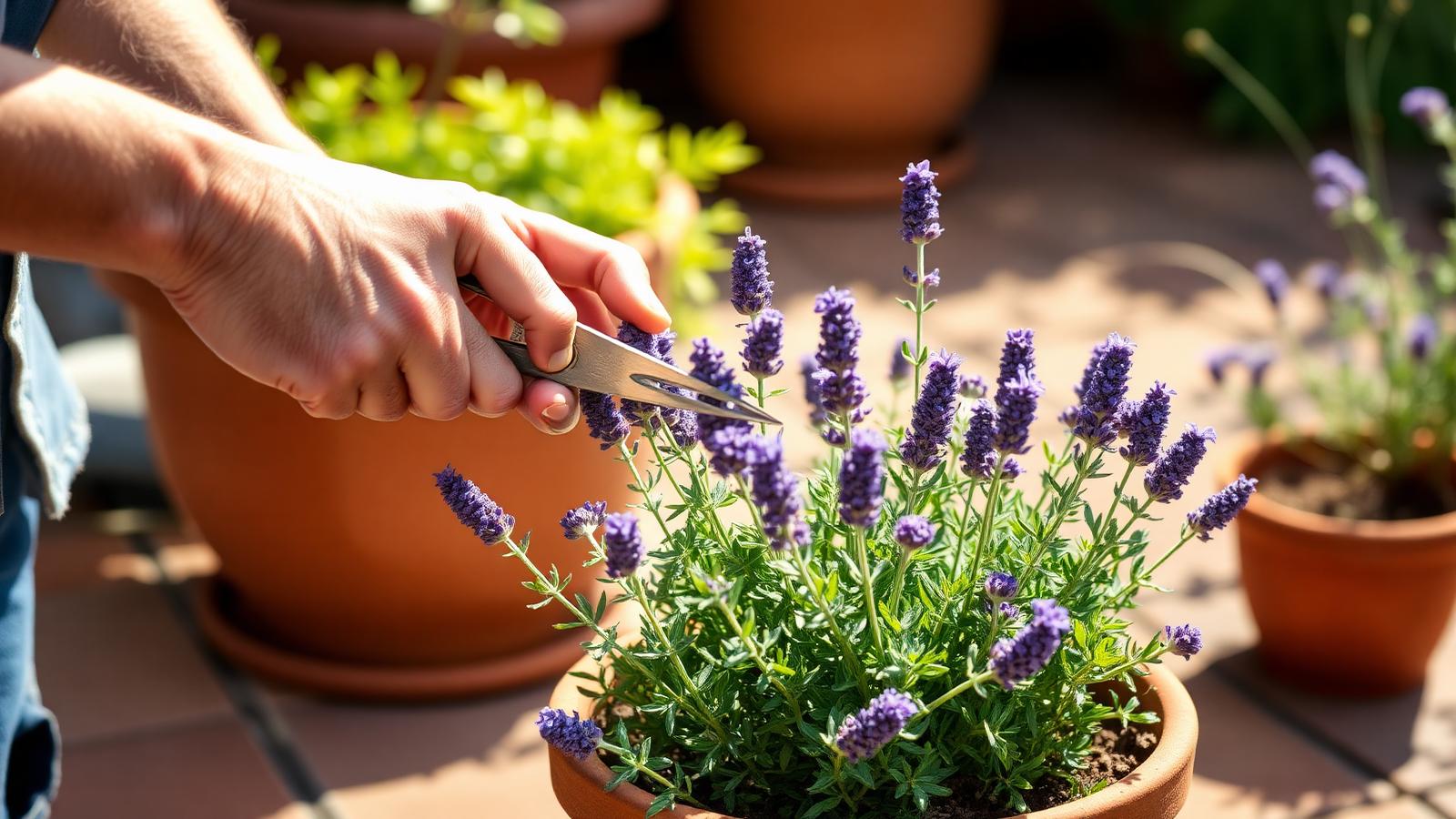
Lavender. This is the big one. Give lavender a light trim right after its first flush of flowers — a proper haircut across the whole plant, taking off the spent flower spikes and about an inch of the leafy growth beneath. Don't cut into the old brown woody stems below; lavender doesn't regrow reliably from bare wood, and cutting too far down is the single most common way a lavender ends up leggy, bald in the middle, and needing replacing after a few years. A good midsummer trim keeps it compact and often triggers a second, smaller flush later in the summer.
Dianthus and pinks. Deadhead spent flowers now to keep them producing, and give plants that have finished their main flush a light overall trim to keep them from getting leggy. They'll often reward you with another wave of flowers before autumn.
Hardy geraniums (cranesbill). These are the pot workhorse most small-space growers underuse. After the first flush of flowers, cut the whole plant back hard — down to a few centimetres above the ground. It looks brutal, but within a couple of weeks you'll get fresh new foliage, and often a second flowering. This is the trick most people don't know exists, and it transforms how good hardy geraniums look for the second half of the season.
What "cutting back" actually means in practice
For a container shrub with distinct woody flowered stems (philadelphus, weigela, deutzia, dwarf lilac): find the stems that carried flowers this year. Follow each one down to where you can see strong new green growth coming out lower down. Cut just above one of those young sideshoots, angling the cut slightly away from the bud. That's it. If the plant is congested or getting rangy, take one or two of the oldest, thickest, woodiest stems right down to the base while you're at it — no more than about a fifth of the plant in any one year.
For a lavender or dianthus, it's a shape more than a set of individual cuts: a light overall haircut across the whole plant with secateurs or shears, taking off the spent flowers and just a little of the foliage beneath, keeping the plant rounded.
For a hardy geranium, it's a proper cutback — down to a few centimetres above the compost, foliage and all.
For a camellia, azalea or rhododendron, it's really just careful deadheading now plus a bit of gentle shaping if needed, since next year's flower buds are already forming behind this year's spent blooms.
Feed and water after cutting
Any cut back asks the plant to put energy into new growth, so it's worth feeding lightly at the same time. A general-purpose liquid feed, or a tomato feed for anything that will flower again this season, watered in around the base helps the plant recover and supports whatever it's about to push out next.
For plants in containers, this matters more than in open ground, since a pot has a limited store of nutrients to draw on and a growing plant depletes them fast. Keep watering consistent, particularly through hot weather, since a plant asked to grow fresh new shoots also needs the water to do it with.
Common mistakes
- Cutting back at the wrong time. The whole point of this piece: prune these plants after they've flowered, not before. Cutting back a spring or early-summer flowerer in autumn or winter removes the buds that carry next year's display.
- Cutting into old brown wood on lavender. Lavender doesn't reliably regrow from bare woody stems. Always cut into the green, leafy top part of the plant, not the woody base.
- Taking too much off at once. Removing more than about a third of a shrub in one go is stressful, even in mild weather. Little and often (across years) beats a single dramatic hack.
- Hard-pruning in the middle of a heatwave. Stress on stress. Wait for a cooler few days if you possibly can.
- Feeding a stressed plant. Feeding is for a recovering plant, not a suffering one. If a plant is wilting from heat, water it and wait; don't add feed on top.
FAQ
Is it really the last chance to prune early-flowering shrubs in mid-July?
For most spring and early-summer flowering shrubs that bloom on last year's wood, yes — leaving it much later than mid-July means the fresh growth that would have carried next year's flowers doesn't get enough time to ripen properly before autumn. Some flexibility for a plant that flowered unusually late this year, but as a general rule, mid-month is the honest deadline.
Can I still prune if it's still very hot?
Deadheading and light tidying, yes. Heavy cutting back, ideally not — pruning is a stress on the plant, and stacking that on top of a heatwave often does more harm than good. Wait for a cooler few days if the forecast shows any at all.
Should I feed after cutting a plant back?
Yes, lightly. A general liquid feed or tomato feed watered in helps the plant recover and supports the new growth you've just asked it to make. Container plants in particular benefit from this, since a pot's nutrient reserves are quickly used up.
How do I know if a plant flowered on last year's wood?
Most late-spring and early-summer flowering shrubs do — lilac, philadelphus, weigela, deutzia, forsythia, azaleas, rhododendrons, camellia. Plants that flower later, from midsummer on, usually flower on new growth from the current year and are pruned in late winter or early spring instead. If in doubt, prune right after flowering and you'll rarely go wrong.
Do lavender and hardy geraniums really need cutting back now?
Yes, and it makes a real difference. Lavender left untrimmed after its first flush goes leggy and woody within a couple of years. Hardy geraniums cut hard back after their first flowering often reward you with a second flush and considerably better-looking foliage for the rest of the season.
Can I prune shrubs in pots the same way as ones in the ground?
The technique is identical. The one difference is that container plants need feeding more often to support fresh growth, and consistent watering — a pot has less margin than open ground, and a plant asked to regrow after cutting needs the water and nutrients to do it with.
RELATED POSTS
Robin is a small-space grower writing for everyone working with a courtyard, balcony, window box, patio or sunny sill. Edible and leafy, both kept alive in the kind of light real small spaces actually get.
✦ Free with the newsletter — the small-space starter sheet
Grow Anywhere — a free weekly email.
The Potted Club newsletter. A short note from Robin — what to sow, one plant problem solved, and the best new guide.
FREE WEEKLY EMAIL · NO SPAM · UNSUBSCRIBE ANYTIME