Why Trees Are Dying in This Heatwave (and Why Your Patio Tree Is at Real Risk)
Even mature trees are struggling in this heat. What that means for the tree you actually have — the patio fruit tree, the standard bay, the olive on the balcony, the young ornamental in the small garden — and what to do about it this week.
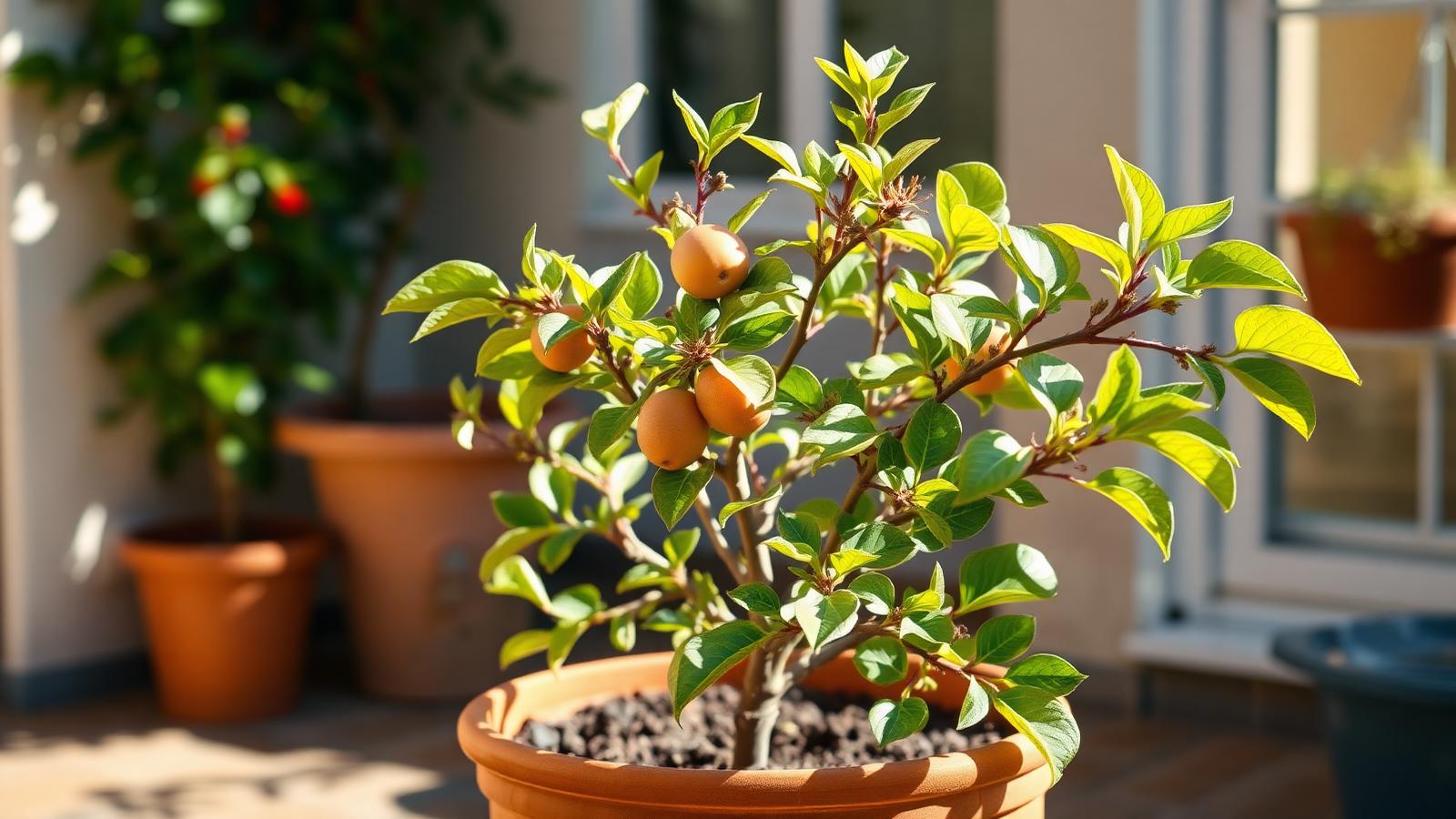
Even mature trees are struggling
Tree health organisations don't tend to raise the alarm over ordinary hot weather. Trees are usually the toughest, most drought-resilient plants in a garden, with roots reaching far deeper than anything in a border or a pot. So when arboriculture bodies start warning publicly about heat-related tree deaths, and institutions like Kew highlight the stress by painting a struggling oak, it's a genuine signal that this summer isn't normal.
That matters even if you've never planted a tree in your life. Because if the toughest, deepest-rooted plants in the country are showing real strain, the smaller, shallower-rooted, container-grown trees the rest of us have are already well past that point — even if the damage isn't visible yet.
The tree you actually have
Most Potted Club readers don't have a mature oak in the garden. What you might have is one of these:
- A patio fruit tree — a dwarf apple, cherry, fig or plum, often in a large pot, chosen precisely because a full-sized tree wouldn't fit.
- A standard bay, olive or laurel — the classic small-garden statement, expensive to replace, easy to lose.
- A young ornamental you planted in the last couple of years — a small acer, an amelanchier, a compact magnolia, something you're still waiting to grow into itself.
- A citrus tree in a pot — a lemon or kumquat that lives outdoors in summer and comes in for winter.
Every single one of those is more at risk in this heat than a mature tree in a park, and for one simple reason: root depth.
Why a container tree is a young tree, permanently
A mature tree copes with drought because its roots can reach several metres down, into moisture reserves well below the parched surface layer that a lawn or a border relies on. That depth is exactly what protects it in a dry summer that would flatten everything else.
A tree in a pot can never do that. Its roots are permanently confined to a limited volume of compost, which dries out at roughly the same rate as any other container in your garden — often within a single hot day if the pot is smaller than the plant. A container fruit tree isn't a resilient established tree in miniature; it's effectively behaving like a newly planted young tree, all the time, and needs treating that way through a heatwave.
The same is true, on a slower timescale, for any tree you've planted in a small garden in the last two or three years. Its roots are still largely confined to the original planting hole and the surrounding disturbed soil, which dries out much like any other patch of ground. It has none of the depth advantage that protects its older neighbours in the park.
How to water a container or young tree properly
Little and often does almost nothing for a tree, in the same way it does almost nothing for a border or a lawn. A quick surface splash barely gets past the first few centimetres of compost and evaporates within hours in genuine heat.
For a container tree, water slowly and deeply until water starts running freely from the drainage holes, then wait a minute, and do it again — that second soak is what actually reaches the bottom of the pot, where the deeper roots are. In this level of heat, a large patio tree may want that treatment daily; check the compost properly rather than assuming, since containers dry out at very different rates depending on pot size, material and position. A dark plastic pot in full sun dries out roughly twice as fast as a terracotta one in dappled shade.
For a young tree in the ground, the technique is different. Form a shallow ring of soil around the base at roughly the edge of the canopy, so water pools rather than running off across the surface. Fill it slowly, let it soak in fully, then repeat once or twice. Once or twice a week like this beats a daily splash by a wide margin. A generous layer of mulch afterwards, kept clear of the trunk itself, holds that moisture in for longer.
The stress signals worth knowing
A few things to look for on a small-space tree, whether it's in a pot or in the ground:
- Scorched, browning or curling leaf edges, particularly on the side facing the strongest afternoon sun. This usually points to heat and moisture stress rather than disease.
- Fruit dropping early on a patio fruit tree — a stress response where the tree sheds developing fruit to conserve resources rather than support the crop through to ripening. It looks alarming and often isn't fatal, but it's a clear signal to start watering more deeply if you haven't already.
- Leaves dropping earlier than the season would suggest, especially evenly across the whole tree rather than one damaged branch. Trees do this deliberately to cut their own water loss, a survival strategy rather than an immediate emergency, but it says the plant is under real pressure.
- A specimen olive, bay or citrus in a pot suddenly wilting — often just severe thirst rather than long-term damage, but genuinely dangerous if left. A deep soak (see above) usually turns this round within a day.
Container trees deteriorate faster than tree-in-ground specimens, and can also recover more quickly with the right watering, precisely because you can influence the entire root environment at once.
What not to do
A few instincts that feel helpful in a heatwave tend to make things worse.
Don't feed a heat-stressed tree. Feeding asks the plant to put energy into new growth at exactly the moment it has the least spare capacity to do so, and can scorch already-stressed roots. Wait until the weather breaks and the tree is settled before considering a feed.
Don't repot a container tree during a heatwave. Repotting disturbs roots at the worst possible moment. Even if the plant looks pot-bound, hold off until autumn.
Don't move a big container into a completely dark spot to "cool it off". Trees still need light. If a pot is really cooking, move it into dappled or afternoon shade rather than full shade, and give the leaves a chance to adjust rather than throwing it straight into the dark.
Don't assume a wilting container tree needs more water. Check the compost first. A tree in soggy compost that's still wilting is either heat-stressed rather than thirsty, or has already been overwatered to the point of root damage; more water on top of either just makes it worse.
When to worry, when to wait
For an established tree in the ground, occasional stress signs in a genuine heatwave rarely mean lasting damage — even mature trees drop leaves early or curl a bit in extreme conditions, and generally recover fully once the weather breaks. It's repeat, severe heatwaves across successive years, or one truly extreme summer on an already-stressed tree, that eventually tip some past the point of recovery.
For a container tree or a recently planted young tree, the margin is far smaller. A single missed week of proper watering in this level of heat can genuinely be terminal for a small patio specimen, particularly one already showing multiple stress signs. If you've been meaning to give yours a proper soak for a few days now, this week is the one to actually do it.
Climate note — If you're in a tropical or warm climate, trees that are properly established there are generally adapted to higher baseline heat than anything in a temperate UK garden, so the same principle holds: container specimens and recent plantings need attention; long-established trees usually don't. Your baseline for what counts as stressful heat will simply be higher.
FAQ
Is it normal for a patio fruit tree to drop its fruit in a heatwave?
Yes, it's a stress response — the tree shedding developing fruit to conserve resources rather than support the crop. It looks worrying and rarely means the tree is dying, but it's a signal to water more deeply and consistently.
How often should I water a large container tree in a heatwave?
Check the compost daily and water thoroughly when the top few centimetres are drying out. In genuine heat, that can mean a proper deep watering every day for a large pot, particularly one in full sun.
Can an olive tree in a pot cope with a UK heatwave?
Yes, olives are drought-adapted and generally handle heat better than most container trees — but they're not indifferent to water in a pot, and a completely dry rootball for days will still stress even an olive. Check the compost properly rather than assuming it doesn't mind.
My young tree in the garden has curling leaves — is it dying?
Probably not — curling leaves are a common heat stress response, and a young tree usually recovers once it's watered deeply and the weather breaks. The bigger risk is leaving it to cope on its own; young trees haven't developed the root depth to shrug off a serious drought unaided.
Should I feed a stressed tree to help it recover?
No. Feeding asks the plant to grow at exactly the point it has no spare capacity, and can do more harm than good. Focus on watering and only feed once the weather has properly broken and the tree is growing normally again.
Are established garden trees really at risk in a UK heatwave?
For most established, mature trees, no — their root depth generally protects them. But this summer is unusually severe, and repeat heatwave summers do eventually catch up with even mature trees, particularly ones already under stress from disease, pests or root disturbance. The alarm being raised this year is about the pattern, not routine hot weather.
RELATED POSTS
Robin is a small-space grower writing for everyone working with a courtyard, balcony, window box, patio or sunny sill. Edible and leafy, both kept alive in the kind of light real small spaces actually get.
✦ Free with the newsletter — the small-space starter sheet
Grow Anywhere — a free weekly email.
The Potted Club newsletter. A short note from Robin — what to sow, one plant problem solved, and the best new guide.
FREE WEEKLY EMAIL · NO SPAM · UNSUBSCRIBE ANYTIME