Don't Leave Your Halloween Pumpkin Out for the Hedgehogs
Why Halloween pumpkins can upset hedgehogs, why dumping them in woods does more harm than good, and how to compost, reuse or feed them to birds safely after 31 October.
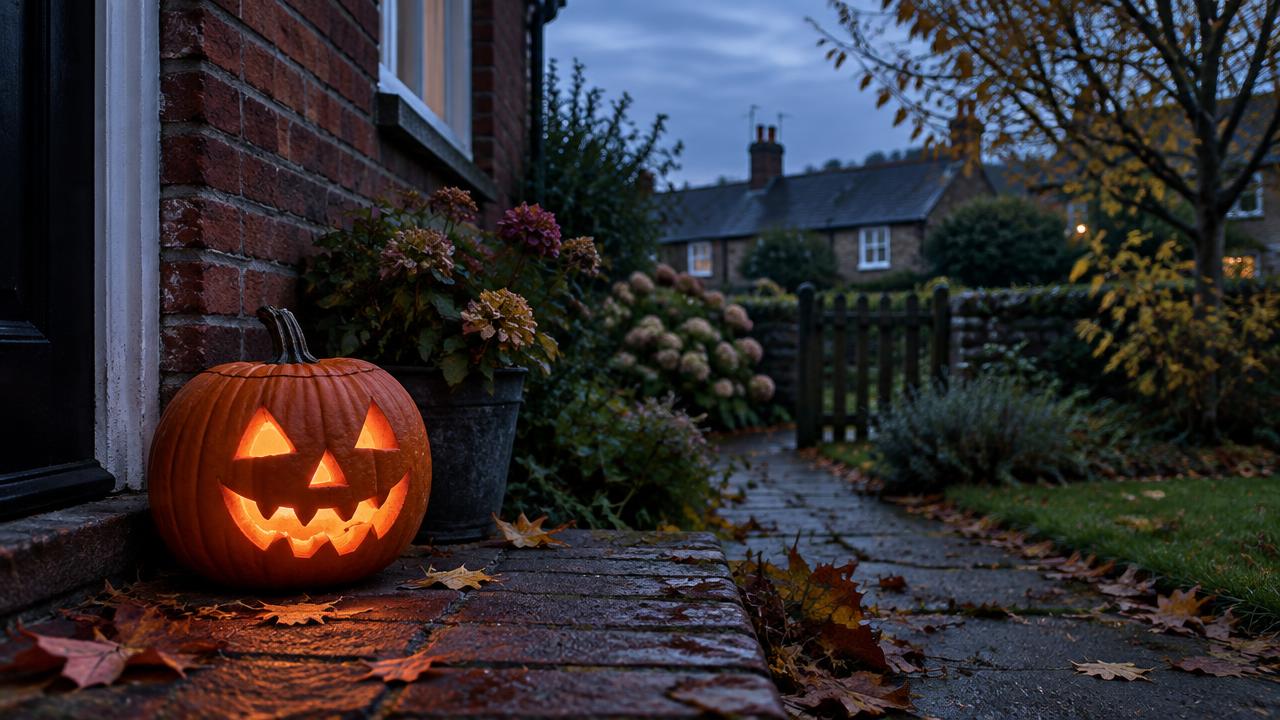
Every year after Halloween, a lot of carved pumpkins end up on lawns, under hedges and at the edge of the woods, left out in the belief that they make a useful meal for wildlife. It is a kind thought, and it is easy to see where it comes from. But the wildlife charities have been warning for several years that it does more harm than good, particularly for hedgehogs, which are trying to put on weight before hibernation at exactly this time of year. Here is what they say, what to do with your pumpkin instead, and how to help garden wildlife in ways that work, including on Bonfire Night a few days later.
Why pumpkin is a problem for hedgehogs
It helps to be precise about the risk. The charities don't describe pumpkin as a poison. Their concern is what it does to a hedgehog's digestion. The Northumberland Wildlife Trust says pumpkins are a natural laxative and that, if eaten by hedgehogs, they will cause serious diarrhoea and dehydration. The RSPB, in its advice for this Halloween, says pumpkin can upset hedgehogs' stomachs and lead to fatal dehydration, and that it is really important to keep pumpkins out of their reach.
The timing makes it worse. Hedgehogs need to build up their fat reserves in autumn to get through hibernation, and the Northumberland Wildlife Trust stresses that it is vital they put on as much weight as possible at this time of year. An animal with an upset stomach in late October is losing condition just when it can least afford to. Pumpkin is also nothing like their normal food. The Woodland Trust says hedgehogs mainly eat invertebrates, such as beetles, earwigs, caterpillars, earthworms, slugs and millipedes.
None of this means you can't enjoy a lantern on the doorstep. Keep it on a step or wall rather than on the ground, bring it in at night if you can, and deal with it once it starts to soften rather than leaving it to collapse where animals can get at it.
Why you should never dump pumpkins in woodland
The Woodland Trust was blunt when it asked people to stop leaving pumpkins in woods after Halloween, saying that a myth seems to have built up that it helps wildlife. It warned that pumpkin flesh can be dangerous for hedgehogs and attracts rats, and that dumping it has a really detrimental effect on woodland soils, plants and fungi.
Forestry England makes the same case. It points out that pumpkins are not natural to the woodland and, while some animals will eat them, others, such as hedgehogs, can be made very poorly. It also warns more widely that feeding pumpkin or any other food to wildlife can make animals ill and spread disease, whether they are birds, foxes, badgers or deer. Carved pumpkins add another problem, because they are often decorated with candles, paint or glitter, which Forestry England says pose serious risks if eaten.
The same thinking applies to a garden. A pumpkin left on the lawn is just as easy for a hedgehog to find, and the RHS notes that rats will take food left out for wildlife and pets, so it is one more reason for them to visit.
Eat it if you can
The best use of a pumpkin is the obvious one. The RHS suggests using the flesh and seeds from a carved pumpkin in soups and stews rather than wasting them, and Forestry England adds cakes and muffins, or freezing purée or chunks for later. The day after carving is the time to do it, while the flesh is still fresh.
A lantern that has spent a week outside with a candle in it and started to soften is better treated as compost than as food. It is also worth knowing that not every decorative squash is edible. The RHS says ornamental gourds are not suitable for eating and will be labelled as such.
Save the seeds for the birds
Birds are a different case from hedgehogs, and the seeds are worth keeping for them. The RSPB suggests roasting pumpkin seeds in the oven to dry them out, without any salt, spices or oil, then crushing them into smaller pieces so smaller birds can manage them. It suggests adding them to hanging feeders alongside other seed from 1 November.
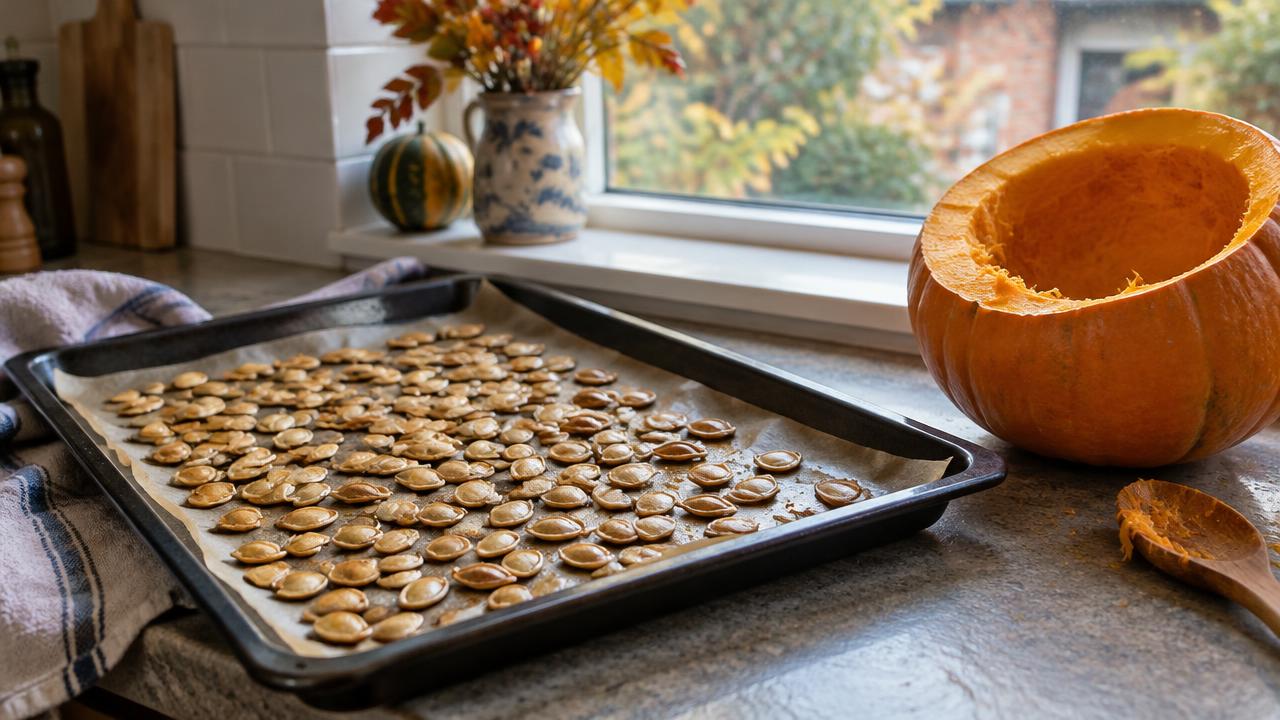
A hanging feeder is a much more controlled way of offering pumpkin than a whole lantern on the ground, because it keeps the food off the ground and away from hedgehogs. Forestry England also suggests turning the tough outer skin into a temporary feeder hung from a branch, but warns that it must be taken down once it starts to rot. In a small garden, an ordinary feeder is usually simpler and easier to keep clean. Our article on feeding garden birds covers what else to put out as the weather turns colder.
Compost the rest
Whatever you can't eat can go on the compost, and Forestry England describes pumpkins as a great source of nitrogen and moisture for a heap. Start by removing any candles, wax, paint, glitter or plastic decorations, then chop the pumpkin into small pieces. The RSPB advises spreading it thinly rather than dropping a whole pumpkin in.
Pumpkin counts as soft green material, and a big one can be a lot of wet waste for a small bin. The RHS suggests that green material should make up roughly a quarter to a half of a compost heap, with the rest chopped-up brown material such as woody prunings, straw, and torn or shredded paper and cardboard. Mixing pumpkin with plenty of shredded cardboard stops a compact bin turning into a wet, smelly mass. There is no need for a compost accelerator, as the RHS says composting generally runs smoothly without one if the balance and air are right. It also slows down over winter, so don't expect the pumpkin to vanish quickly.
A closed compost bin is better than an open heap at this time of year, because the RHS says rats will nest in compost heaps and advises keeping bins sealed. If you have no compost bin, the Northumberland Wildlife Trust suggests burying the pumpkin 12 to 18 inches deep, which is roughly 30 to 45cm, and your council's food waste collection is another option where one is offered.
What to feed hedgehogs instead
If you want to do something for hedgehogs, there is plenty that helps more than a pumpkin. The Wildlife Trusts suggest putting out plain kitten biscuits or meat-based wet dog or cat food at dusk, with a dish of fresh water, and point out that specialist hedgehog food is not regulated, so check what you are buying. They advise never leaving out bread or milk. The Woodland Trust explains that hedgehogs are lactose intolerant and milk can make them ill, that bread has little nutritional value, and that large amounts of bird food, including mealworms, seed and peanuts, can cause health problems.
It also stresses that extra food should supplement a hedgehog's natural diet rather than replace it. If cats are taking the food, the Wildlife Trusts suggest a simple feeding station made from bricks with a gap only a hedgehog can fit through. Clear away anything left in the morning so it does not spoil or draw in rats.
Bonfire Night comes next
Bonfire Night falls less than a week after Halloween, and a pile of branches and garden waste waiting to be lit looks a lot like a safe place to nest. The British Hedgehog Preservation Society sums up its advice as Stop, Move, Check. Stop and ask whether you need a bonfire at all, or whether a community display would do. If you do have one, build it only on the day you plan to light it, and if material has been stacked up beforehand, move it to a fresh spot just before lighting.
Then check the whole pile. The society advises lifting it gently from the bottom with a pole or broom, paying attention to the centre and lower section, and never using a spade or fork, which can cause great harm. A torch helps, and a hissing sound means a disturbed hedgehog. Light the fire from one side only, so anything still inside has a way out.
Make a small garden safer through winter
The most useful thing you can do for hedgehogs after Halloween is to make the garden easier to get into, forage in and shelter within. Hedgehog Street, the campaign run by the British Hedgehog Preservation Society and People's Trust for Endangered Species, says hedgehogs can travel up to a mile in a night and asks people to make a 13cm by 13cm hole in fences and walls, about the size of a CD case. Talk to your neighbour before cutting into a shared fence.
The society's gardening advice also suggests a pile of leaves or logs in a quiet corner as a nesting site, which is one reason our article on fallen leaves suggests leaving some where they fall. Take care when turning a compost heap, which the society says is an ideal place for a hedgehog to nest, warning that one thrust of a fork can easily kill more than one baby hedgehog. Keep any netting a foot above the ground so hedgehogs can pass underneath without becoming tangled, and check long grass and wild patches before strimming.
When a hedgehog needs help
Late autumn is when young hedgehogs are most likely to be in trouble. The British Hedgehog Preservation Society advises that any hedgehog under 250g in autumn should be rescued straight away, and that from the end of October, hedgehogs under 450g may need rescuing, depending on the weather. A hedgehog out during the day is a warning sign whatever its size. If you find one, call the society on 01584 890 801 for advice and local help.
The short version
Once Halloween is over, move the pumpkin somewhere hedgehogs can't reach it. Eat what is still fresh, roast the seeds for the bird feeder, strip off the decorations and compost the rest chopped small with plenty of cardboard. If you want to help hedgehogs, put out water and the food the charities recommend, leave a gap in the fence and a pile of leaves in a corner, and check any bonfire before you light it. The best thing to do with a Halloween pumpkin is often simply to keep it out of the wildlife's way.
FAQ
Are pumpkins poisonous to hedgehogs?
Pumpkin isn't described as a poison, but the Northumberland Wildlife Trust says it acts as a natural laxative and can cause serious diarrhoea and dehydration in hedgehogs. The RSPB says this can be fatal, so keep pumpkins out of their reach.
Can birds eat Halloween pumpkin?
Birds can eat the seeds if you prepare them first. The [RSPB](https://www.rspb.org.uk/birds-and-wildlife/how-to-feed-garden-birds) suggests roasting them to dry them out, without salt, spices or oil, then crushing them and adding them to hanging feeders from 1 November.
Can I leave a pumpkin in the woods for animals?
No. Forestry England says pumpkins are not natural to woodland, can make animals such as hedgehogs very poorly, and that feeding food to wildlife can spread disease. The Woodland Trust says dumped pumpkins also harm woodland soils, plants and fungi.
Can I compost a carved pumpkin?
Yes. Remove candles, wax, paint and glitter first, chop it small and mix it with brown material such as shredded cardboard or woody prunings. The RHS suggests green material should make up only around a quarter to a half of a heap.
What should I feed hedgehogs in autumn?
The Wildlife Trusts and Woodland Trust suggest meat-based cat or dog food or cat biscuits, with a shallow dish of fresh water. Avoid milk, which can make hedgehogs ill, bread, and large amounts of mealworms, seed or peanuts.
RELATED POSTS
Robin is a small-space grower writing for everyone working with a courtyard, balcony, window box, patio or sunny sill. Edible and leafy, both kept alive in the kind of light real small spaces actually get.
✦ Free with the newsletter — the small-space starter sheet
Grow Anywhere — a free weekly email.
The Potted Club newsletter. A short note from Robin — what to sow, one plant problem solved, and the best new guide.
FREE WEEKLY EMAIL · NO SPAM · UNSUBSCRIBE ANYTIME