
Winter Hanging Baskets and Window Boxes: What to Plant Now
What to plant in winter hanging baskets and window boxes, which plants cope with a British winter, the right compost and liners, and how to look after them until spring.
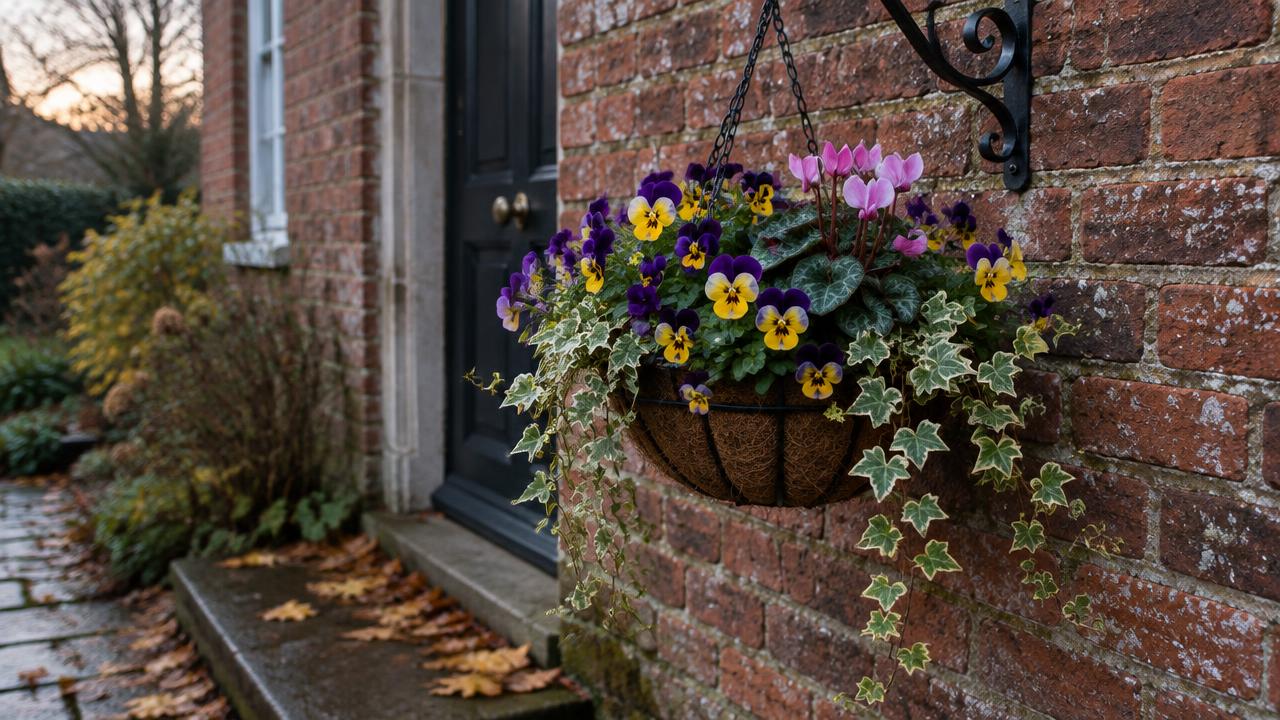
When the summer bedding comes out of a hanging basket or window box, it is tempting to leave it empty until spring, but a winter basket planted now can give colour and evergreen structure through the cold months, with bulbs underneath to carry it into spring. The trick is choosing plants that cope with a British winter. Some flower in mild spells, others earn their place through foliage, and a few need more shelter than their labels suggest.
Why now is the time to plant
The RHS advises planting winter hanging baskets between September and November, so late October sits comfortably inside the window. Planting before the coldest weather gives the roots a few weeks to settle, and garden centres still have a good selection of seasonal plants rather than whatever is left in December.
Winter baskets work differently from summer ones, because plants grow very little in the cold. A basket will look much the same in February as on the day you plant it, so the RHS advice is to start with good-sized plants and use enough of them for the container, since you cannot rely on growth to fill the gaps. Winter interest does not mean continuous flowers either. Violas and primulas flower on and off as the weather allows, while evergreen foliage keeps the basket looking cared for in between.
Choosing the basket or window box
Traditional wire hanging baskets need a liner to hold the compost. The RHS suggests ready-made cardboard or fibre liners, or moss raked from your own lawn in a layer about 1.5cm thick, and advises against buying sphagnum moss unless you are sure it has been sustainably harvested. Solid plastic and resin baskets need no liner, but they must have drainage holes, because a basket that stays saturated through a wet winter causes more trouble than one that dries slightly between waterings.
Window boxes need drainage too. Where you can, raise them slightly on feet or small supports so water can escape rather than collecting underneath, in line with the RHS advice to raise containers in winter to help them drain.
Check fixings before you plant. Wet compost makes a basket considerably heavier, and winter winds put extra strain on brackets and supports, so on balconies and upper-floor sills make sure every container is secured and cannot fall or be blown loose.
Which compost to use
For a basket that only needs to last one winter, the RHS says a good-quality peat-free multipurpose compost is fine. If you want to keep perennial plants in the container for longer, adding peat-free loam-based compost such as a John Innes mix gives a more substantial growing medium, but it is heavier, which matters in a hanging basket.
Most winter basket plants grow happily in ordinary multipurpose compost, with two to think about. Gaultheria prefers acid to neutral conditions, so ericaceous compost is the safest choice if it is going in a pot of its own. Winter-flowering heath, Erica carnea, is more forgiving, and the RHS notes it tolerates a higher pH than most heathers, so it can go in ordinary compost.
What to plant in a winter hanging basket
The RHS recommends a fairly short list of reliable plants for winter baskets, and the best displays mix seasonal flowers with evergreen foliage rather than relying entirely on bedding.
Violas and winter-flowering pansies are the most familiar choice. In an RHS overwintering trial at Wisley, most of the violas tested were still flowering into their eighth month, and the plants coped with a week of frosts down to minus 7.5°C. A hanging basket is more exposed than a trial bed, so give them a sheltered spot. Primulas and polyanthus add colour in mild spells, particularly in sheltered positions.
Cyclamen need more careful choosing. The RHS lists small-flowered cyclamen for winter baskets, and its cyclamen guide describes Cyclamen coum as the hardiest, flowering from January to March, with Cyclamen hederifolium giving autumn flowers and patterned leaves. The florist's cyclamen, Cyclamen persicum, is also widely sold for winter containers, but the RHS says it usually lasts only until the new year in a sheltered spot, so treat it as temporary colour rather than a plant for the whole winter.
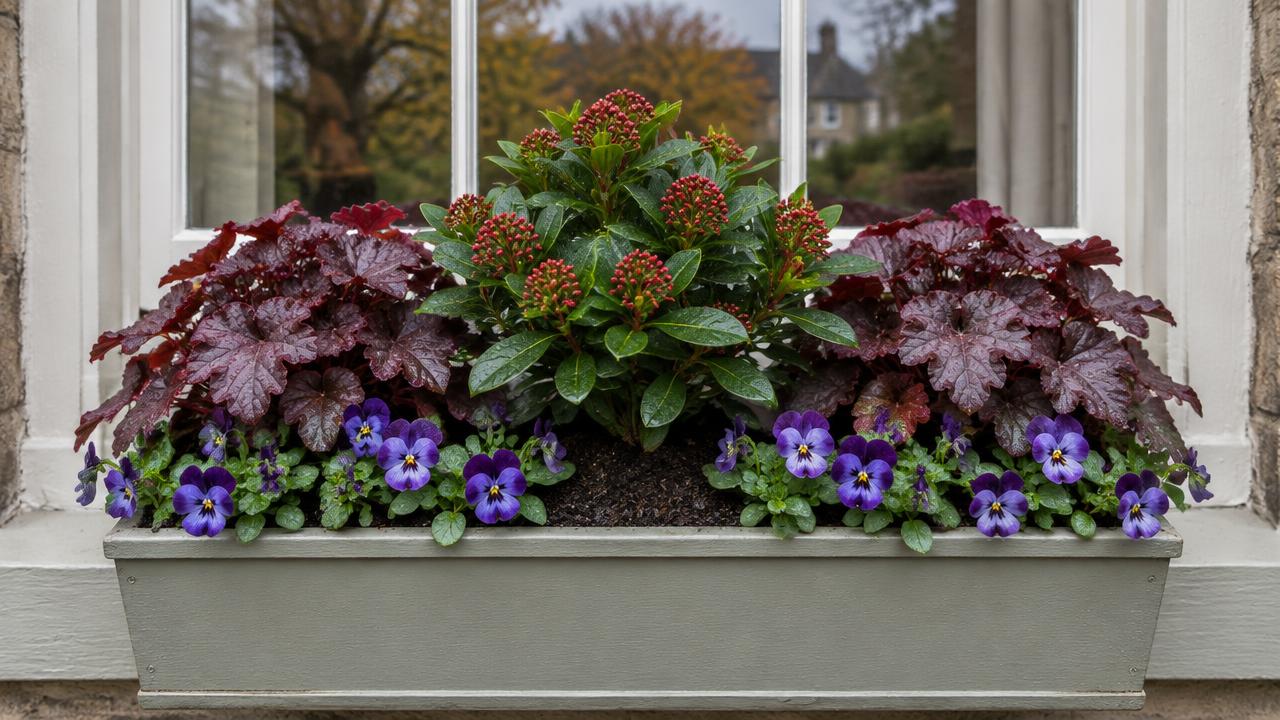
For foliage and structure, trailing ivy softens the edge of a basket, and variegated forms brighten it on a dull day. Carex and other small evergreen grasses add height and movement. Heucheras give coloured leaves, and the RHS describes them as hardy, though it notes leaves on some plants may die back in colder areas before regrowing in spring. Winter-flowering heathers combine evergreen foliage with flowers in the coldest months.
Gaultheria adds glossy leaves and berries. The RHS notes that female plants need a male nearby to produce berries, though plants sold already in berry give instant colour, and it eventually grows into a sizeable shrub, so it is a seasonal visitor in a basket rather than a permanent resident.
Window boxes take a wider range. Ornamental cabbage and kale give bold foliage, and the RHS includes them for winter interest. Compact skimmias give evergreen leaves and winter buds, but the RHS says skimmia prefers partial to deeper shade, and even compact varieties reach around 40 to 70cm, so it belongs in a box or larger container rather than a hanging basket.
For spring, tuck dwarf bulbs underneath. The RHS winter basket list includes crocus and Iris reticulata, and its winter containers page adds dwarf narcissus such as 'Tête-à-tête'.
Three combinations for small spaces
You do not need a long list of plants. Three or four that suit the conditions usually make a more coherent display than a crowded mix, and the combinations below are suggestions to adapt rather than formal recipes.
For a sunny, sheltered hanging basket, combine purple or yellow violas with variegated trailing ivy and a compact evergreen carex, with a few Iris reticulata bulbs underneath for late winter. The violas give the colour, the ivy softens the rim and the grass gives the basket shape when flowering slows.
For a basket in part shade, use primulas, a small heuchera and trailing ivy. This relies more on foliage than on constant flowers, so choose plants with leaves you like, and avoid a spot that stays in deep shade all day.
For a sheltered window box, plant a compact skimmia as the centrepiece, with burgundy heucheras and violas around it and dwarf narcissus such as 'Tête-à-tête' underneath for spring. Check the eventual size of the skimmia variety before you buy.
How to plant a winter basket or window box
Start with the bulbs, if you are using them. Put a layer of compost in the bottom of the container, set the bulbs on it at the right depth for each type, and cover them before positioning the winter plants on top. Our complete guide to planting bulbs covers depths in more detail.
Arrange the plants while they are still in their pots, with upright plants towards the back or centre, flowers where you will see them and trailing ivy at the edges. Plant generously enough for an immediate display, but leave enough compost around each rootball for the roots to grow. Firm the plants in gently, leave a small gap below the rim for watering, and water thoroughly to settle the compost, letting the excess drain away before you hang the basket up.
Looking after it through winter
Winter baskets need much less attention than summer ones, but they should not be forgotten. The RHS says they dry out more slowly in winter but still need regular checks, so aim to keep the compost moist but not soggy, and water the compost rather than the leaves and flowers. A basket under a porch or deep eaves may get very little rain even in a wet winter, and dry winds can draw moisture from exposed compost, so check the compost itself rather than assuming the weather has done the watering.
Don't feed. The RHS says winter hanging baskets don't need feeding, because it can encourage soft new growth that is easily damaged by frost. If you are keeping perennial plants, feeding can start again once they are growing in spring.
Frost protection depends on how exposed the basket is. The RHS says winter baskets benefit greatly from a sheltered, sunny spot. On an exposed site, it suggests covering them with fleece in the coldest weather, noting that heavier grades of fleece give about 2°C of protection, or standing the basket on a bucket in a cool greenhouse for the worst few days. Our article on protecting pots from frost explains how to judge when that is worth doing.
There is less need to deadhead than many gardeners assume. In the RHS Wisley viola trial, plants deadheaded every few weeks showed little or no benefit over plants left alone, so tidy them if you like the look, but it is not an essential winter job.
Two pests are worth watching. Slugs and snails stay active in mild, damp spells and will graze on violas and primulas. Vine weevil grubs are the other concern, and the RHS lists heuchera as susceptible, notes that containers are most at risk, and says most plant losses happen between September and March. A plant that suddenly wilts, or lifts out of the compost with most of its roots missing, should be checked for the white, C-shaped grubs with brown heads.
What happens in spring
As the days lengthen, the bulbs underneath start to push through, and the basket shifts from a winter display to a spring one without any replanting. By late spring it will be ready for a change. Healthy violas and other bedding can go on the compost heap once they finish, while heucheras, ivy, carex, heathers and skimmia can be moved into larger pots or the ground rather than left in a crowded basket. Check the eventual size and soil preferences of each before replanting, particularly for shrubs and for gaultheria. Our article on what to do with summer pots after flowering covers reusing the old compost.
FAQ
When should I plant a winter hanging basket?
The RHS advises planting winter hanging baskets between September and November. Late October and early November are fine, giving plants time to settle before the coldest weather.
Do winter hanging baskets need feeding?
No. The RHS says winter hanging baskets don't need feeding, because it can encourage soft new growth that is easily damaged by frost.
How often should I water a winter hanging basket?
Check the compost regularly rather than following a fixed schedule, and water when it begins to dry, keeping it moist but not soggy. Baskets under eaves or porches may get very little rain.
Are cyclamen hardy in a winter basket?
It depends on the species. The RHS describes Cyclamen coum as the hardiest, flowering from January to March. Florist's cyclamen, Cyclamen persicum, usually lasts only until the new year in a sheltered spot, so treat it as temporary colour.
Should I deadhead winter violas?
You can remove spent flowers for appearance, but an RHS overwintering trial at Wisley found little or no benefit from deadheading every few weeks.
READ THE FULL GUIDE
Container Growing Fundamentals →
RELATED POSTS
Robin is a small-space grower writing for everyone working with a courtyard, balcony, window box, patio or sunny sill. Edible and leafy, both kept alive in the kind of light real small spaces actually get.
✦ Free with the newsletter — the small-space starter sheet
Grow Anywhere — a free weekly email.
The Potted Club newsletter. A short note from Robin — what to sow, one plant problem solved, and the best new guide.
FREE WEEKLY EMAIL · NO SPAM · UNSUBSCRIBE ANYTIME