
Indoor Bulbs to Plant Now. Paperwhites, Amaryllis and Hyacinths for Winter Flowers
Which indoor bulbs planted now can flower for Christmas, New Year and late winter, and how to grow paperwhites, amaryllis and hyacinths.
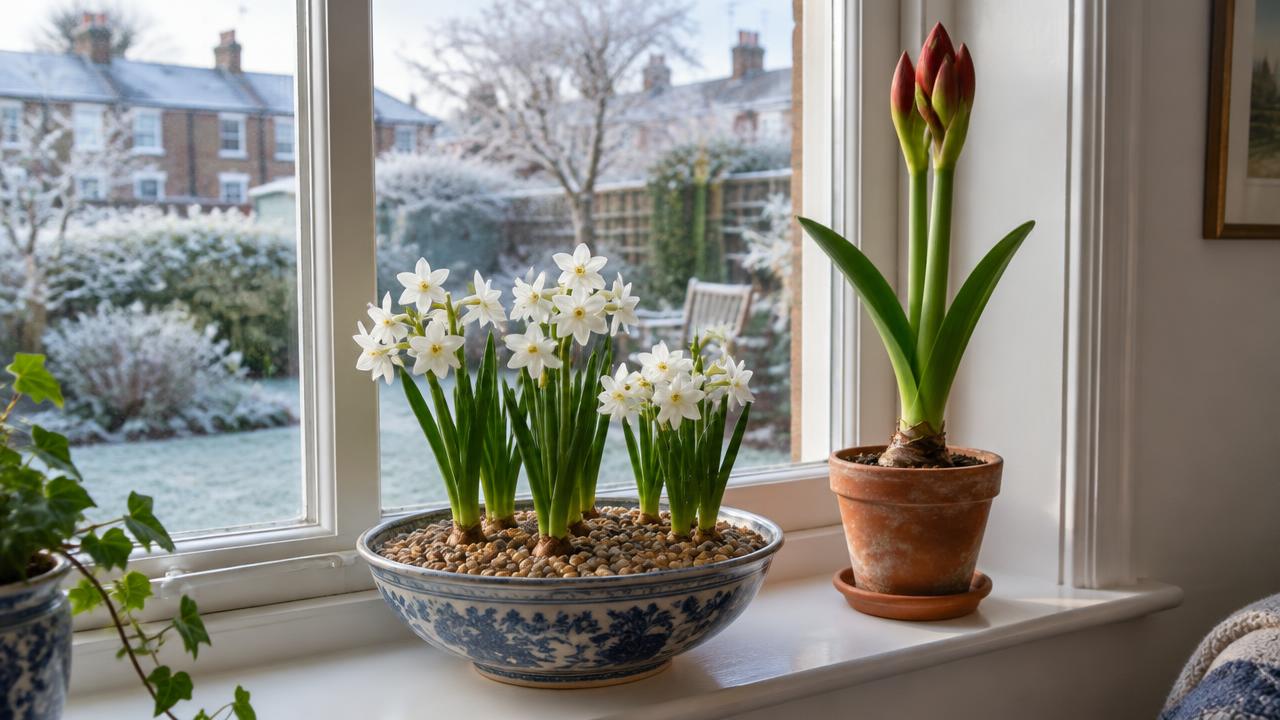
A bowl of bulbs on the windowsill is one of the easiest ways to have flowers indoors in the darkest part of the year, and it needs no garden at all. The catch is timing. Some indoor bulbs planted this week can still flower for Christmas, some are more likely to open around New Year, and some won't be ready until late January or February. This covers what to expect from paperwhites, amaryllis and prepared hyacinths planted now, how to grow each one, and how to keep them safely away from pets.
What to plant now, and when it will flower
The RHS gives a range of growing times for each of these bulbs, and the conditions in your home will push them one way or the other. Warmth speeds them up, but too much of it produces weak, floppy growth. Based on planting in early November, this is a realistic guide.
| Bulb | Time from planting | Likely flowering | Christmas? |
|---|---|---|---|
| Paperwhites | 6 to 10 weeks | Mid-December to mid-January | Possible, but not guaranteed |
| Amaryllis | About 6 to 10 weeks | Late December to mid-January | Possible, but timing varies |
| Prepared hyacinths | 10 to 12 weeks, including a cool rooting period | Late January or February | Not a reliable choice from now |
The hyacinth timing isn't a fixed countdown. It combines a cool rooting period, which varies between cultivars, with a few weeks of development indoors, and it applies to loose bulbs you start from scratch now. Pots of hyacinths that are already rooted and showing shoots when you buy them are further along, and may flower sooner depending on how developed they are.
Whatever you grow, choose the right container. The RHS recommends peat-free multipurpose compost for pots with drainage holes, and peat-free bulb fibre for bowls without them, because fibre holds water without becoming too soggy. Avoid filling a sealed decorative bowl with ordinary compost, which can stay waterlogged and rot the bulbs. Growing in water, in gravel or a bulb vase, is a third option.
Paperwhites
Paperwhites are a tender narcissus, and the easiest of the three. Unlike hyacinths, they don't need weeks of cold and dark before they will flower. The RHS suggests planting several bulbs to a pot, with the tips just showing, watering well, and keeping them somewhere warm and sunny. It says they flower six to ten weeks after planting, which means a pot planted this weekend may open for Christmas, but could equally flower in early January. Flowering times vary with the bulbs and the conditions they are grown in, so the RHS range is the safer basis for planning a Christmas display.
To spread the display, plant a few pots a fortnight apart. That won't guarantee unbroken flowers through the winter, because each pot will move at its own pace, but it does make it more likely that something is in flower over Christmas and into the new year.
Paperwhites can also be grown without compost. Set the bulbs firmly on a layer of gravel or pebbles in a bowl, packed closely together, and add water so that it reaches the base of the bulbs, where the roots will form, without submerging the bulbs themselves. A bulb left sitting in water can rot, so check the level regularly as the roots grow down into the gravel.
The main problem with paperwhites is that they grow tall and flop. The RHS says they can get leggy and need support, so put in a few twigs or canes with string around them early on. Once they are in leaf, a bright, cool spot keeps the stems shorter than a warm room. There is also a well-known experiment from Cornell University. In 2006, Professor William Miller found that once the shoots were several inches long, replacing the water with a solution of 4 to 6 per cent alcohol stunted paperwhites by 30 to 50 per cent, without affecting the flowers. It is an interesting finding rather than standard practice, it depends on getting the concentration right, and the researchers warned against using beer or wine, because the sugars harm the plants. Support and cool, bright conditions are the simpler approach.
Be aware of the scent. Paperwhites have a strong fragrance that some people love and others find overpowering in a small room. After flowering, paperwhites aren't hardy in most of the UK. The RHS advises leaving them somewhere frost-free while the foliage dies down, then storing the bulbs for replanting in containers later in the year, or planting them outside in a sheltered, sunny spot. They are less predictable the second time round than a fresh bulb.
Amaryllis
Amaryllis, sold under its botanical name Hippeastrum, produces the biggest flowers of any indoor bulb, with several trumpet-shaped blooms on a tall stem. The RHS gives a planting season from October to January, and says flowers appear about six to eight weeks after planting, although its advice on Christmas bulbs gives about ten weeks. A bulb started now may therefore flower around Christmas or New Year. A firm, dry, dormant bulb usually takes longer than one that is already showing the tip of a flower bud, so check what you are buying if Christmas matters.
Plant the bulb in a pot only a little larger than the bulb itself, in peat-free John Innes No. 2 or peat-free multipurpose compost, with about two-thirds of the bulb above the surface. The RHS suggests starting it at around 21°C in a well-lit spot, which is warmer than paperwhites or hyacinths need. The RHS advises watering sparingly until new leaves appear, then watering regularly, without letting water sit in the saucer. On many bulbs the flower bud appears before the leaves, so rather than waiting for a fixed signal, keep the compost lightly moist as growth develops and increase watering gradually as the plant grows, without letting the compost become saturated.
Turn the pot every few days so the flower stem grows straight rather than leaning towards the window, and stake large-flowered cultivars. Once the flowers open, the RHS suggests moving the plant somewhere cooler, around 15 to 18°C, to make them last longer.
An amaryllis can flower again for years. After flowering, the RHS advises cutting off the flower stem at the base, keeping the leaves growing, and feeding weekly with a balanced liquid fertiliser. It can go outside in summer, in a sheltered spot out of harsh sun. In late September, it needs a rest, either kept cooler at about 13°C with less water, or dried off completely and stored somewhere cool for one to two months, before you start it into growth again. The RHS says a bulb that doesn't flower has usually been dried off too early, grown in too much shade, or underwatered the previous summer.
Prepared hyacinths
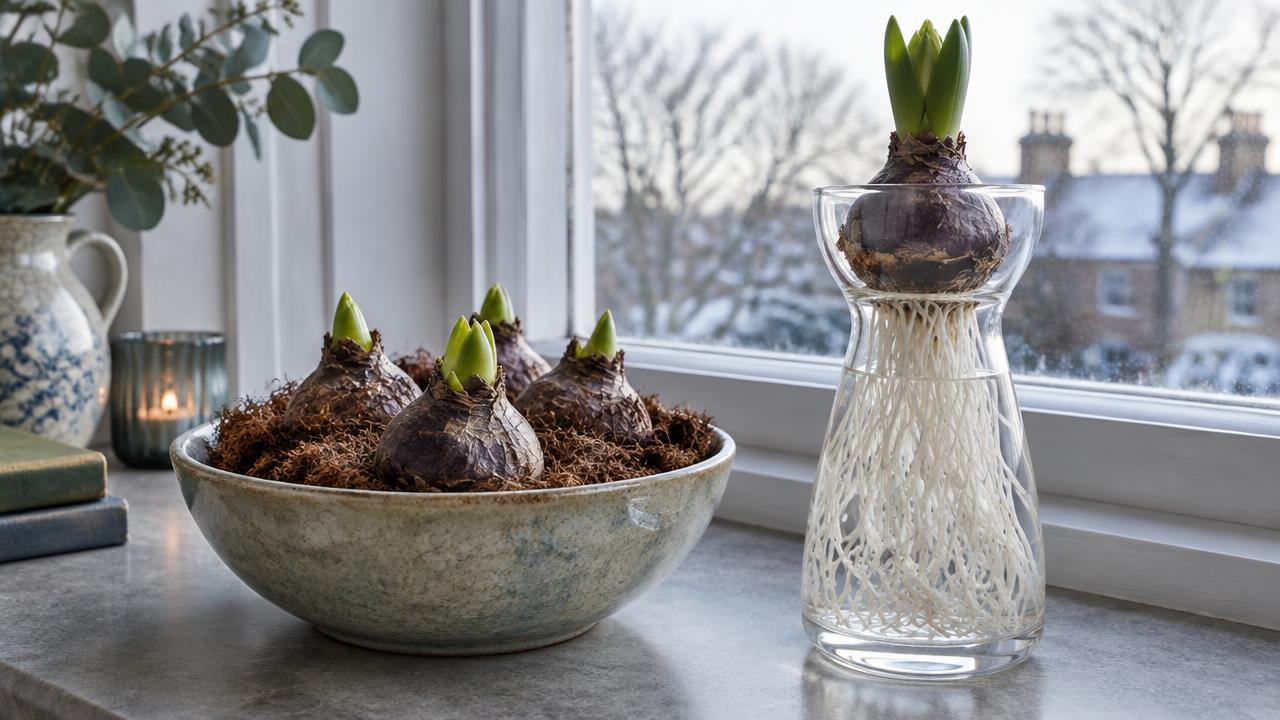
Prepared hyacinths are bulbs that have been heat-treated so they flower earlier than they would outdoors. The RHS says they should be planted in September for Christmas flowering, because they need 10 to 12 weeks for good root and shoot development. Started now, they are a pleasure to look forward to later in the winter, rather than a Christmas display.
The RHS advises wearing gloves when handling hyacinths, because they can irritate the skin. Plant them in moist bulb fibre or compost with the tops of the bulbs just showing, close together but not touching. Then they need a cool, dark period to form roots, ideally at around 9°C. The RHS suggests putting the pots in a black polythene bag in a shed or garage, or standing them outside against a north-facing wall under about 15cm of bark or compost. The spot needs to stay cool, but an unheated shed isn't automatically frost-free, so in a hard freeze, move the pots somewhere a little more sheltered. Check them every so often and water if the fibre is drying out. The RHS advises tipping bowls without drainage holes on their side for a while after watering, so the excess can run out.
Bring them in once the shoots are 4 to 5cm tall. The RHS suggests putting them in a cool room out of bright light at first, so the leaves green up, then moving them to a window. Keep them away from radiators and other direct heat. If the leaves start growing faster than the flower buds, return the pots to a cool, dark place for a day or two, but no longer. The RHS says that if the flowers open before the stalk has grown, or the stalk is too weak to stand up, the room is probably too warm.
Hyacinths can also be grown in a bulb vase. Fill it with water so the level sits just below the base of the bulb without touching it, and keep it somewhere cool and dark until the vase fills with roots and the flower stem appears. The RHS says a little charcoal in the water helps stop slime forming.
After flowering, let the leaves die back naturally, then plant the bulbs outside at a depth of twice their own height, as the RHS suggests. They can go on to flower in the garden, although forcing takes a lot out of a bulb, so the first display outdoors may be smaller, and results depend on the bulb and the conditions.
Why indoor bulbs fail
Most problems come down to warmth, timing and water. The RHS lists the most common causes as bringing bulbs out of the cool and dark too early, compost or fibre that is too wet or too dry, and a dark spot that isn't cool enough. For hyacinths especially, a warm airing cupboard is not a substitute for a cold shed or a shady wall outside.
Once bulbs are in the light, warmth is the enemy of sturdy growth. A centrally heated room above a radiator produces tall, pale, floppy stems and flowers that fade quickly. Our article on houseplants and heating explains how to find the coolest bright spots in a home. Over-watering is the other common mistake, particularly in bowls without drainage holes, so check the fibre with a finger before adding more water.
Bulbs, pets and children
Indoor bulbs are a real hazard to pets, and the bulbs are usually the worst part. Paperwhites are narcissi, and Blue Cross says daffodils are poisonous to dogs if they eat the flowers or bulbs, or drink water from a vase containing them, with the bulbs often the most poisonous part. Symptoms can include an upset stomach and vomiting, drowsiness, unsteadiness and, in some cases, seizures. Blue Cross also lists hyacinth bulbs as poisonous to dogs. For cats, Agria says the amaryllis bulb is especially dangerous, and that hyacinth bulbs or larger amounts of the plant can cause poisoning.
That makes the gravel bowl and the bulb vase as much of a risk as the bulbs themselves, so keep them out of reach of pets, including on windowsills a cat can get to, and store any loose bulbs securely until you plant them. The same care makes sense with young children. If you think a pet has eaten a bulb or drunk the water, contact a vet straight away rather than waiting for symptoms, and for a child, get medical advice promptly.
FAQ
Is it too late to plant paperwhites for Christmas?
Not necessarily. The RHS says paperwhites flower six to ten weeks after planting, so bulbs planted in early November may flower in time for Christmas, though they could just as easily open in early January.
Will prepared hyacinths planted in November flower for Christmas?
Unlikely. The RHS says prepared hyacinths should be planted in September for Christmas, because they need 10 to 12 weeks for root and shoot development. Loose bulbs planted now are more likely to flower in late January or February.
How long does an amaryllis take to flower?
The RHS gives about six to eight weeks in its growing guide, and about ten weeks in its advice on Christmas bulbs. Warmth, light and the condition of the bulb all affect the timing.
Why do my paperwhites flop over?
Paperwhites grow tall and leggy, especially in a warm room. The RHS advises supporting them. Growing them somewhere bright and cool once they are in leaf helps keep the stems shorter.
Are indoor bulbs poisonous to pets?
Yes. Blue Cross says daffodils, which include paperwhites, are poisonous to dogs, including the water from a vase, and lists hyacinth bulbs as poisonous too. Agria says amaryllis bulbs are especially dangerous to cats. Contact a vet straight away if you think a pet has eaten any.
RELATED POSTS
Robin is a small-space grower writing for everyone working with a courtyard, balcony, window box, patio or sunny sill. Edible and leafy, both kept alive in the kind of light real small spaces actually get.
✦ Free with the newsletter — the small-space starter sheet
Grow Anywhere — a free weekly email.
The Potted Club newsletter. A short note from Robin — what to sow, one plant problem solved, and the best new guide.
FREE WEEKLY EMAIL · NO SPAM · UNSUBSCRIBE ANYTIME