
The Heating's On. Are Your Houseplants in the Wrong Place?
Once the heating comes on, the spot that suited a houseplant in July may not suit it now. How radiators, cold glass, draughts and falling light change a room, and where to move things.
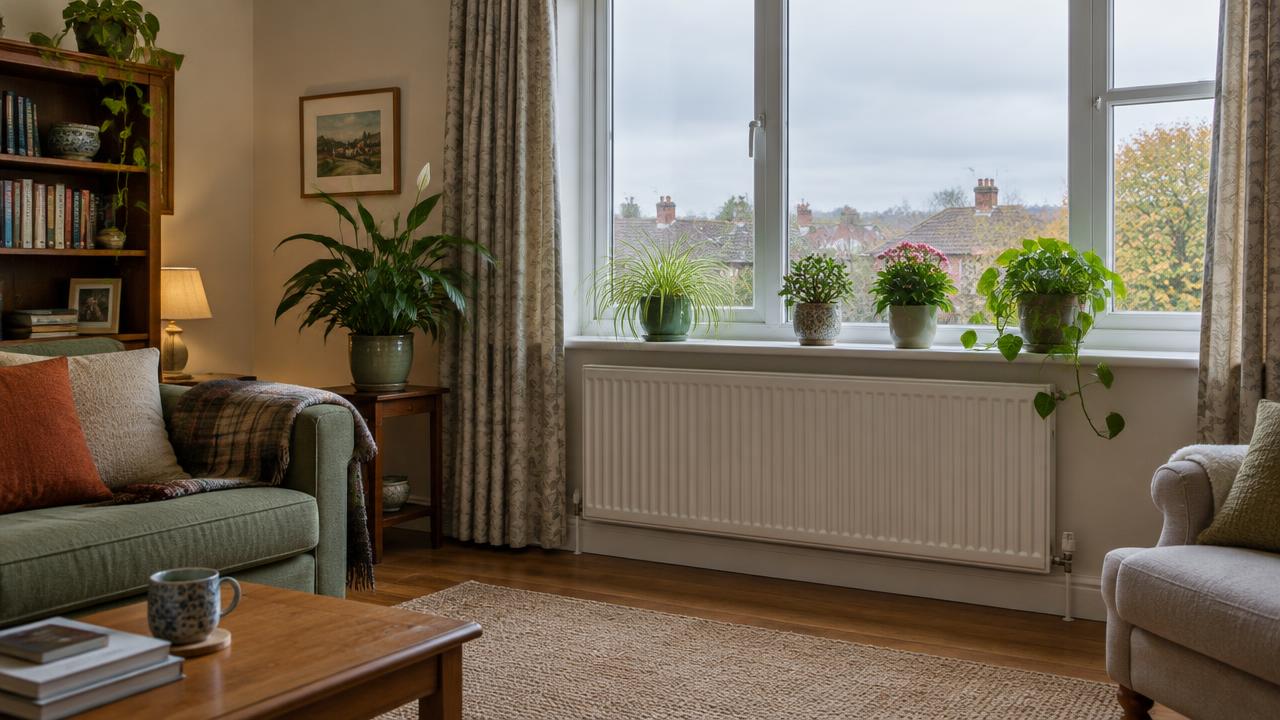
The plant has not moved since July, but the room around it has changed. Once the heating comes on, the warmest, coldest and brightest places in a house all shift, and a position that suited a houseplant in summer can be working against it by October.
What changes when the heating comes on
In summer, the positions around a room are shaped largely by daylight, ventilation and the heat coming through the windows. Once central heating starts, another variable enters the picture. Warm air rises from radiators, the glass can become cold overnight, and temperatures may change considerably between heating cycles. All of this happens while the available daylight is declining.
The RHS advises keeping houseplants away from extremes of temperature and out of draughts. Once the heating is on, the extremes turn up in exactly the places where plants tend to live, which are windowsills, mantelpieces and the shelf above the radiator.
Radiators, fires and other heat
The RHS is direct about this. Its guide to ailing houseplants lists scorched leaves as a likely result of a nearby heat source, while excess heat can make plants that prefer cool conditions wilt. Central heating also lowers humidity, which the RHS says can lead to brown tips and leaf curling.
There is a second effect, and it is easier to miss. Low winter light can produce weak, spindly growth, and a warm position does not supply the light a plant is missing. A plant kept warm may continue trying to grow at the time of year when it has least light to grow with. That is a reason to be wary of the cosiest spot in the house as well as the hottest, and of any shelf where warm air rises past the leaves.
Check the position while the heating is running, and not only when the room is cool. Is warm air rising directly through the foliage? Are leaves hanging over the radiator? Does the pot become unusually warm? If so, try moving it a short distance sideways before looking for another room. There is no universal safe distance, because the radiator, the airflow and the plant all make a difference.
Cold glass, curtains and draughts
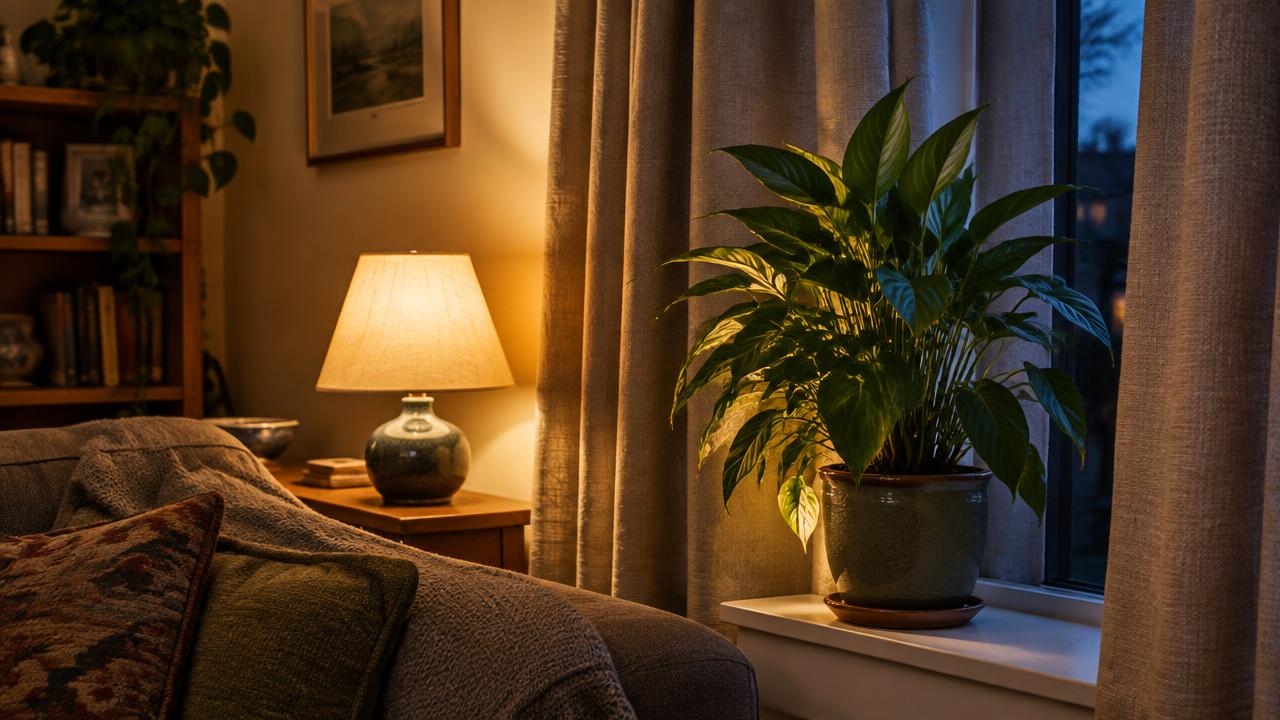
The windowsill has the opposite problem, mostly after dark. The RHS warns against leaving houseplants on windowsills behind curtains on frosty nights, especially where windows are not double glazed. There is an easy test. Close the curtains as you normally would in the evening and see where the plant ends up. If it is shut in between the fabric and the glass, the arrangement needs rethinking, either by moving the plant into the room at night or by drawing the curtain behind it.
Draughts do their own damage. They can stress tender houseplants, dry leaf edges and expose foliage to sudden drops in temperature. Yellowing or collapse has many possible causes, so do not diagnose either from position alone. The places to check are the ones that were harmless in summer, such as the hall by the front door, a windowsill above an opening window, and anywhere near a door to an unheated room.
Some plants mind more than others. The RHS advice for moth orchids is to keep them above 16°C, away from radiators and heaters and out of draughts, because they dislike fluctuating temperatures. For any plant you are unsure of, the RHS suggests checking its minimum temperature before choosing a position.
Swings matter as much as extremes
A heated house is not a steadily warm one. Most heating runs on a timer, so a room that is comfortable in the evening can be noticeably cooler by the early morning, and a plant beside a radiator or against the glass feels the widest swing of all. Sudden temperature changes can stress plants, and the RHS advises keeping sensitive plants such as moth orchids away from fluctuating temperatures.
That is worth remembering when a plant looks unhappy for no clear reason. Neither the daytime nor the night-time position may be extreme in itself. The trouble can be the distance between them.
The trade-off with light
The obvious response to all of this is to move everything into the middle of the room, and that is the wrong one. Light is falling at the same time as the heating comes on, and RHS winter advice is to move houseplants to a sunny windowsill until March where appropriate. Its houseplant troubleshooter says too little light can show as weak, spindly growth, pale leaves and lower leaves that yellow and fall. Our piece on houseplants and falling light covers that in full.
In many British rooms that creates a direct conflict, because the radiator sits under the window. The brightest place in the room is directly above the main source of heat, and next to the coldest surface at night. Moving a plant away from the radiator can mean moving it away from the light it needs more than ever.
The way through is usually a small move and not a retreat into the room. A table or stand beside the window, away from the rising heat of the radiator, may preserve useful daylight without exposing foliage to the hottest air. A windowsill with no radiator beneath it may be better still. The aim is to find enough light without dropping below the plant's minimum temperature. Neither a bright, freezing windowsill nor a warm, dark corner is a good compromise.
A walk round the house
It is worth going round with these points in mind, because each room goes wrong in its own way. The RHS covers kitchens and bathrooms. The rest of what follows is applying its principles room by room.
Living room. This is usually the warmest room, heated longest and often with the radiator under the main window. It gives the best light and the biggest swings. Look for plants directly above the radiator, beside a fire or stove, or left behind the curtains. Large plants standing on the floor by a window or balcony door deserve a look too. Floor level can be colder than a shelf, especially near a draught or poorly insulated glazing, and a stable stand sometimes improves the position if the plant still gets enough light.
Kitchen. The RHS describes kitchens as usually more humid than other rooms. Ripening fruit releases ethylene, which can shorten the life of flowers, so it is sensible to keep flowering plants away from the fruit bowl.
Bathroom. The RHS suggests bathrooms for plants that enjoy humidity. Cacti and succulents generally need drier, brighter conditions, and many bathrooms are short of light and cool between uses, so match the plant to the room rather than humidity alone.
Bedroom. Bedrooms may be cooler than living rooms, particularly overnight. That can suit some flowering houseplants, but others need consistently warmer conditions. A cooler position may suit certain plants, but it is not a general rule for every flowering houseplant. Check the minimum temperature, particularly if a window is left open overnight or curtains enclose plants on the sill.
Hall, porch and spare room. These are often the cold and draughty places. Cold damage may show as blackened leaves, drooping or collapse, so unheated rooms such as porches need particular attention over winter. A plant that spent the summer in the hall may need to come further into the house.
Reading the plant
RHS guidance links a number of symptoms to a plant's surroundings, and several point to position. They overlap, and most have other possible causes, so treat the table as a starting point for looking at where the plant is standing and not as a diagnosis.
| What you see | Possible environmental cause to investigate |
|---|---|
| Scorched or crisp leaf margins | Excess heat or direct exposure to a heat source |
| Wilting, rolling or crispy leaves | Heat stress |
| Dry leaf edges or localised damage | A draught or dry heated air |
| Blackened leaves, drooping, collapse | Cold damage |
| Crinkled or distorted leaves | Temperature stress, among other possible causes |
| Spindly growth, pale leaves, lower leaves yellowing and falling | Too little light |
The RHS also notes that winter problems often come from overwatering, poor light or dry air, so check the compost before blaming the position. Our piece on autumn watering covers that side of it.
FAQ
Can I keep a houseplant above a radiator?
It is a risky spot. A nearby heat source can scorch foliage, while dry heated air can cause brown tips and leaf curling. A stand beside the window often keeps most of the light without the direct heat.
Should I move houseplants off the windowsill in winter?
Not necessarily during the day, when they need the light. The risk is on frosty nights if a curtain traps the plant between the fabric and cold glass. Keep the plant on the room side of the curtain or move it temporarily.
Is light or warmth more important in winter?
A plant needs both. Look for the brightest suitable position that stays above that plant's minimum temperature, rather than choosing either a bright freezing sill or a warm dark corner.
READ THE FULL GUIDE
Best Indoor Plants for Beginners →
RELATED POSTS
Robin is a small-space grower writing for everyone working with a courtyard, balcony, window box, patio or sunny sill. Edible and leafy, both kept alive in the kind of light real small spaces actually get.
✦ Free with the newsletter — the small-space starter sheet
Grow Anywhere — a free weekly email.
The Potted Club newsletter. A short note from Robin — what to sow, one plant problem solved, and the best new guide.
FREE WEEKLY EMAIL · NO SPAM · UNSUBSCRIBE ANYTIME