What Kew's New Report Reveals About Changing Flowering Times
Kew analysed 8 million historic plant specimens with AI and found flowering times have shifted by 2.5 days a decade for a century. What the State of the World's Plants and Fungi 2026 report actually found, and why it matters for a small garden.
Proof, not just a feeling
Anyone who's kept a garden for more than a few years has probably had the sense that things are happening earlier than they used to. The first daffodil a little sooner each spring. A rose finished flowering before you expected. It's easy to write that off as memory playing tricks, or one unusual year standing in for a pattern.
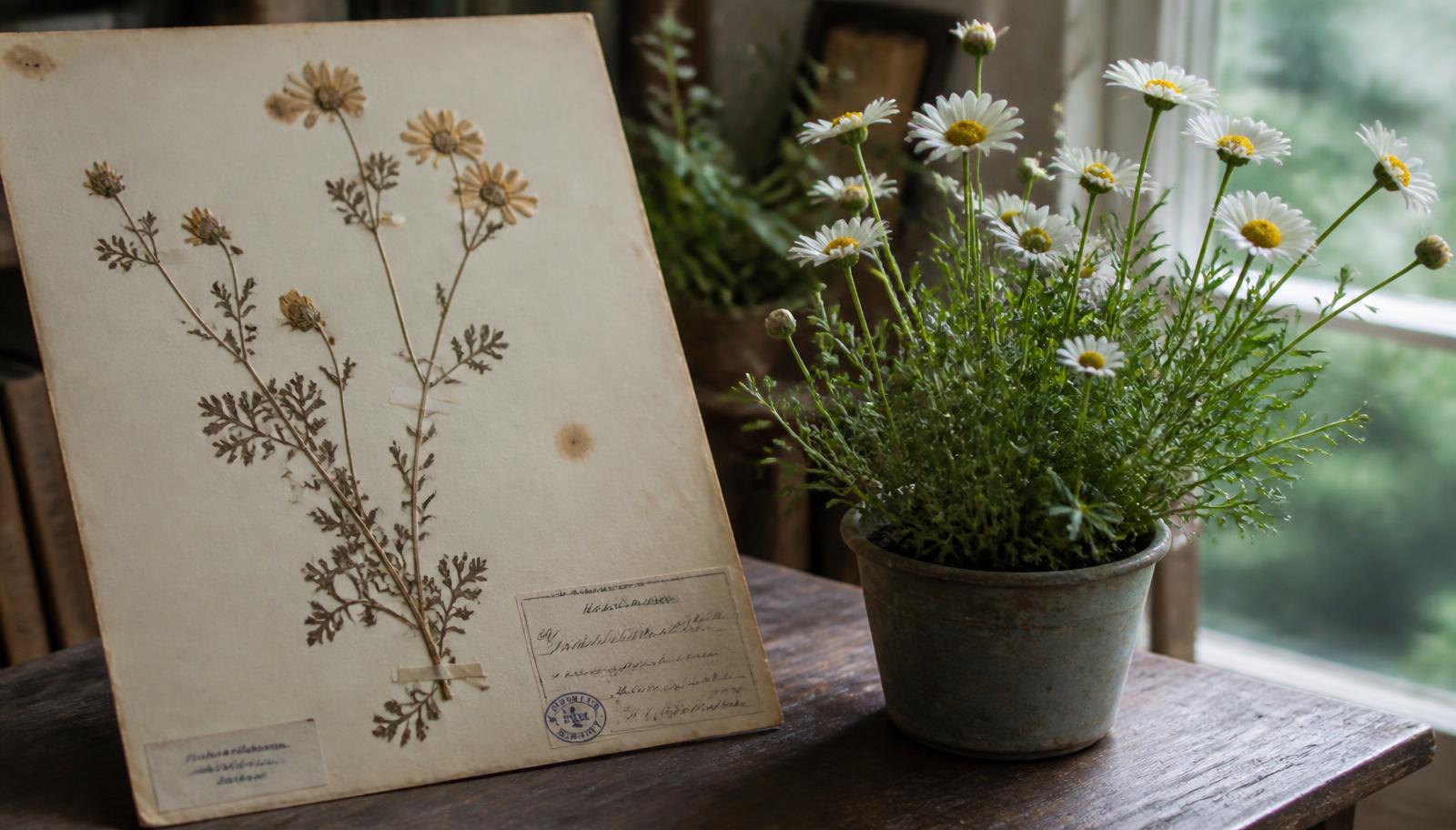
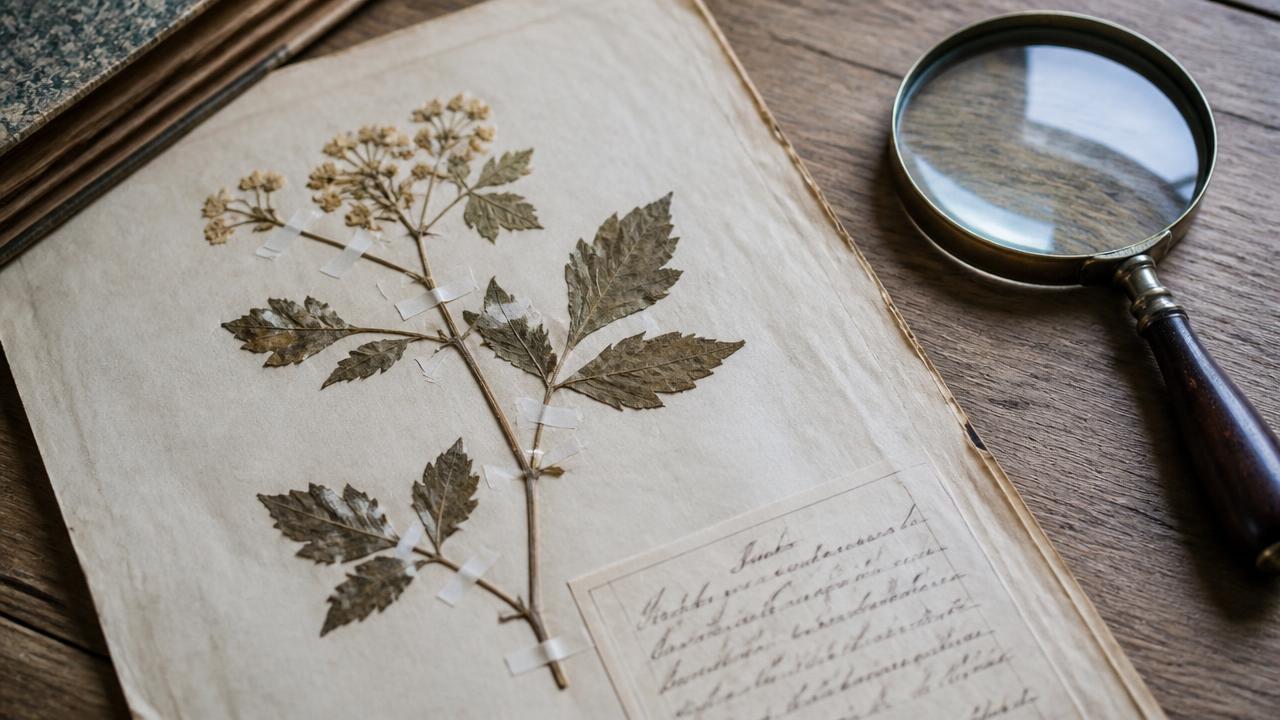
Kew's new report puts an actual number on it, and the method behind that number is genuinely elegant. Researchers used AI to analyse 8 million historic plant specimens, many of them pressed and catalogued in herbarium collections going back well over a century, cross-referencing the date each specimen was collected against the stage of flowering it was in when pressed. Do that across millions of samples spanning a hundred years, and a pattern emerges that no single gardener's memory ever could: flowering times have shifted by an average of 2.5 days per decade, with the most pronounced changes occurring in the tropics. It's described as the first global study of its kind, precisely because doing this by hand across such a vast dataset was never realistically possible before.
That's the proof-of-concept result Kew is most excited about in this year's report, and it's worth sitting with for a moment. A herbarium specimen isn't an opinion or an estimate. It's a physical plant, pressed on a specific date, that either was or wasn't in flower at that point. Multiply that by millions of specimens across a century, and you get hard, physical evidence of exactly the shift gardeners have been sensing anecdotally for years.
What the report actually is
This is the sixth in Kew's State of the World's series, marking ten years since the first edition, and it's the most collaborative yet: more than 400 scientists across over 170 institutions in 40 countries contributed. Subtitled "The Digital Biodiversity Revolution," the report's central argument is that digitisation and AI are genuinely transforming what's possible in plant and fungal science, not just making existing work faster.
Alongside the phenology finding, a few other results stand out.
Kew has finished digitising every one of the 7.4 million plant and fungal specimens in its own collection, a landmark in itself. But the report is honest about how far there is left to go globally: fewer than 16% of the world's herbarium specimens have been imaged and shared digitally, and the gaps are worst in the Global South, where a huge amount of the world's plant diversity actually exists. In Honduras specifically, digitising records revealed that around a third of species recorded from the country's own protected areas were entirely missing from its conservation management plans, a genuine, correctable gap that nobody could have spotted without the data being properly digitised and cross-referenced.
The fungal picture is arguably starker still. Fungi underpin soil health, nutrient cycling and plant life generally, in ways most gardeners rarely think about, and yet less than 1% of known fungal species have ever had a formal extinction risk assessment. The report is candid that science's attention to fungi lags a long way behind their actual importance to how ecosystems, including your own garden's soil, actually function.
Why this matters for a small garden
It would be easy to read all of this as impressive but distant, a story about global institutions and enormous datasets that has nothing to do with a courtyard or a row of pots. It doesn't feel that way once you notice how directly it connects to problems already covered on this site.
The bolting piece we wrote a few weeks ago explained that lettuce, spinach and coriander respond primarily to day length rather than temperature, which is why sowing timing matters more than most people assume. Kew's finding is the same underlying story at a much larger scale: plants are genuinely responsive to subtle shifts in seasonal timing, consistently enough that it shows up in a century of pressed specimens. If flowering times have moved measurably over a hundred years, it stands to reason that the sowing calendars, first-frost dates and "prune right after flowering" windows most gardening advice relies on are moving targets too, not fixed points that hold forever.
Practically, this is less a reason to panic and more a reason to trust what you actually observe in your own space over what a generic calendar says. If your particular patio, courtyard or windowsill consistently runs a week or two ahead of, or behind, the standard advice for your area, that's not you doing something wrong. It may simply be the same shift Kew's researchers found written across 8 million specimens, playing out in miniature on your own plants.
What comes next
Kew frames this report as a proof of concept rather than a finished picture, which is an honest way to describe it: a first demonstration that AI-assisted analysis of historic specimens can reveal genuine, measurable ecological change, with the expectation that far more will follow as more of the world's collections get digitised. Given that under a sixth of global specimens have been digitised so far, there's a great deal more of this kind of finding still waiting to be uncovered, particularly once collections from the most biodiverse, currently under-digitised regions catch up.
For anyone growing in a small space, the takeaway isn't really about the scale of Kew's operation. It's the confirmation that what you notice happening in your own pots, quietly, year on year, is part of something real and measurable, not a trick of memory.
FAQ
What is Kew's State of the World's Plants and Fungi report?
It's a major synthesis report published roughly every few years by the Royal Botanic Gardens, Kew, drawing together the work of hundreds of scientists worldwide to summarise the current state of knowledge on global plant and fungal biodiversity. The 2026 edition is the sixth in the series, marking ten years since it began.
How did researchers work out that flowering times have shifted?
By using AI to analyse millions of historic herbarium specimens, pressed plants with a recorded collection date, and cross-referencing the date against each specimen's flowering stage. Doing this across 8 million specimens revealed a consistent average shift of 2.5 days per decade over the past century.
Does this mean my local sowing calendar is now wrong?
Not wrong exactly, but worth treating as a general guide rather than gospel. Seasonal timing genuinely shifts over years and decades, and your own observations about what's actually happening in your specific space are a reasonable thing to trust alongside any standard calendar.
Why does the report focus so much on fungi?
Because fungi are enormously important to soil health, nutrient cycling and plant life generally, yet remain dramatically understudied. Less than 1% of known fungal species have ever had a formal extinction risk assessment, a gap the report argues urgently needs closing.
What does digitisation actually mean in this context?
Turning physical museum specimens, pressed plants and fungal samples often over a century old, into digital records and images that can be searched, cross-referenced and analysed at scale, including with AI tools. Kew has now digitised its entire 7.4 million-specimen collection, though the global picture is far less complete.
RELATED POSTS
Robin is a small-space grower writing for everyone working with a courtyard, balcony, window box, patio or sunny sill. Edible and leafy, both kept alive in the kind of light real small spaces actually get.
✦ Free with the newsletter — the small-space starter sheet
Grow Anywhere — a free weekly email.
The Potted Club newsletter. A short note from Robin — what to sow, one plant problem solved, and the best new guide.
FREE WEEKLY EMAIL · NO SPAM · UNSUBSCRIBE ANYTIME