HOME / GUIDES / GETTING STARTED
Feeding Plants: What They Actually Need
What NPK actually means, which feed to use and when, why containers need feeding and open ground mostly doesn't, and the honest signs of both underfeeding and overfeeding, including the Mediterranean plants that want far less than you'd think.
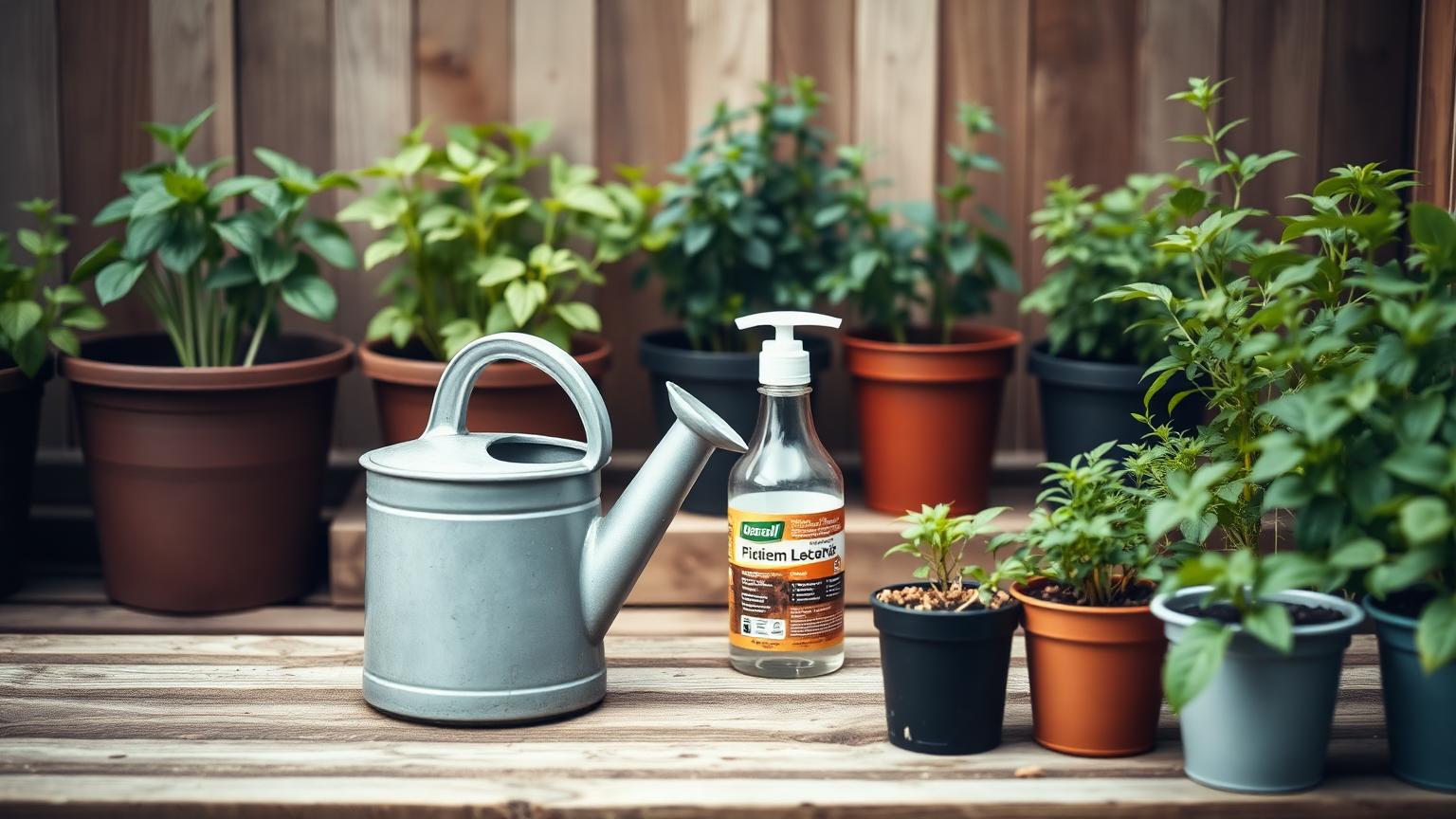
Why feeding matters
Plants build themselves out of nutrients drawn from the soil, principally nitrogen, phosphorus and potassium, alongside a handful of trace elements. In open ground, that supply largely renews itself: leaves fall and rot down, worms and soil microbes cycle nutrients back into circulation, and rain slowly releases minerals from the soil structure. A well-established border can go years with only an occasional mulch or feed and stay healthy.
A container has none of that renewal. As covered in our guide to container growing fundamentals, a pot is a closed system: whatever nutrients were in the compost when you bought it are largely used up within about six weeks, either taken up by the plant or washed out through the drainage holes every time you water. After that point, an unfed container plant is running on empty, and it shows: slower growth, paler leaves, fewer flowers, weaker resistance to pests and stress.
So feeding isn't an optional extra for most container growing. It's the substitute for the nutrient cycle that open ground provides for free.
NPK explained plainly
Every bottle or bag of plant feed carries three numbers, usually written as something like 10-10-10 or 5-5-10. These stand for the percentage of nitrogen (N), phosphorus (P) and potassium (K) the feed contains, always in that order. Understanding roughly what each one does turns those numbers from a meaningless code into something you can actually choose between.
Nitrogen (N) drives leafy, green growth. It's what makes lettuce lush, lawns green, and foliage plants put on fresh leaves. Too much nitrogen relative to the other two, though, gives you a plant that's all leaf and little else: lots of soft green growth, but weak flowering and poor disease resistance, since that soft growth is exactly what pests and fungal problems find easiest to attack.
Phosphorus (P) supports root development and overall plant establishment. It matters most when a plant is young, newly transplanted, or building a root system, which is why seed composts and rooting feeds tend to be phosphorus-heavy relative to the other two.
Potassium (K), sometimes labelled potash, drives flowering, fruiting, and general plant hardiness. This is the number to look for on anything you want flowers or fruit from: tomatoes, roses, most flowering ornamentals. A high-potassium feed (tomato feed is the classic example) pushes energy toward blooms and fruit rather than leaf.
A balanced, general-purpose feed has roughly equal numbers across all three and suits most everyday growing. A specialised feed skews toward whichever nutrient matches its job: high-nitrogen lawn feed, high-potassium tomato feed, root-boosting feed for new plantings. The RHS guide to fertilisers is a solid deeper reference if you want the chemistry in more detail.
Types of feed
Beyond the NPK ratio, feeds also differ in form, and each form suits a different rhythm of gardening.
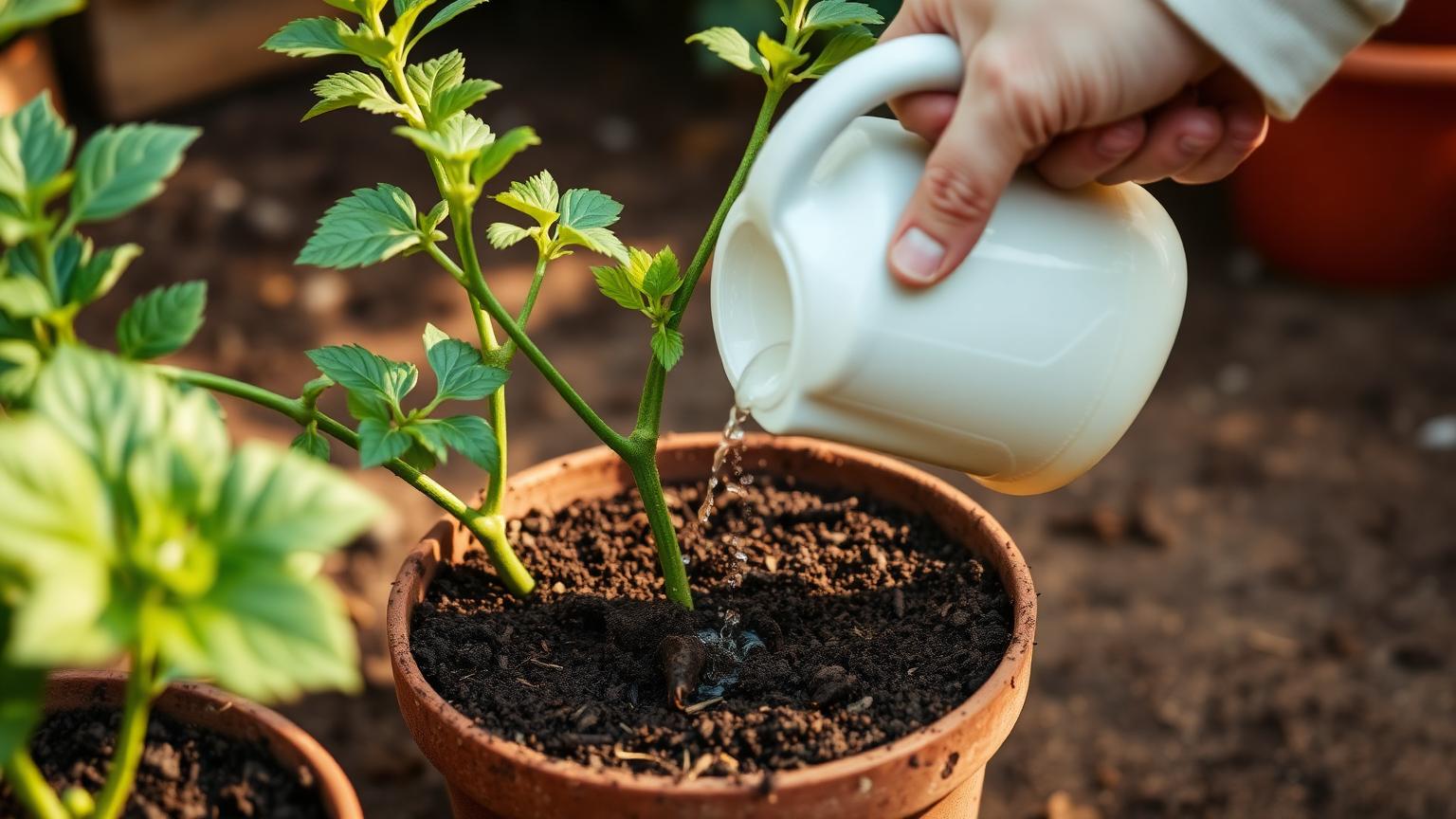
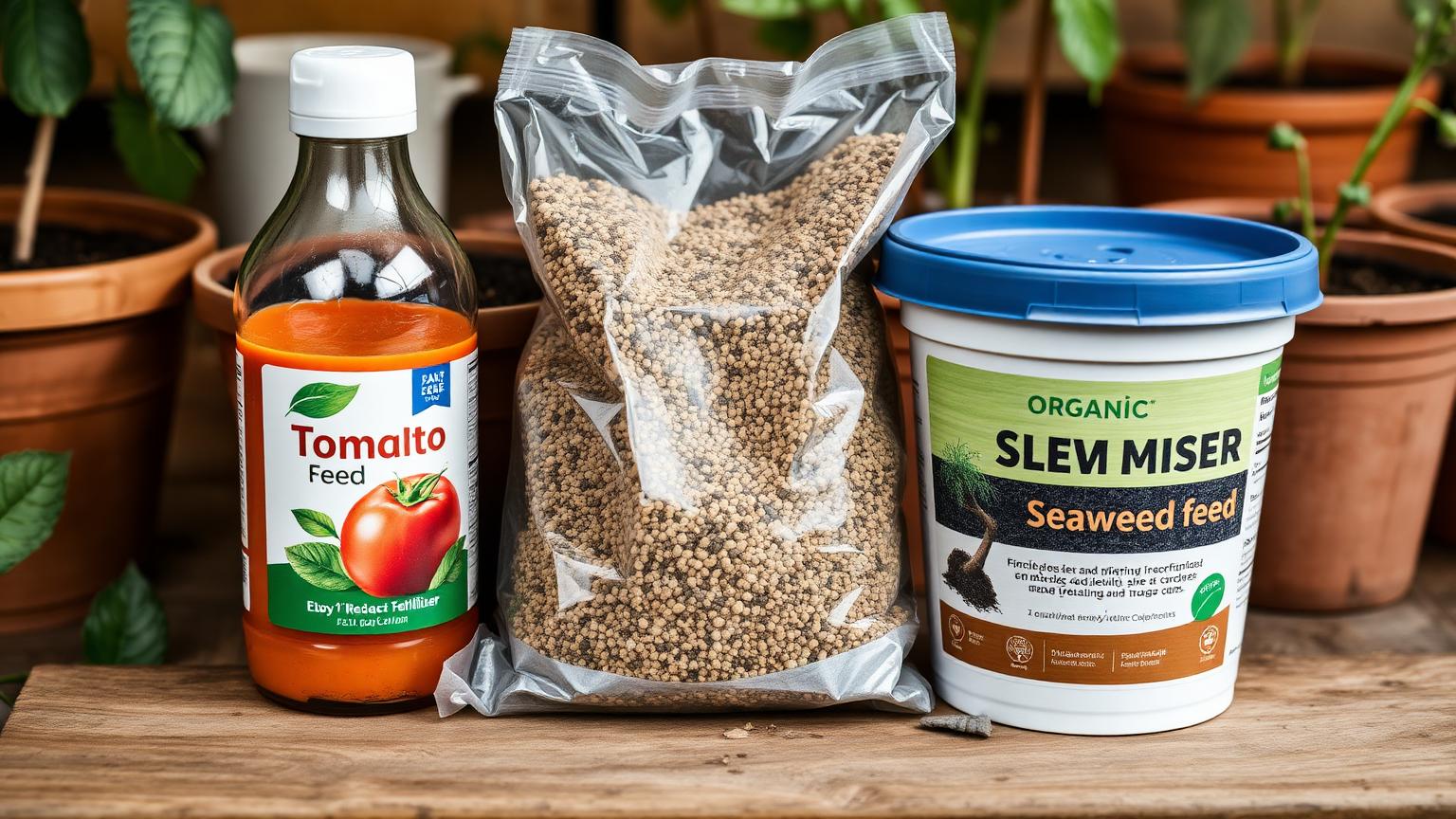
Liquid feed is diluted in water and applied directly to the compost, usually every week or fortnight through the growing season. It's fast-acting, easy to control the dose, and the simplest way to feed containers regularly. The downside is that it needs remembering; nothing happens automatically.
Granular feed is scattered on the soil surface or worked in, releasing nutrients gradually as it breaks down or dissolves with watering. Useful for open-ground beds and borders, and for a single seasonal top-up rather than an ongoing routine.
Slow-release feed (often small pellets or a coated granular form) is mixed into compost at planting time and releases nutrients steadily over several months. Genuinely useful for anyone who reliably forgets to feed, and a sensible default for container plantings you won't want to fuss over weekly.
Organic feeds (seaweed feed, comfrey feed, well-rotted manure, blood fish and bone) tend to release nutrients more slowly and gently than synthetic equivalents, feed soil biology as well as the plant directly, and are harder to seriously overdose a plant with. They're generally lower in concentrated nutrients per dose, so you may need to feed slightly more often to match a synthetic feed's effect.
Synthetic feeds are more concentrated and precisely formulated, act faster, and are easier to overdo if you're not careful with dilution rates. Neither type is inherently better; the choice is largely about gardening philosophy and how forgiving you want the margin for error to be.
What to feed, and when
Different plant categories want quite different feeding regimes. This table is the one to bookmark.
| Plant type | What it wants | How often |
|---|---|---|
| Leafy houseplants (pothos, ferns, foliage plants) | Balanced or nitrogen-leaning liquid feed | Fortnightly through spring and summer, none in winter |
| Flowering houseplants and ornamentals | Balanced feed while growing, potassium-leaning as buds form | Fortnightly through the growing season |
| Tomatoes, peppers, chillies, courgettes | High-potassium feed (tomato feed) once flowering starts | Weekly once flowers appear, none before that |
| Leafy salad and herb crops (lettuce, basil, chard) | Balanced or nitrogen-leaning feed | Fortnightly through active growth |
| Roses and flowering shrubs | Balanced or potassium-leaning feed, plus a spring granular feed | Spring feed, then liquid fortnightly through flowering |
| Container trees (patio fruit, citrus) | Balanced feed spring to late summer | Every 2–3 weeks through the growing season |
| Acid-loving plants (camellias, rhododendrons, azaleas, blueberries, ericaceous-compost plants) | Feed specifically formulated for ericaceous plants | Every 2–4 weeks through the growing season |
| Lawns | High-nitrogen lawn feed in spring, potassium-leaning in autumn | Two to three applications a year, not a constant routine |
| Mediterranean and drought-tolerant plants (lavender, olives, rosemary, thyme) | Little to none | See below |
Lavender, olives and the Mediterranean exception
This is worth its own section, because it runs against the instinct that more feed is always better, and it's a genuine, common mistake.
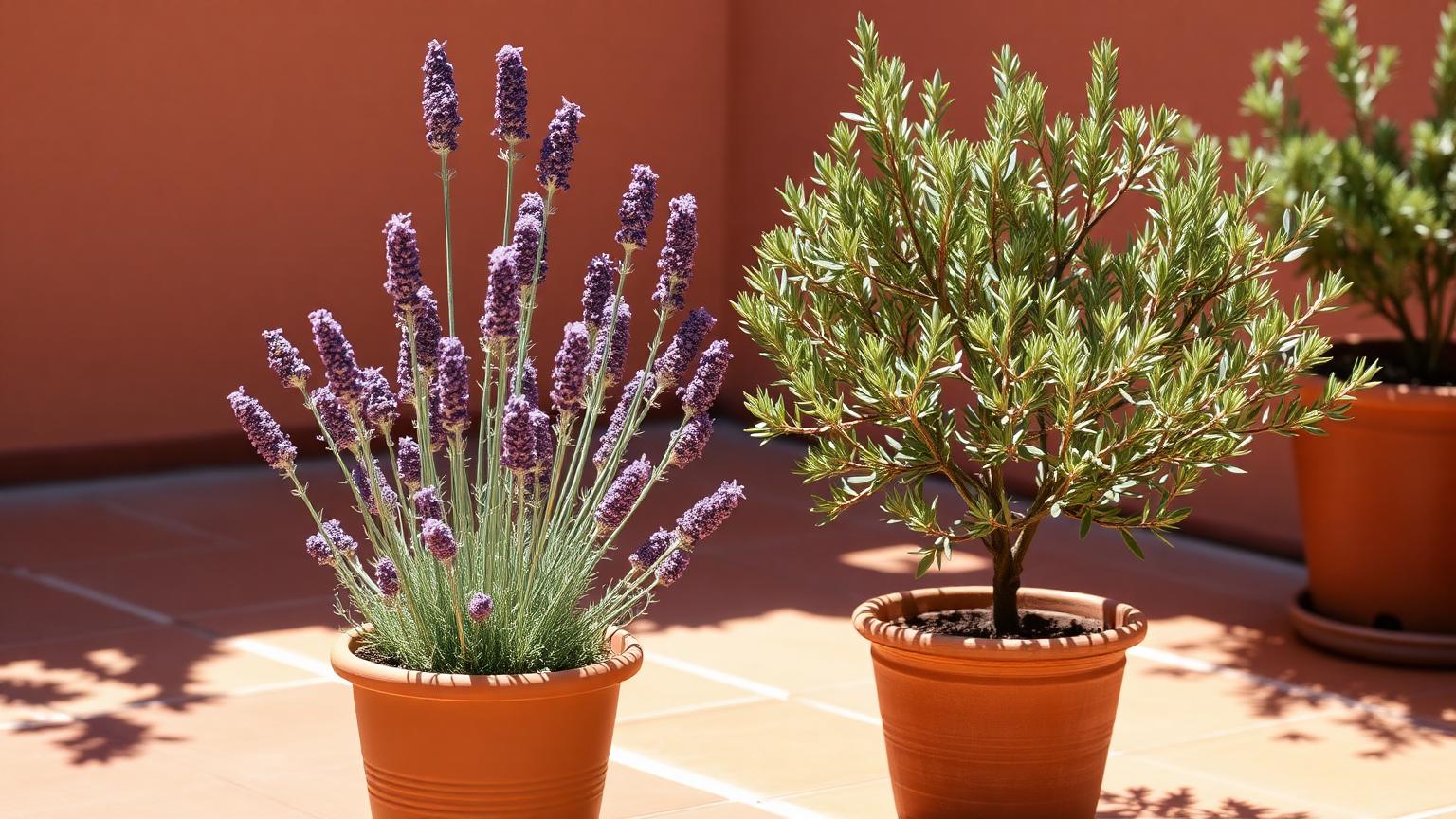
Lavender, olives, rosemary, thyme, and most other Mediterranean herbs and shrubs evolved in poor, free-draining, low-nutrient soil, and they're genuinely adapted to thrive on very little. Feeding them the way you would a hungry tomato plant does the opposite of what you'd want: it produces soft, leggy, overly lush growth at the expense of the tight, woody, compact habit that keeps these plants healthy, and it measurably reduces flowering in lavender and fruiting quality in olives. Lavender fed too richly grows floppy and sparse-flowering rather than dense and abundant; an over-fed olive puts energy into soft leafy growth rather than the fruit and oil production it's actually grown for. The RHS lavender guidance is worth a read if you want confirmation on how modest their needs really are.
The practical advice: skip regular feeding for lavender and rosemary in the ground almost entirely, since garden soil generally has more than enough for their modest needs. In a container, where nutrients do eventually run out, a very light feed once a year in spring, at roughly half the usual dilution, is plenty. For olive trees in pots, a dilute balanced feed a couple of times through the growing season is reasonable, but resist the urge to feed heavily or often; a lean olive is a healthier, better-fruiting olive than a lushly fed one.
If in doubt with any Mediterranean plant, underfeed rather than overfeed. These are among the very few plants where genuinely doing nothing is closer to correct than following a standard feeding schedule.
Container vs open ground: the real difference
As covered in our container fundamentals guide, this distinction matters more than almost anything else in feeding decisions. A container has a fixed, exhaustible nutrient supply that you're entirely responsible for; open ground has an ongoing, self-renewing supply that you're only supplementing.
Practically, this means: container plants need a regular feeding routine through the growing season, roughly every one to four weeks depending on the plant, because there's genuinely nothing else replenishing what's used up. Open-ground plants, once established, often need only an annual spring feed or an occasional mulch of well-rotted organic matter, since the soil itself is doing most of the ongoing work. A newly planted border still benefits from feeding in its first year or two while it establishes, but a mature, healthy bed of shrubs and perennials usually needs very little beyond that.
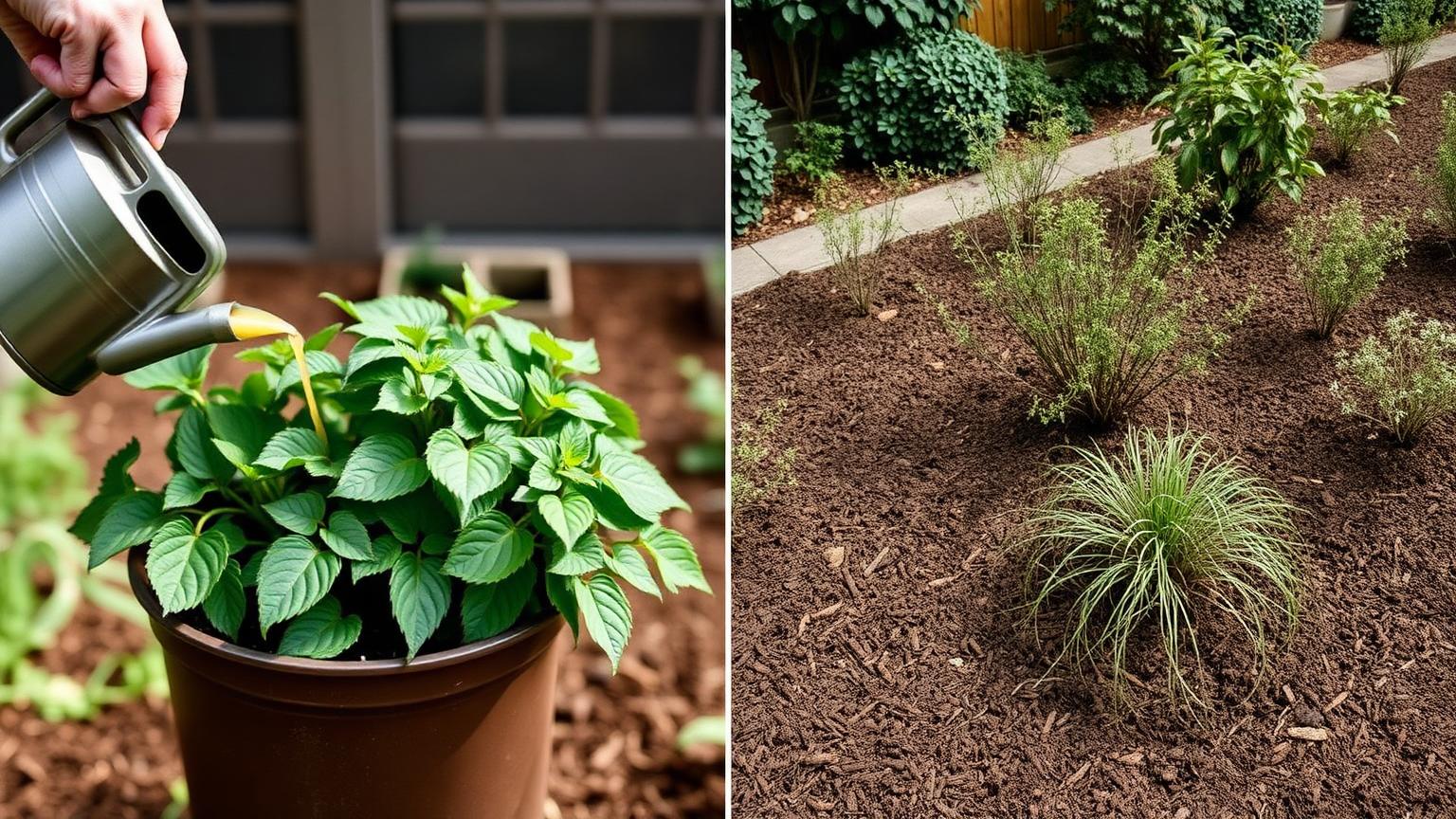
Signs of underfeeding
A plant running low on nutrients shows fairly recognisable patterns, and knowing which nutrient is likely missing points you to the right fix.
| Symptom | Likely deficiency | What to do |
|---|---|---|
| Pale, yellowing leaves, especially older/lower ones, slow overall growth | Nitrogen | Switch to a nitrogen-leaning or balanced feed |
| Stunted growth, weak or sparse root system, poor establishment in young plants | Phosphorus | Use a feed with a higher middle number, or a rooting feed |
| Few or no flowers, weak stems, poor fruit set despite healthy leaves | Potassium | Switch to a potassium-leaning feed (tomato feed is the classic example) |
| Yellowing between leaf veins while veins stay green, particularly on acid-loving plants in the wrong soil | Iron or trace element deficiency, often linked to incorrect pH | Use an ericaceous or iron-supplement feed; check the plant is in the right compost |
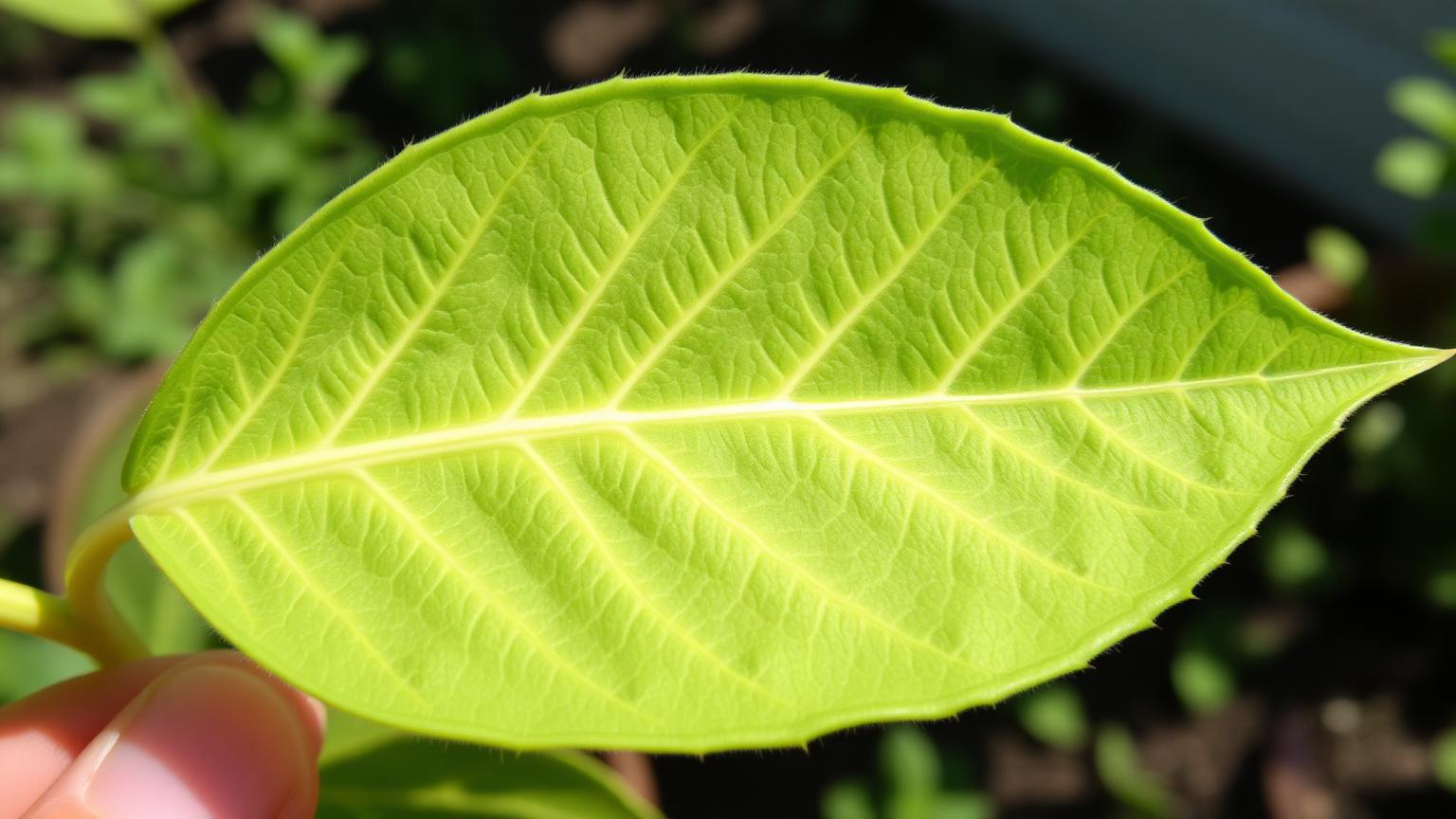
Signs of overfeeding
This is the side most feeding advice skips, and it's genuinely just as common a mistake as underfeeding, particularly with container plants where it's tempting to feed "just in case."
| Symptom | What's happening | What to do |
|---|---|---|
| Excessive soft, leggy, floppy growth with weak stems | Too much nitrogen relative to the plant's needs | Stop feeding, let the plant use up its reserves, resume at a lower dose or lower frequency |
| Fewer flowers than expected on a plant that's clearly growing vigorously | Nitrogen overload suppressing flowering in favour of leaf | Switch to a potassium-leaning feed and reduce frequency |
| A white, crusty build-up on the compost surface or pot rim | Salt build-up from repeated feeding without enough plain watering in between | Flush the pot thoroughly with plain water, then resume feeding at a lower rate |
| Scorched, browning leaf edges shortly after feeding | Feed applied too concentrated, or applied to dry compost | Always water before feeding a dry pot, and check dilution rates carefully |
| Leggy, sparse-flowering lavender or floppy, soft-leaved olive | Overfeeding a Mediterranean plant that wants very little | Stop feeding entirely for a season and let the plant settle |
The salt build-up issue is worth calling out specifically for containers: because feed is dissolved in water and a pot's drainage is limited, repeated feeding without occasional thorough watering to flush the compost can leave mineral salts accumulating in the compost, eventually damaging roots. Watering thoroughly between feeds, so some water genuinely runs through and out of the drainage holes, prevents this — the same rhythm covered in how to water your plants properly.
Common mistakes
Feeding a stressed or dormant plant. As covered in our pieces on heat-stressed houseplants and small-space plants to cut back now, feeding asks a plant to put energy into new growth at exactly the moment it has the least spare capacity to do so. A wilting, heat-stressed, or newly repotted plant should be left to recover before any feed is applied, not fed in the hope of reviving it faster.
Feeding instead of watering. A plant that looks unwell is far more often thirsty, waterlogged, or heat-stressed than it is short of nutrients. Check watering and growing conditions before reaching for the feed bottle; feeding a plant that's actually struggling with water is unlikely to help and can make things worse.
Feeding at full strength on a whim. Always follow the dilution rate on the packaging. "A bit stronger, just in case" is one of the most common ways a plant ends up with scorched roots rather than a growth boost.
Feeding right through winter. Most plants, indoors and out, are dormant or resting through winter and using very little in the way of nutrients. Feeding then mostly just builds up unused salts in the compost or forces weak, out-of-season growth. Stop feeding as growth slows in autumn and resume as new growth appears in spring.
Treating all plants the same. As the Mediterranean section above makes clear, more feed isn't universally better. Match the feed, and the frequency, to what the specific plant actually wants.
FAQ
How often should I feed my container plants?
Roughly every one to four weeks through the growing season, depending on the plant. Hungry, fast-growing edibles like tomatoes want weekly feeding once they start flowering; most ornamentals and houseplants are happy fortnightly; slow-growing Mediterranean shrubs want very little at all.
What does NPK mean on a fertiliser label?
Nitrogen, phosphorus and potassium, always listed in that order as three numbers. Nitrogen drives leafy growth, phosphorus supports roots and establishment, and potassium drives flowering and fruiting.
Do I need to feed plants in open ground?
Much less than container plants, and often barely at all once a border is established. A spring feed or an annual mulch of well-rotted organic matter is usually enough for mature, healthy open-ground planting.
Should I feed lavender or olive trees?
Very little, if at all. These Mediterranean plants are adapted to poor soil and grow best lean. Overfeeding produces soft, leggy growth and reduces flowering in lavender and fruiting quality in olives. A light annual feed at half the normal dose is plenty for container-grown specimens.
Can you overfeed a plant?
Yes, and it's a genuinely common mistake. Overfeeding causes weak, leggy growth, scorched roots, salt build-up in containers, and can actually reduce flowering and fruiting rather than improve it.
What's the difference between organic and synthetic feed?
Organic feeds (seaweed, comfrey, manure, blood fish and bone) release nutrients more slowly, feed soil biology, and are harder to seriously overdose. Synthetic feeds are more concentrated, act faster, and require more careful attention to dilution rates to avoid overfeeding.
Should I feed a plant that looks unwell?
Not automatically. Check watering and growing conditions first; a struggling plant is far more often thirsty, waterlogged, or stressed by heat or cold than short of nutrients, and feeding a stressed plant can make things worse rather than better.
Why is there a white crust on my pot or compost surface?
That's usually a build-up of mineral salts from repeated feeding without enough plain watering in between to flush the compost. Water thoroughly through the pot to flush it out, then resume feeding at a slightly lower rate.
FURTHER READING
- Getting Started
Container Growing Fundamentals
- Getting Started
How to Water Plants Properly
- Getting Started
Soil and Compost pH, Explained
Robin is a small-space grower writing for everyone working with a courtyard, balcony, window box, patio or sunny sill. Edible and leafy, both kept alive in the kind of light real small spaces actually get.
✦ Free with the newsletter — the small-space starter sheet
Grow Anywhere — a free weekly email.
The Potted Club newsletter. A short note from Robin — what to sow, one plant problem solved, and the best new guide.
FREE WEEKLY EMAIL · NO SPAM · UNSUBSCRIBE ANYTIME