Why Your Lettuce, Spinach and Coriander Keep Bolting
It's not just the heat. Why lettuce, spinach and coriander suddenly shoot up and flower, why some crops do it because of day length rather than temperature, and what to actually do about it.
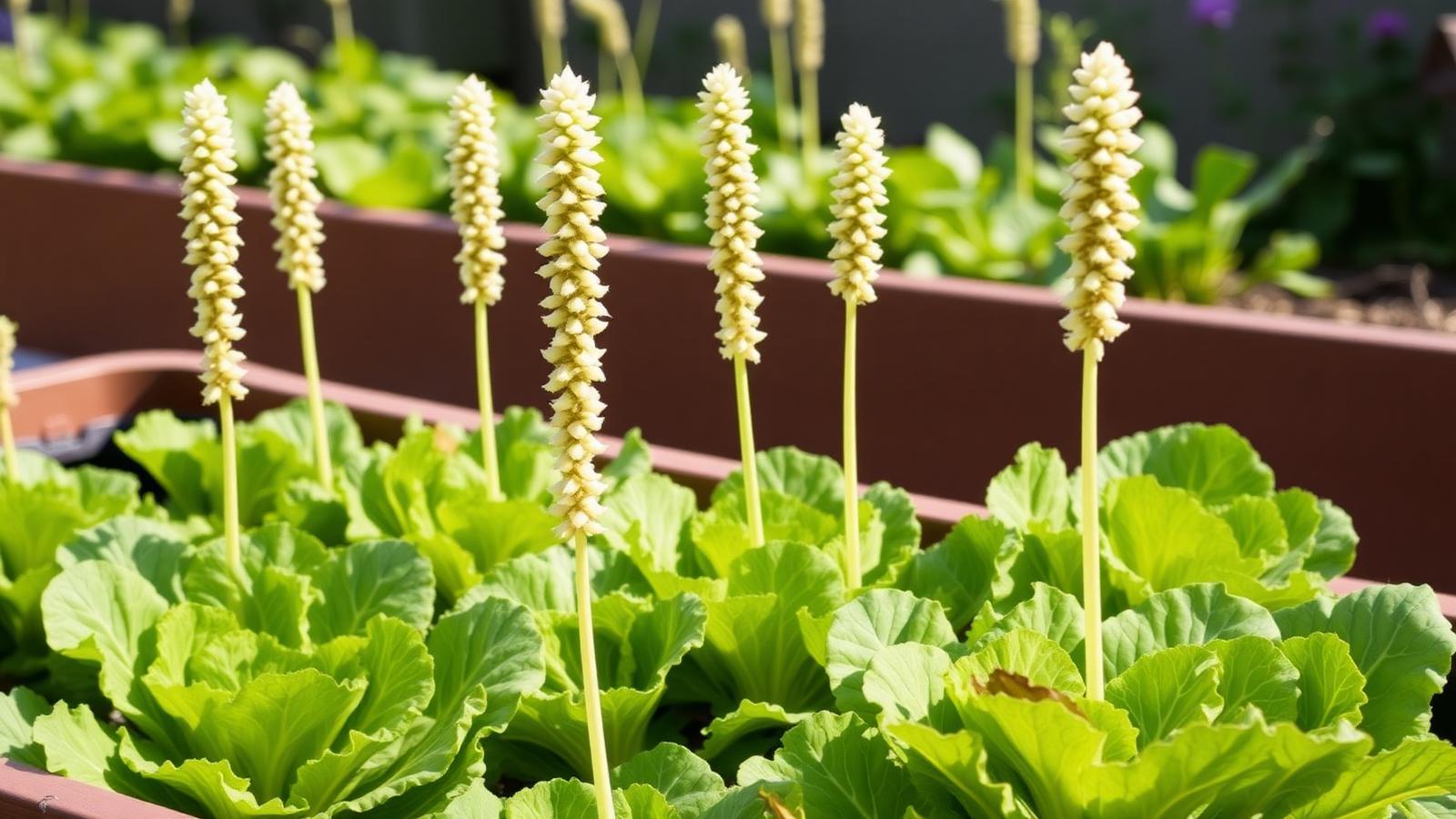
It isn't just the heat
The standard explanation for bolting is "it got too hot," and that's true often enough that it's become the whole story. It isn't the whole story, and knowing the difference actually changes what you do about it.
Bolting is when a plant abruptly stops producing leaves and switches to producing a flower stem, then seed. For a lettuce or a spinach plant, this usually shows up as the centre of the rosette suddenly elongating into a tall, thin stem, with new leaves growing small and clinging tightly to it rather than spreading out. Once that shift has properly started, it's genuinely too late to stop; the plant has made its decision and the leaves that follow turn bitter and the texture coarsens. So the honest goal here is prevention and delay, not a fix once it's underway.
What actually triggers that decision depends enormously on which plant you're growing, and there are at least two distinct mechanisms at play, plus a couple of things that make either one worse.
Trigger one: day length, not temperature
This is the genuinely underappreciated part. Lettuce, spinach, and coriander are what's called long-day plants: they're genetically wired to switch into flowering mode once the number of daylight hours passes a certain threshold, largely independent of how hot it actually is.
That's why a lettuce sown in late spring can bolt within weeks even during a relatively mild June, while the same variety sown in early spring or in late summer, when days are shorter, will happily sit leafy for far longer. The plant is reading the clock, not the thermometer. It's also why shading a bolting lettuce from the sun often does very little to stop it: you can cool the plant down without changing the one thing it's actually responding to, which is day length.
Coriander is a particularly clear example. Sow it in June, at the longest days of the year, and it will often bolt within three weeks. Sow the same seed in August, as days shorten again, and it will frequently stay leafy for considerably longer, in broadly similar temperatures. Same seed, same soil, same gardener; the difference is almost entirely the calendar.
Spinach behaves the same way, and radish (some cultivars more than others) shows a milder version of the same pattern. The RHS guidance on bolting covers the day-length mechanism in more depth if you want to read further.
Trigger two: a false winter (vernalisation)
Onions, carrots, beetroot, and several brassicas work on a completely different clock. These are biennials: in a normal life cycle, they spend their first year building up leaves and a root or bulb, experience a proper winter, and only flower in their second year, once they've registered that they've been through the cold.
The problem arises when a young plant, still in its first year, experiences a cold snap (commonly a spell below around 10°C) followed by a sudden return to warmth. The plant reads that as "I've had my winter," and switches into flowering mode there and then, months earlier than it should, well before it's built up a usable root or bulb. This is why an unseasonably cold, unsettled spring followed by a sudden warm spell is often followed a few weeks later by a rash of bolted carrots, beetroot and overwintered onions. It has nothing to do with the current heat at all; the trigger happened weeks or months earlier.
Brassicas can show a related but distinct problem called buttoning, where cold-stressed young plants form tiny, underdeveloped heads rather than full ones. Not the same mechanism as bolting exactly, but the same underlying cause: a young plant misreading a cold snap as the end of its first year.
What makes either trigger worse
Once a plant is genetically primed to bolt by day length or by a false winter, a few additional stresses accelerate the process and bring it on faster or more severely:
- Dry soil. Drought stress is a genuine accelerant, particularly for cauliflower, rocket and spinach. Consistent watering measurably delays bolting in these crops even when the underlying day-length or vernalisation trigger is already in play.
- Overcrowding or root disturbance. Transplanting shock, particularly for crops that dislike having their roots disturbed, pushes a stressed plant toward bolting faster.
- Genuinely extreme heat. Even for a long-day plant whose main trigger is daylight, sustained high temperatures add stress on top, and can bring bolting on somewhat earlier than day length alone would.
What actually helps
Given that bolting can't be reversed once it starts, everything useful happens before the fact.
- Choose bolt-resistant varieties. Plant breeders have specifically selected slow-bolt cultivars of lettuce, spinach and coriander that tolerate longer days and warmer conditions considerably better than older varieties. Look for "slow-bolt," "bolt-resistant," or "heat-tolerant" on the seed packet. 'Boltardy' beetroot is a well-known bolt-resistant cultivar bred specifically for this problem.
- Time your sowing to avoid the longest days. For lettuce, spinach and coriander in particular, sowing in early spring or from late summer onwards, rather than right at the summer solstice, avoids the peak day-length trigger almost entirely. This is the single most effective thing you can do for these three crops specifically — see what to plant in pots in July for the crops that actually suit high summer instead.
- Succession sow, little and often. Rather than one large sowing that all bolts together, sow a small batch every couple of weeks. Some plants will inevitably bolt sooner than others, but you'll always have a productive batch coming through rather than losing the whole crop at once.
- Water consistently. Particularly for cauliflower, rocket and spinach, even watering makes a genuine difference to how long a crop stays productive before bolting takes over. See our guide to how to water plants properly for the technique, and container growing fundamentals if you're growing in pots where drying out happens fastest.
- Avoid unnecessary root disturbance. Where a crop resents transplanting, sow it directly where it's going to grow rather than starting it elsewhere and moving it later.
For overwintered onions specifically, a nitrogen-rich topdressing in January can help suppress bolting that would otherwise be triggered by the winter cold they've already experienced.
Harvest young and often. Baby leaf lettuce, spinach and rocket, picked regularly while young, gives you a usable crop before bolting has a chance to set in, rather than waiting for a full head to mature.
What to do once it's bolted
If you've missed the window and a plant is already sending up its flower stem, a few things are still worth doing rather than pulling it out immediately.
- Harvest whatever's still usable straight away. Leaves already present are often still edible, if increasingly bitter, right up until the flower stem is well advanced.
- Consider leaving some to flower on purpose. Bolted coriander and rocket produce flowers that pollinators genuinely love, and letting a few plants go to seed at the end of a succession-sown row is a reasonable trade for the pollinator benefit, particularly in a small space where every flowering plant helps.
- Save the seed. A fully bolted plant that's set seed gives you free seed for next year's sowing, assuming it wasn't an F1 hybrid variety (which won't come true from seed).
- Pull it and resow. Given that the plant has finished its productive life either way, replacing a bolted plant with a fresh succession sowing, ideally of a bolt-resistant variety, is often the most useful response.
If basil is the crop giving you trouble, its bolting behaviour is a bit different — see how to keep basil alive on a windowsill for the specifics.
A note on hot and tropical climates
If you're in a genuinely hot or tropical climate, the day-length trigger still applies since it's about your local hours of daylight, but the accelerant effect of heat and drought stress will be considerably stronger and more constant. Bolt-resistant varieties and consistent watering matter even more in that context, and timing sowings around your own local daylight patterns, rather than assuming the UK's calendar applies, is worth doing.
FAQ
Why did my lettuce bolt even though it wasn't that hot?
Lettuce is a long-day plant, meaning it responds primarily to hours of daylight rather than temperature. A mild but long June day can trigger bolting just as effectively as a genuine heatwave, which is why it can catch people out even in a relatively cool summer.
Can I stop a plant from bolting once it's started?
No, not once the flower stem has genuinely started to elongate. The plant has switched from leafy growth to reproduction and that shift isn't reversible. Prevention through timing, variety choice and consistent watering is the only real lever available.
Is bolted lettuce or spinach safe to eat?
Yes, it's safe, just increasingly bitter and coarser in texture as the flower stem develops. Harvest what you can as soon as you notice bolting starting, since quality declines quickly from that point.
Why do my carrots or onions bolt even though it isn't hot at all?
These are biennials that flower in response to having experienced a cold snap followed by warmth, a process called vernalisation, rather than to heat or day length. A cold, unsettled spring followed by sudden warmth is the classic trigger, and it can happen weeks before you actually notice the bolted flower stem.
Does shading my lettuce stop it bolting?
Only partially. Shading reduces heat stress, which is a real accelerant, but it doesn't change day length, which is the primary trigger for lettuce, spinach and coriander. Timing your sowing to avoid the longest days is considerably more effective than shading alone.
What's the difference between bolting and buttoning?
Bolting is a plant switching prematurely into flowering. Buttoning is a related problem specific to brassicas, where young plants that experience cold stress form tiny, underdeveloped heads rather than full ones. Different symptom, same underlying cause: a young plant misreading a cold spell as the end of its first year.
Which crops are most prone to bolting?
Lettuce, spinach, coriander, rocket and some radish varieties are the classic long-day bolters. Onions, carrots, beetroot and some brassicas bolt via the cold-then-warmth mechanism instead. Basil can also bolt in response to heat and stress, though its trigger is less strictly tied to day length than lettuce or spinach.
RELATED POSTS
Robin is a small-space grower writing for everyone working with a courtyard, balcony, window box, patio or sunny sill. Edible and leafy, both kept alive in the kind of light real small spaces actually get.
✦ Free with the newsletter — the small-space starter sheet
Grow Anywhere — a free weekly email.
The Potted Club newsletter. A short note from Robin — what to sow, one plant problem solved, and the best new guide.
FREE WEEKLY EMAIL · NO SPAM · UNSUBSCRIBE ANYTIME