Why Is Your Lawn Suddenly Full of Weeds?
Drought has left many lawns thin just as weeds are becoming conspicuous. Here's what the common ones mean, how to remove them, and why filling the gaps matters most.
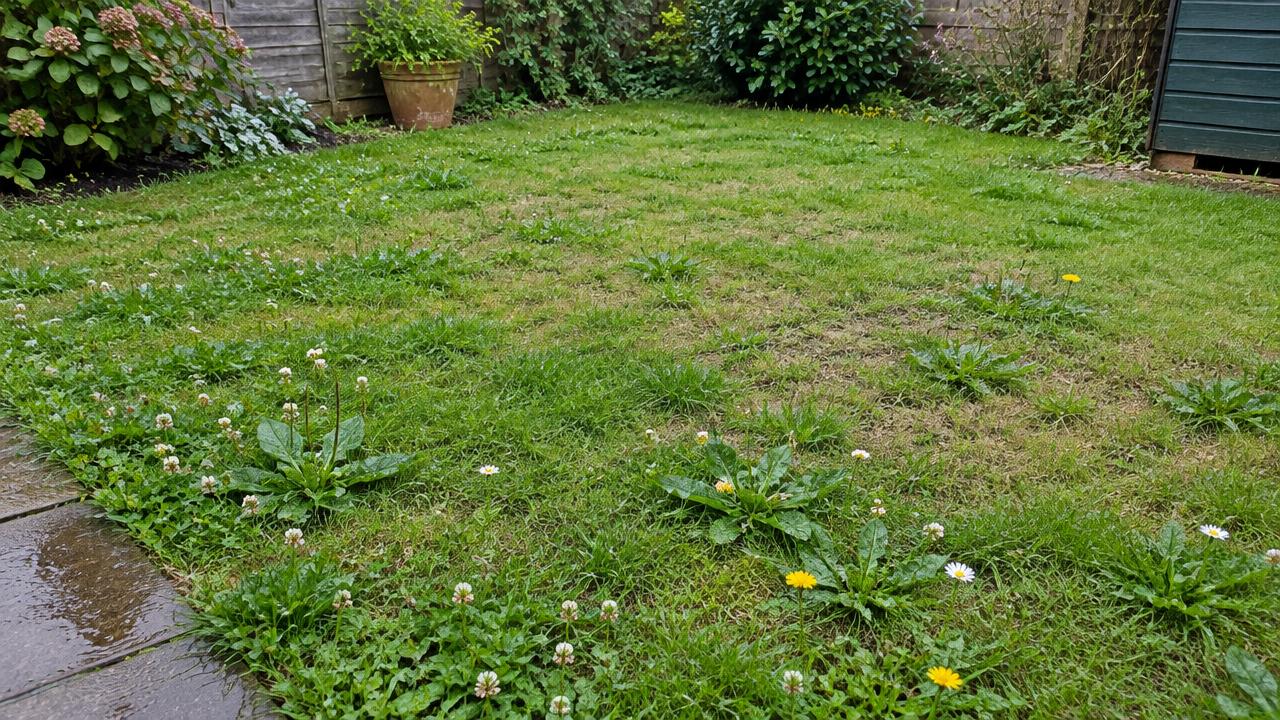
If your lawn suddenly seems to contain more weeds than it did a month ago, don't reach for the weedkiller yet. A difficult summer has left plenty of grass thin and open. The useful question isn't just how to kill what's growing in the gaps. It's why the gaps are there, and what you're going to put back into them.
The weeds haven't necessarily appeared overnight
There's something odd happening to a lot of lawns this September. A lawn that spent much of summer brown or straw-coloured is turning green again after rain. But not everything coming back green is grass.
Dandelions are obvious. Plantain rosettes are suddenly enormous. Clover has spread sideways into thin patches. Daisies that barely registered earlier in the year now seem to occupy whole sections of turf. It can look as though the weeds have arrived in the space of a fortnight.
The explanation is more complicated. England has been through an exceptionally dry summer, and although September rain has improved conditions in places, the wider water-resources position remains poor. Lawns themselves are generally capable of surviving drought by becoming dormant, then recovering when moisture returns, but recovery isn't always perfectly even. Hot, dry weather, wear, poor soil, compaction and existing weak patches can leave parts of a lawn thinner than others. We covered how to tell dormant grass from genuinely dead turf in how to repair your lawn after the drought.
And a lawn is a competition for space. Dense grass leaves relatively little exposed ground for something else to occupy. Thin the grass out and plants already present in the turf become more obvious, while gaps create opportunities for further establishment.
So don't begin with the bottle of lawn weedkiller. Begin with the grass.
First: are they actually a problem?
A weed is partly a gardening decision. White clover in a bowling green would be unwanted. White clover in a family lawn may be green, low-growing, drought-tolerant and useful to pollinators when allowed to flower. The same applies to daisies.
If what you want is a close, uniform grass lawn, then their presence matters. If what you want is a green surface that survives children, dry summers and occasional neglect, a few flowering plants may be an advantage rather than a defect. The RHS encourages more species-rich lawns and points out that familiar lawn plants can increase their wildlife value.
So set the target before choosing the treatment. If you're happy with mostly grass and some flowers, there may be remarkably little to do. If weeds are taking over areas you want to remain predominantly turf, then look at what is growing before trying to remove everything in the same way.
What the weeds can tell you
Lawn weeds aren't laboratory soil tests. A dandelion does not diagnose your garden, and finding plantain doesn't prove that the ground is compacted. But where particular plants become dominant, the conditions can give you useful clues.
Plantain. Plantains cope well with trampling and compacted ground, which is why they often turn up in lawns, paths and heavily used areas. If they're concentrated along the route between the patio and shed, or wherever children repeatedly run across the lawn, the location may be telling you more than the plant. Pulling the plantain out deals with the plant; relieving genuine compaction and helping grass recolonise the area deals with why it has been able to persist there.
Creeping buttercup. This one can be particularly useful as a clue. Creeping buttercup grows particularly strongly in damp or poorly drained soil, and spreads by runners that root as they travel, allowing a few plants to become a substantial patch. If it is spreading through the wettest part of your lawn, simply removing the visible plants without considering drainage or compaction means you're leaving the conditions that favour it untouched.
Clover. Clover has an advantage that lawn grass doesn't. With the help of bacteria living in nodules on its roots, it can fix atmospheric nitrogen into forms the plant can use, which means it can remain competitive where grass is struggling with low nitrogen availability. But don't take the presence of clover alone as proof that your lawn needs feeding. There are many reasons turf becomes thin, and a lawn doesn't automatically need fertiliser simply because clover is present. There is also no horticultural requirement to remove it. If you like it, leave it.
Daisies. Daisies are exceptionally well adapted to life in a mown lawn. Their flat rosette and growing point at ground level allow them to survive repeated cutting, while their flowers can appear on remarkably short stems. That doesn't mean a daisy-covered lawn has something wrong with its soil. It may simply mean you've created exactly the short-grass habitat daisies are good at living in.
Dandelions. Another plant extremely well suited to lawns. Their low rosette escapes much of the mower's attention and the substantial taproot allows an established plant to regrow after its leaves have been cut. A few are easy to deal with individually. Hundreds suggest that deciding what kind of lawn you actually want may be more useful than spending autumn chasing each root.
If you have a few weeds
This is the easy version. On a small lawn, hand removal is often quicker than treating the entire surface.
Use a hand fork, trowel or lawn-weeding tool and try to remove the root system rather than snapping off the leaves. This matters particularly with perennial weeds capable of regrowing from established roots. Do it when the ground is moist enough for roots to release without turning the lawn into mud. With creeping plants such as buttercup, follow the runners and lift the newly rooted sections too.
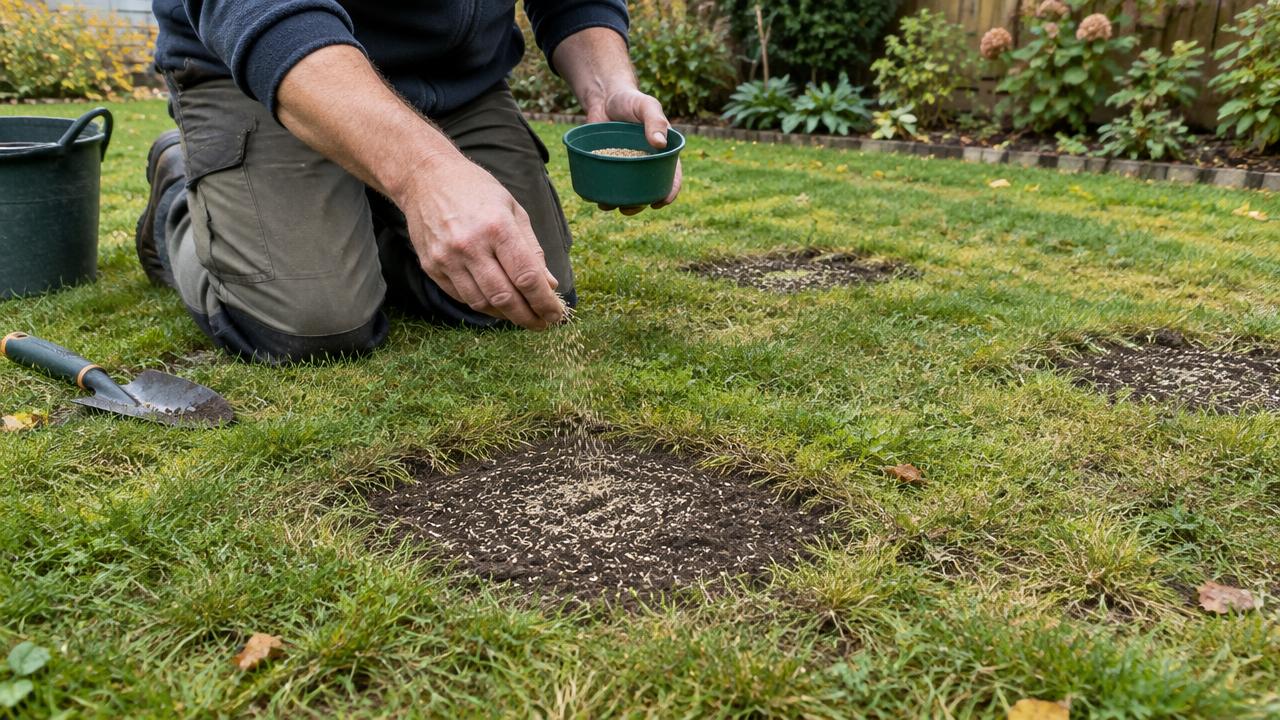
Then look at the hole you've made. A tiny hole will normally close as surrounding grass grows across it. A larger patch should be reseeded rather than left as bare soil.
That's the step people miss. Removing the weed is only half the repair.
If you have weeds everywhere
Don't spend three weekends individually excavating 400 plants from a lawn that's mostly gaps. At that point, think about turf density.
Early autumn is one of the most useful periods for lawn repair. The soil retains warmth from summer, moisture is generally becoming more available and young grass has time to establish before winter.
Start by mowing normally rather than scalping the lawn, then inspect the surface. Scarifying removes thatch: the accumulated layer of dead grass, moss and other organic material around the base of the turf, too much of which can interfere with water and air movement.
As a rough guide, the RHS says that if you can't see the soil between the grass blades, the lawn may benefit from scarifying. A better check is to cut a small wedge from the turf and look at the brown, matted layer between the green growth and the soil. A thin layer is normal. It's a substantial build-up of thatch that you're trying to remove.
But September is not an instruction to scarify every lawn. A drought-stressed lawn that's already thin doesn't automatically benefit from having a machine tear more material out of it.
The same applies to aeration. If the ground is compacted, particularly along regularly walked routes, spiking with a garden fork can improve movement of air and water around the roots, and on heavily compacted soil, hollow-tine aeration may be more useful. If the soil isn't compacted, don't aerate simply because an autumn lawn-care checklist told you to.
Then reseed the thin areas. The goal is simple: occupy the available ground with the plant you actually want there. Our guide to starting and repairing a lawn covers scarifying, aerating and overseeding in detail.
Overseeding is the bit that changes the competition
This is why killing weeds alone is such an unsatisfactory strategy.
Imagine a thin square metre of lawn containing grass, clover, plantain and bare ground. You remove the clover and plantain. You now have grass and more bare ground. Unless the grass expands rapidly enough to occupy it, you've created another opportunity for weeds to return.
Overseeding changes that equation. Choose a grass mix appropriate to the lawn rather than automatically buying whatever box is nearest the till: shadier lawns need a mix suited to lower light, and lawns that regularly dry out can benefit from mixes containing more drought-tolerant grasses such as fescues.
Get the seed into contact with the soil and keep newly sown areas from drying out while germination and establishment take place, subject of course to any water-use restrictions applying where you live — what hosepipe bans mean for your pots explains how to read the wording of restrictions. And don't bury seed beneath a thick layer of compost. Good seed-to-soil contact matters more than making the lawn look as though it has been freshly resurfaced.
What about weedkiller?
For a small lawn, selective lawn weedkiller shouldn't be the automatic response to broad-leaved plants.
The RHS now explicitly recommends non-chemical methods for lawn weeds, including hand removal, improving the health and density of the grass and reseeding bare areas. That's particularly persuasive in a small garden, where twenty unwanted plants can be removed individually without treating every square metre of grass.
For patches of creeping weeds that are thoroughly entangled with the turf, another option is to cut out the affected section, remove the weed roots and repair it with seed or fresh turf.
If you do choose a chemical treatment, read the label rather than assuming all lawn weedkillers do the same job. Different products control different weeds and may carry restrictions affecting mowing, grass clippings and subsequent sowing. UK pesticide products must be authorised for their intended use.
And never substitute a non-selective weedkiller designed to kill general vegetation. It will kill the grass too.
If you're planning to overseed, check the product label carefully for restrictions on sowing before or after treatment. Killing weeds this week isn't much use if it prevents you from making the repair the lawn actually needs.
Don't feed just because there are weeds
Another tempting response is to buy an autumn lawn feed and assume stronger grass will solve everything. It might help a lawn that genuinely needs feeding. But the RHS notes that many lawns recover from summer wear and drought without fertiliser.
If the underlying problem is compaction, shade, drought damage or poor drainage, fertiliser doesn't correct any of those things.
Where an autumn feed is justified, use one intended for autumn rather than a high-nitrogen spring or summer treatment, and follow the application rate. A lawn is not healthier simply because it is greener next Tuesday.
When weeds mean starting again
There is a point at which repair becomes absurd. If the lawn contains very little grass, has extensive bare ground and is dominated by plants you don't want, renovation may be more sensible than trying to rescue every surviving tuft.
That doesn't necessarily mean buying turf. Autumn is also a good time to prepare and reseed a lawn, and seed gives you control over the grass mixture you establish.
But before starting again, work out why the previous lawn failed. If it deteriorated because the soil is compacted, improve that first. If water sits on the surface all winter, investigate drainage. If the lawn receives almost no light, choose a mix capable of coping with shade, or reconsider whether grass belongs there at all.
Otherwise the new lawn eventually becomes the old lawn again.
The most useful thing you can do this weekend
Walk across the lawn and look down. Not for weeds. For gaps.
If the grass is reasonably dense and you have a handful of plants you don't want, remove them and repair the holes. If the turf is thin, work out why: relieve genuine compaction, remove excessive thatch if it's there and overseed while autumn conditions are favourable.
And if what you're calling weeds are daisies and clover that you don't particularly mind, there's a fourth option. Do nothing.
After the summer this lawn has just been through, being green is already quite an achievement.
FAQ
Why does my lawn suddenly have so many weeds?
After hot, dry weather, lawns can be thinner or patchier than usual. Existing weeds become more conspicuous and gaps reduce competition from grass. Autumn moisture can then make growth more obvious. The important question is why the turf became thin.
Should I remove clover from my lawn?
Only if you don't want it. Clover can fix nitrogen through its association with bacteria in root nodules, is useful to pollinators when allowed to flower and can form useful green cover. If you want predominantly grass turf, improve grass density and remove unwanted clover by hand.
What is the best way to remove dandelions from a lawn?
For small numbers, use a hand fork or lawn-weeding tool and remove as much of the taproot as practical. Repair larger holes with grass seed rather than leaving bare ground.
Does plantain mean my lawn is compacted?
Not conclusively, but plantains tolerate trampling and compacted conditions well. If they're concentrated in heavily used parts of the lawn, check the soil before deciding whether aeration would help.
Should I scarify my lawn in September?
Only if it needs it. Autumn is a good time to scarify, but the purpose is to remove excessive thatch, moss and debris. Inspect the thatch layer rather than scarifying automatically because it's September.
Should I use lawn weedkiller?
For a small number of weeds, usually not. Hand removal followed by reseeding is more targeted. If you choose a chemical treatment for a larger problem, make sure it is currently authorised for use on lawns, suitable for the weeds present and compatible with any planned overseeding.
READ THE FULL GUIDE
Starting and Repairing a Lawn →
RELATED POSTS
Robin is a small-space grower writing for everyone working with a courtyard, balcony, window box, patio or sunny sill. Edible and leafy, both kept alive in the kind of light real small spaces actually get.
✦ Free with the newsletter — the small-space starter sheet
Grow Anywhere — a free weekly email.
The Potted Club newsletter. A short note from Robin — what to sow, one plant problem solved, and the best new guide.
FREE WEEKLY EMAIL · NO SPAM · UNSUBSCRIBE ANYTIME