Hosepipe Bans 2026: What They Mean for Your Pots
Nine UK water companies have hosepipe bans in force this summer, covering most of southern and eastern England, London and the Thames Valley. What that actually means if you're growing in pots, what you can and can't do, and the workarounds that keep everything alive.
What's actually happening
The UK is in its third heatwave of summer 2026, and nine water companies have now declared formal Temporary Use Bans (the official name for a hosepipe ban) covering more than 25 million customers between them. The largest by far is Thames Water, Britain's biggest water company, which announced a ban for all 10.1 million of its drinking-water customers across London, the Thames Valley and the Home Counties, starting at 00:01 on Thursday 23 July. Demand in the region has been running 7% above normal in London and 10% above normal across the wider Thames Valley, equivalent to an extra 100 million litres a day, after the driest spring in years and a run of record temperatures.
As of 21 July, the bans in force or about to start are:
- Thames Water (London, the Thames Valley and the Home Counties, including Oxfordshire, Berkshire, Wiltshire, Buckinghamshire, Surrey and parts of Gloucestershire; from 23 July)
- Southern Water (Hampshire and the Isle of Wight)
- South East Water (Kent now, extending to Sussex, Surrey, Hampshire and Berkshire from 25 July)
- Anglian Water (East of England, except Hartlepool)
- Cambridge Water (Cambridge region)
- Affinity Water (Central region: Herts, Beds, Bucks, Berks, Surrey, parts of Essex and London)
- South West Water (parts of Mid and East Devon)
- Welsh Water (mid and south Ceredigion, north Pembrokeshire, north Carmarthenshire)
- United Utilities (north-west England, from 5 August)
There is no Yorkshire Water ban in 2026 (that ended in December 2025), and no Northern Ireland or Scotland-wide ban currently.
If you're not sure whether you're in an affected area, your water bill names your supplier. The current situation is unusually widespread but still regional rather than national; national reservoir storage is around 87.5%, so the country isn't running dry as a whole. The crisis is where the heatwaves have been most severe and where population density is highest.
What a hosepipe ban actually stops you doing
The Water Use (Temporary Bans) Order 2010 covers eleven activities, and the bans this summer all follow the same rules. You can't:
- Use a hosepipe or sprinkler connected to the mains to water a garden, lawn, allotment or ornamental plants.
- Wash a car, boat, or leisure vehicle with a mains hosepipe.
- Fill or top up a paddling pool, swimming pool, hot tub or fountain from the mains.
- Clean paths, patios, walls, decking, windows or driveways with a mains hosepipe.
Bans are enforceable under law with fines up to £1,000, though enforcement in practice is generally slow to escalate; water companies rely largely on voluntary compliance and neighbour reports.
What you can still do
This is the good news for small-space growers, and the reason a hosepipe ban changes less than the headlines suggest.
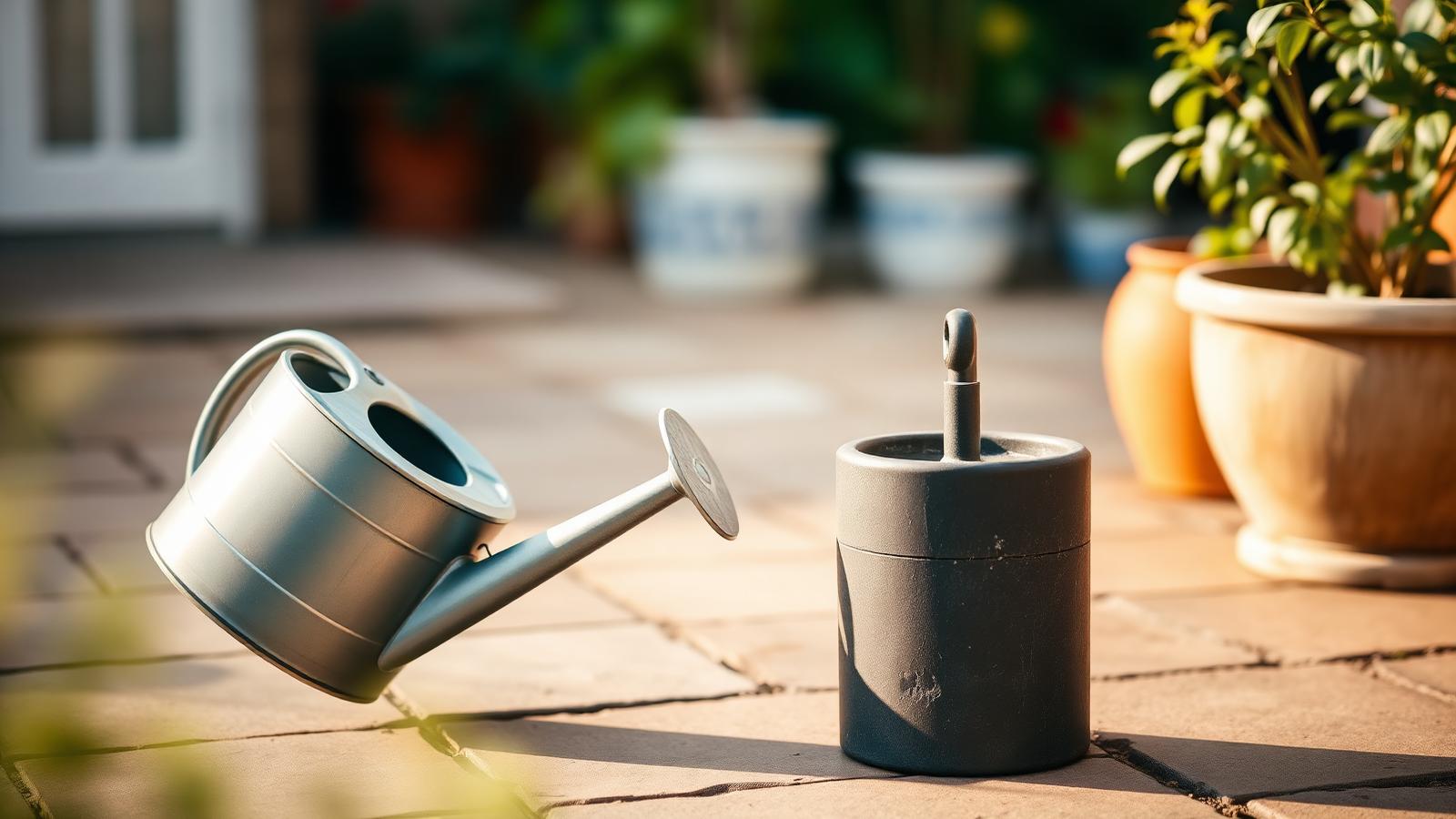
You can water plants with a watering can filled from the mains tap. This is the single most important allowance for anyone growing in pots, because it's how most container watering is done anyway. A hosepipe ban has almost no practical effect on someone watering half a dozen pots on a balcony with a can each morning.
You can use collected rainwater. Anything you've caught in a water butt, a bucket left outside, a saucer under a downpipe, is entirely yours to use freely, including through a hosepipe if you've plumbed one to the butt (though most butts don't have enough pressure for a proper hosepipe anyway).
You can use grey water. Water from washing up, from the bath, from rinsing vegetables, is fine for garden use. It's not ideal for edibles because of soap residues, but it's genuinely useful for ornamentals, shrubs and lawns.
You can use a professional cleaning service for windows, cars or paths. Businesses using mains water for their own commercial cleaning are exempt from the ban.
You can water newly planted lawns and trees, if you've laid turf or planted a tree within the past 28 days, using a watering can. This one's less well known but genuinely useful.
What this means for a small-space grower
If you're gardening in pots, on a balcony, in a courtyard, or on a small patio, a hosepipe ban is more of a headline than a practical problem. Almost everything you do already comes down to a watering can and a bit of judgement, which the ban doesn't touch. The bigger question is one of habit: how much water are you actually using, and is any of it going to waste?
A few honest changes worth making, ban or no ban:
- Water in the morning or evening, not the middle of the day. A good proportion of water applied in strong midday sun evaporates before it reaches roots. This isn't about scorching leaves (see our myth-busting piece on watering in a heatwave) — it's about waste.
- Water at the roots, not over the leaves. Wet foliage encourages disease and most of what you sprinkle overhead doesn't reach the compost anyway.
- Group pots together in shade during a heatwave. Grouped containers create a slightly more humid pocket of air around themselves and shade each other, dramatically reducing evaporation loss.
- Mulch container tops with bark, gravel or a layer of compost. A thick mulch on top of pot compost cuts evaporation loss by anything up to half.
- Reuse the water you use inside. A washing-up bowl of grey water, a bath, a saucepan of pasta cooking water once cooled: all of these can go on ornamental plants rather than down the drain.
- Water deeply and less often. A proper soak every few days trains deeper roots than a daily splash and makes containers considerably more resilient to short dry spells.
For much more on watering technique that saves water without sacrificing plant health, see our guide to watering plants properly.
The water butt case
If you don't already have a water butt, this summer is a genuine argument for buying one. A compact patio butt that fits on a downpipe holds anywhere between 100 and 250 litres, costs around £40 to £80, and pays for itself within a single dry summer. Water butt water is also technically better for plants than tap water (it's soft, chlorine-free, and closer to what plants would receive naturally as rain).
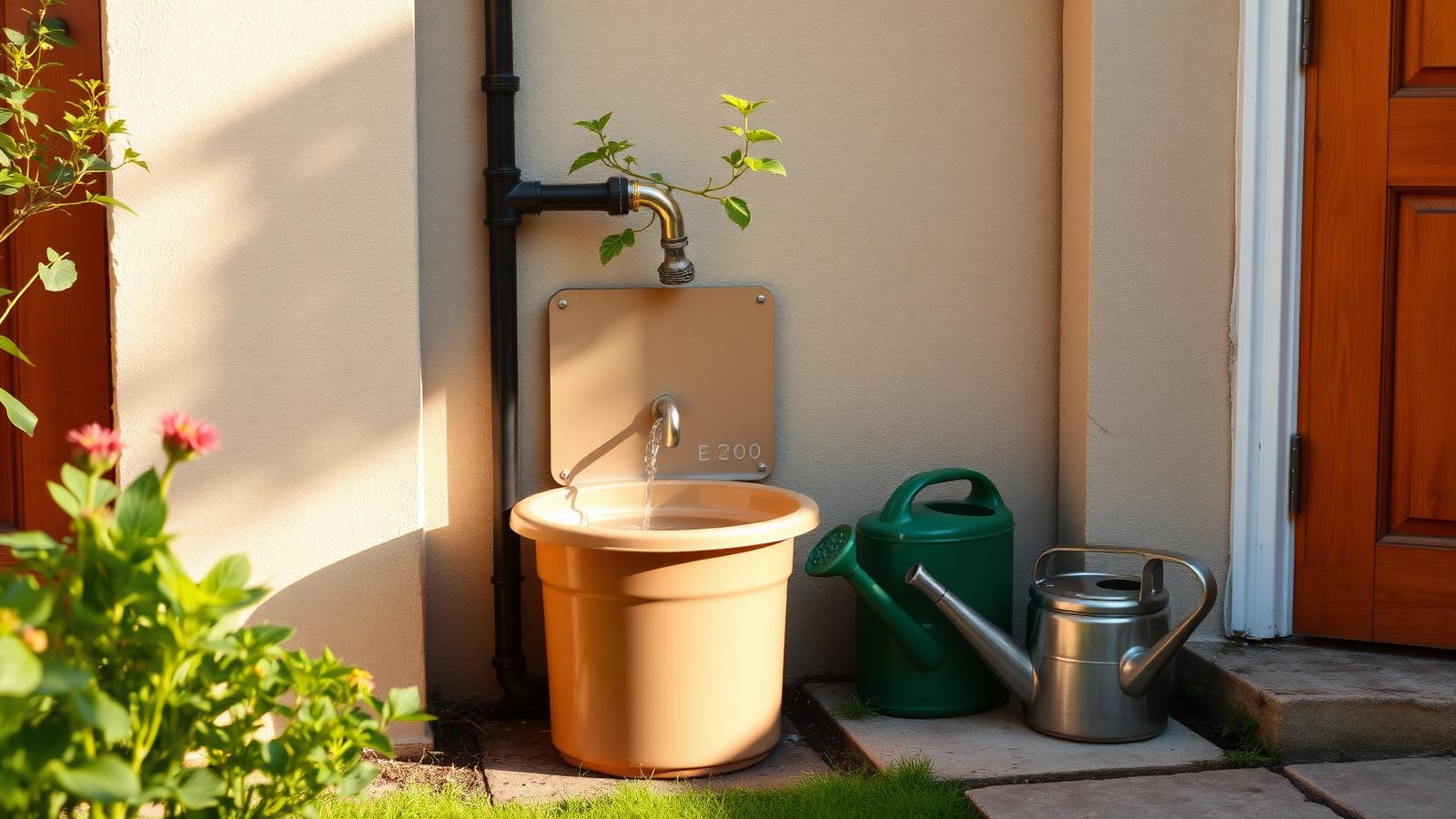
The main constraint on a small-space grower is space and the downpipe you can connect to. A first-floor flat, a balcony, or a shared communal courtyard often makes it genuinely impractical. But if you've got a patio or a courtyard with your own downpipe, this is easily the single most useful garden investment you can make. Even a small butt catches surprising amounts of water from a single autumn storm.
For the wider picture on how containers behave differently to open ground and what makes them so thirsty, see our guide to container growing fundamentals.
Common misunderstandings
Because these bans hit the headlines and the detail gets muddled, a few things worth clearing up:
- "I can't water my garden at all." Not true. You can water freely with a watering can, or with any collected water. Only the mains hosepipe is restricted.
- "I can't water containers." Also not true, for the same reason. Watering cans are fine.
- "A hosepipe ban means my water bill will go up." Actually the reverse for most households; a Temporary Use Ban is precisely because water is expensive and scarce right now, and the whole point is to reduce total demand. Your bill won't rise because of the ban itself.
- "I'll get fined immediately if I break it." In practice, water companies rely on voluntary compliance and neighbour reports before escalating. First offences generally result in a warning letter. Fines of up to £1,000 are possible for persistent breaches, but they're rare.
- "The ban means the country is running out of water." Not nationally. National reservoir storage is around 87.5%. The crisis is regional, driven by localised heatwaves, high demand, and specific reservoirs being low. In some regions the water table remains healthy; in others it's genuinely worrying.
What the RSPB and wildlife people are asking
One thing worth folding in here: bird care is affected too, though not by the ban itself. In a heatwave a wild bird can die of dehydration in hours, and putting out fresh water in a shallow dish (from the mains, via a jug — that's fine under the ban rules) is genuinely urgent this week. If you want to help wildlife alongside your plants, water for birds is the single most useful thing you can put out right now. See our separate piece on how to help garden birds in a heatwave for the detail, including the RSPB's updated 2026 guidance on what to stop putting out until autumn.
FAQ
Am I allowed to use a watering can under a hosepipe ban?
Yes, entirely. Watering cans filled from the mains tap are allowed under every current UK hosepipe ban. The restrictions specifically target hosepipes and sprinklers, not manual watering.
Can I use rainwater from a water butt during a hosepipe ban?
Yes, freely. Collected rainwater isn't part of the mains supply the bans are protecting, so you can use it however you like, including through a hosepipe if you've connected one to your butt.
What about grey water from the bath or washing up?
Yes, that's fine too. Grey water is a good option for ornamentals, shrubs and lawns during a ban. Avoid using it on edibles if it contains soap residues.
Do hosepipe bans apply to allotments?
Yes. Watering an allotment counts as watering a garden under the ban rules. Watering cans and collected rainwater remain allowed.
Is Yorkshire under a hosepipe ban in 2026?
No. Yorkshire Water's 2025 ban ended in December 2025, and no new ban is in force this summer. Some coverage recycling the 2025 announcement has caused confusion.
Can I still fill my pond, water feature or paddling pool?
Filling a pond or fountain from the mains is restricted under the ban. Ponds already established don't need topping up frequently in normal conditions; those that do can be topped up from collected rainwater. Paddling pools are explicitly restricted.
What happens if I break the ban?
Water companies typically send a warning letter for first-time offences, escalating to fines only for persistent or serious breaches. The maximum fine under the Water Industry Act is £1,000, but this is rarely levied.
Should I install a water butt now?
If you have a downpipe you can access and don't have one already, yes. Compact patio butts cost around £40 to £80, hold 100 to 250 litres, and pay for themselves quickly in a summer like this one. Even a small autumn storm can fill one completely.
RELATED POSTS
Robin is a small-space grower writing for everyone working with a courtyard, balcony, window box, patio or sunny sill. Edible and leafy, both kept alive in the kind of light real small spaces actually get.
✦ Free with the newsletter — the small-space starter sheet
Grow Anywhere — a free weekly email.
The Potted Club newsletter. A short note from Robin — what to sow, one plant problem solved, and the best new guide.
FREE WEEKLY EMAIL · NO SPAM · UNSUBSCRIBE ANYTIME