Your New-Build Garden Doesn't Need Fixing Before You Can Grow
Compacted soil, thin turf and poor drainage are familiar new-build problems. Before you excavate the lot, work out what needs fixing and what you can simply grow above.
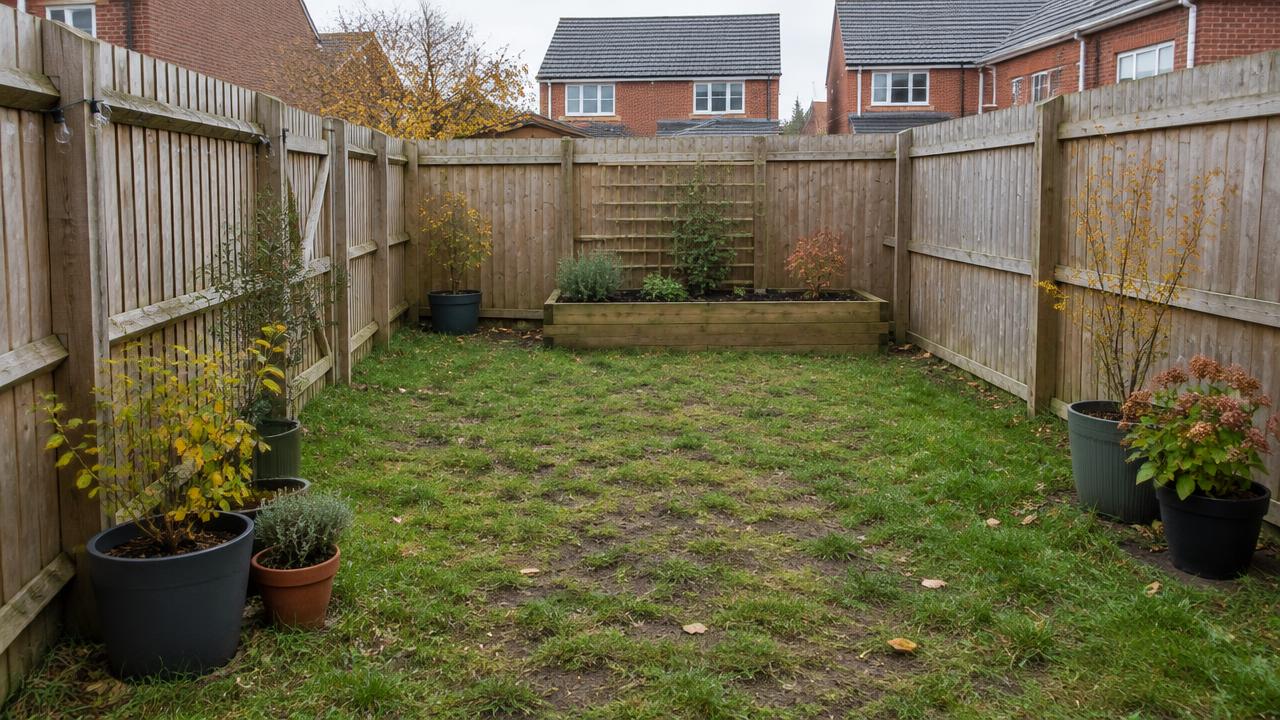
Thin turf, compacted ground and rubble under the spade are familiar features of new-build gardens. You can spend years trying to turn the whole plot into good soil. Or you can decide which bits actually need fixing, and start growing above the rest.
You don't have to fix the whole garden
There's a familiar new-build gardening experience. The garden looks finished when you move in, with turf, fencing and perhaps a small patio. Then you try to grow something.
The lawn becomes patchy. A shrub sits there for two years without getting noticeably larger. Water gathers in the same place whenever it rains. Push a spade into the ground and, a few centimetres below the surface, you hit something that feels more like a building site than soil.
The conventional answer is daunting. Strip the turf. Excavate. Break up the subsoil. Remove the rubble. Import tonnes of topsoil. Install drainage if necessary. Regrade. Returf. Then, finally, start gardening.
Sometimes that work really is necessary. But on a small plot, it shouldn't be the automatic starting point. The better question is: which parts of this garden genuinely need fixing, and which parts can I simply grow above?
That distinction can save an enormous amount of money and several years of waiting for the soil to become something it currently isn't.
Why new-build ground can be so difficult
A house is not built around the needs of its future hydrangeas. During construction, heavy machinery repeatedly travels across the plot. Soil is moved, stored and redistributed, different layers can become mixed, and construction materials can be left behind. The result can be heavily compacted subsoil with relatively little functioning topsoil above it.
Compaction matters because healthy soil isn't simply mineral particles. It also contains pore spaces holding air and water. Compress those spaces and roots struggle to penetrate, oxygen becomes limited and water movement changes. On heavy soils, rainfall may sit near the surface because it can't move easily through the compacted layer below.
Then turf is laid over the top, and for a while the garden looks finished. The problems become obvious once somebody tries to grow in it.
First, find out what you've actually got
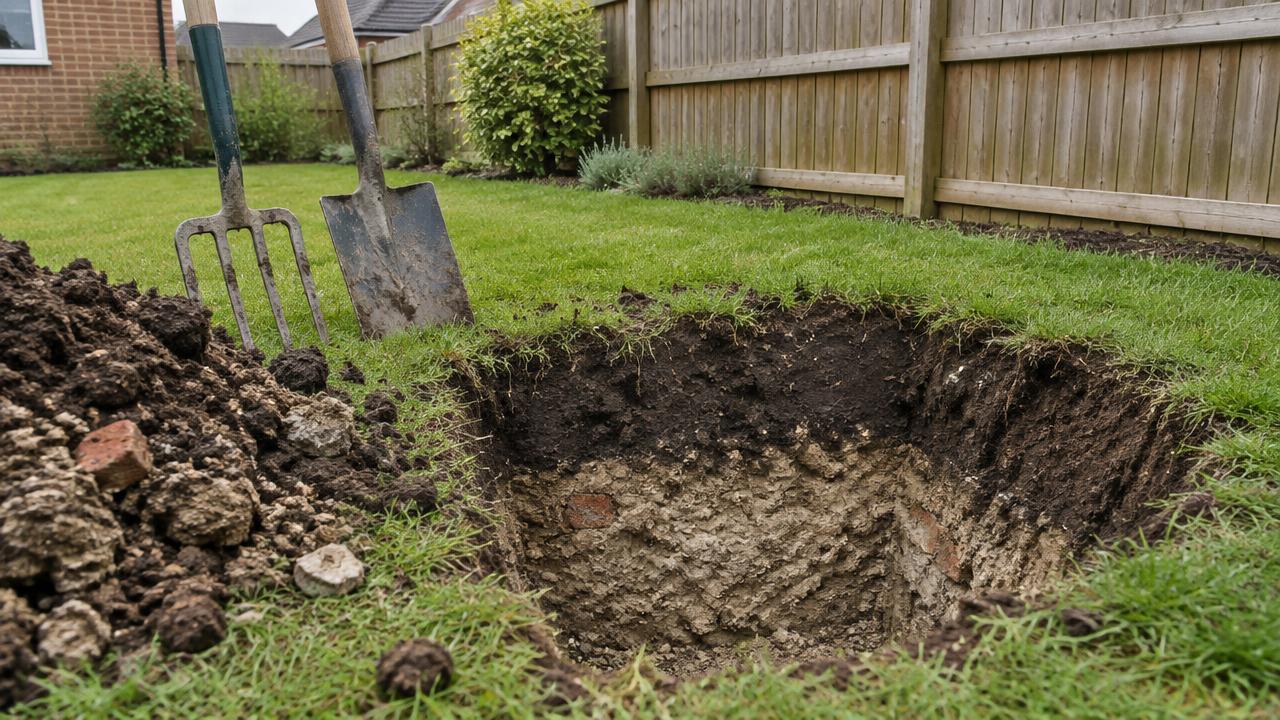
Before ordering a skip or a raised bed, get a spade.
Dig an inspection hole somewhere representative of the garden, and if different areas behave differently, dig more than one. You're looking for layers. How deep is the darker, more workable topsoil before you reach denser subsoil? Is there an abrupt compacted layer? Can you get a fork into it? Are there obvious pieces of brick, mortar or other construction debris? Look at the roots of the turf too, and whether they're penetrating downwards or sitting almost entirely within a shallow surface layer.
Then look at what happens after rain. A simple hole can tell you something about drainage, although a home drainage test isn't a substitute for professional investigation where waterlogging is serious. If water repeatedly sits in the garden for long periods, particularly close to the house, treat that as a drainage issue rather than merely disappointing soil.
Take photographs while you've got the ground open. They may prove more useful than the hole itself.
There are standards for this
This is worth knowing before you accept that a poor garden is simply part of buying a new house.
For homes covered by an applicable NHBC warranty, its published standards for garden areas contain specific requirements. They include decompacting construction-affected subsoil to a minimum depth of 300mm, removing construction rubbish and debris during the process, and providing a minimum 100mm depth of suitable topsoil. The standards also say subsoil shouldn't be placed over topsoil. Separate NHBC guidance for areas within 3m of habitable parts of the home says they should not be waterlogged.
These are minimum standards, not a specification for magnificent garden soil. Nor does finding a problem automatically mean a builder will return and reconstruct the garden, since what applies will depend on your home, warranty, evidence and when the issue is raised.
But if you've recently moved in and your inspection suggests the garden falls substantially short, check the warranty documents before spending your own money putting it right. The builder's job was to give you decent ground. Your job doesn't have to be rebuilding it.
Decide whether you're dealing with soil or drainage
This is the important fork in the road. Poor growing soil can often be worked around. Serious drainage failure may need fixing.
If one corner is a little wet in winter, plant choice and garden design can accommodate that. If water regularly sits against the house, large areas remain waterlogged, or you suspect levels and drainage were incorrectly constructed, don't disguise the problem beneath containers, paving or raised beds. Investigate it properly, particularly while a warranty route may still exist.
But if the problem is simply thin topsoil over dense, unpromising ground, you have far more options. You don't need every square metre to become beautiful loam before you're allowed to have a garden.
Grow where the soil is good because you put it there
This is the useful bit.
A container is a completely controlled root environment. You choose the growing medium, you choose the drainage, you choose its position, and if a plant dislikes where you've put it, you can move it. On a new-build plot, those are substantial advantages. Our Container Growing Fundamentals guide explains how to choose the pot, growing medium and drainage that make that control useful.
A raised bed does something similar at a larger scale, giving you a useful depth of known growing medium immediately while allowing the soil underneath and around it to improve gradually. That doesn't mean dropping a shallow wooden box onto a swamp and declaring the drainage solved. Where the underlying ground is compacted, loosen it before filling a shallow bed where practical, and make sure the bed itself can drain. But you don't have to import enough soil to reconstruct the entire garden.
Match the depth of the growing area to what you want to grow. Use containers for plants that need particularly controlled conditions. Put a raised bed where you want vegetables, herbs or concentrated planting. Keep paths where you actually walk so you aren't continually recompacting the areas you're trying to improve.
Suddenly the question isn't how do I turn this whole plot into good soil? It's: where do I actually need good soil? For a small garden, that's a much more manageable question.
This isn't a temporary workaround
Containers and raised beds are often presented as second-best gardening. They aren't.
Small gardens benefit from concentration. Instead of spreading money and compost thinly across an entire plot, you can put both where the plants are. You can grow acid-loving plants without trying to alter the pH of the whole garden, give Mediterranean plants a freer-draining medium, and replace exhausted compost rather than trying to change difficult subsoil indefinitely. Soil and Compost pH, Explained covers why choosing a suitable medium is usually more reliable than trying to alter an entire plot. Raised growing areas can also give structure to an otherwise blank rectangular garden, which is exactly what many new-build gardens lack.
There are disadvantages. Containers dry more quickly and depend entirely on you for water and nutrients, and raised beds also tend to dry faster than open ground and eventually need replenishing with organic matter.
But those are manageable problems. A layer of compacted subsoil extending across the entire garden is considerably harder to manage.
Improve the rest slowly
None of this means abandoning the ground forever. Soil structure can improve.
Add organic matter as a surface mulch and allow worms, roots and other soil organisms to work it into the upper layers. Grow plants whose roots help open the ground. Keep unnecessary feet off wet soil, and create permanent or semi-permanent routes through the garden rather than walking everywhere. Think in years rather than weekends.
What you don't need to do is dig a beautiful individual planting hole into dreadful surrounding ground, fill it with a bag of lovely compost and assume you've solved the problem. On poorly draining compacted soil, an isolated heavily amended planting pit can behave like a sump: water moves into the loosened area but struggles to escape through the dense surrounding ground.
If you're planting directly into difficult soil, improve and loosen a broader area where appropriate rather than creating a small underground flowerpot. Or put the plant in an actual pot. At least then you control where the water goes.
What about the lawn?
The lawn is often where the new-build problem becomes visible first. Thin turf can survive for a while on a shallow layer of topsoil, particularly if somebody waters it diligently. Then summer arrives, the shallow root zone dries rapidly and brown patches appear. Conversely, in prolonged wet weather, compacted ground beneath the turf can leave the surface saturated.
Before repeatedly overseeding a failing lawn, work out what is happening underneath it. If there is adequate soil and the problem is localised compaction, lawn renovation may be worthwhile. If the turf is sitting on an obviously inadequate growing layer over badly compacted ground, repeatedly throwing seed and fertiliser at the surface is unlikely to address the underlying limitation. Starting and Repairing a Lawn explains how to diagnose the ground before choosing a repair.
And on a very small plot, it's worth asking another question entirely: do you actually want a lawn? A lawn occupying 20 square metres of poor ground isn't compulsory, and some of that area may be more useful as planting, pots, a raised bed or somewhere to sit.
A difficult new-build lawn can be repaired. It can also be edited.
Why this is in the news now
The newly launched New Build Manifesto is arguing that this shouldn't all be the homeowner's problem in the first place. Its premise is that gardens should be treated as part of the infrastructure of a new home rather than whatever space remains once the building has been completed. That means thinking about soil, drainage, planting, biodiversity and resilience to hotter summers and heavier rainfall before the owner moves in.
It's a sensible distinction. We wouldn't regard an unfinished indoor floor as an opportunity for the buyer to express themselves. Yet outside, a thin layer of turf over heavily disturbed ground can still be treated as a finished garden.
Whether the campaign changes housebuilding practice remains to be seen. In the meantime, there are thousands of people already looking through their patio doors at the garden they've got. For them, the useful answer isn't to wait.
Start with one good square metre
If you've inherited a difficult new-build garden, don't begin by trying to solve all of it.
Dig a hole. Find out what's underneath. Check whether a serious problem needs raising with the builder or warranty provider. Then choose the first place you actually want to grow something.
That might be one large container beside the back door. A raised bed for herbs and salad. Three pots along a sunny fence. A small section of improved ground for a climber. If a container is your first step, autumn can be a useful planting time for many hardy plants, provided the pot and drainage suit them.
Make that bit good. Then make the next bit good.
The soil underneath can improve slowly while the garden above it starts now. That's a much better use of your first autumn than spending it trying to turn a building site into loam.
FAQ
Why won't plants grow well in my new-build garden?
Construction can leave soil heavily compacted, disturbed or covered by only a limited depth of topsoil. Roots then struggle to penetrate and drainage can be poor. Dig an inspection hole before assuming the plant itself is the problem.
How much topsoil should a new-build garden have?
For homes to which the relevant NHBC standard applies, at least 100mm of suitable topsoil is specified where turf or seeding is provided, with construction-compacted subsoil decompacted to a minimum depth of 300mm.
Should I replace all the soil?
Usually not as a first response. Work out whether you have a serious drainage or warranty problem first. For ordinary poor growing ground, containers, raised beds and targeted improvement can be much more practical than excavating an entire small garden.
Can I put a raised bed over compacted soil?
Yes, but don't use a raised bed to conceal serious waterlogging. Where practical, loosen compacted ground beneath shallow beds and ensure water can drain. Choose the bed depth according to what you intend to grow.
Should I fill a planting hole with compost?
Avoid creating a small pocket of radically different, moisture-retentive material in badly compacted ground. Improve and loosen a wider area where appropriate so roots and water can move beyond the original planting hole.
What should I do first?
Dig an inspection hole. If there is serious waterlogging or an apparent standards problem, investigate that before spending money. Otherwise, choose one growing area you can control, whether a container, raised bed or properly prepared section of ground, and start there.
RELATED POSTS
Robin is a small-space grower writing for everyone working with a courtyard, balcony, window box, patio or sunny sill. Edible and leafy, both kept alive in the kind of light real small spaces actually get.
✦ Free with the newsletter — the small-space starter sheet
Grow Anywhere — a free weekly email.
The Potted Club newsletter. A short note from Robin — what to sow, one plant problem solved, and the best new guide.
FREE WEEKLY EMAIL · NO SPAM · UNSUBSCRIBE ANYTIME