Do I Need to Water My Lawn in Summer?
Short answer: no. Why a brown lawn in a heatwave is dormant, not dying, what watering it actually does wrong, the one thing to do instead, and how to tell dormancy apart from disease.
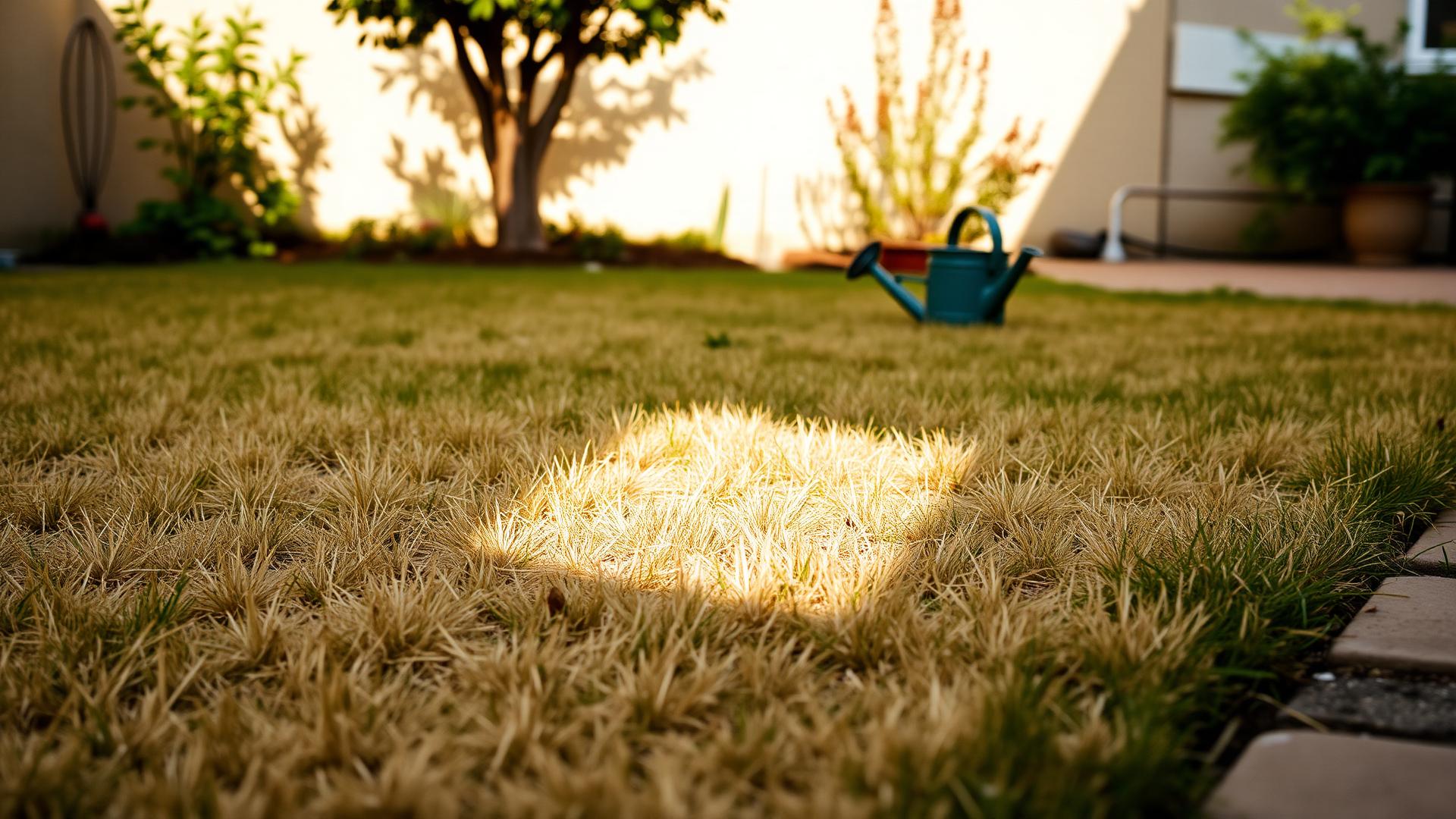
The short answer: no, don't water it
It looks alarming — a lush lawn turning straw-brown within a week or two of hot, dry weather — but for almost every established UK lawn, that's the grass protecting itself, not dying. Grass goes dormant in a drought: the visible leaf blades shut down and turn brown to conserve water, while the crown, the small growing point sitting right at soil level, stays alive underground. Once rain returns, the crown sends up fresh green growth and the lawn recovers, often within two to three weeks.
Watering a dormant lawn doesn't speed this up in any useful way, and it wastes a genuinely large amount of water for very little benefit. The advice from gardening experts — including the RHS guidance on lawn care in drought — is consistent and slightly counter-intuitive: however brown and awful it looks, resist the urge to get the sprinkler out.
Why watering it can actually make things worse
The instinct is to give a struggling lawn a bit of water to tide it over. The problem is that a light daily sprinkle does the opposite of what you'd want. It wets only the top centimetre or so of soil, which keeps the grass roots shallow and lazy — they never need to grow down to find water, so they stay right at the surface, exactly where the ground heats up and dries out fastest. The next hot spell then hits that lawn harder than ever, because the roots have no depth to draw on.
A lawn left to go properly dormant, by contrast, keeps whatever root depth it had already established, and recovers using its own reserves once real rain comes. Light, frequent watering doesn't rescue a lawn from drought — it just makes the next drought worse.
What to do instead
There is genuinely useful action here, and it costs nothing: change how you mow.
- Raise the cutting height. Set the mower to its highest setting through a dry spell. Longer grass shades its own soil, keeping it cooler and slowing moisture loss, and it encourages deeper roots than a lawn scalped short.
- Mow less often. Growth slows right down in dry weather, so there's less need to cut. If the grass has stopped growing altogether, stop mowing altogether too.
- Let the clippings fall back in. Rather than collecting them, leave clippings on the lawn as a light mulch — they help hold in what moisture is there.
- Keep foot traffic light. A dormant lawn is more easily scuffed and compacted than an actively growing one, since it isn't repairing itself while it's shut down. A little use won't hurt, but repeated pacing along the same line can thin the grass in that spot for weeks after.
None of this makes the lawn green again during the dry spell — nothing will, short of proper rain — but it protects the lawn's ability to bounce back well once the weather breaks.
How long can a lawn stay brown?
Longer than most people expect, and without lasting harm. An established lawn can sit fully dormant and brown for around four to six weeks through a summer drought and still recover completely once rain returns. Even a lawn that looks entirely dead by late summer very often isn't — it's simply waiting.
The exception is a genuinely severe or prolonged drought, well beyond a typical UK dry spell, where the underlying roots themselves can eventually be damaged rather than just the visible leaf. That's uncommon, but if a lawn stays parched for months on end in an unusually harsh year, some thinning or patchy die-back afterwards is possible — which is a job for fixing in autumn, not for watering through in summer.
Not every lawn copes the same way
How well a lawn handles a dry summer depends a good deal on what it's actually made of. A formal, closely mown lawn of fine grasses — the kind grown for a bowling-green look, often bents or fescue-fine mixes — tends to struggle hardest in a drought, browning off fastest and taking longest to recover. An ordinary domestic lawn, usually a coarser mix with a good amount of ryegrass and broader fescues, is considerably tougher and bounces back more readily, since those grasses are simply built with more drought tolerance in the first place.
Age matters too. A lawn that's been established for several years has had time to build a proper root system reaching down into the soil, which is exactly what lets it shut down and wait out a drought without lasting harm. A lawn under a year old hasn't built that depth yet, which is why new lawns are the genuine exception to "don't water" — see below.
Making next year's lawn more drought-resistant
Once autumn arrives and rain returns, that's the moment to work on resilience for next time, not during the drought itself.
- Overseed thin or bare patches with a drought-tolerant seed mix, ideally one with a good proportion of fescue, which copes with dry spells far better than fine bents or ryegrass alone.
- Aerate compacted areas. Compaction stops water and roots penetrating properly, so a lawn that's been walked on heavily benefits from spiking or aerating once it's growing again.
- Hold off on lawn weedkiller and fertiliser on a drought-affected lawn until the following spring — feeding or treating stressed, still-recovering turf in autumn does more harm than good. Let it recover fully first.
- Consider whether a perfect, closely mown lawn is worth the water it costs. Letting part of the lawn grow slightly longer, or introducing some meadow flowers and bulbs into an area you mow less often, produces a patch that copes with dry spells far better than a tightly manicured one — and needs a lot less looking after generally.
None of this helps the lawn you're looking at right now, browning off in front of you. But it's the difference between next year's drought being a minor inconvenience and a repeat of this one.
Dormant, or is it actually a problem?
Brown grass isn't always simple dormancy, so it's worth knowing how to tell the difference before writing it off as "just the drought."
| Sign | Dormancy (leave it) | Disease or a deeper problem |
|---|---|---|
| Pattern | Even browning across the whole lawn | Irregular circular or ring-shaped patches |
| The crown (pull a small tuft) | Firm, pale, resists being pulled out | Soft, blackened, or foul-smelling, comes away easily |
| Colour | Straw-brown, fairly uniform | Rings with a darker or lighter border, patchy |
| Recovery test | Greens up within 2–3 weeks of proper rain | No improvement once rain returns |
The quick check that settles it: tug gently on a small patch of grass. If it resists and the base feels firm, that's a living, dormant crown doing exactly what it should. If it lifts away with no resistance and feels slimy or rotten at the base, that's a different problem — likely a fungal disease rather than simple drought — and is worth investigating separately rather than assuming it's dormancy.
If you must water
There are a couple of genuine exceptions where watering is the right call, not the wrong one.
A newly sown or newly turfed lawn, laid within the last year, hasn't built the root system that lets an established lawn cope with dormancy. It needs regular watering through its first dry spell, since it simply doesn't have the reserves yet to shut down and bounce back.
If you decide any part of an established lawn genuinely needs help — a small, particularly precious area, say — water deeply and infrequently rather than little and often: a thorough soak every few days beats a daily splash, for exactly the same root-depth reason mowing height matters. And always check local hosepipe restrictions before you reach for the sprinkler at all.
If you're in a tropical or warm climate… the same logic holds even more strongly — a lawn is built to survive exactly this, and the water is far better spent on containers and food crops, which can't shut down the way a lawn can. See our guide to watering plants properly and the companion piece on watering in a heatwave for where your water actually does the most good.
FAQ
Will my brown lawn actually come back?
Yes, in the vast majority of cases. Once autumn rain returns, a dormant lawn typically greens up within two to three weeks with no intervention at all. Full recovery from several weeks of dormancy is the normal outcome, not the exception.
Is it bad to walk on a brown, dormant lawn?
Light use is fine, but repeated foot traffic along the same path can compact the soil and crush the crowns right when the grass has no growth to spare for repairing itself. Try to vary your route across the lawn while it's dormant if you can.
Should I mow a brown lawn at all?
Only if it's still growing enough to need it, or if weeds are getting tall. If growth has stopped completely, stop mowing. When you do cut, raise the height as far as it'll go rather than cutting close.
Can I fertilise a dry, dormant lawn to help it along?
No — feeding a lawn that isn't actively growing does little useful and can stress it further. Wait until it's properly green and growing again before feeding, which is usually a job for autumn after a summer drought.
How do I know if it's drought or a lawn disease?
Pull a small tuft of grass. A firm, pale crown that resists coming out is dormancy. A soft, blackened or smelly base that lifts away easily points to disease rather than simple drought, and is worth treating differently.
Is there any lawn that does need summer watering?
Yes — a lawn sown or turfed within the past year hasn't developed the root system to cope with drought dormancy, and needs regular watering through its first dry spells until it's properly established.
RELATED POSTS
Robin is a small-space grower writing for everyone working with a courtyard, balcony, window box, patio or sunny sill. Edible and leafy, both kept alive in the kind of light real small spaces actually get.
✦ Free with the newsletter — the small-space starter sheet
Grow Anywhere — a free weekly email.
The Potted Club newsletter. A short note from Robin — what to sow, one plant problem solved, and the best new guide.
FREE WEEKLY EMAIL · NO SPAM · UNSUBSCRIBE ANYTIME