Keeping Houseplants Alive When Your Home Hits 30 Degrees
Indoor heat is a different problem to outdoor heat — no breeze, no rain, and a window that can magnify the sun like a greenhouse. How to keep houseplants alive when a room is genuinely over 30 degrees.
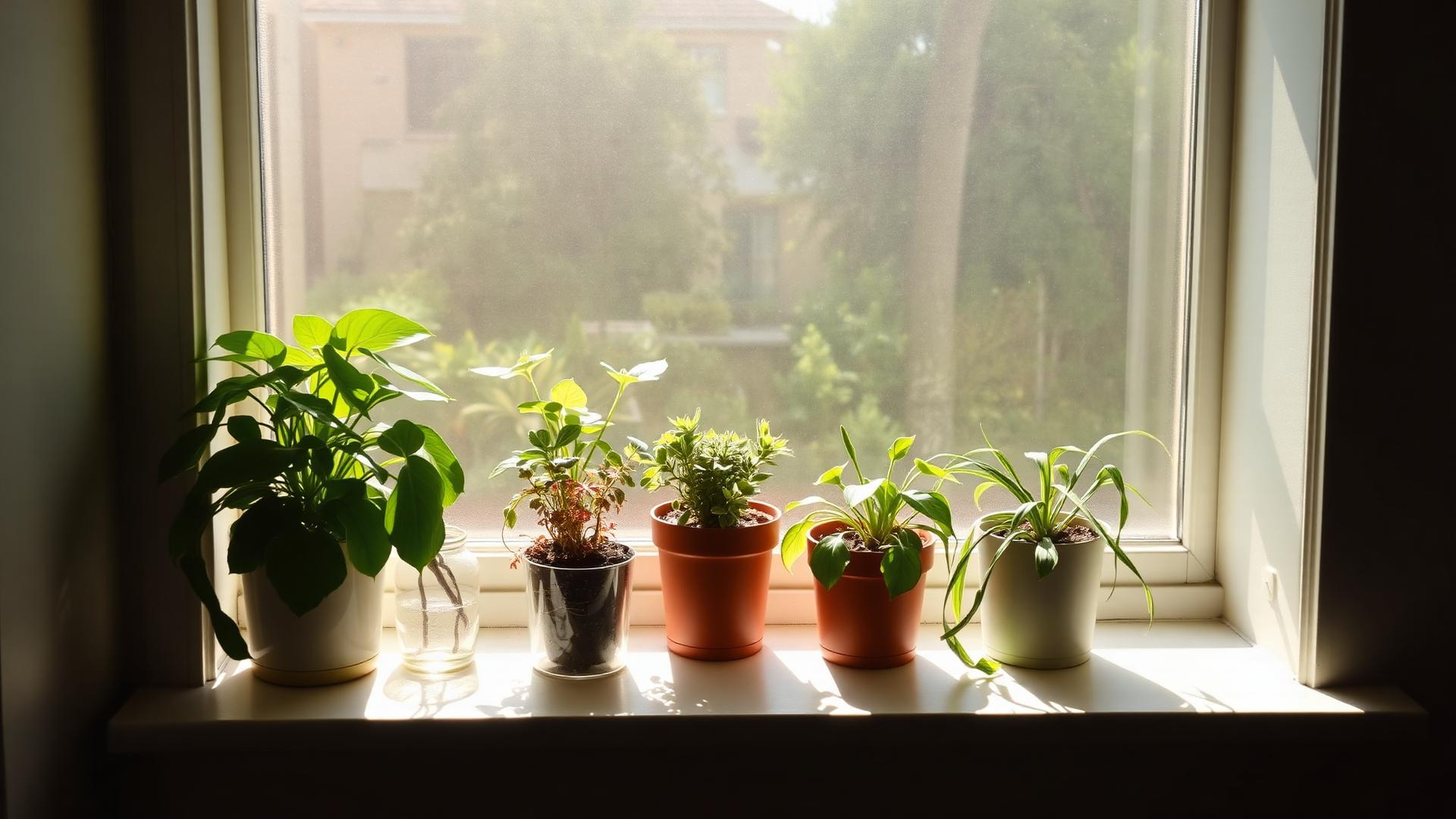
Why a hot room is its own kind of problem
A greenhouse works by trapping heat behind glass, and an unshaded, unventilated room in a heatwave does exactly the same thing by accident. Outdoors, a plant in 30-degree heat still gets air movement, cooling overnight, and often some shade at points through the day. A houseplant sitting on a windowsill in a still, sun-baked room gets none of that — the heat builds and simply sits there, sometimes long after the outside temperature has dropped for the evening.
Glass makes it worse in a specific way: a window doesn't just let heat in, it can concentrate it. A plant sitting directly against south or west-facing glass in the afternoon can be sitting in conditions considerably hotter than the room's own thermometer reading, because it's absorbing direct radiant heat at close range as well as the ambient warmth around it. That's the single biggest difference between "the room is warm" and "the plant is in trouble" — position relative to the glass matters more than the room's overall temperature.
Heat stress, light stress, or water stress — telling them apart
Several different problems can look similar on a struggling houseplant, and treating the wrong one usually makes things worse rather than better.
| Sign | Likely cause | What to do |
|---|---|---|
| Crispy, brown patches on leaves facing the window | Scorch — too much direct sun and heat at close range | Move back from the glass, not necessarily to a darker spot entirely |
| Whole plant wilting despite moist compost | Heat stress — the plant is losing water through its leaves faster than roots can replace it | Move somewhere cooler and out of direct sun; don't add more water on top |
| Wilting with dry, light compost | Straightforward thirst | Water thoroughly, ideally by standing the pot in water briefly to rehydrate evenly |
| Soft, yellowing leaves in damp compost | Overwatering, not heat | Let it dry out; heat does not mean water more automatically |
| Fine webbing, speckled or dull leaves | Spider mites, which thrive in hot, dry indoor air | Increase humidity, rinse the plant, isolate it from others nearby |
The genuinely useful habit here is the same one that underpins all watering: check the compost before you act, rather than assuming heat automatically means the plant needs more water. It very often doesn't.
Move plants back from the glass, not necessarily into the dark
The instinct in a heatwave is often to shift plants somewhere shadier, but the more precise fix is usually just distance from the window rather than a dramatically darker spot. A few feet back from a south or west-facing pane can be the difference between scorch and a perfectly happy plant, without sacrificing the light most houseplants still want. Sheer curtains, blinds angled to filter rather than block, or simply repositioning a plant to a north or east-facing sill for the hottest weeks all help take the edge off midday and afternoon sun without plunging everything into gloom.
Watering in a hot room
This is where the instinct to overcorrect is strongest, and it's worth resisting. A hot room does not automatically mean a thirsty plant — compost dries out faster in heat, certainly, but the same overwatering trap applies just as much in summer as in any other season. Check before you water rather than watering more simply because it's warm.
That said, do check more often. Compost that would stay damp for a week in spring can dry out in half that time during a genuine heatwave, so the finger test earns its keep here more than ever. If a pot has dried out completely, a quick top-up won't rehydrate it properly — stand it in a shallow tray of water for fifteen to twenty minutes and let it soak up from below instead, which gets the whole rootball evenly moist rather than leaving a dry core. Our full guide to watering plants properly covers this method in more depth if you haven't used it before.
Humidity, airflow and grouping
Hot air is very often dry air too, especially if a fan or any air conditioning is running, and low humidity stresses many houseplants — particularly the ones that evolved on humid tropical forest floors — on top of the heat itself. A few things help without any special equipment:
- Group plants together. Clustered pots create a slightly more humid pocket of air around themselves than a single plant standing alone, simply through the moisture each one gives off.
- Stand pots on a tray of damp pebbles. The water evaporating around the pot raises local humidity without waterlogging the roots.
- Open a window, or run a fan on the room rather than the plant. Stagnant hot air is worse than moving warm air — some gentle airflow helps a plant cope with heat considerably better than being sealed in with it, though a fan blasting directly onto foliage can dry leaves out unevenly, so aim it at the room, not the plant.
The RHS guidance on houseplants in summer is worth a read if you want a second angle on shade, ventilation and holiday-proofing.
What not to do
A few instincts that feel helpful in a heatwave tend to backfire.
- Don't move a hot plant straight into cold air conditioning or in front of an open freezer. The temperature shock — going from a very warm room to a sudden blast of cold air — stresses a plant more than steady heat does, and can cause leaf drop on its own regardless of the heat that came before it.
- Don't feed a heat-stressed plant. Feeding asks a plant to put on new growth at exactly the moment it's struggling just to survive, and can scorch already-stressed roots. Wait until it's settled and growing normally again.
- Don't repot during a heatwave. Repotting is itself a stress event, disturbing roots right when the plant has the least spare capacity to recover. Hold off until the weather breaks.
- Don't assume every drooping leaf means more water. As the table above shows, wilting can mean too much heat, too little water, or too much water — check the compost before deciding which.
The plants most likely to struggle
Thin-leaved, moisture-loving plants — ferns, calatheas, peace lilies, most prayer plants — tend to show heat and humidity stress fastest, wilting and crisping at the edges before tougher plants even notice. The genuinely resilient houseplants (snake plants, ZZ plants, cast iron plants, pothos) generally cope with a hot room far better, since the same drought-and-neglect tolerance that makes them forgiving of a missed watering also makes them steadier through a heatwave. If you're building a collection with an eye to summers like this one, our guide to the best houseplants for beginners leans heavily on exactly these tougher varieties.
If you're in a tropical or warm climate… a genuinely hot, humid climate is closer to what many houseplants evolved for than a dry UK heatwave is, so the balance shifts: heat itself is less of a threat, but strong direct sun through unshaded glass and inconsistent watering still catch plants out in exactly the same way. The core habits — check the compost, keep plants back from direct glass, watch for scorch — apply everywhere, just with different baseline conditions to work from.
FAQ
Should I water my houseplants more often in a heatwave?
Check more often, but only water when the compost is actually drying out — heat alone doesn't mean a plant needs more water, and overwatering remains one of the most common ways houseplants are killed, even in hot weather.
Why are my houseplant's leaves going crispy and brown at the edges?
Usually scorch from direct sun and heat at close range to a window, especially in the afternoon on a south or west-facing sill. Move the plant back a few feet from the glass rather than assuming it needs more water.
Is it bad to put a fan directly on my houseplants?
A fan blowing gently across a room helps by keeping air moving, but pointed directly at foliage for long periods it can dry leaves out unevenly and stress the plant. Aim a fan at the room generally rather than straight at any one plant.
Can I move my houseplants outside during a heatwave to cool them down?
Not directly into strong sun — that's often hotter and more intense than an indoor windowsill. If you do move tender houseplants outdoors for summer, introduce them gradually to a shaded or dappled spot rather than full sun, and bring them back in before nights turn cool.
Why is my houseplant wilting even though the soil is damp?
That's a sign of heat stress rather than thirst — the plant is losing water through its leaves faster than its roots can take it up, even with moisture available. Move it somewhere cooler and out of direct sun rather than adding more water.
Do houseplants need more humidity in hot weather?
Often, yes, particularly thinner-leaved tropical plants like ferns and calatheas, since hot air (especially with air conditioning running) tends to be dry air. Grouping plants together or standing pots on a tray of damp pebbles both help without any special equipment.
RELATED POSTS
Robin is a small-space grower writing for everyone working with a courtyard, balcony, window box, patio or sunny sill. Edible and leafy, both kept alive in the kind of light real small spaces actually get.
✦ Free with the newsletter — the small-space starter sheet
Grow Anywhere — a free weekly email.
The Potted Club newsletter. A short note from Robin — what to sow, one plant problem solved, and the best new guide.
FREE WEEKLY EMAIL · NO SPAM · UNSUBSCRIBE ANYTIME