HOME / GUIDES / GETTING STARTED
Container Growing Fundamentals
Everything worth knowing about growing plants in pots, indoors and out: choosing the right container, drainage that actually works, which compost matters and which doesn't, feeding, repotting, and why containers behave differently to open ground.
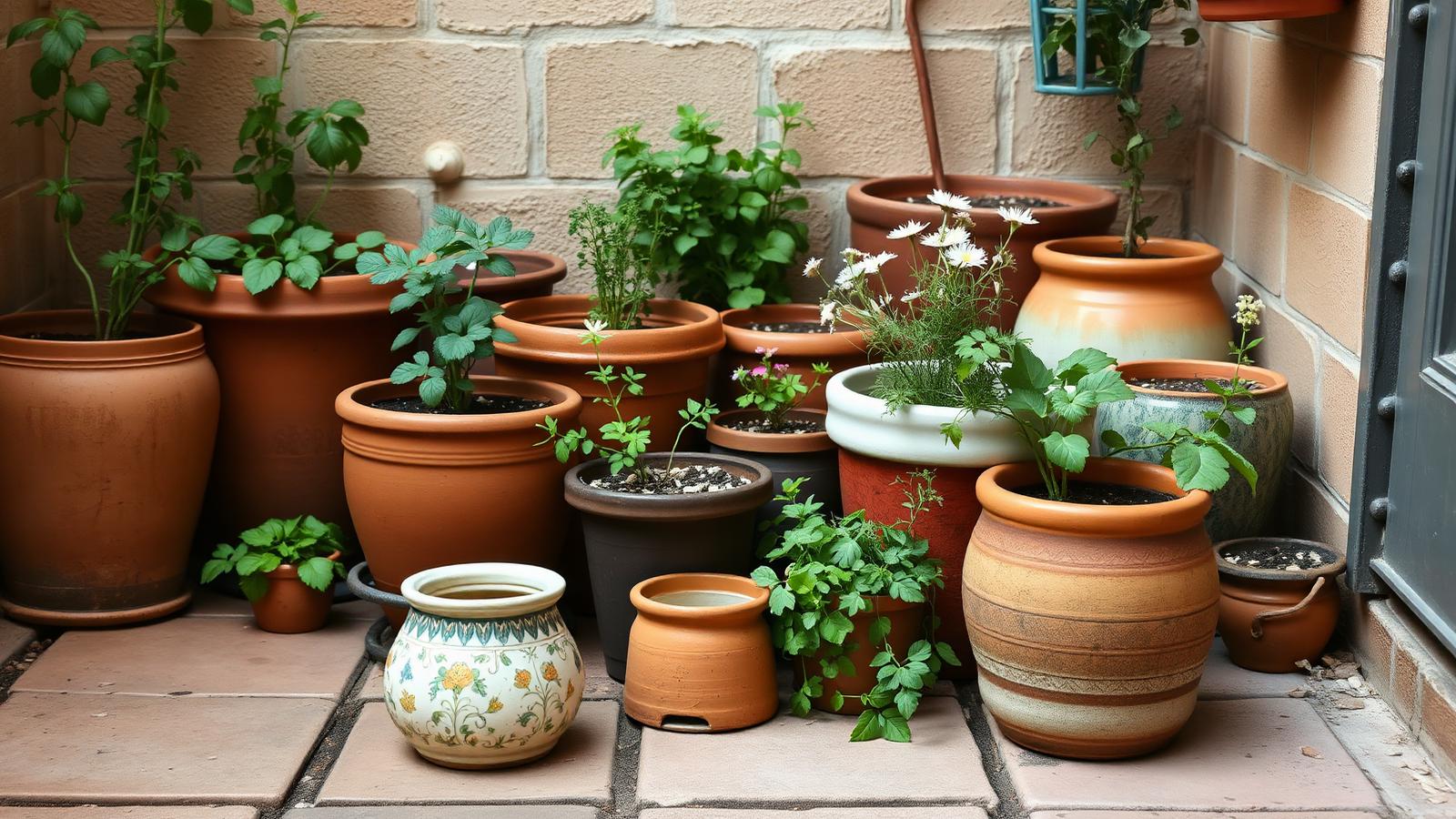
Why containers are a different game
Growing in pots isn't just growing in miniature. It's a fundamentally different environment to open ground, and the small handful of things that make it different are the things that matter for whether your plants thrive or quietly die.
An open border has room to spread. If a plant needs more water, its roots reach further down. If the surface layer dries out, there's cool damp soil beneath. Nutrients are constantly cycling in from decomposing leaves, worm activity, rainwater. Rain washes salts through. Roots have effectively unlimited space to grow into.
A pot has none of that. It has exactly one volume of compost, exactly what nutrients you put into it, exactly the water you supply. What isn't there, isn't coming from anywhere else. A container plant depends entirely on you understanding this, and getting a few basics right.
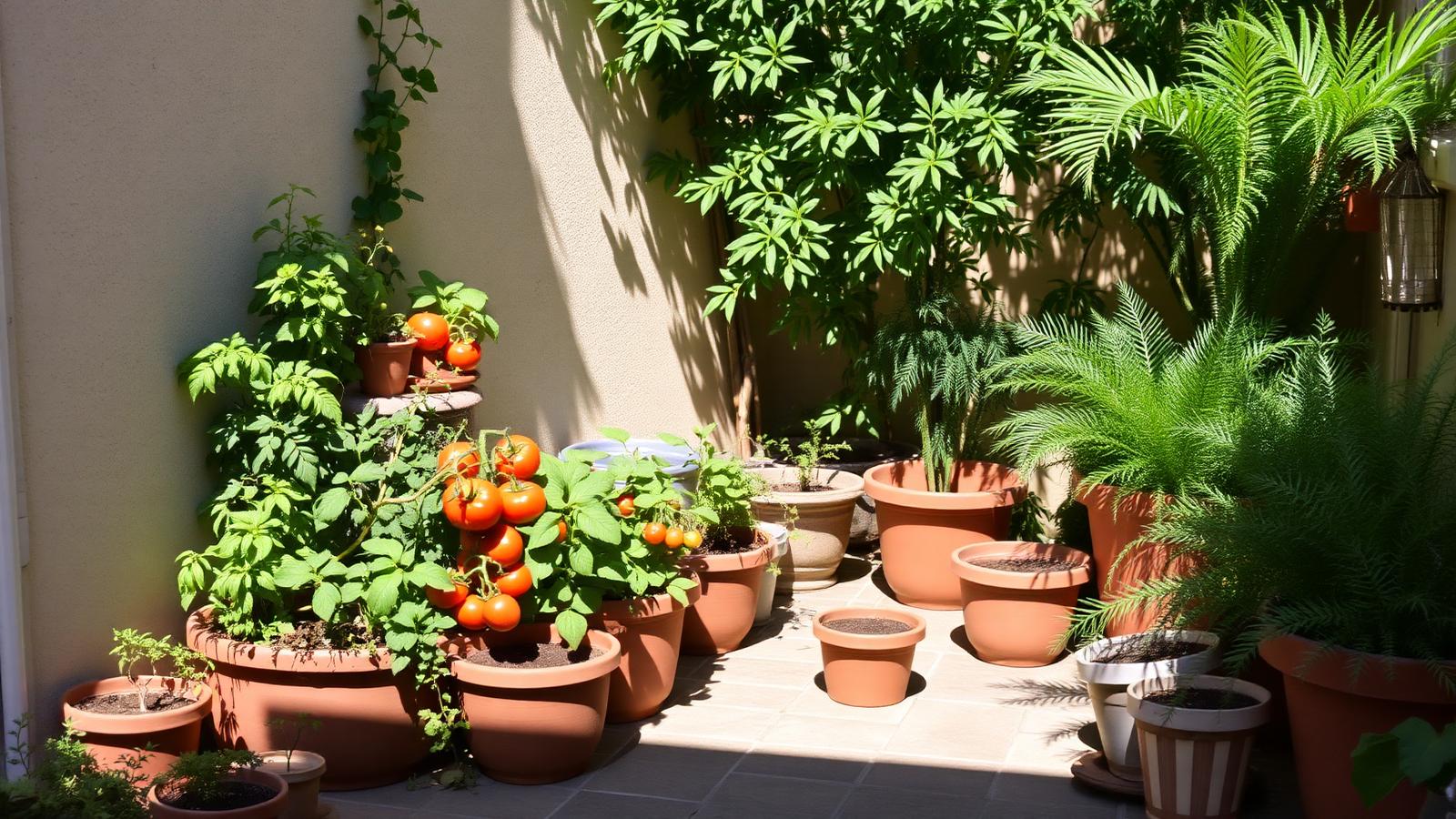
Get those basics right, though, and containers are genuinely a joy. You control the compost, the position, the drainage, the exposure. You can grow things you couldn't in your actual ground — strawberries on a windowsill, tomatoes on a patio, mint that doesn't take over the whole garden, or exactly the herbs you use most rather than whatever the supermarket has that week. You can move plants seasonally. You can garden on a balcony, a windowsill, a courtyard, a rooftop, in a rented flat with no soil at all.
Choosing a pot
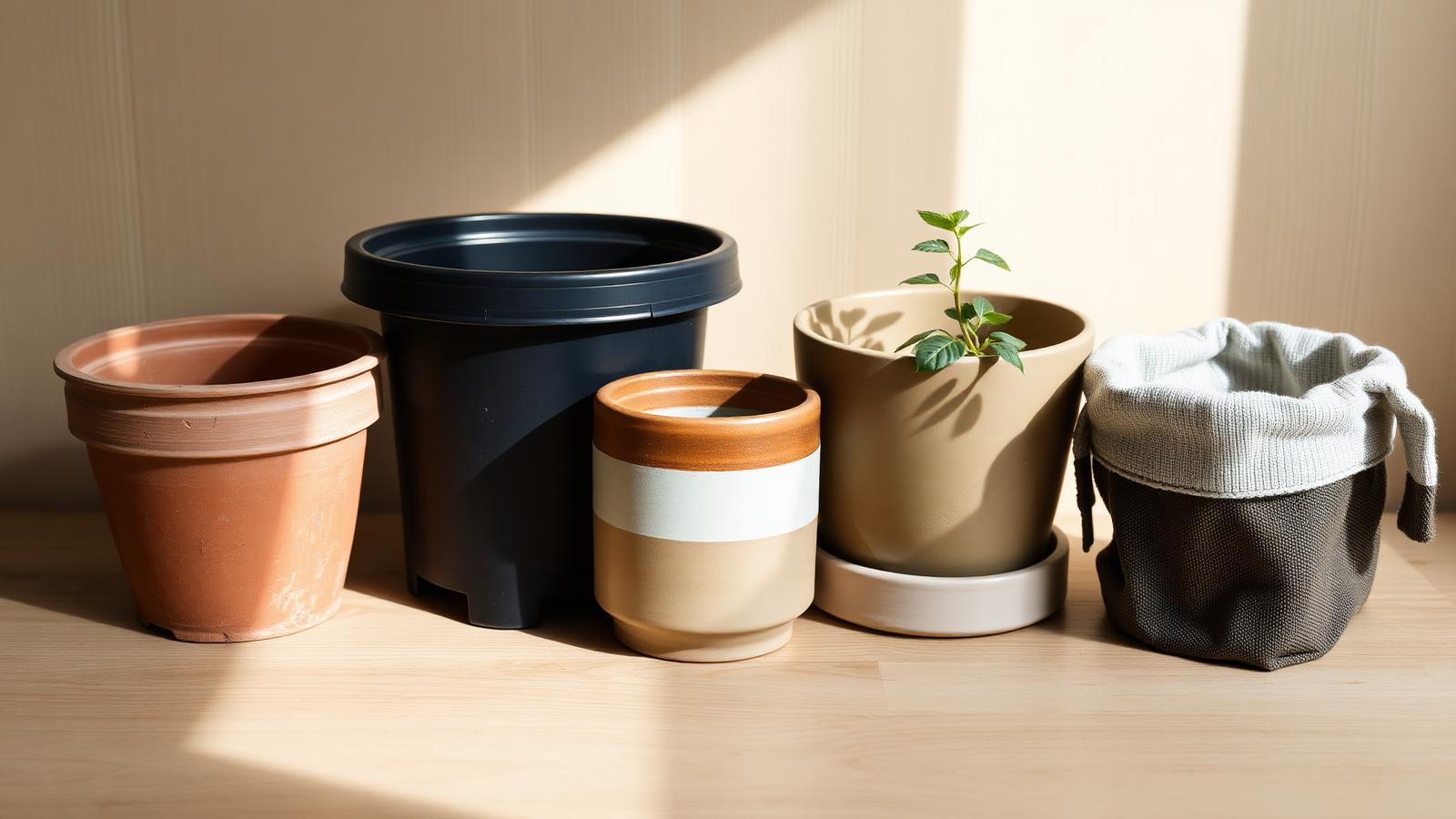
The pot itself matters more than most people realise, and the differences between materials are practical rather than just aesthetic.
Terracotta is porous, which means it breathes and lets excess moisture evaporate through the walls. That makes it harder to overwater and easier to underwater — great for Mediterranean plants (rosemary, lavender, olives) that hate wet feet, less ideal for thirsty plants in genuine heat, since it dries out faster than plastic. It's also heavy, which matters if the pot needs to move.
Glazed ceramic looks similar but the glaze seals the pot, so it behaves much more like plastic — retains moisture longer, doesn't breathe. Attractive, but heavier and often more expensive.
Plastic is the practical workhorse. Cheap, light, retains moisture well, comes in every size. Not the prettiest, but you can put a plastic pot inside a decorative one (a cachepot) if the look matters. Also the most forgiving for beginners since it's harder to accidentally dry out.
Fabric pots (grow bags, root pouches) are increasingly popular for edibles. They breathe, they encourage healthier root systems by air-pruning roots at the edges rather than letting them circle, and they're extremely light. They dry out fast in heat, though.
Wood — half barrels, planters — is fine and looks good, but line the inside with plastic if you want it to last, since untreated wood in constant contact with damp compost rots within a few years.
Metal looks striking but heats up dramatically in direct sun, which can genuinely cook roots. Use with caution in a sunny position.
Whatever material you choose, size matters more than style. Small pots dry out fast, get stressed easily, and limit plant size. Bigger pots hold more moisture, more nutrients, and buffer temperature swings. A rough rule: if you're not sure, go one size up from what you think you need.
Drainage: the non-negotiable
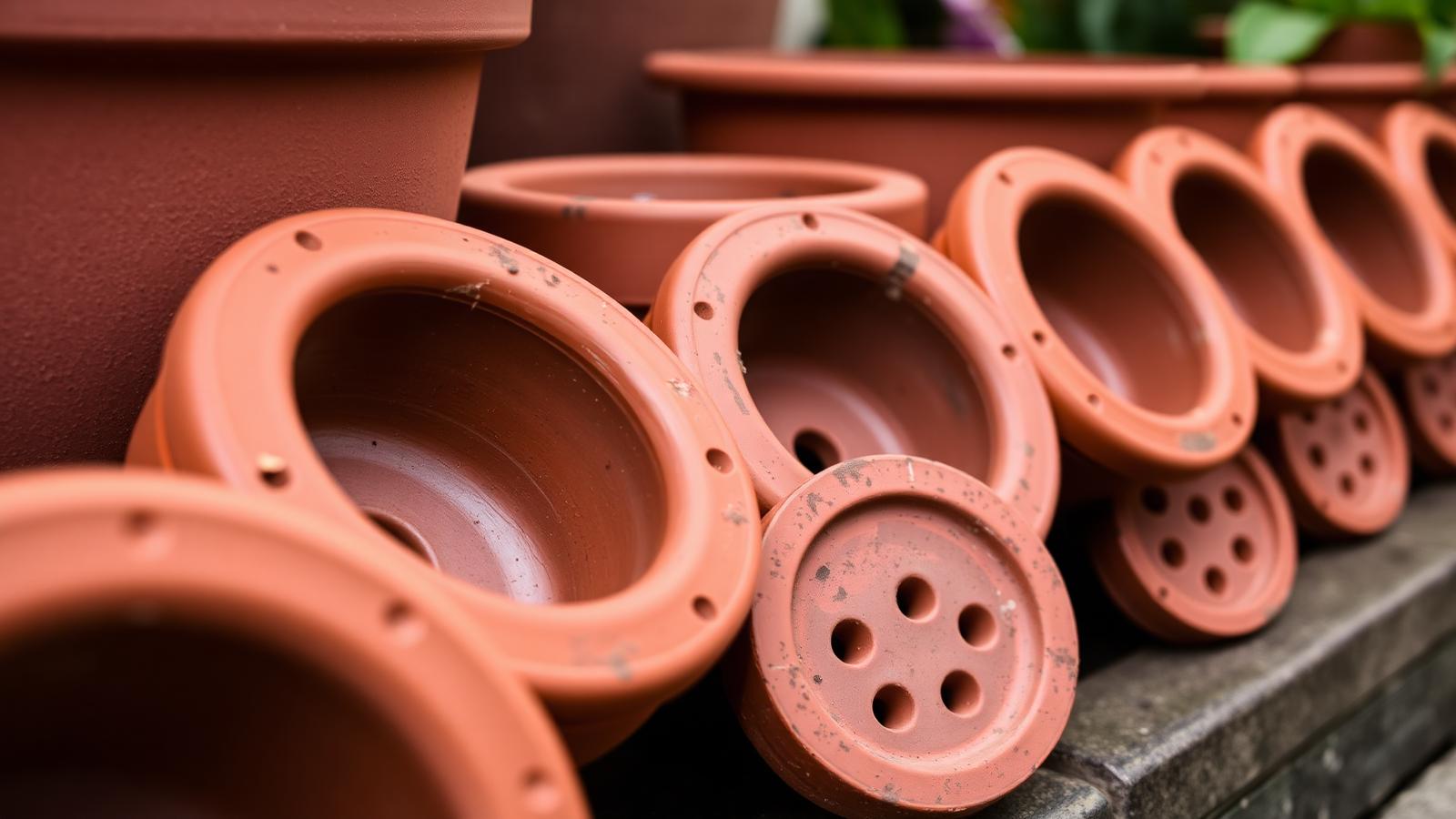
Every single pot for outdoor or indoor growing needs drainage holes. This isn't a preference or a nice-to-have. Roots need air as well as water, and compost that sits waterlogged with nowhere for excess to escape drowns them. An overwatered plant looks like a thirsty one — wilting, yellowing leaves — so the natural instinct is to water more, which finishes it off.
If a pot doesn't have holes, drill some. If it can't be drilled (a nice ceramic cachepot, for instance), don't plant into it directly — put a plastic nursery pot with holes inside it, and lift that inner pot out to drain after watering. A saucer beneath a drained pot is fine, but empty it if water sits there for hours; no plant should stand in standing water for long.
The old advice about putting broken crocks or gravel in the bottom of pots for drainage is largely a myth. Recent gardening research has shown it doesn't actually help drainage — water moves through soil layers based on physics that don't care about the pot bottom. What matters is that the holes at the bottom are open and the compost above them is good quality. Save the pottery shards.
Compost: what actually matters
This is where most container growers save money in the wrong place. The pot is largely decorative. The compost inside it is doing all the work.
Do not use garden soil in pots. It compacts, drains poorly, brings in weed seeds and pests, and lacks the balance of nutrients and drainage aids that a proper compost has. It's genuinely a different material.
Multi-purpose compost is the reliable default for most plants. Buy a reputable brand — cheap own-label compost often varies wildly in quality, and a bad batch can stunt a whole season. Look for something described as being suitable for containers specifically, since these are formulated with better water retention.
Peat-free is worth choosing where you can. The gardening industry has been moving away from peat compost for genuine environmental reasons — peat bogs store enormous amounts of carbon and take thousands of years to form — and modern peat-free composts perform well. Some brands are noticeably better than others; it's worth reading reviews rather than assuming all peat-free is equal.
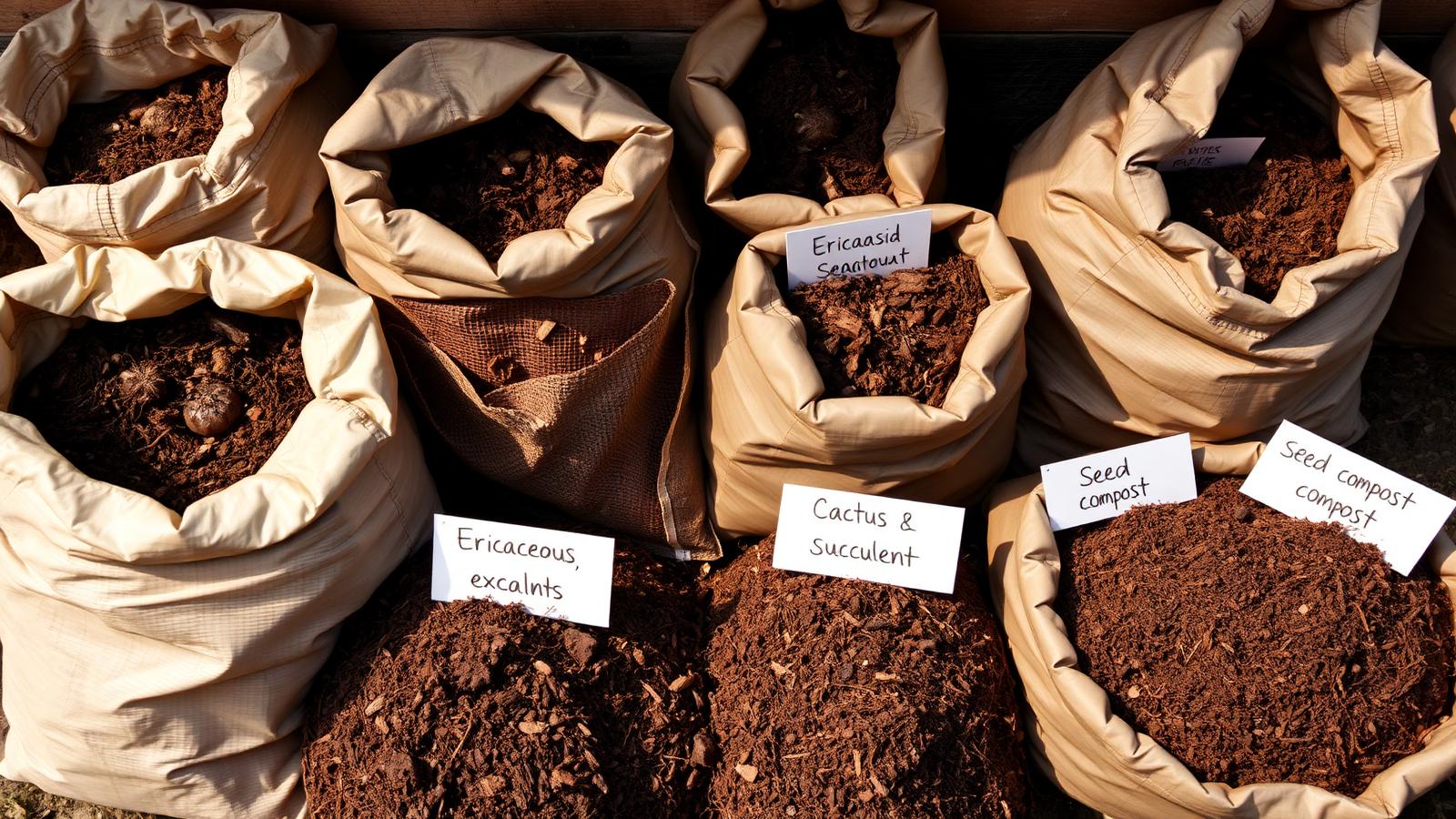
Specialist composts matter for a few groups of plants:
- Ericaceous compost for acid-loving plants — blueberries, camellias, rhododendrons, azaleas, heathers. These plants can't take up nutrients properly at normal soil pH, and standard compost quietly starves them.
- Cactus and succulent compost for anything drought-adapted. Free-draining, low in organic matter, exactly what a plant that resents wet feet wants.
- Seed compost for starting seeds. Finer texture, lower nutrient content (young roots don't want a rich diet), better for germination.
- John Innes composts are soil-based rather than peat-based, heavier, and hold moisture and nutrients longer. Good for long-term plantings like trees, shrubs, and perennials that will stay in the same pot for years.
For everyday growing, though, a decent multi-purpose compost handles the majority of what you'll grow.
Feeding: what open ground does that pots don't
This is the point most people miss, and it's the single biggest reason healthy young plants gradually decline in pots.
Multi-purpose compost contains enough nutrients to support most plants for roughly six weeks. After that, whatever fertiliser was in the compost is used up — absorbed by the plant, or washed out through the drainage holes by regular watering. In open ground, nutrients are continually replaced by decomposing organic matter, worm activity, and rain leaching minerals through the soil profile. In a pot, none of that happens.
So container plants need feeding. From roughly six weeks after planting or repotting, right through the growing season (spring to early autumn), give container plants a regular liquid feed. A general-purpose liquid fertiliser works for most; a tomato feed (high in potassium) suits anything that flowers or fruits; a nitrogen-rich feed suits leafy growth. Once a fortnight is a reasonable rhythm for most plants; weekly for greedy feeders like tomatoes and hungry fruit crops.
Stop feeding in autumn as growth slows, and don't feed a resting or dormant plant in winter — you'll only encourage weak growth that struggles.
Slow-release granular feeds mixed into compost at planting or scattered on the surface can supplement or replace liquid feeding, and are useful for people who forget. But for everyday growing, a bottle of liquid feed and a weekly habit is the simplest approach.
Watering, briefly
Container watering is covered in depth in the dedicated guide on watering plants properly, but the container-specific essentials are worth summarising here.
Pots dry out much faster than open ground, especially small pots, terracotta, and anything in strong sun or wind. Check daily in warm weather. Water when the top few centimetres of compost feel dry, not on a fixed schedule.
Water thoroughly. A quick surface splash only wets the top layer; water slowly until it runs freely from the drainage holes, which tells you the whole rootball has had a drink. Then wait until the plant needs it again.
The overwatering trap is just as much a summer problem as a winter one. A wilting plant in soggy compost is drowning, not thirsty. Check before you water.
Positioning a container
Where you put a pot is often more important than which pot you chose.
- Full sun — most Mediterranean herbs (rosemary, thyme, oregano, sage), tomatoes, chillies, peppers, aubergines, most flowering annuals, most succulents. In genuine UK sun. This means at least six hours of direct sun a day.
- Partial sun / dappled shade — most soft fruit, salads, spinach, chard, mint, parsley, most houseplants that live outdoors for summer, ferns.
- Full shade — few edibles will thrive here, but ferns, some hostas, and shade-loving foliage plants work well.
Container plants can also be moved as conditions change — into shelter for a hot spell, into brighter light in autumn, or indoors for winter. This is one of the genuine advantages of growing in pots. Use it.
Wind matters more for containers than most people realise, since a top-heavy pot in a windy spot can blow over, and consistent wind dries out compost dramatically faster than still air.
Repotting: when and how
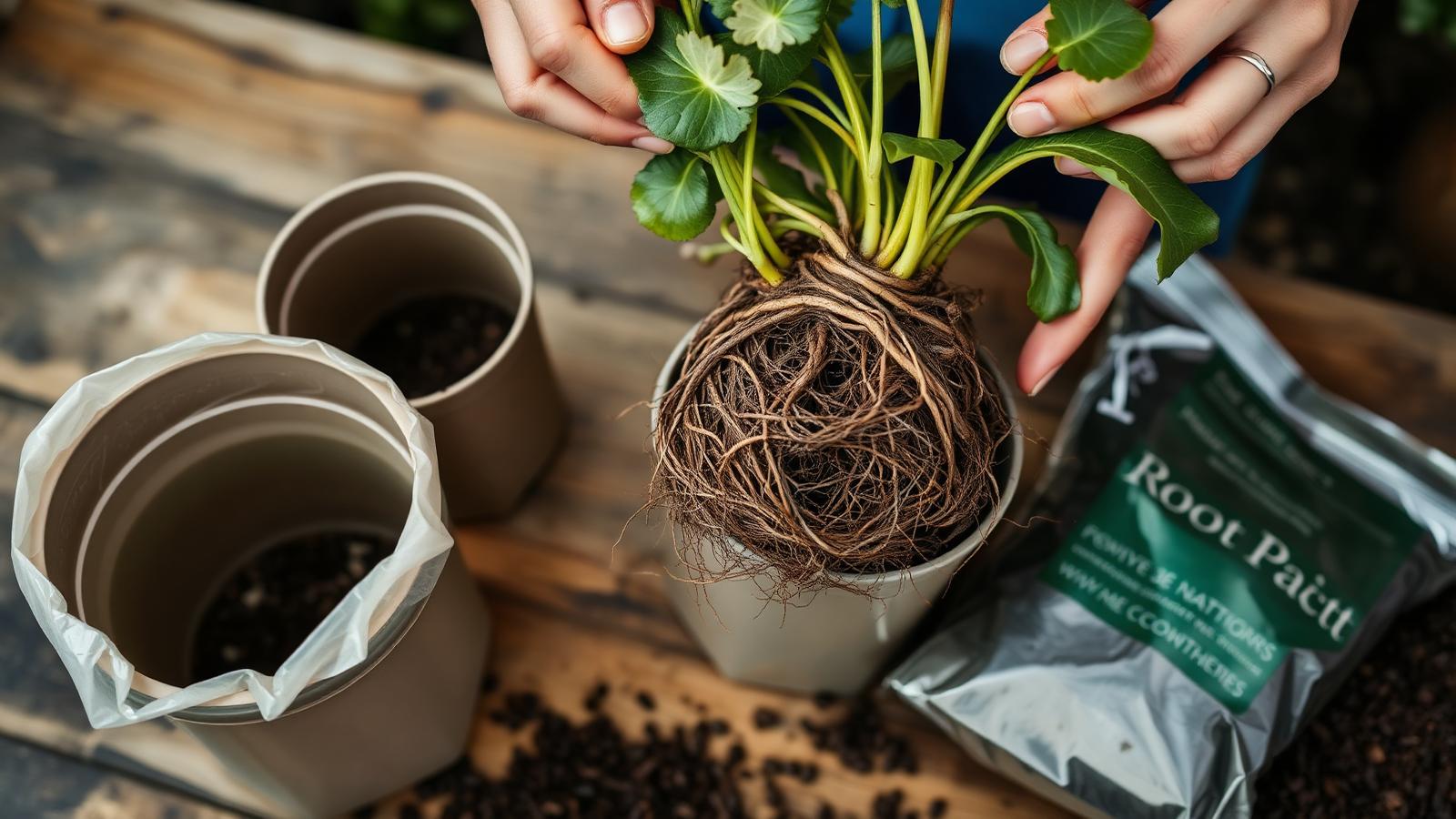
Container plants outgrow their pots. Roots fill the available space, compost gets exhausted, drainage deteriorates. Repotting is how you reset that.
Signs a plant needs repotting:
- Roots visible growing out of the drainage holes.
- Water running straight through without being absorbed (compost has broken down and lost its structure).
- Plant drying out unusually fast even after watering thoroughly.
- Plant looking pale or lacking vigour despite regular feeding.
- Top-heavy plant tipping the pot over.
Most plants benefit from repotting every one to three years, depending on how fast they grow. Fast growers (tomatoes, annuals) get fresh compost every season anyway. Slow growers (mature shrubs, established houseplants) can go longer.
How to repot:
- Water the plant thoroughly a few hours before repotting. Dry rootballs are harder to work with and more stressful for the plant.
- Choose a new pot one or two sizes larger. Going dramatically larger — putting a small plant in a huge pot — often leads to overwatering, because there's more compost than the roots can drink from.
- Add fresh compost to the base of the new pot.
- Ease the plant out of its old pot. Tap the sides, squeeze a plastic pot, or slide a knife around the edge of a rigid pot to release it.
- Gently tease the outer roots free if they've wound around the rootball.
- Position the plant in the new pot so the top of the rootball sits about 2cm below the pot rim, to leave space for watering.
- Backfill around the sides with fresh compost, firming gently.
- Water thoroughly.
For plants that don't need repotting yet but have been in the same pot a while, top-dressing works as a lighter intervention: scrape off the top 2-3cm of tired compost and replace it with fresh, ideally with some slow-release fertiliser mixed in. This tops up nutrients without disturbing roots.
Avoid repotting in the middle of a heatwave, in the middle of flowering, or when a plant is stressed — it's a stress event itself, and adding it to another one often does more harm than good.
Getting containers through winter
Most winter losses in containers aren't from cold directly. They're from waterlogging, root freeze, or pot damage.
Waterlogging. Container plants need less water in winter as growth slows, but they still need drainage. Wet compost that never dries out in cool, low-light conditions is a recipe for root rot. Check pots aren't sitting in permanently full saucers.
Root freeze. Roots in a pot are far more exposed to cold than roots in the ground, because there's no thermal mass of surrounding soil to buffer the temperature. In a hard freeze, roots in a small pot can freeze solid, killing even hardy plants that would survive the same temperatures in open ground. Move vulnerable pots against a house wall, or wrap them in hessian, bubble wrap or fleece.
Pot damage. Terracotta especially can crack in a hard freeze if compost is wet and expanding as it freezes. Raising pots on feet to improve drainage helps, as does wrapping.
Reduced light. Some plants that summer outside want bringing indoors for winter — bay standards, olives, and tender fruit trees like citrus will suffer in a UK winter left outside unprotected.
FAQ
What size pot does my plant actually need?
As a general rule, match the pot to the mature size of the plant, not the current size. Small annuals and herbs work in pots from about 15cm. Larger plants and shrubs generally want 30cm or more. Trees and long-term specimens need genuinely large containers — 40-60cm minimum. Undersized pots limit plant growth and dry out too fast to be practical.
Can I use garden soil in a pot?
No. Garden soil compacts, drains poorly, and doesn't provide the balance a container needs. Always use a proper compost — multi-purpose for most plants, specialist compost for ericaceous or drought-loving plants.
How often should I feed container plants?
Roughly every fortnight through the growing season with a general-purpose liquid feed, once the compost's own nutrients run out (about six weeks after planting or repotting). Heavier feeders like tomatoes want weekly. Stop feeding in autumn as growth slows, and don't feed dormant plants in winter.
Do container plants really need repotting every year?
Not every year for most plants, but every one to three years is typical. Fast growers and annual crops get fresh compost each season. Slow-growing shrubs and mature houseplants can go longer, with top-dressing in the years between.
Why does water run straight through my pot without being absorbed?
The compost has usually broken down or dried out so hard the water can't penetrate. Either repot with fresh compost, or rehydrate by standing the pot in a shallow tray of water for 15-30 minutes so it soaks up from below rather than off the top.
Is peat-free compost really as good as the old peat-based kind?
The best modern peat-free composts perform well, though there's more variation between brands than there used to be with peat. Reading reviews and sticking with a brand that works for you is worth doing. The environmental case for peat-free is genuine, so it's a switch worth making.
Can I put a plant straight from the garden centre into a decorative pot?
Yes, but with two caveats: check the plant actually needs repotting (if it's already in a decent-sized nursery pot with plenty of root space, you may be better off dropping it into the decorative pot inside its nursery pot, which is easier to lift out and drain). And check the decorative pot has drainage — if it doesn't, use it as a cachepot with the nursery pot inside rather than planting straight in.
What plants are easiest to grow in containers for a beginner?
Most herbs, salad leaves, radishes, and small flowering annuals like violas are all forgiving container starters. Snake plants, pothos, and ZZ plants are the equivalent indoors. Anything that likes a lot of water and rich soil (hostas, some vegetables) is harder in pots. Anything that needs deep roots (carrots, parsnips, most shrubs and trees) needs a larger pot than you'd think.
FURTHER READING
- Getting Started
How to Water Plants Properly
- Houseplants
Best Indoor Plants for Beginners
- Getting Started
How to Propagate Plants
Robin is a small-space grower writing for everyone working with a courtyard, balcony, window box, patio or sunny sill. Edible and leafy, both kept alive in the kind of light real small spaces actually get.
✦ Free with the newsletter — the small-space starter sheet
Grow Anywhere — a free weekly email.
The Potted Club newsletter. A short note from Robin — what to sow, one plant problem solved, and the best new guide.
FREE WEEKLY EMAIL · NO SPAM · UNSUBSCRIBE ANYTIME