What's Actually Worth Buying at the Garden Centre This Bank Holiday
Bank Holiday garden centre trips mix genuine bargains with stock nobody else wants. Here's what's worth buying now, what to skip, and how to tell the difference.
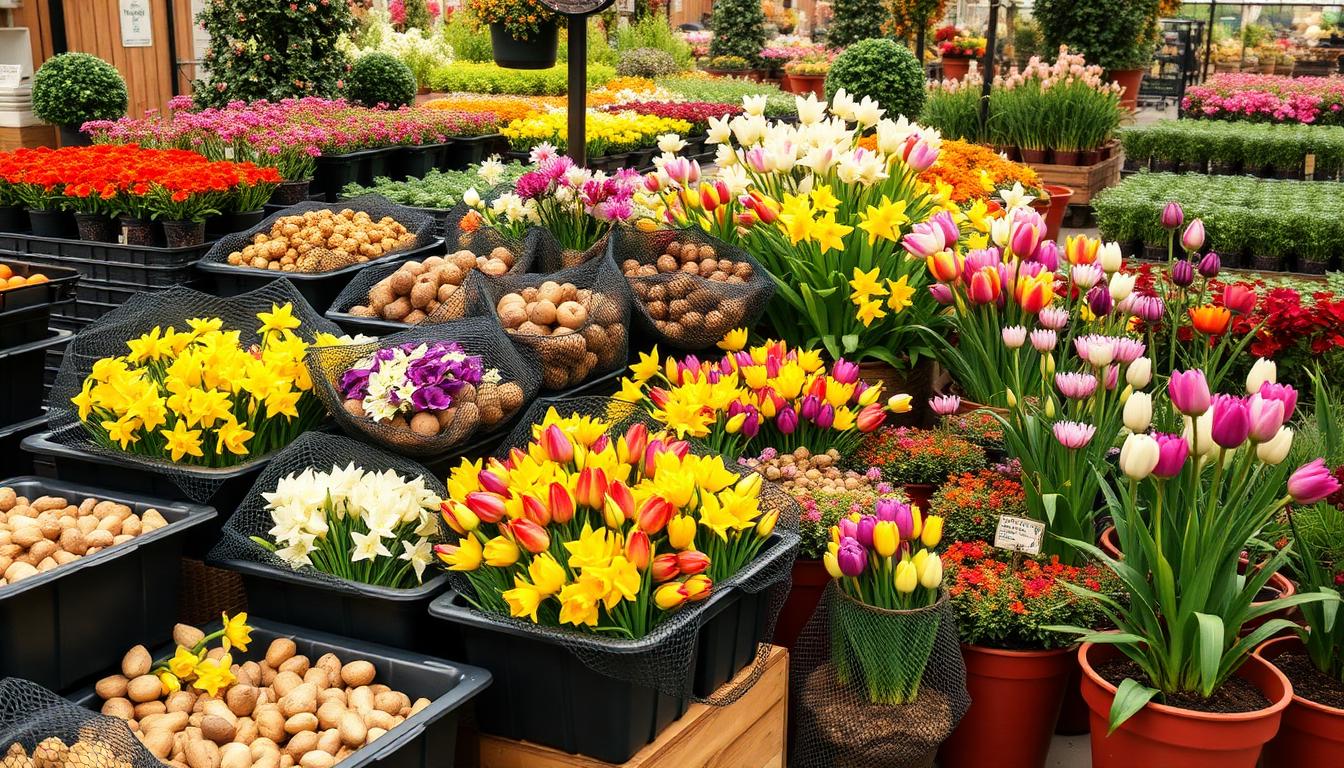
The bank holiday trip is worth it, selectively
Garden centres lean hard into bank holiday weekends. That can make late August a genuinely useful time to visit, but it also creates a peculiar mix of stock: autumn arrivals appearing at one end of the shop while the remains of summer are being marked down at the other.
Some of those reductions are genuine bargains. Others are plants that have spent too long in a small pot, been inconsistently watered for weeks, and are now being offered cheaply because nobody wanted them at full price either.
The useful question isn't "is it reduced?" It's "would I still want this if I couldn't see the red sticker?" If the answer is yes, here's what we'd be looking at.
Buy spring bulbs now
This is probably the strongest reason to make the trip. Garden centres are beginning to fill with bulbs for next year's displays, and buying while the range is wide gives you more choice than leaving everything until late in the planting season.
For a container gardener, bulbs are particularly useful. They occupy relatively little space, work brilliantly in pots and can give you weeks of colour before many permanent container plants have properly started growing again.
But there's one important distinction: buying bulbs now doesn't mean planting all of them now. Daffodils, crocuses and hyacinths are best planted in early autumn, ideally by the end of September. Hardy summer-flowering bulbs such as alliums generally go in during September and October. Tulips are different again, best left until November, since colder soil reduces the risk of tulip fire, a fungal disease that thrives in warm, damp conditions. The RHS has a full rundown of bulb planting times if you want to check a specific variety.
So if you see a tulip variety you particularly want this weekend, buying it is perfectly reasonable, provided you keep the bulbs somewhere cool and dry until you're ready to plant. For other bulbs, don't buy them with the intention of leaving them sitting around unnecessarily for months; bulbs can flower poorly after prolonged storage, so plant them at the appropriate time rather than letting them sit indefinitely.
Think of the bank holiday as the start of bulb-buying season, not a deadline for filling every pot.
What about tulip fire?
This is worth understanding, since it gets attached to a lot of advice about when to plant tulips.
Tulip fire is a fungal disease that can produce distorted or stunted growth, spots on leaves and flowers, and rotting bulbs. Rather than trying to diagnose the health of a bulb once you've brought it home, inspect what you're buying. Bulbs should be firm and free from obvious rot, mould or damage. A dry, papery outer skin isn't in itself a problem, but a bulb that's soft or visibly decaying is one to leave behind.
Don't turn the November tulip recommendation into a rule that all bulbs benefit from sitting in storage until then, though. Different bulbs have different planting windows. Buy according to what you want to grow, then plant according to the bulb rather than the date you happened to visit the garden centre.
Healthy perennials and shrubs: buy selectively
This category needs more judgement. Late August isn't quite the prime autumn planting window for many hardy perennials, which generally do best planted from late September into October, when conditions are typically moist. Container-grown perennials can technically go in throughout the year provided the ground isn't frozen or waterlogged, but summer planting demands more attention to watering.
That doesn't make a healthy reduced perennial a bad buy this weekend. It just means buy now doesn't necessarily mean plant now. If you've found exactly the plant you want, it's healthy, the price is good and you know where it's going, buying it can make perfect sense.
For a container garden specifically, the more important question is whether it suits life in a pot. Check the eventual size, preferred light levels and hardiness rather than buying simply because a perennial looks compact in its current nursery pot; a plant that's 25cm across in the garden centre may not remain 25cm across. And if it's going to live permanently in a pot, make sure you're prepared to give it an appropriately sized container rather than leaving it indefinitely in the plastic pot you bought it in — our container growing fundamentals guide covers pot sizing in detail.
Reduced summer bedding: sometimes worth it
This is where the bank holiday bargain tables become more dangerous.
A plant can be reduced because its peak selling period has passed. That's potentially useful. Or it can be reduced because it's unhealthy. That's very different, and stressed plants are more vulnerable to pests and diseases even if they aren't visibly carrying them when you buy them.
So don't rescue something merely because it's heavily discounted. Healthy but slightly leggy bedding with good foliage and more buds to come may still give you several weeks of colour, particularly if September is mild. A plant with widespread yellowing, collapsing growth, rotting stems or obvious pests isn't suddenly a good plant because it costs next to nothing.
There's also the question of what you're buying it for. If you want an instant splash of colour for a container beside the door and a healthy reduced plant has several weeks left in it, fine. If you're buying an exhausted annual because the discount makes it feel impossible to leave behind, you've bought yourself a gardening job rather than a bargain.
Pots can be a better bargain than plants
Don't spend the entire visit staring at the plant benches. Bank holiday reductions on durable gardening equipment can be much easier to judge. A terracotta pot doesn't become less useful because summer is ending. Neither does a plant support, a set of labels, or a propagation tray. If you know you'll need containers for autumn planting or spring bulbs, reductions now can be genuinely useful.
But buy the right container. Drainage holes are non-negotiable for most outdoor container planting, and for bulbs specifically, particularly tulips, good drainage matters because sitting wet is a much bigger problem than simply being cold.
Think about size too. Very small pots have relatively little compost to buffer changes in moisture and temperature, so they dry rapidly and need more attention. Larger containers generally give roots a more stable environment and more scope for combining bulbs or creating layered displays. And if a ceramic or terracotta pot is going to stay outdoors through winter, check whether it's sold as frost-resistant or suitable for outdoor winter use; the cheapest pot isn't a bargain if the first hard frost splits it.
Seeds: check the packet, not the display
Seed racks are particularly good at making everything look seasonally appropriate. They're not. A packet being available in late August tells you the retailer has it in stock; it doesn't tell you this is the right moment to sow it. Tomatoes, courgettes and many other summer crops may still be sitting on the rack long after their useful outdoor sowing window has passed, as covered in our piece on what's worth planting in August.
That doesn't mean seeds are automatically a bad purchase now, though. Some hardy annuals can be sown in September and October, giving them a head start for flowering the following year. Turn the packet over, check the sowing window, then think about where you're actually going to grow it, which is considerably more useful than treating the garden-centre seed display as a seasonal instruction manual.
Be cautious with reduced houseplants
Houseplants are another category where a large discount can disguise poor condition. Look at the plant first and the price second. Check both sides of the leaves and along stems for obvious pests, look at the compost, and avoid plants that have been left standing in water, checking that the pot itself can drain.
A few cosmetic marks don't automatically make a houseplant a bad buy, but widespread yellowing, collapsing growth, rot or a visible pest infestation should make the decision fairly straightforward. You don't want to bring a cheap plant home and introduce a much more expensive problem to every other houseplant in the room. If you do buy from a reduced section, keeping the newcomer apart from your existing collection while you monitor it is a sensible precaution, and worth doing for any new plant regardless of where it came from.
The thirty-second plant check
Before any discounted plant goes into the trolley, give it half a minute.
Leaves. Look at the overall condition, not one imperfect leaf. Check both sides for insects, webbing, sticky residue, unusual spotting or widespread yellowing.
Stems. They should be firm and healthy rather than collapsing or rotting around the base.
Compost. Extremely dry compost pulling away from the side of the pot suggests the plant hasn't been well maintained. Permanently saturated compost isn't reassuring either.
Roots. If you can see roots through the drainage holes, inspect them, or gently tip the rootball out rather than yanking the plant by its stem. Some visible roots aren't a problem; a dense, congested mass tells you the plant has been sitting there for some time. This is also a good moment to check for root pests like vine weevil grubs, as covered in our pests and diseases guide.
Overall. Ask whether the problem is cosmetic and recoverable or evidence that the plant itself is unhealthy. A few finished flowers, fine. One damaged leaf, probably irrelevant. A slightly awkward shape, fixable. Rot, pests and widespread decline, leave it where it is.
What we'd leave behind
The most useful bank holiday purchase may occasionally be the one you don't make.
Leave unhealthy discount plants to the garden centre. Leave soft or rotten bulbs. Leave seeds that aren't appropriate for anything you're going to sow in the foreseeable future. Leave the enormous perennial that has no realistic future on your balcony, however good it looks in a two-litre pot today. And leave the expensive decorative container that doesn't have a drainage hole unless you have a very specific plan for using it as an outer pot.
A bargain still needs somewhere to live. For a small-space gardener, that's perhaps the most important rule of the lot. Space is more expensive than plants.
FAQ
Is late August too early to buy spring bulbs?
No. It's a useful time to start buying while ranges are appearing in garden centres. But follow the appropriate planting time for the particular bulb rather than planting everything immediately.
When should I plant daffodil bulbs?
Early autumn, ideally by the end of September, is the recommended window for daffodils, crocuses and hyacinths.
Should I buy tulip bulbs now if I won't plant them until November?
Yes, if you've found a variety you want. Tulips are generally best planted later, in November, and bulbs you can't plant immediately store perfectly well somewhere cool and dry until then.
Is discounted summer bedding worth buying?
Sometimes. A healthy plant that's simply past its retail peak can still offer good value. An unhealthy plant isn't a bargain simply because it's cheap.
Is late August a good time to plant perennials?
Container-grown perennials can be planted provided conditions are suitable, but late September to October is generally the better autumn planting window. If you buy now, you don't necessarily need to plant immediately.
How can I tell whether a reduced plant is healthy?
Inspect both sides of the leaves, stems, compost and visible roots. Look for pests, rot, widespread decline or signs of prolonged neglect. Minor cosmetic damage or a slightly awkward shape is very different from a genuinely unhealthy plant.
RELATED POSTS
- Seasonal
What Can You Plant in Pots in August
- Seasonal
When It Finally Rains, Make It Count
- Plant Problems
Why the Slugs Are Back
Robin is a small-space grower writing for everyone working with a courtyard, balcony, window box, patio or sunny sill. Edible and leafy, both kept alive in the kind of light real small spaces actually get.
✦ Free with the newsletter — the small-space starter sheet
Grow Anywhere — a free weekly email.
The Potted Club newsletter. A short note from Robin — what to sow, one plant problem solved, and the best new guide.
FREE WEEKLY EMAIL · NO SPAM · UNSUBSCRIBE ANYTIME