Why the Slugs Are Back
Wetter weather after a long dry spell brings slugs and snails back into view. Most aren't actually a problem. Here's what genuinely helps protect vulnerable plants.
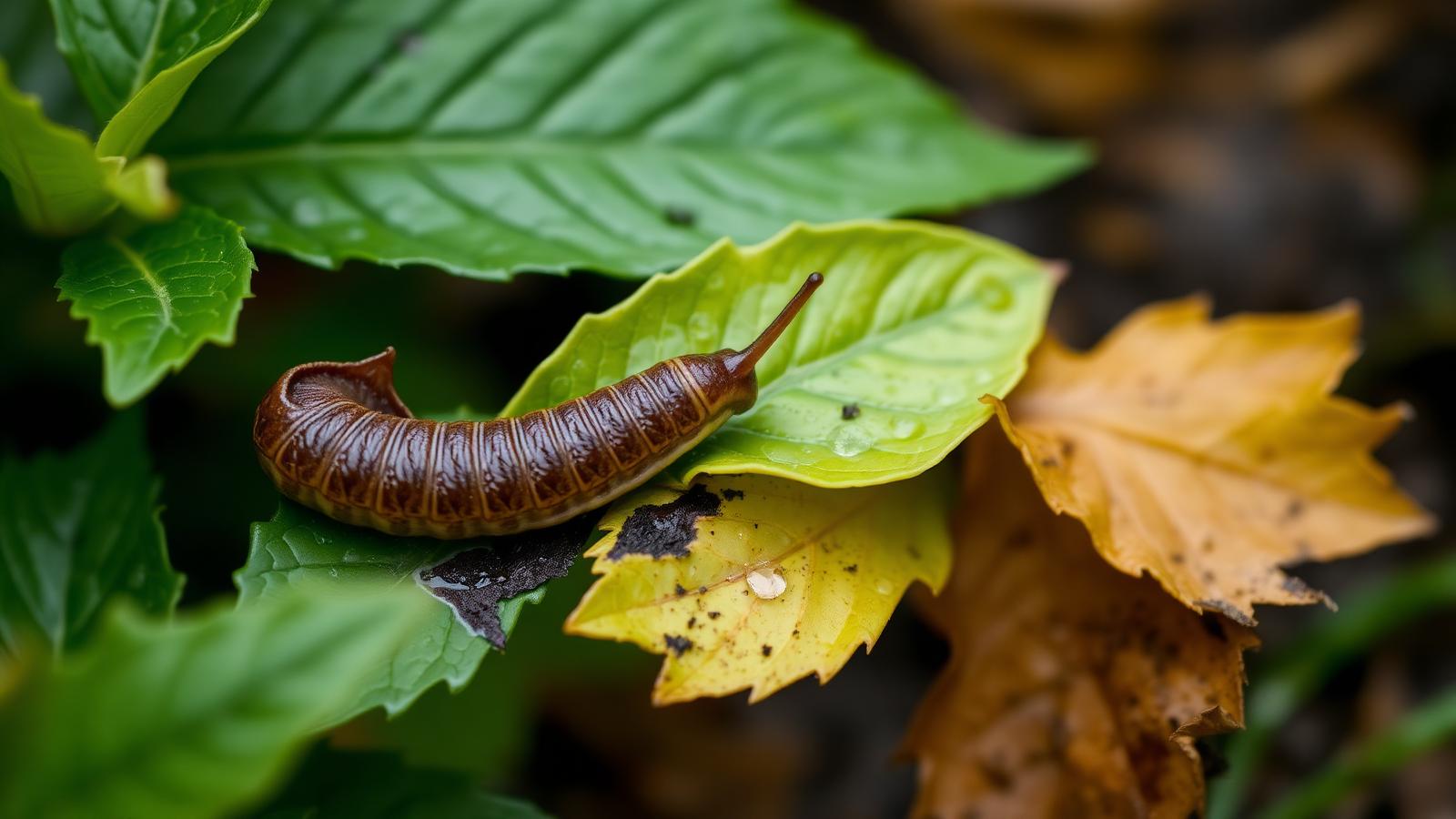
Not every slug is a problem
Slugs and snails are common, well suited to the UK's damp climate and, for the most part, useful members of a garden ecosystem.
Many feed on decomposing organic matter, dead leaves, dung and even dead slugs and snails, helping break material down in gardens and compost heaps. They're also food for birds, frogs, toads, hedgehogs, slowworms and ground beetles.
Only a relatively small number of species feed significantly on living garden plants. The netted field slug, brown soil slug and common garden snail are among those most likely to be found feeding on plants, particularly soft, fleshy leaves and seedlings, where their rasping mouthparts leave characteristic ragged holes. Keeled slugs spend more of their time underground and can occasionally tunnel into potatoes and other tubers.
So seeing a slug isn't automatically a reason to intervene. They can't realistically, and shouldn't, be eradicated from a garden. The more useful objective is protecting the handful of plants that are genuinely vulnerable rather than trying to clear the garden of slugs entirely. A mature plant with two nibbled leaves is one thing. A tray of seedlings disappearing overnight is another.
Why wetter weather brings them out
Slugs and snails are soft-bodied animals vulnerable to water loss. The mucus associated with their movement also means damp surfaces are considerably easier for them to travel across.
Through a long dry spell, many retreat into cooler, damper, sheltered places and become much less active at the surface. Then the rain arrives. Suddenly a hosta or lettuce that looked fine yesterday has fresh holes in its leaves and a silvery trail crossing the patio.
The apparent sudden return doesn't necessarily mean there are suddenly more slugs. Wetter conditions simply allow them to become more active and much more noticeable, which is why damage can seem to appear almost overnight after prolonged dry weather — one of the first things you notice when it finally rains.
Know what slug damage looks like
Before doing anything, make sure slugs are actually responsible. The classic signs are irregular, ragged holes in leaves, particularly on soft growth and seedlings. A young plant can sometimes be eaten almost completely. Feeding happens predominantly at night, so often you'll see the damage rather than the animal responsible.
Slime trails are another useful clue. Look across leaves, pot rims and paving, particularly first thing in the morning after a damp night.
But not every hole is slug damage. Caterpillars and other chewing insects can produce superficially similar symptoms. If there's no slime trail and a torchlight inspection after dark doesn't reveal slugs or snails, it's worth considering another culprit before treating anything. Our pests and diseases reference goes through the broader possibilities.
Protect what actually needs protecting
Young seedlings and soft new shoots are the priority. Rather than putting very young plants straight into an area where you've already had significant slug damage, the RHS recommends growing sturdy plantlets in pots and transplanting them once they're better established. Cloches can provide additional protection while they settle in.
Plant choice can help too. The RHS maintains a list of plants that slugs and snails tend to find less palatable, including woody plants, plants with thick or waxy leaves and certain herbaceous choices. Agapanthus, alchemilla, foxgloves, euphorbias, fuchsias and hardy geraniums are among the options on its list.
That doesn't make any plant completely slug-proof. But if one particular corner of your garden experiences relentless damage, choosing something less attractive to slugs may be considerably easier than trying to defend a favourite hosta every night.
Don't rely on barriers
This is where some of the most familiar gardening advice runs into trouble.
The RHS ran a garden-realistic experiment testing five popular barriers, copper tape, crushed eggshells, wool pellets, sharp horticultural grit and pine bark mulch, across patio pots and raised beds. After six weeks, there was no difference in the damage suffered by protected and unprotected plants.
That's important because all five approaches have plausible-sounding explanations behind them. Copper, for example, has shown some deterrent effect in laboratory studies. But results from controlled conditions haven't reliably translated into less plant damage in actual gardens. The RHS describes these barriers as potentially unreliable and ineffective.
So we wouldn't say a slug will never cross one, or that copper can have no effect whatsoever. We would say: don't rely on them to protect a plant that matters. The same goes for eggshells, grit, bark and wool pellets.
What actually helps
Water in the morning. The simplest change is when you water. The RHS recommends watering in the early morning rather than evening where slug damage is a problem, since evening watering creates damp surface conditions just as many slugs become active. Morning watering gives those surfaces more opportunity to dry before night. There's experimental evidence behind this too: research on lettuce has found substantially less slug damage with morning rather than evening irrigation. It won't stop slugs after a rainy day, obviously, but during periods when you're controlling the watering yourself, it's an easy adjustment.
Go out with a torch. Less exciting than a miracle deterrent, but one of the most practical options for a small garden. The RHS recommends searching on mild evenings, particularly when conditions are damp. Take a torch and check around the plants actually being damaged, looking beneath leaves, around the base of pots, under rims and in the cool, sheltered places where slugs may hide. Hand-pick what you find into a container; the RHS suggests relocating them to a compost heap or another part of the garden with less vulnerable planting, or leaving them somewhere predators can take them. Some species have a homing instinct and may return, so relocation isn't necessarily permanent, but on a patio with a relatively small number of vulnerable plants, repeated checks can be a genuinely targeted way of reducing immediate damage.
Encourage predators. Slugs and snails are part of a food web. Birds, frogs, toads, hedgehogs, slowworms and ground beetles all eat them, which is another reason indiscriminate eradication isn't desirable. A wildlife-friendly garden won't guarantee untouched lettuces, but encouraging a diverse range of predators — starting with something as simple as reliable water for garden birds — helps create a garden where slug populations are part of a wider ecosystem rather than something you're attempting to control entirely yourself.
Traps and biological control
Where damage continues, there are more targeted options.
Traps. The RHS suggests scooped-out orange, grapefruit or melon skins placed cut-side down, or jars part-filled with beer and sunk into the soil near vulnerable plants. Check and empty traps regularly, preferably every morning. For a few containers, hand-picking may be simpler, but traps can help concentrate your efforts around a plant that's repeatedly being damaged.
Nematodes. Biological slug control uses microscopic nematodes (Phasmarhabditis hermaphrodita), watered into the soil, which enter slugs and infect them with bacteria that cause a fatal disease. Conditions matter: the RHS recommends moist, warm soil at roughly 5-20°C, making spring to early autumn the main application period. Best results come from evening application to moist but well-drained soil, and performance can be poorer in heavy clay, so late summer is a perfectly suitable time to use them. Use them selectively, though; the nematodes can affect slug species that don't damage live plants as well as those that do, and they're unlikely to have much effect on snails, since snails spend less time in contact with the soil-dwelling nematodes. This is a treatment for a genuine slug problem, not something to apply simply because you've seen one.
Slug pellets: the RHS says no
This is worth stating plainly, because the advice has changed from what many gardeners grew up with.
The RHS's current position is not to use slug pellets, including organic ones, because of their negative effects on other garden wildlife. Ferric phosphate products remain legally available, but that isn't the same thing as the RHS recommending their use.
The older standard, metaldehyde, is different again. Outdoor use of metaldehyde was phased out in Great Britain by 31 March 2022 because of the risks it posed to birds and mammals. If you find an old packet of metaldehyde pellets at the back of the shed, don't use it; government advice is that small quantities of old garden products should be disposed of through appropriate local-authority waste facilities rather than at home.
For a small garden, the cultural and biological approaches above give you plenty of other places to start.
In containers specifically
Pots make slug hunting comparatively easy. Check underneath pot rims, saucers and around the base of containers during the day; cool, dark, sheltered places are worth inspecting when you're trying to work out what's eating a plant. This is also a useful moment to clear away decaying material immediately around particularly vulnerable plants if it's providing convenient shelter.
Pot feet can help containers drain properly, particularly after wet weather, but don't mistake them for slug protection; raising a pot slightly above the paving doesn't prevent a slug climbing it. And don't turn a container garden into an obstacle course of copper, grit and eggshells. If one particular pot is being attacked, concentrate your attention there instead.
Common mistakes
Trying to eradicate every slug. Most aren't causing serious plant damage. Concentrate on the plants that actually need protection.
Relying on copper, eggshells, grit, bark or wool. The RHS trial found no reduction in damage from any of them under its garden conditions.
Watering in the evening during a persistent slug problem. Morning watering gives surfaces more opportunity to dry before slugs become active at night.
Assuming every hole is a slug. Look for slime trails, check after dark, and consider other chewing pests before deciding what's responsible.
Applying nematodes everywhere. They're a useful biological control, but they'll affect beneficial slug species too. Use them where damage genuinely warrants treatment.
Assuming "organic" slug pellets are harmless. The RHS specifically advises against slug pellets even when they're organic, because of potential effects elsewhere in the garden ecosystem.
FAQ
Why do slugs suddenly appear after rain?
Damp conditions make it much easier for slugs to move and feed. During prolonged dry weather they tend to shelter and become less active at the surface, so rain can make an existing population suddenly much more noticeable.
Does copper tape work against slugs?
Don't rely on it. Some laboratory studies have found a deterrent effect from copper, but an RHS garden-realistic experiment found no reduction in damage from copper tape.
Do eggshells stop slugs?
The same RHS trial found no reduction in damage from crushed eggshells. Wool pellets, sharp grit and pine bark also failed to reduce damage.
Should I use slug pellets?
Current RHS advice says no, including organic slug pellets, because of negative effects on other garden wildlife. Ferric phosphate products remain available legally, but the RHS recommends cultural and biological approaches instead.
Do slug nematodes work on snails?
They're unlikely to have much effect. Snails spend less time in contact with the soil-dwelling nematodes used for slug control.
Should I get rid of every slug?
No. Many feed on decomposing organic matter and form an important part of the garden food web. Protect vulnerable plants rather than trying to eliminate slugs entirely.
READ THE FULL GUIDE
Pests and Diseases: A Small-Space Reference →
RELATED POSTS
Robin is a small-space grower writing for everyone working with a courtyard, balcony, window box, patio or sunny sill. Edible and leafy, both kept alive in the kind of light real small spaces actually get.
✦ Free with the newsletter — the small-space starter sheet
Grow Anywhere — a free weekly email.
The Potted Club newsletter. A short note from Robin — what to sow, one plant problem solved, and the best new guide.
FREE WEEKLY EMAIL · NO SPAM · UNSUBSCRIBE ANYTIME