When It Finally Rains, Make It Count
After months of dry weather and hosepipe restrictions, rain is welcome. Here's how to make sure your pots actually benefit from it.
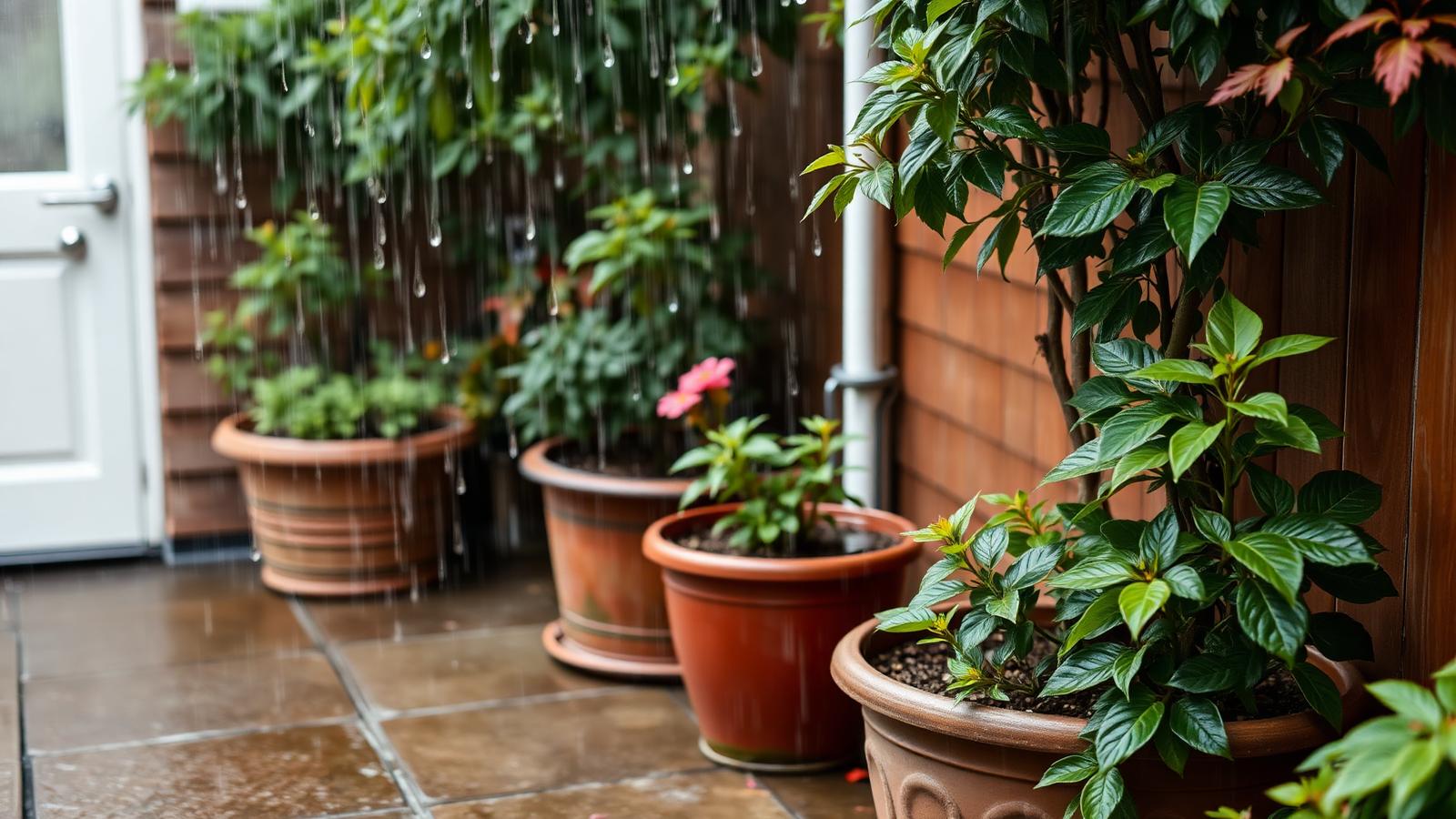
Welcome, but not a fix
After such a long, dry summer, a change in the weather is genuinely good news. But it's worth being clear about what it will and won't do.
One spell of rain doesn't reverse months of dry weather. As of August 2026, 71% of England is officially in drought, with over 27 million people subject to water-use restrictions. Reservoirs, rivers and groundwater need sustained rainfall to recover, not a single wet weekend. So treat the coming rain as useful water rather than a signal that the drought is suddenly over — the hosepipe restrictions and what they mean for pots haven't changed overnight.
For anyone growing in pots, there's another reason not to get too relaxed: rain falling on your patio doesn't necessarily mean your plants have been properly watered.
Capture it while you can
The first job is simple: make sure you're ready to collect some of it.
If you have a water butt, check that the tap is closed, the downpipe or diverter is connected and gutters aren't obviously blocked with leaves or debris. Even a relatively small roof can collect a surprising amount; the RHS estimates that a small shed roof in relatively dry south-east England can collect around 2,500–3,500 litres of rainwater over a year. That makes sheds, garages and greenhouses useful collection surfaces as well as the roof of the house.
A covered water butt connected to guttering remains the best long-term option. The point isn't to catch every drop that falls this weekend. It's to stop relying entirely on mains water whenever the weather turns dry again.
Make sure your pots actually get the rain
Small-space gardens have a particular problem with rainfall: rain shadows.
Pots against the house can be protected by eaves. Balcony containers may sit beneath the balcony above. Window boxes can be sheltered by deep sills, and dense foliage can intercept water before much reaches the compost. So take a look at where your pots actually are.
If a thirsty container is somewhere that rarely gets wet, moving it temporarily into the rain can make sense, provided you're not moving a tall or fragile plant somewhere dangerously exposed to wind.
And check afterwards. The RHS warns that light rain and short showers may wet only the first few centimetres of container compost. Push a finger down into the compost rather than judging by the wet surface, exactly as you would when watering properly. If it's moist where the roots are, leave it alone. If it's still dry, water it. The forecast isn't a substitute for checking the pot.
The dry-compost problem
This is particularly important after the summer we've just had.
Compost that has become extremely dry can be difficult to rewet evenly. Water may move rapidly through parts of the pot or around a shrunken root ball without thoroughly wetting the compost around the roots. That's why you can pour water into a very dry pot, see it emerge from the drainage holes almost immediately, and assume the whole thing must be soaked. It may not be.
If a pot has become badly dried out, check beneath the surface after the rain. Where it's still dry, water slowly and give the compost time to absorb it rather than pouring a large amount through in one go. For small pots that have become particularly difficult to rewet, the RHS also suggests dunking them in a bucket or tub of water — the same approach used when rescuing plants that dried out while you were away. The important part is checking rather than assuming.
Check drainage before the rain
We've spent most of the summer trying to keep water in pots. Wetter weather means it's worth checking that excess water can get back out again.
Look underneath containers and make sure drainage holes haven't become obstructed. Check saucers and trays too. They're useful in hot weather for catching runoff, but shouldn't be allowed to keep most container plants sitting in saturated compost for prolonged periods.
This matters particularly for plants that naturally prefer sharper drainage. Mediterranean herbs, succulents and many of the drought-tolerant plants that have performed well this summer don't suddenly want permanently wet roots. You don't need to dismantle the patio. Just make sure water has somewhere to go — container drainage basics cover what to look for.
Secure anything exposed
Rain isn't the only change that matters. If wetter weather arrives with stronger winds, look at tall plants, hanging baskets and anything in a relatively lightweight pot.
Late-summer plants can be considerably larger and heavier at the top than they were earlier in the season. Check stakes and ties, move obviously unstable pots away from exposed edges and make sure hanging containers are secure. Grouping pots can offer some shelter, but don't pack foliage together so tightly that airflow disappears completely.
A few minutes before bad weather is considerably easier than repotting something from the paving afterwards.
Keep an eye on fruiting plants
For most plants, a proper drink after prolonged dry weather is welcome. Fruiting crops can be slightly more complicated.
Tomatoes in particular can split when water availability changes suddenly and the fruit expands faster than its skin can accommodate. You can't stop rain falling, but if your tomatoes have spent the summer fluctuating between very dry and watered, check ripe and nearly ripe fruit after a particularly wet spell and harvest anything that has split before deterioration sets in.
It's another reason consistent watering is generally better than allowing containers to repeatedly swing between extremes.
What one wet weekend doesn't mean
It doesn't mean the hosepipe restrictions are automatically over. Continue following the rules applying to your area until your water company announces otherwise.
It doesn't mean every pot can now be ignored. Sheltered containers may have received very little water, while dense foliage can keep rain away from the compost.
And it doesn't mean a drought-stressed plant will immediately spring back into perfect growth. Plants that have shed leaves, wilted repeatedly or slowed their growth to survive the summer may need time and more consistently favourable conditions before you can properly judge their recovery — worth reading alongside is your plant dead, or just protecting itself.
Most importantly, don't respond to a tired-looking plant by automatically feeding it after the rain. If drought is the problem, restore appropriate moisture first. Water solves a water problem. Fertiliser doesn't.
And then there are the slugs
There's one other consequence of wetter weather that may become obvious remarkably quickly.
Slugs and snails are much more active in damp conditions, so plants that have escaped much attention during prolonged dry weather can suddenly acquire ragged holes and slime trails. Our pests and diseases reference covers how to tell the damage apart.
That doesn't mean surrounding every pot with copper tape or reaching automatically for slug pellets. In fact, several of the traditional barriers gardeners use against slugs haven't performed particularly well when tested properly. We'll look at that next.
FAQ
Do I still need to water my pots after it rains?
Possibly. Check the compost rather than relying on the weather. Light rain and showers may wet only the upper few centimetres, particularly in large or leafy containers.
Why is my pot still dry after rain?
It may be sitting in a rain shadow beneath an eave, balcony or dense foliage. Very dry compost can also be difficult to rewet evenly. Check below the surface before deciding whether more water is needed.
Should I move pots into the rain?
If they're thirsty and normally sheltered, it can be useful. Don't move unstable or top-heavy containers into an exposed position when strong winds are expected.
Should I empty saucers after heavy rain?
If they're remaining full and leaving the compost saturated for prolonged periods, yes, unless you're growing something that specifically prefers very wet conditions.
Is it worth getting a water butt now?
Yes. Rainwater collected from roofs gives you a stored supply for the next dry spell and reduces reliance on mains water. Even relatively small roofs can collect substantial amounts over a year.
Does this rain mean the hosepipe restrictions will end?
Not by itself. Drought recovery depends on sustained improvement in water resources, not simply a few wet days. Keep following the restrictions applying to your area until your supplier announces a change.
READ THE FULL GUIDE
How to Water Plants Properly →
RELATED POSTS
- Seasonal
Hosepipe Bans 2026: What They Mean for Your Pots
- Plant Problems
Can You Save Plants That Dried Out While You Were on Holiday
- Getting Started
Drought-Tolerant Plants for Pots
Robin is a small-space grower writing for everyone working with a courtyard, balcony, window box, patio or sunny sill. Edible and leafy, both kept alive in the kind of light real small spaces actually get.
✦ Free with the newsletter — the small-space starter sheet
Grow Anywhere — a free weekly email.
The Potted Club newsletter. A short note from Robin — what to sow, one plant problem solved, and the best new guide.
FREE WEEKLY EMAIL · NO SPAM · UNSUBSCRIBE ANYTIME