Don't Put Your Houseplants on an Autumn Watering Schedule
Houseplants often need less water as autumn arrives, but central heating can push the other way. Here's why checking the pot beats following a schedule.
The advice, and where it goes wrong
Every September, the same houseplant advice starts circulating: water less.
The RHS gives much the same advice. As light levels and temperatures fall, many houseplants grow more slowly and consequently need less water. The principle is sound.
The problem comes when "water less" gets translated into a new schedule: once a week becomes once a fortnight, or September arrives and every plant in the house suddenly gets watered half as often.
Plants don't work to a calendar quite that neatly. More importantly, two things happen inside British homes during autumn that can pull water demand in different directions.
The days get shorter. And then the heating goes on.
Two things change indoors in autumn
The first change is obvious when you look out of the window. Day length declines and the intensity and duration of useful natural light available to houseplants generally falls. For many plants this means slower growth and reduced water use. Temperatures may fall too, particularly in rooms that aren't regularly heated, so growing medium can take considerably longer to dry than it did during summer.
That's the useful principle behind the instruction to reduce autumn watering.
But then something else happens. Central heating changes the indoor environment. Rooms become warmer and the air can become drier, and the RHS notes that pots can dry more quickly in winter where the atmosphere is dried by central heating.
Those two effects don't cancel each other out in some predictable way. A plant may be growing more slowly because light has fallen, while its pot is simultaneously losing moisture more quickly because it's sitting in a warm room. Which effect matters most depends on the plant and where you're growing it.
That's why "water every two weeks from September" isn't particularly useful advice.
The room matters as much as the month
Imagine two identical houseplants in the same home. One is sitting in a cool spare bedroom. The other is in a warm living room where the heating is used regularly. They may experience the same shortening days, but the conditions around their pots are quite different. The RHS specifically notes that plants in cool rooms need watering less often than those in warm rooms.
Position matters too. A plant beside a large bright window can behave differently from one several metres into the room. A plant moved away from a cold window in autumn may suddenly find itself closer to a radiator. Even plants that haven't physically moved can experience a significant environmental change once the heating comes on.
So rather than deciding in September how often you'll water until March, notice what is actually changing around each plant. The correct watering interval should emerge from those conditions rather than dictate them. If you're also wondering how to keep houseplants happy when the heating is already on, our guide to keeping houseplants alive in a heatwave covers the dry-air side of the same problem.
Check the pot, not the calendar
The RHS's basic advice is refreshingly simple: don't water routinely; check whether the plant actually needs water first.
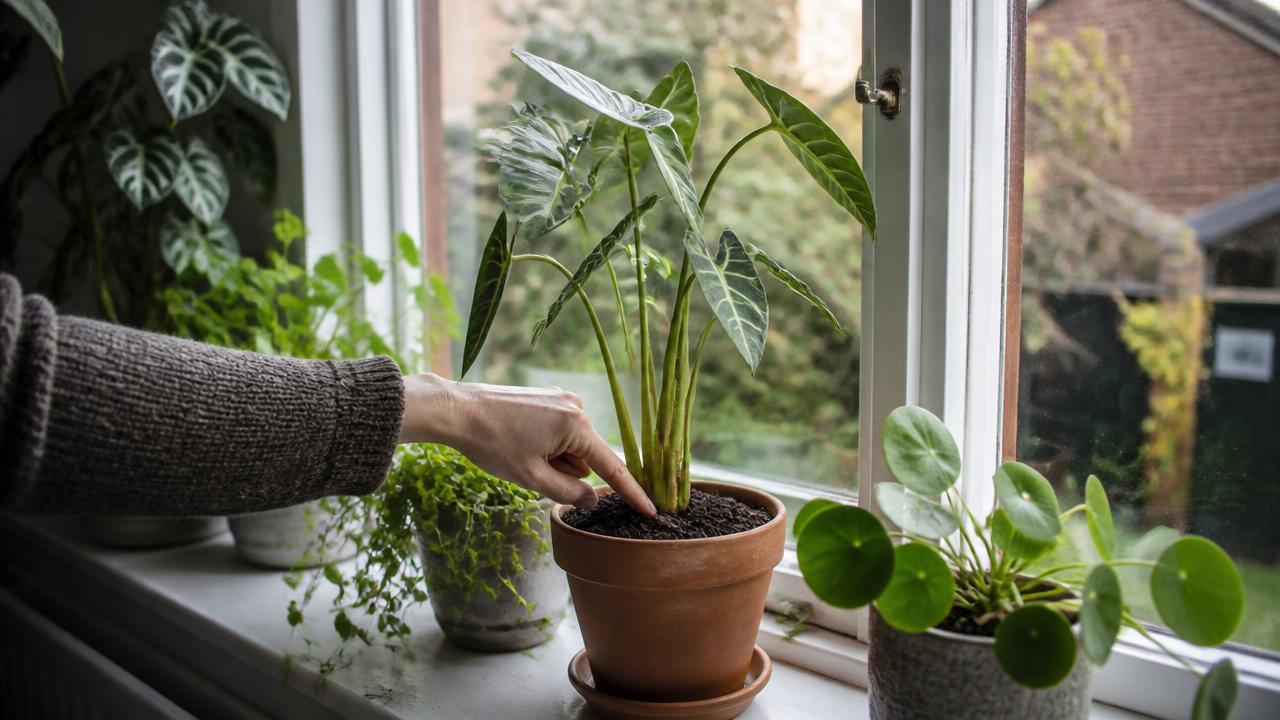
There isn't one perfect test that works for every houseplant. Feeling the growing medium is a useful starting point. Push a finger below the surface rather than judging the pot by how the top looks. But avoid turning that into another universal rule such as "water when the top 2cm is dry." A shallow nursery pot and a large floor-standing container aren't equivalent, and neither are a cactus and a plant that prefers more consistent moisture. The useful question is whether the growing medium has reached the level of dryness appropriate for that particular plant.
Pot weight is another excellent clue, particularly with smaller containers. Lift a plant after it has been thoroughly watered and again as it dries. With experience, the difference becomes surprisingly easy to recognise.
Use the plant itself as additional evidence, but don't wait for dramatic symptoms before making every watering decision.
And remember one particularly important rule: wilting isn't a watering instruction. A dry plant can wilt. But a plant with waterlogged or damaged roots can also wilt because those roots are no longer functioning properly. If you're unsure how to read those symptoms, our post on why leaves turn yellow explains how to distinguish root problems from simple thirst.
Water less often, not less thoroughly
Another misunderstanding creeps in when gardeners try to "cut back" watering for autumn. They start giving plants smaller amounts.
A splash on the surface every week isn't necessarily safer than watering properly at longer intervals. It can leave the growing medium unevenly moistened and makes it harder to know what is happening around the rootball.
When a plant genuinely needs watering, apply enough to wet the growing medium properly and allow excess water to drain away. Then wait until the plant needs water again. As autumn progresses, that interval may become longer. That's what reducing watering often means in practice: the amount of time between waterings changes because the pot is drying more slowly, not because the calendar has told you to halve the amount in your watering can.
Check what's happening inside decorative pots
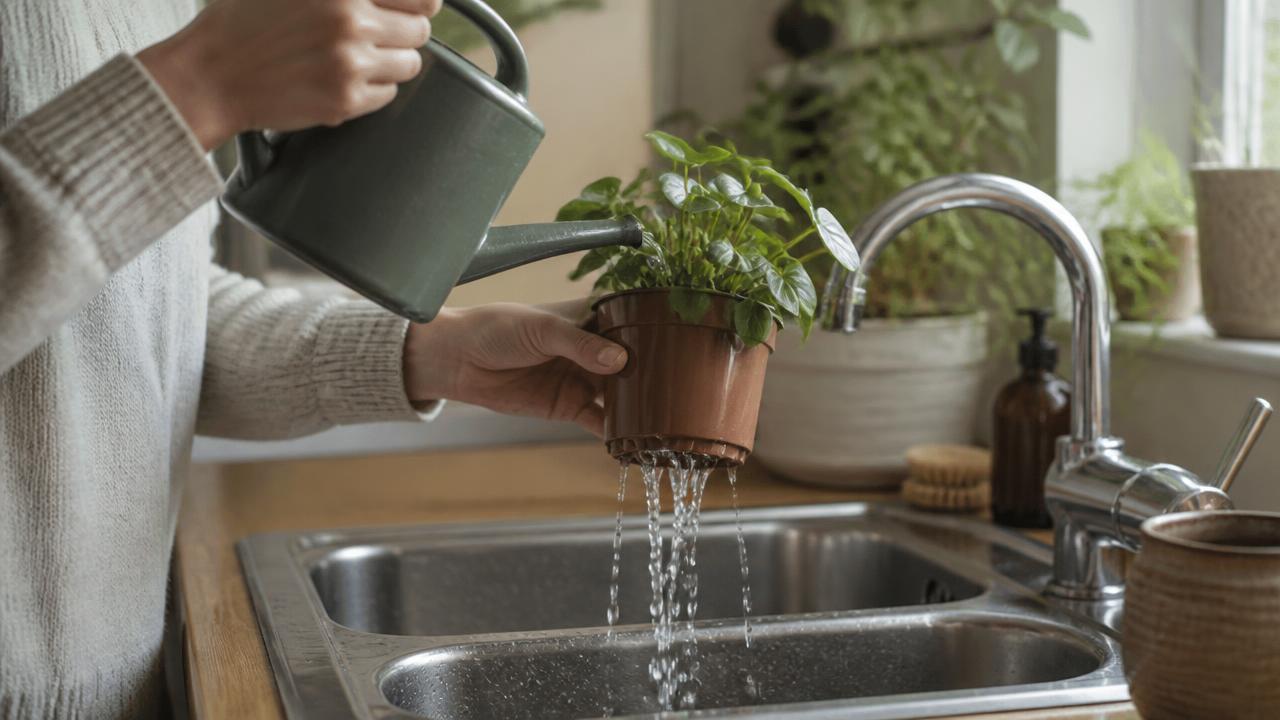
Autumn is also a good time to look inside the cachepots and decorative containers that hide ordinary nursery pots. Water can collect at the bottom without being visible from above. The container growing fundamentals guide covers why drainage matters and what to look for when a pot is sitting inside another pot.
During summer, a rapidly growing plant may use moisture relatively quickly. As growth slows, leaving the rootball standing in water becomes an increasingly unnecessary risk.
After watering, allow the nursery pot to drain properly before returning it to its cover pot. If you water it in place, check afterwards and empty any excess water that has collected at the bottom. The same applies to saucers. A decorative container makes a wet rootball very easy to miss.
Different plants still need different things
"Houseplant" describes a location, not a type of plant. The plants we grow indoors come from very different environments and don't share one preferred moisture level. Our guide to the best indoor plants for beginners sets out how much light and care different common houseplants really need.
Many cacti and succulents need considerably less water during cooler, lower-light periods, although exactly how dry they should be kept depends on the species and growing conditions. At the other end of the spectrum are plants that prefer more consistent moisture and shouldn't simply be allowed to dry completely because winter has arrived. Some plants may also remain in active growth or flower during periods when others have slowed considerably.
That's why generic advice such as "let houseplants dry out between waterings" isn't much better than "water every Sunday." Know broadly what your particular plant requires, then check whether its pot has actually reached the point at which it needs water.
Don't confuse dry air with dry compost
Central heating introduces another easy mistake. A plant can experience dry indoor air while its roots are sitting in wet compost.
Those are different conditions and they don't have the same solution. Some houseplants dislike low humidity, but repeatedly watering their roots won't correct dry air. Equally, misting leaves isn't a substitute for watering a rootball that genuinely needs moisture.
The distinction matters particularly once heating comes on, because the room can feel dry even when a pot is taking considerably longer than expected to lose water. Treat the condition you actually have rather than the one autumn houseplant advice tells you to expect.
What to do this weekend
Don't go around the house watering everything. Go around and check everything.
Lift the smaller pots. Feel the growing medium. Look inside decorative outer pots and empty any water that's been left sitting there. Notice which plants are still drying quickly and which remain damp much longer than they did in summer.
Then look at where they're growing. Has a formerly bright position become noticeably darker? Is a radiator about to start running beside one of them? Is a plant sitting in a cool room where its pot is now taking much longer to dry?
You may find one plant needs watering today, another in four days and another not for a week or more. That's less convenient than putting "water houseplants" on the Sunday jobs list. It's also the point.
"Water less in autumn" is useful advice when it reminds you that growing conditions are changing. It stops being useful when it becomes another schedule.
FAQ
Should I water my houseplants less in autumn?
Often, yes. Lower light levels and slower growth mean many houseplants use water less quickly. But check individual pots rather than reducing every plant to the same autumn schedule.
How often should I water houseplants in September?
There is no useful universal interval. Species, pot size, growing medium, light and room temperature all affect how quickly a plant needs watering.
Does central heating make houseplants need more water?
It can make pots dry more quickly by creating warmer, drier indoor conditions, but that doesn't automatically mean every plant needs more frequent watering. Check the growing medium first.
Should I let the compost dry completely before watering?
That depends on the plant. Some cacti and succulents tolerate much drier conditions than plants that prefer consistent moisture. Don't apply one drying rule to every houseplant.
Why is my houseplant wilting when its compost is wet?
Wilting can occur when damaged or waterlogged roots are unable to function properly. Don't assume wilting always means drought; inspect the growing medium and root conditions before adding more water.
Should I leave water in the saucer beneath a houseplant?
Generally don't leave a houseplant standing in excess water unless the particular plant and watering method specifically call for it. Allow excess water to drain and empty water that collects in saucers or decorative outer pots.
RELATED POSTS
- Houseplants
Should I Feed My Houseplants?
- Houseplants
Keeping Houseplants Alive When Your Home Hits 30 Degrees
- Plant Problems
Why Are My Leaves Turning Yellow
Robin is a small-space grower writing for everyone working with a courtyard, balcony, window box, patio or sunny sill. Edible and leafy, both kept alive in the kind of light real small spaces actually get.
✦ Free with the newsletter — the small-space starter sheet
Grow Anywhere — a free weekly email.
The Potted Club newsletter. A short note from Robin — what to sow, one plant problem solved, and the best new guide.
FREE WEEKLY EMAIL · NO SPAM · UNSUBSCRIBE ANYTIME