Before You Bring Your Houseplants Back Indoors, Check Them for This
A summer outside does houseplants good. It can also give them passengers. What to look for on leaves, stems and compost before anything comes back inside.
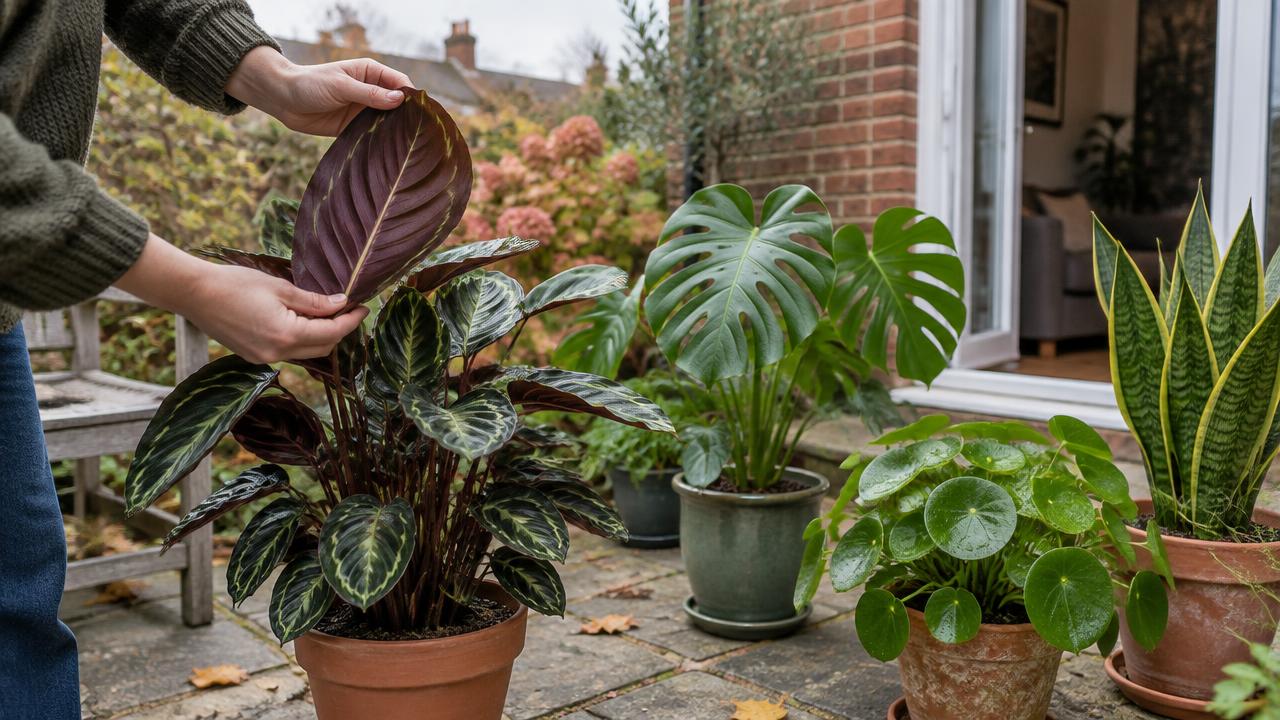
That summer holiday on the patio may have done your houseplants good. It may also have given them passengers. Before anything comes back inside, spend five minutes checking leaves, stems and compost.
Why this is worth five minutes
A houseplant that's spent the summer outside has generally had a good time of it. Better light, better air movement, rain rather than tap water, and a growing season considerably more vigorous than anything a windowsill provides.
It has also been sitting in an environment full of insects, with no glass between it and them.
Most of what lands on a plant outdoors is either harmless or gets eaten by something else. Outdoors there are predators, weather and competition keeping populations in check. Indoors there are none of those things, and there's a warm, stable, predator-free environment with a dozen other houseplants within reach.
So the pest that was doing very little damage on the patio in August can become a genuine problem in a heated living room by November. And because these are plants you already own, they bypass the caution you'd apply to something bought at a garden centre.
The order that works
Inspect, clean, isolate, then bring indoors. Doing it in that sequence matters, because each step is easier outside than in.
Inspecting is easier in daylight. Cleaning is easier where you can hose a plant down without worrying about the carpet. And isolating is only useful if you do it before the plant has spent a fortnight next to everything else.
What to look for, and where
Most indoor pests hide in predictable places, which makes a systematic check quick. The RHS September garden jobs guidance specifically flags checking plants being brought indoors for red spider mite, mealybug and scale, and checking the rootball and compost for vine weevil larvae.
Leaf undersides. The single most productive place to look, and the one people skip. Turn a few leaves over on each plant rather than glancing at the top.
Leaf joints and new growth. Where the leaf meets the stem, and the soft growing tips. Mealybug in particular favours these tucked-away spots.
Stems. Run your eye, and ideally a finger, along them. Scale insects can look like part of the plant until you touch one.
The compost surface and the pot rim. Check underneath the pot and around the rim too, where things shelter during the day.
The rootball, if you have reason to suspect trouble. Tip the plant out and look, particularly on the species vine weevil favours.
The four worth knowing
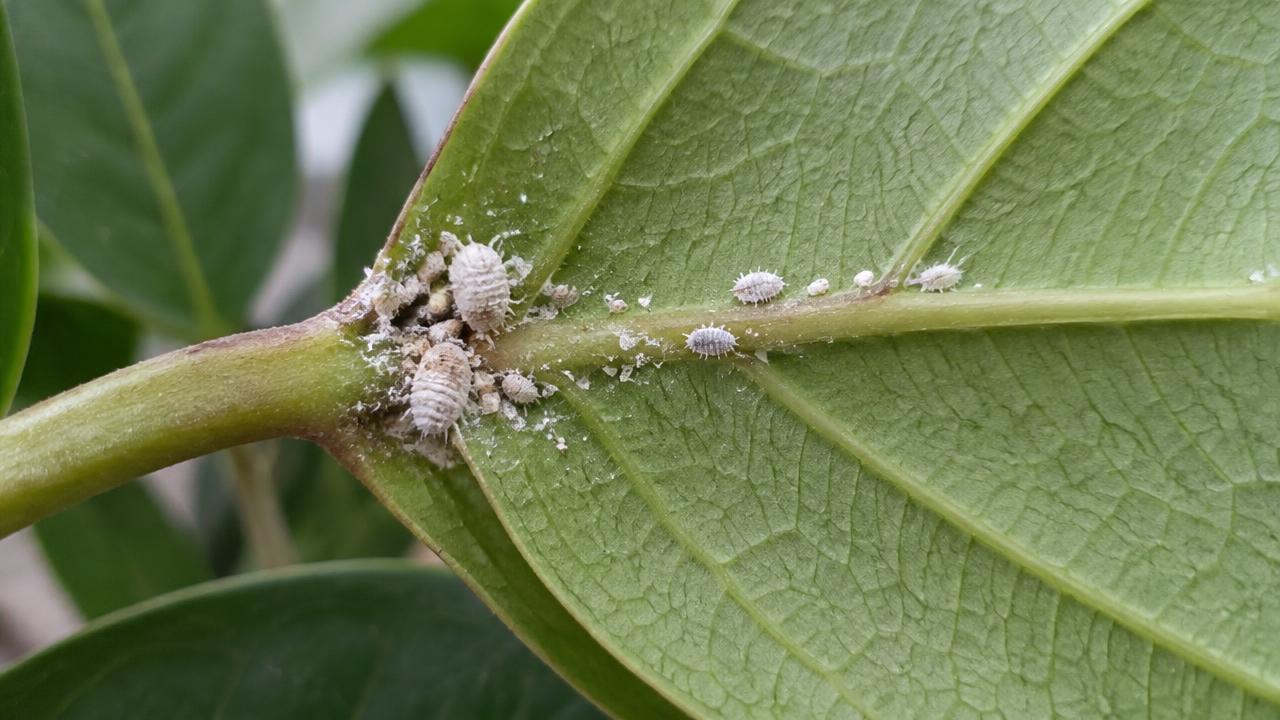
Mealybug. White, slightly fluffy waxy blobs, usually clustered in leaf joints, along stems and on leaf undersides. They look more like a mould or a bit of fluff than an insect, which is partly why they get missed. They also produce sticky honeydew, so a shiny or tacky leaf below a cluster is a useful clue. The RHS mealybug guide covers the pest in more detail.
Scale insects. Small, flattish brown or yellowish bumps on stems and leaf undersides, often in rows along a stem or vein. The adults don't move, which makes them look like natural markings on the plant. Scrape one gently with a fingernail: if it comes away and there's a soft insect underneath, that's your answer. They also produce honeydew, and sooty mould often develops on it. The RHS scale insect guide is useful if you're not sure what you're seeing.
Red spider mite. Genuinely hard to see, since the mites are under half a millimetre. What you'll notice first is the damage: a fine pale mottling or speckling on the upper leaf surface, giving leaves a dusty, washed-out look. In bad infestations there's fine webbing between leaves and stems.
A common confusion here is the name. Glasshouse red spider mite, the one that troubles houseplants, is greenish-yellow for most of the year and only turns orange-red heading into autumn and winter. People look for something red, find nothing, and conclude they haven't got it.
Vine weevil larvae. Creamy-white, C-shaped, legless grubs with a brown head, living in the compost and eating roots. Adults leave characteristic notches around leaf edges, which is a useful warning sign even though the notching itself does little harm. This is the pest that can justify inspecting the rootball, particularly if you've seen adult feeding notches, the plant is declining inexplicably or it's among the container plants most vulnerable to vine weevil. There's no reason to disturb every healthy rootball simply because the plant has been outside. We covered the full picture in our September vine weevil piece, and the RHS vine weevil guidance sets out the life cycle and controls.
Clean before it comes in
Even where you find nothing obvious, a clean is worth doing.
Take the plant somewhere you can wet it properly and rinse the foliage. A gentle spray can dislodge debris and some pests, particularly if you pay attention to the leaf undersides. Wipe larger, smooth leaves with a damp cloth.
Clear away any fallen leaves or debris sitting on the compost surface, since that's shelter. Give the outside of the pot a wash too, particularly around the rim and base.
And if the plant is going back into a decorative outer pot that's been sitting empty in the house all summer, rinse that out as well rather than dropping a freshly cleaned plant into a dusty container.
Let everything dry off before it goes indoors. A soaked plant going into a cool, low-light room is a separate problem, as our autumn watering piece covers.
Isolate for a few weeks
This is the step most people skip, and it's the one that saves a collection.
Where you can, keep returning plants somewhere separate from the rest of your houseplants for a few weeks. A spare room, a different windowsill, anywhere with a bit of distance. The RHS recommends quarantining plants for this reason: eggs and immature stages can be invisible at the point you inspect, and only become obvious once they've hatched and developed.
Check them again at the end of that period, undersides included. If nothing has appeared, they can join the others.
In a small flat this isn't always possible, and a windowsill in another room is better than nothing. Even a metre of separation and a habit of checking weekly is more useful than putting everything back on the same shelf and hoping.
If you find something
Don't panic, and don't reach for a spray by reflex.
For a small, localised outbreak of scale, physical removal can be useful. Mealybugs can also be removed individually where accessible, but their habit of hiding in crevices means one clean-up may not eliminate them. Keep the plant isolated and inspect it repeatedly rather than assuming one treatment has solved the problem.
For red spider mite, warm, dry conditions favour damaging populations, so moving an affected plant away from a radiator and increasing humidity can make conditions less favourable. That won't control an established infestation on its own, however, so keep the plant isolated and use an appropriate control if the population persists.
For vine weevil, the treatment window and options are specific enough that our dedicated piece covers them properly. If you're trying to work out whether the issue is pest damage, water stress or something else, start with the pests and diseases reference.
And for anything heavily infested and not particularly precious, the honest answer is sometimes that disposing of one plant protects the other twelve. That's a legitimate decision rather than a failure.
If your inspection makes the plant look as though it needs a bigger pot, pause before acting. Autumn is usually the wrong moment for routine repotting, as covered in don't repot your houseplants this autumn.
FAQ
Why should I check houseplants before bringing them indoors?
Because pests picked up outdoors have natural predators and weather keeping them in check, and indoors they have neither. A minor problem on the patio can spread through an entire collection in a warm, stable room.
What should I be looking for?
RHS September guidance advises checking for red spider mite, mealybug and scale, and inspecting the rootball and compost for vine weevil larvae. Leaf undersides and leaf joints are the most productive places to look.
Why can't I see any red spider mites?
They're under half a millimetre, and the glasshouse species that affects houseplants is greenish-yellow for most of the year, only turning orange-red towards winter. Look for the damage instead: fine pale mottling, dull leaves and, in heavier infestations, fine webbing.
How long should I isolate returning plants?
A few weeks where you can. Eggs and immature stages may not be obvious at the first inspection, so a short quarantine period gives problems time to show before the plant rejoins the rest of your collection.
Do I need to spray?
Not as a first response. A small, localised outbreak of scale can be removed physically, and mealybugs can be picked off where you can reach them, though they hide in crevices and one clean-up may not clear them. Keep the plant isolated, inspect repeatedly, and use an appropriate control if the problem persists.
What if a plant is badly infested?
Consider whether it's worth keeping. Disposing of one heavily infested plant to protect the rest of a collection is a reasonable decision, particularly if the plant is easily replaced.
RELATED POSTS
Robin is a small-space grower writing for everyone working with a courtyard, balcony, window box, patio or sunny sill. Edible and leafy, both kept alive in the kind of light real small spaces actually get.
✦ Free with the newsletter — the small-space starter sheet
Grow Anywhere — a free weekly email.
The Potted Club newsletter. A short note from Robin — what to sow, one plant problem solved, and the best new guide.
FREE WEEKLY EMAIL · NO SPAM · UNSUBSCRIBE ANYTIME