
How to Collect Rainwater in a Small Garden
How much rain a small roof actually collects, how to choose and fit a water butt where space is tight, and how to use stored rainwater safely and well.
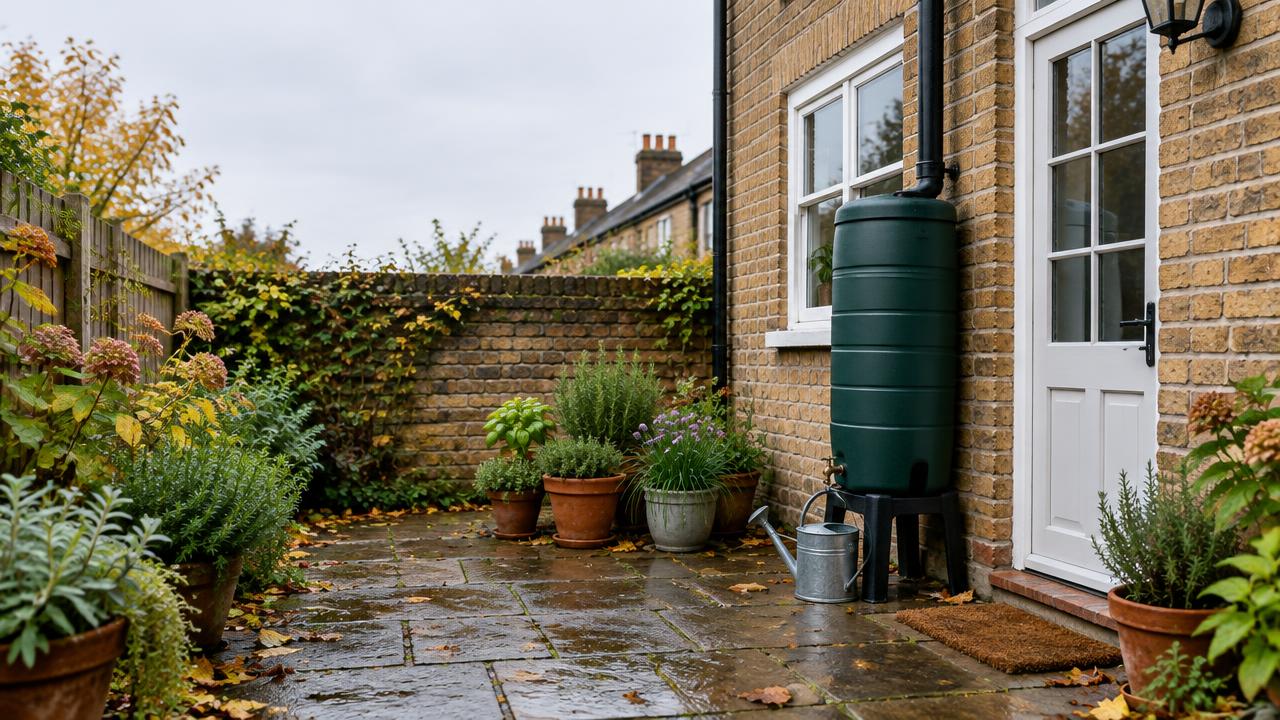
Most small gardens have a roof nearby, whether it is the house, a garage, a shed or a greenhouse, and almost all of that rain runs straight into the drain. Collecting even part of it makes a real difference next summer, especially with hosepipe bans still in force across much of England. This explains how much a small roof can actually collect, how to choose and fit a water butt when space is tight, and how to use the water once you have it.
Why now is the time to fit one
Autumn and winter are when water butts fill, so a butt fitted now has months of rain to collect before you need it next summer. The Environment Agency specifically advises gardeners to install one, and with severe drought declared in parts of six counties this month and hosepipe bans still in place for ten water companies, the case for having your own supply is stronger than usual. Our article on the severe drought explains what has been declared and why autumn rain alone will not end it quickly.
How much water your roof can collect
The arithmetic is simpler than most people expect. One millimetre of rain falling on one square metre of roof gives one litre of water. To work out what a roof could collect in a year, measure the area it covers on the ground, length by width rather than up the slope, and multiply it by your local annual rainfall in millimetres. In practice you will collect rather less than that figure, because some water splashes, evaporates or is lost in heavy downpours, but it gives you the right scale.
Even a small roof adds up. The RHS says that in dry south-east England, the roof of a small shed can collect 2,500 to 3,500 litres of rainwater a year, enough to fill around 10 to 15 standard 240-litre water butts. That is the total that runs off the roof over twelve months, not what one butt can hold, and you will only keep what you have room to store. A house roof collects far more. Researchers writing in The Conversation, taking around 30 square metres as the roof area of an average terraced house, estimated that it receives between 19,000 and 55,000 litres of rain a year depending on where it is in the UK.
That leads to the most useful point in this article. On that same terraced roof, they calculated that a 210-litre butt would be filled by just 7mm of rain, which is a single wet day. For most small gardens, the limit is not how much rain falls but how much of it you can store and when it arrives. A butt that is in place and filling through the autumn and winter is the one that gives you an alternative to mains water when dry weather arrives.
Choosing where to collect
Any roof with a gutter and downpipe can feed a water butt. The RHS says roofs with a decent pitch and a relatively clean surface are ideal, which makes the house, a garage or a greenhouse a good choice. A shed works well too, but many have no guttering, so you may need to fit a length of gutter and a downpipe kit first.
Put the butt where you will actually use the water. A butt by the back door is used every day, while one at the far end of the garden behind the shed tends to be forgotten. If you rent, live in a flat or share a downpipe with a neighbour, ask the landlord, freeholder or neighbour before cutting into a downpipe, since it may not be yours to alter.
Choosing a butt when space is tight
A standard water butt holds a little over 200 litres. If you do not have room for a round one, slimline butts sit flat against a wall and take up much less floor space, and there are wall-mounted and decorative versions designed for patios and courtyards. The RHS suggests linking several slimline butts together where space is limited, using connector kits or siphons, so that the water fills one and then flows on to the next.
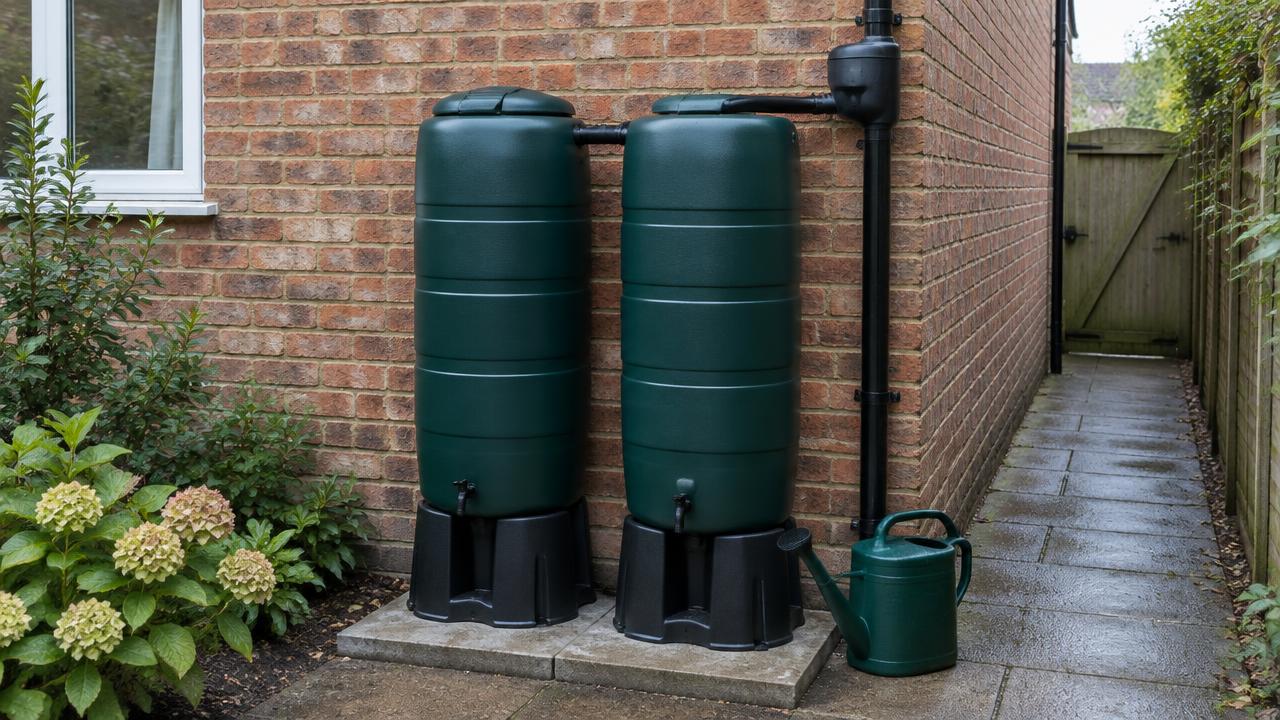
On a balcony or roof terrace, think about weight before anything else. A litre of water weighs a kilogram, so a full 100-litre butt weighs around 100kg before you add the butt and its stand. Check what the balcony is designed to carry, and if you are not sure, ask the building's managing agent before installing anything heavy.
How to fit one
Start with the base. The RHS advises standing the butt on a firm, level stand or on bricks so you can fit a watering can under the tap. If it is going on grass or soil, lay a paving slab first, since a full butt is heavy enough to sink and tilt.
Most butts are sold with a diverter kit, which connects the downpipe to the butt. Wessex Water's step-by-step advice is to stand the butt in position, mark its height on the downpipe, cut the pipe 10mm below the mark and fit the diverter there, then connect it to the butt with the flexible pipe supplied. Kits vary, so follow the instructions that come with yours. A diverter sends rainwater into the butt while there is room, and once the butt is full, it sends the overflow back down the downpipe to the drain.
The RHS also recommends fitting a filter to keep leaves and debris out, and a close-fitting lid to stop rain-borne spores of plant diseases getting in. Before the first heavy rain, pour some water into the system and check that the overflow goes back down the pipe rather than pooling around the base of the butt.
Dealing with overflow and heavy rain
Once the butt is full, a well-fitted diverter handles the rest. If you find it filling and overflowing every time it rains, that is a sign you could store more, and linking a second butt is usually the easiest answer. Where you have a patch of ground, the RHS also points to rain gardens, which are planted areas designed to take runoff from roofs and paving after a downpour and let it soak away slowly.
Using stored rainwater well
Stored rainwater is good for most watering, but not all of it. The RHS recommends using it on established plants and says it is ideal for acid-loving plants such as camellias and rhododendrons, since mains water in hard-water areas can gradually raise the pH of the soil. It is also suited to houseplants, particularly orchids and carnivorous plants.
The exception is seedlings. The RHS advises against using water from a butt on seedlings because it may contain damping-off diseases, so use mains water for seeds and very young plants. The same goes for uncovered tanks and troughs, which can stagnate and harbour harmful micro-organisms.
To keep the water fresh, use it often rather than saving it all for a crisis. The RHS advises cleaning water butts once a year, with warm water and a little washing-up liquid, and if the water starts to smell, emptying and cleaning the butt rather than adding chemicals. A watering can filled from the tap at the bottom of the butt is the simplest way to use it. For a hose, the RHS says you will need a submersible or external pump for decent pressure. It also warns that breathing in droplets from stagnant, warm water can pose a health risk, so it suggests a coarse spray setting and disconnecting and draining hoses when they are not in use. Keeping gutters clear helps too, and where you have the choice, a spot out of full sun will keep the water cooler.
If you are under a hosepipe ban, check your water company's rules before connecting a hose to a butt. Some, including South East Water, allow a hose fed from a water butt because it does not use mains water, but the rules differ between companies.
Keeping it safe for young children
A secure lid is not only about plant disease. RoSPA says containers holding rainwater should be emptied or sealed so that children cannot get into them, and warns that drowning incidents have occurred in less than 300mm of water. Children aged one to two are most at risk, and RoSPA notes that children do not begin to understand danger until around four or five. Choose a butt with a lid that fits firmly and cannot be lifted by a small child, keep it on, and do not leave buckets or open trugs of water standing around where toddlers play.
Other water you can reuse
Rain is not the only water worth saving. The RHS says water from a dehumidifier or condenser tumble dryer is suitable for many ornamental plants. Greywater from baths, showers and washing-up can also be used on ornamentals if you follow a few rules. Avoid water containing bleach, disinfectant, dishwasher salt or harsh cleaners, use it within 24 hours, apply it with a can rather than through an irrigation system, and alternate it with rainwater to stop salts building up in the soil. Our article on the October hosepipe ban covers greywater in a little more detail.
For the basics of when and how much to water, see how to water plants properly.
FAQ
How big a water butt do I need?
Start with a standard butt of around 200 litres and add more if it regularly fills and overflows. In a small garden, two linked slimline butts are often more useful than one large one, because they fit against a wall.
Can I collect rainwater from a shed roof?
Yes. The RHS says a small shed roof in south-east England can collect 2,500 to 3,500 litres a year. If the shed has no guttering, you will need to fit a gutter and downpipe kit first.
Is rainwater from a water butt safe for all plants?
It suits established plants, including acid-lovers such as camellias, and houseplants such as orchids. The RHS advises against using water from a butt on seedlings, because it may contain damping-off diseases.
Can I use a hose with a water butt during a hosepipe ban?
It depends on your water company. Some allow a hose fed from a water butt, since it does not use mains water, but check your own company's rules first.
How do I stop my water butt smelling?
Keep the lid on, use the water regularly, and clean the butt once a year. The RHS advises emptying and cleaning a smelly butt rather than adding chemicals.
READ THE FULL GUIDE
How to Water Plants Properly →
RELATED POSTS
Robin is a small-space grower writing for everyone working with a courtyard, balcony, window box, patio or sunny sill. Edible and leafy, both kept alive in the kind of light real small spaces actually get.
✦ Free with the newsletter — the small-space starter sheet
Grow Anywhere — a free weekly email.
The Potted Club newsletter. A short note from Robin — what to sow, one plant problem solved, and the best new guide.
FREE WEEKLY EMAIL · NO SPAM · UNSUBSCRIBE ANYTIME