
England's Drought Has Deepened. What Does Severe Drought Mean for Gardeners?
Severe drought has been declared in parts of six English counties. What the declaration means, why autumn rain will not fix it quickly, and what gardeners should do this autumn.
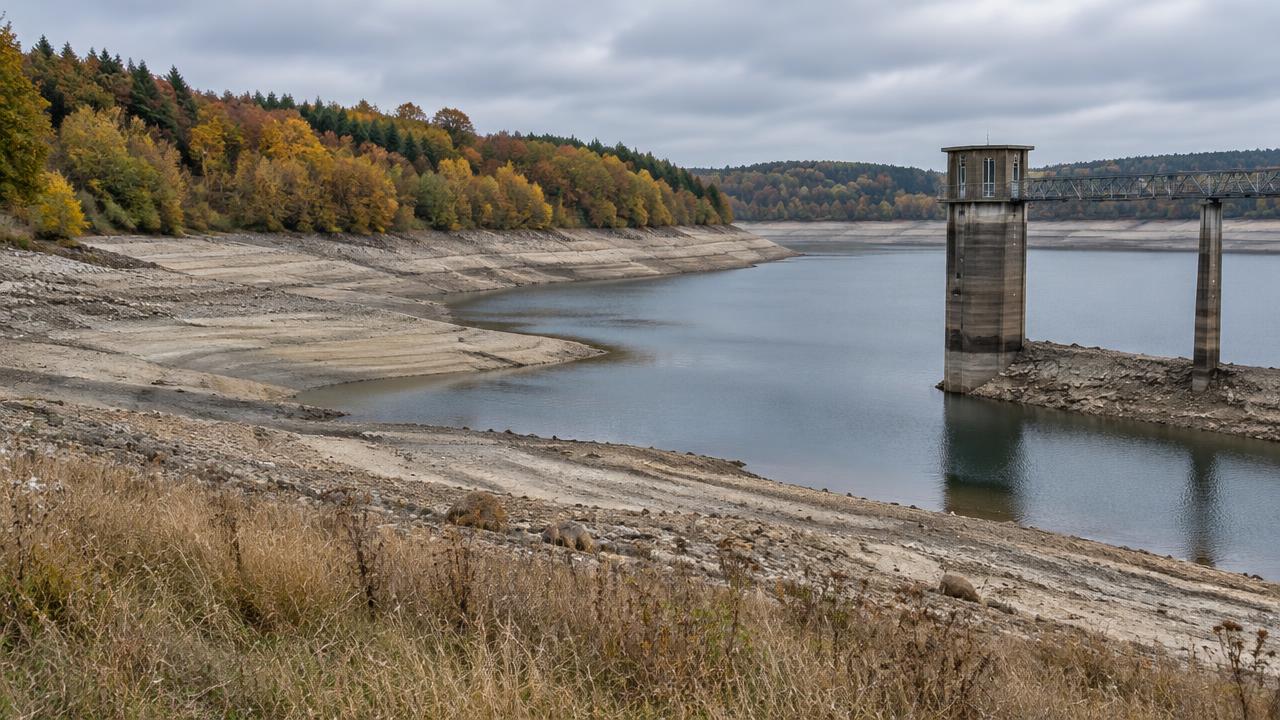
On 15 October the government declared severe drought, the highest drought status in England, in parts of Cornwall, Devon, Dorset, Somerset, East Sussex and West Sussex. It came in the middle of autumn, after the driest April to September in southern England for more than a century, and with two key reservoirs classed as exceptionally low. Here is what the declaration means, what it does not mean, and what it changes for gardeners between now and spring.
What was declared, and where
The declaration was announced by the Department for Environment, Food and Rural Affairs and the Environment Agency on 15 October 2026. It applies to parts of six counties rather than to every household within their boundaries. The Environment Agency says it covers the homes and businesses served by two reservoirs where public water supplies are most at risk, Ardingly in West Sussex, run by South East Water, and Wimbleball in Somerset, run by South West Water, and it advises people to check their position with their water company. It has also raised concerns about several smaller South West Water reservoirs serving south Devon and west Cornwall.
Both reservoirs are far below where they would normally be. South East Water's latest published figure put Ardingly at 19.4 per cent full on 11 October, down from 23 per cent on 28 September, which the Environment Agency said was already the lowest on record for the time of year. South West Water's figures put Wimbleball at 15 per cent on 12 October. The smaller South West Water reservoirs the Environment Agency is concerned about were all below 30 per cent on 15 October, with Drift at 26 per cent, Stithians and Venford at 21 per cent and Tottiford at 17 per cent. The Environment Agency's weekly report for 2 to 8 October lists Ardingly and Wimbleball among eight reservoirs or reservoir groups in England classed as exceptionally low.
The trend is the part that justifies the word "deepened". Reservoir storage across England fell from 55 per cent in the week ending 29 September to 54 per cent in the week ending 6 October, which the Environment Agency describes as 21 per cent below average for the time of year. Yorkshire moved into drought status on 9 October, which means eleven of the Environment Agency's areas in England are now in drought, and the agency says 82 per cent of England remains in drought overall.
The background is a summer that provisional Met Office figures show as the UK's hottest on record, with a mean temperature of 16.5°C, beating the previous record set only in 2025. England had 64 per cent of its average summer rainfall. The Environment Secretary, Angela Eagle, said this level of drought "is something we have not experienced for decades".
What severe drought actually means
Severe drought is the highest level the Environment Agency can declare. It is used when drought is causing, or will soon cause, serious harm and emergency action is needed. The Environment Agency is also clear about what it is not. Severe drought does not automatically trigger new restrictions on households, and it is not a civil emergency. The government has said customer supplies will remain uninterrupted.
What changes is the response behind the scenes. Reservoir and river levels are now monitored daily, water companies in the affected areas have been told to strengthen their drought planning, and the Environment Agency has been told to prioritise public water supply where that conflicts with environmental rules. The agency says water companies may still bring in further measures in affected areas, from limiting some business use to reducing mains pressure, and that they will contact affected customers directly.
Three terms tend to get confused in the coverage. A hosepipe ban, officially a temporary use ban, is a restriction on households using a hose for things like watering the garden or washing the car. Ten water companies still have one in all or part of their areas, according to the Environment Agency's report for the week to 8 October. A non-essential use ban is a further step that applies to businesses, such as watering plants on commercial premises or washing vehicles. South West Water has applied for one covering Exeter, Mid and East Devon and the area around Lyme Regis, and it would not apply to household customers. A drought permit is different again. It allows a water company to change how much it takes from, or releases into, a river or reservoir. The Environment Agency has granted one to each company, allowing South East Water to release less water from Ardingly into the Shell Brook and the River Ouse, and South West Water to release less from Wimbleball into the River Haddeo, so that more is held in storage.
The pressure extends beyond household supplies. By the cut-off for its 2 to 8 October report, the Environment Agency had recorded 396 incidents linked to drought and dry weather in 2026, more than in the whole of 2025 or 2022, including 96 confirmed incidents involving dead fish and 39 involving algae. Saving water in the garden is also a way of easing the pressure on rivers and the wildlife that depends on them.
Why autumn rain will not fix it quickly
The Environment Agency's report for 2 to 8 October put England's rainfall for October up to that point at just 10 per cent of the long-term average for the month. River flows were normal or lower at every site it monitors, and groundwater levels were still in their seasonal decline. The Environment Agency expected further dry weather for the rest of October.
The bigger obstacle is the size of the gap. The Environment Agency says some areas would need 120 per cent of typical rainfall over the next six months to recover. That means not just a normal autumn and winter, but a wetter-than-normal one. Even then, much of the first rain after a long dry spell is taken up by dry ground before it reaches rivers and reservoirs, so a garden can look soaked while the reservoir supplying it barely moves. Without enough rain, the agency warns, drought could persist or worsen into next year.
That gives last week's question, whether a hosepipe ban still matters in October, a firmer answer. It matters less for watering now than for the reserves left when demand rises next spring.
What it means in your garden this autumn
If you were already under a hosepipe ban, it remains in force, and a watering can or bucket is still allowed. If you are not under one, the Environment Agency's advice is still to use water carefully in the garden. Last week's article on the October hosepipe ban covers what is and is not allowed in more detail.
The plants that still need checking are the same as last week. Most garden plants need little or no extra water in October, but evergreens, plants in pots, and anything sheltered from the rain by a wall, fence or overhang can stay dry even after a shower. Check the compost or soil with your finger before reaching for the watering can, and water the roots rather than the leaves.
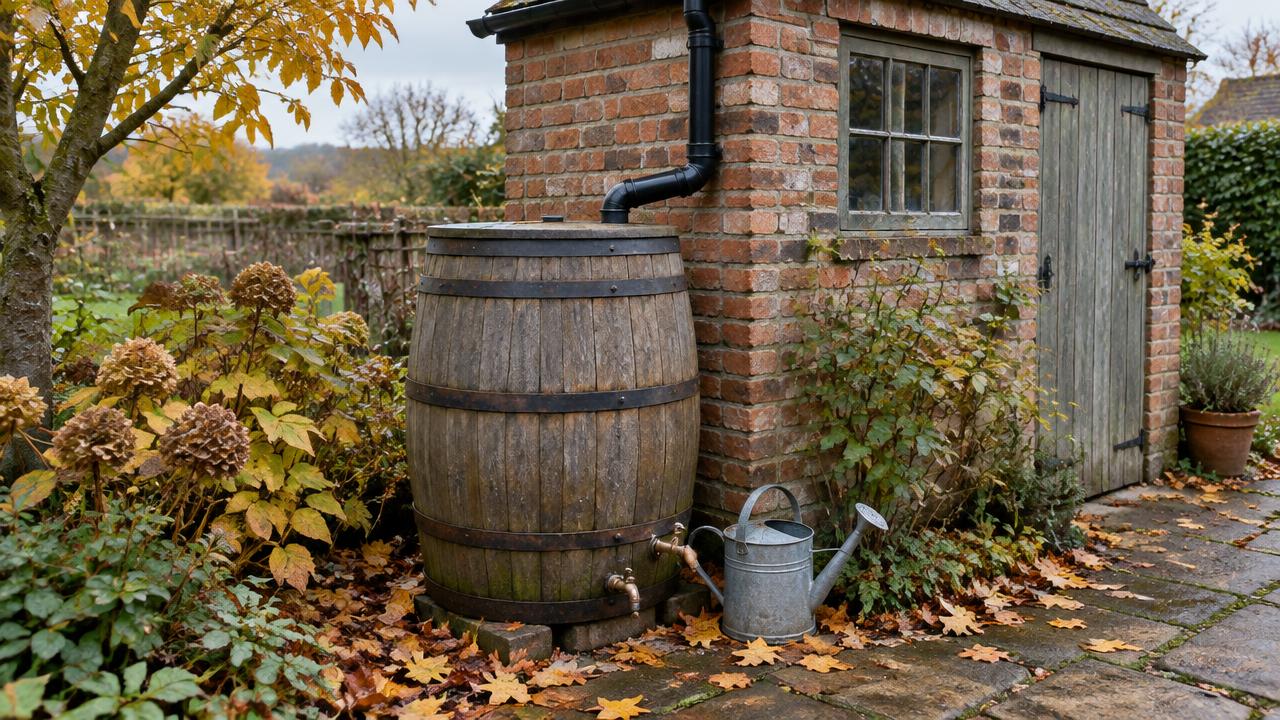
The more useful work is preparation. Autumn and winter are when water butts fill, and the Environment Agency specifically advises gardeners to install one. A butt fitted to a shed, garage or house downpipe now has months of rain to collect before it is needed next summer, and time to check the diverter and overflow work before it matters. The RHS guide to collecting and storing water covers where to fit one and how much a small roof can collect.
What you plant this autumn also matters. Some hardy shrubs and perennials, especially for heavy soil, can still go in while the ground is workable, but new plants need water to establish, so in a drought-affected area it can make sense to wait until rain has softened the soil, and to plant only what you can keep watered with a can. Our guide to plants for drier summers and wetter winters explains which plants cope with both the drought and the winter wet that the Met Office expects, and which are better left until spring.
If you live in a severe drought area
If you are supplied from Ardingly or Wimbleball, the advice above still applies, with a few additions. Check your water company's website for the current restrictions, since these can change at short notice, and expect it to contact you directly if anything new applies to your home. In Sussex, last week's tightening of the South East Water hosepipe ban already removed most of the remaining exemptions.
Use any rainwater you collect for the plants that need it most, which in a small garden usually means pots, young plants and evergreens, rather than the lawn. The RHS says established lawns rarely need watering and recover after rain, so they are the last thing to water in a dry spell.
For pots specifically, drought-tolerant plants for pots and how to water plants properly cover the choices that ask least of a watering can.
FAQ
Does severe drought mean a new hosepipe ban?
Not automatically. The Environment Agency says severe drought does not in itself trigger new restrictions. Existing hosepipe bans stay in force, and water companies may add further measures in affected areas, in which case they will contact customers directly.
Which areas are in severe drought?
Parts of Cornwall, Devon, Dorset, Somerset, East Sussex and West Sussex. The declaration covers homes and businesses served by Ardingly reservoir in West Sussex and Wimbleball reservoir in Somerset, not every household in those counties, so check with your water company whether your home is affected.
Can I still water my garden?
Yes. Under a hosepipe ban you can still use a watering can or bucket, and you can still use water you have collected yourself. Most plants need very little water in October, so the main ones to check are pots, evergreens and plants sheltered from the rain.
Will the rain this winter end the drought?
Possibly, but it needs to be a wet winter. The Environment Agency says some areas need 120 per cent of typical rainfall over the next six months to recover.
Is it worth installing a water butt now?
Yes. The Environment Agency recommends one, and fitting it in autumn gives it the whole winter to fill before you need it next summer.
READ THE FULL GUIDE
What to Plant for Drier Summers and Wetter Winters in Britain →
RELATED POSTS
Robin is a small-space grower writing for everyone working with a courtyard, balcony, window box, patio or sunny sill. Edible and leafy, both kept alive in the kind of light real small spaces actually get.
✦ Free with the newsletter — the small-space starter sheet
Grow Anywhere — a free weekly email.
The Potted Club newsletter. A short note from Robin — what to sow, one plant problem solved, and the best new guide.
FREE WEEKLY EMAIL · NO SPAM · UNSUBSCRIBE ANYTIME