
November on the Allotment. What to Plant, Harvest and Leave Alone
What to do on the allotment in November, from sowing broad beans and planting fruit to harvesting winter crops, covering empty beds and knowing which traditional jobs can wait, with RHS advice.
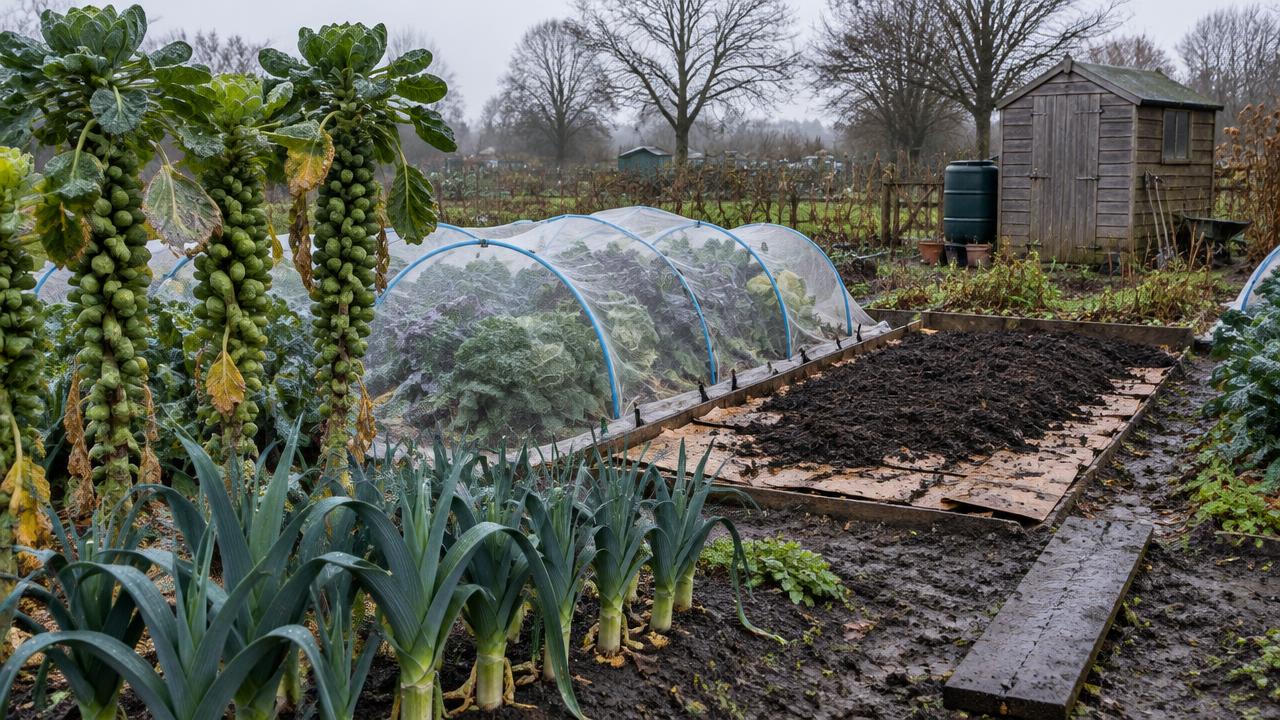
The growing season slows right down in November, but an allotment is far from finished. There are still a few hardy crops to sow, winter vegetables to pick, fruit to plant and prune, and beds to protect before the worst of the weather. Just as useful is knowing which traditional allotment jobs can safely wait, or be skipped altogether. Whether you have a full plot, a half plot or a few raised beds at home, this covers what is worth your time this month and what is better left until spring.
What November on the allotment is for
Think of November as the month for a handful of jobs that make a real difference. There are some hardy sowings and plantings that give you a head start next year, winter crops to harvest and protect, and soil to cover so it comes through the winter in good shape. There is also fruit to plant and prune while it is dormant.
What it isn't for is turning over the whole plot. The traditional autumn dig is the job most allotment holders feel they ought to be doing, and it is one of the least necessary. More on that below.
What you can still plant
Broad beans are the main sowing this month. The RHS suggests sowing overwintering broad beans outside or under cloches in mild areas, where the soil is well drained, and recommends 'Aquadulce Claudia' as a good variety for autumn sowing and overwintering. It says late-autumn sowings in mild parts of the UK can give a crop as early as May. Sow them 5 to 7.5cm deep and 15 to 23cm apart. In colder or wetter areas, the RHS suggests sowing them in pots of peat-free compost in an unheated greenhouse instead, and planting them out later. Mice eat broad bean seeds in the ground, and the RHS notes that sowing under cover keeps the seeds safe from them, which is another reason to start them in pots if mice are a problem on your site.
Garlic can go in now too. On a free-draining plot in a low-rainfall area, the RHS says cloves can be planted straight into their final position, but on heavier or wetter ground, it suggests starting them in modules in a cold frame. Our article on growing garlic in pots covers the planting in detail.
November is also the start of the planting season for fruit. The RHS November advice is to buy and plant new fruit trees and bushes, but not into frozen or waterlogged ground. Bare-root currants, gooseberries, raspberries and fruit trees are all available now, and our complete guide to bare-root planting explains how to plant them, including which rootstocks suit a small plot.
What to harvest now
A well-planned allotment still has plenty to pick in November. The RHS lists Brussels sprouts, which can withstand harsh winter weather in place, along with kale, leeks, Savoy and other winter cabbages, and parsnips among the hardy vegetables that carry on through the winter. Leeks grow slowly all winter, so you can lift them as you need them rather than all at once.
Parsnips are frost-resistant, and the RHS says they can be left in the ground until needed, or lifted and buried in a shallow trench. The bigger problem is getting them out of frozen soil. The RHS suggests an insulating layer of straw 15 to 20cm deep over the row to stop the ground freezing solid. Celeriac can also be left in the ground for a while, protected from the cold with a thick mulch of straw, bracken or similar material.
If you sowed salad leaves in late summer, they can keep going for some time yet with protection. The RHS says salad leaves can be harvested almost all year if you choose varieties suited to colder weather, and advises protecting them over winter with cloches, plastic-free fleece or a cold frame. It describes lamb's lettuce as hardy, and says oriental leaves such as mizuna, mibuna, mustard and rocket germinate well in autumn and may survive the winter under a cloche. It is too cold now to sow salads outdoors, but you can keep picking what is already growing under cover. Don't expect much new growth, though. The RHS notes that in cooler weather, salads can take a couple of months to reach their first harvest, and in the low light of midwinter, plants that survive often grow very slowly, so pick lightly.
Protecting crops through the winter
Pigeons are one of the biggest problems for winter brassicas on an allotment. The RHS advises protecting them with cloches or re-used netting or fleece. Use fine netting held taut on hoops or a frame, rather than loose netting laid over the plants, so birds and other wildlife can't get tangled in it. Peg cloches and fleece down firmly, because an exposed allotment can lose both in the first gale, and open cloches on milder days so the air inside doesn't stay damp.
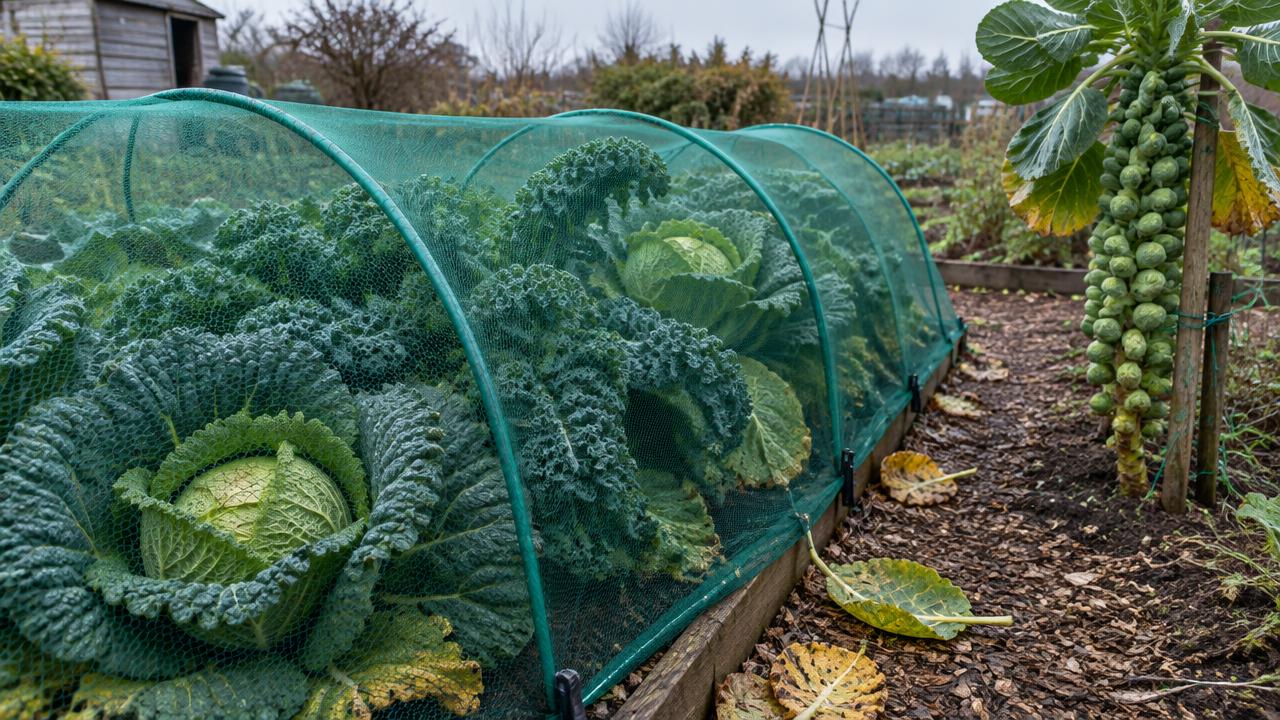
Remove any yellowed leaves from Brussels sprouts and other brassicas, as the RHS suggests, and stake any sprout stalks that look leggy and vulnerable to wind rock. Tall sprout plants on an open site catch a lot of wind. Mice are the other problem this time of year. The RHS advises protecting new sowings and crops still in the ground from mice, ideally with physical barriers.
What to do with empty beds
What you do with an empty bed depends on what state it is in. The RHS November advice is to cover empty beds with a double layer of cardboard, with any tape and staples removed first, topped with homemade compost. That protects the soil surface from heavy rain and smothers weeds. Cardboard is mainly useful on a weedy bed or ground you are bringing into use for the first time. An established, weed-free bed doesn't routinely need it.
If you are creating a new no-dig bed, the RHS recommends overlapping plain cardboard so weeds can't push through the gaps, then covering it with 10 to 15cm of well-rotted organic matter. There is a subtlety on timing, though. The RHS no-dig guidance points out that winter rain washes nitrogen out of the soil, so spreading nutrient-rich mulch in autumn can be wasteful, and it suggests mulching in late winter where you can. If your aim this month is simply to protect unused ground and keep weeds down, cover it now, and save the bulk of your compost to finish the bed nearer spring. A thin scattering over cardboard is a temporary cover, not a finished no-dig bed.
Fruit jobs before December
Established, free-standing apple and pear trees can be winter-pruned now. The RHS says the time to prune is while the trees are dormant, after leaf fall and before the buds swell, usually between November and early March. Start by cutting out anything dead, diseased or damaged, then remove crossing shoots that rub together. Routine winter pruning should remove only about 10 to 20 per cent of the canopy. The RHS warns that pruning too hard produces a mass of vigorous upright growth, known as watershoots. Cut out any canker as you go.
Young trees and trained forms are different. Cordons and espaliers are mainly pruned in summer, and the RHS reserves winter work on them for thinning congested spurs on older plants, which its November advice lists as a job for now, along with tying in new tiers on espaliers. Don't extend the apple and pear advice to plums and cherries either. The RHS advises leaving Prunus species until spring, because they are vulnerable to silver leaf if pruned in autumn or winter. Check stored apples and pears regularly too, and remove any that are rotten or damaged. The RHS suggests using apples with bitter pit first, cutting out the affected parts. This is also a good month to take hardwood cuttings of currants and gooseberries if you want more bushes, and our article on hardwood cuttings explains how.
What to leave alone
The most useful thing you can do for an allotment's soil this month may be to leave the spade in the shed. The RHS no-dig guidance says digging damages soil structure by destroying the natural drainage channels made by worms, and that the main thing to avoid is digging over the whole area. If the ground is compacted, it suggests easing it by pushing in a fork and rocking it gently, without turning the soil.
Keep off soil when it is saturated, too. After heavy rain, the RHS suggests using planks to spread your weight when you need to work on wet beds. A path of boards across the plot is far kinder to the soil than walking straight over it.
There is no need to clear every fallen leaf or tidy away every corner either. A pile of leaves or a log pile at the edge of the plot gives shelter to wildlife over winter, and leaves collected from paths can be turned into leaf mould. Our article on fallen leaves explains how. Healthy crops that are standing well, such as parsnips and leeks, are also best left where they are until you need them.
Getting ahead for next year
A few quieter jobs make spring easier. If you have just taken on a plot, check your tenancy agreement before you clear or build anything, and look carefully for existing perennials such as rhubarb, asparagus or fruit bushes before you dig them out by mistake. On any plot, it is worth checking paths, compost bays and anything in store while you are there. The RHS suggests November is a good time to prepare new asparagus beds for planting in spring, so if you have been meaning to start one, clear and cover the area now. Clean bamboo canes and store them somewhere dry, so they are still sound next year. If you grow chicory for forcing, the RHS suggests digging up the roots now, cutting the leaves back to 2.5cm above the crown and potting them up.
It is also worth planning for the hungry gap, the stretch in spring when stored crops have run out and newly sown ones aren't ready. The RHS describes spring as a barren phase in the vegetable garden until spring-sown crops are ready in summer, and its own allotment diarist wrote in April that her stored potatoes and parsnips had run out. The crops that fill it are mostly already in the ground by November. The RHS says sprouting broccoli and leeks can be left for harvesting until April, spring cabbage planted in autumn is ready from mid-spring, and hardy lettuces and salads kept under protection can carry on too. Broad beans sown now may give an early crop at the end of spring in a good year, but they aren't guaranteed to arrive before the gap ends. Perennials help as well. The same diary highlighted lovage, salad burnet, chives and asparagus as useful during the gap, which is one more reason to prepare an asparagus bed now. Garlic planted now is for next summer rather than the spring gap.
Finally, use a wet day to plan. The RHS suggests ordering seeds now, and November is a good time to look back at what earned its space on the plot this year and what didn't. Make a note of where each crop grew, so you can move them around next year rather than growing the same thing in the same bed.
Keep things alive in small spaces. Join the Club for one practical issue a week — what to sow, one plant problem solved, and the best new guides. Free, no spam.
FAQ
What can I sow on the allotment in November?
[The RHS suggests](https://www.rhs.org.uk/vegetables/broad-beans/grow-your-own) sowing overwintering broad beans outdoors or under cloches in mild areas with well-drained soil, or in pots in an unheated greenhouse in colder areas. 'Aquadulce Claudia' is its recommended variety for autumn sowing.
Should I dig over my allotment in autumn?
Digging the whole plot every autumn isn't necessary. The RHS supports no-dig growing, saying digging damages soil structure by destroying the drainage channels made by worms. Whichever method you use, avoid working the ground when it is saturated or frozen.
Can I leave parsnips in the ground over winter?
Yes. The RHS says parsnips are resistant to frost and can be left in the ground until needed. A layer of straw helps stop the ground freezing so you can still dig them up.
When should I prune apple trees on the allotment?
The RHS says established, free-standing apples and pears are pruned while dormant, usually between November and early March, removing about 10 to 20 per cent of the canopy. Trained forms such as cordons and espaliers are mainly pruned in summer, and plums and cherries are best left until spring.
How do I stop pigeons eating my brassicas?
The RHS advises protecting brassicas with cloches or re-used netting or fleece over winter, and removing any yellowed leaves from Brussels sprouts and other brassicas.
RELATED POSTS
Robin is a small-space grower writing for everyone working with a courtyard, balcony, window box, patio or sunny sill. Edible and leafy, both kept alive in the kind of light real small spaces actually get.
✦ Free with the newsletter — the small-space starter sheet
Grow Anywhere — a free weekly email.
The Potted Club newsletter. A short note from Robin — what to sow, one plant problem solved, and the best new guide.
FREE WEEKLY EMAIL · NO SPAM · UNSUBSCRIBE ANYTIME