Don't Wrap Every Pot Just Because It's October
October doesn't mean every container needs wrapping. Check the plant, the pot and the forecast before deciding what actually needs winter protection.
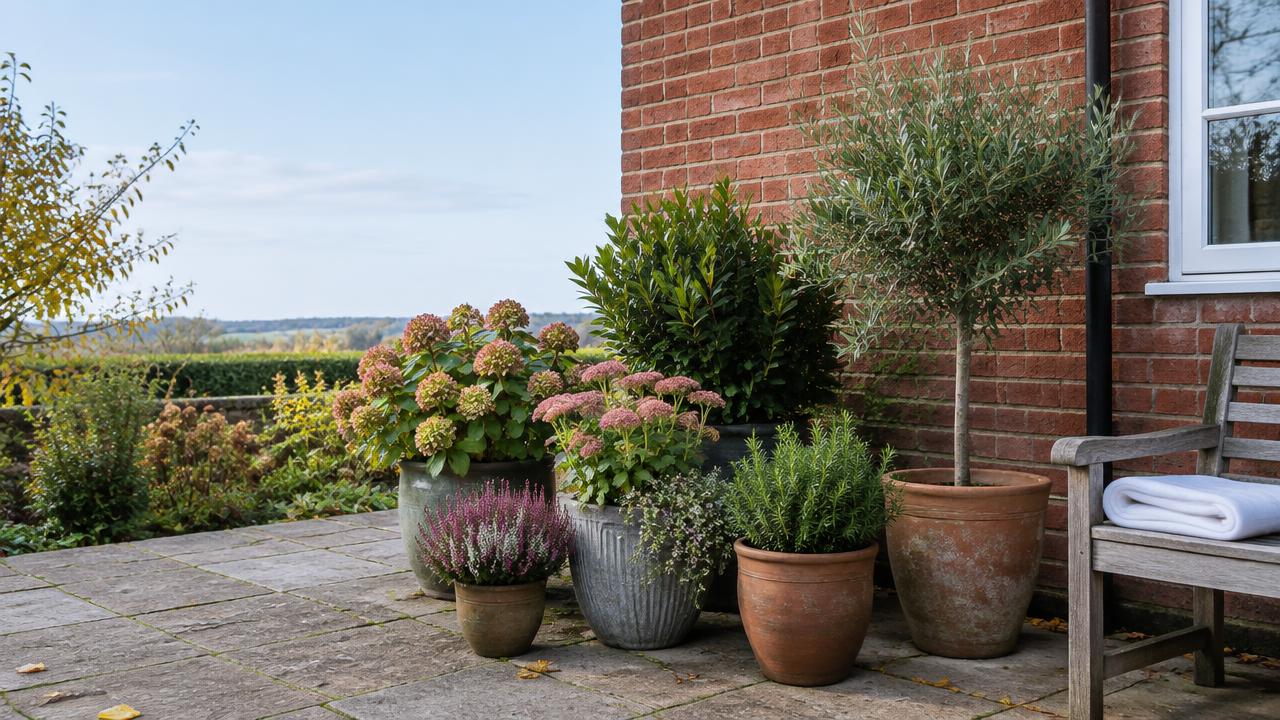
October arrives and winter protection suddenly appears on the jobs list, but the date is not what damages a plant. Before you wrap every container in fleece and bubble wrap, find out what you are growing, how hardy it is, how exposed the pot is and what the forecast says.
October is not a temperature
There is a familiar moment in autumn when patios start to look as though somebody is packing for a house move. Bubble wrap appears around containers, fleece goes over plants and anything vaguely Mediterranean is bundled up until spring. Sometimes that protection is needed, because an early October frost is perfectly possible and a tender plant may already belong under cover. What makes less sense is treating the first of October as a deadline for everything.
The RHS ties the job to the weather and not to the month. Its guidance on overwintering tender plants says winter wrappings are best put in place at the first warning of frost, which usually falls somewhere between September and November. That gives a better rule than the calendar: identify the plant, understand what it can tolerate and respond to the conditions it is going to meet.
Start with the hardiness rating
The RHS hardiness system runs from H1a, for plants that need more than 15°C all year, to H7, for plants that survive below -20°C. For most container growers the useful part is the middle. H2 plants tolerate roughly 1 to 5°C but will not survive being frozen. H3 covers about -5 to 1°C and is described as hardy in coastal and relatively mild parts of the UK. H4 covers about -10 to -5°C and is described as hardy through most of the UK.
Those figures are the lowest winter temperatures a plant is likely to withstand, and the RHS presents them as a guide. They are worth looking up all the same, because appearance is a poor predictor. A silvery, Mediterranean-looking plant is not necessarily tender, and a familiar garden shrub is not necessarily safe in an exposed pot.
A pot changes the calculation
The rating describes the plant, and a container changes its circumstances. The RHS says so in the ratings themselves. At H4 it notes that plants in pots are more vulnerable, at H5 that plants in pots are at increased risk, and at H6 that many plants grown in containers will be damaged unless given protection. Its guidance on winter damage makes the same point more broadly, saying that in cold or exposed areas even hardy plants may need some protection, and that evergreens and plants in pots are at particular risk.
None of that means every hardy plant in a pot needs wrapping. It means the pot and its position belong in the decision alongside the rating. A large container grouped with others against a sheltered wall is a different proposition from a small one alone on a windy balcony, and the same species can need different treatment in each.
Move first, then decide whether to wrap
One advantage of growing in containers is that you can change a plant's surroundings without building anything. The RHS guidance on container maintenance says that grouping pots close together near a house wall in winter helps protect the roots from the cold. For a small patio or courtyard, rearranging half a dozen pots can be quicker than wrapping each of them.
For a hardy plant in an ordinary spell of winter weather, that may be all the protection it needs. A borderline plant may still want fleece on the coldest nights, and something tender may need to move under cover altogether. Moving, wrapping and bringing in are different responses to different levels of risk, and the sensible approach is the least intervention that gives a particular plant what it needs.
Are you protecting the roots or the plant?
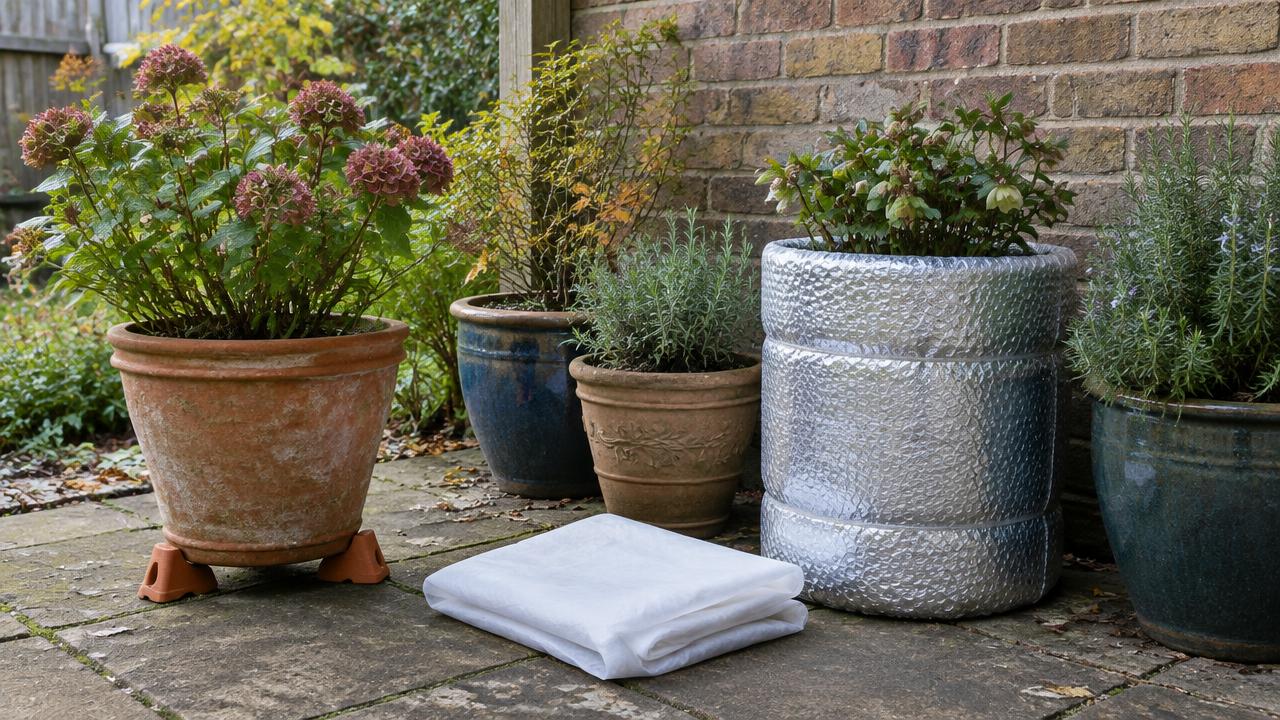
This distinction makes winter protection much easier to think about. If the worry is roots freezing inside a container, insulate the pot. RHS winter-damage guidance recommends insulating containers with materials such as bubble wrap, hessian or straw to help protect roots from freezing.
If the worry is stems and foliage, the RHS recommends wrapping plants with horticultural fleece. Its fleece guidance also puts a figure on what fleece can do, saying the heavier grades give about 2°C of protection from frost. That is useful against a modest frost, and it will not turn a tender plant into a hardy one. Bubble wrap belongs on the pot and fleece on the plant, since fleece lets air and moisture through and plastic does not.
For a plant that cannot tolerate the forecast temperature at all, neither may be enough. An H2 plant will not survive freezing, and moving it somewhere frost-free is the safer course.
Don't leave everything bundled until March
Wrapping is often presented as an autumn job you do once. The RHS advice is more responsive than that. To prevent sweating and possible rotting, it says protective covers should be removed when extended periods of very mild weather are forecast, and replaced as necessary if it turns cold again.
There are plants that are given a substantial winter structure and left in it, and the RHS has specific methods for bananas and tree ferns. That is no reason to keep every borderline shrub on a patio enclosed for five months. For ordinary container plants, the forecast stays part of the decision right through the winter.
The October job worth doing now
Even with no frost in sight, there is winter preparation that is worth doing straight away, and it concerns water. The RHS advises raising container plants onto pot feet or bricks over winter so that the compost cannot become saturated, and its container guidance says plainly to remove saucers in winter. Both matter most where pots stand on paving and water has nowhere to go.
Winter is a wet problem as well as a cold one. A plant sitting in sodden compost for months is under a different kind of stress from one that meets a brief cold night in a free-draining pot. The same RHS guidance adds a small point that is easy to miss, which is to avoid watering when frost is forecast.
The container itself may also need thinking about. Terracotta is prone to cracking in cold weather, especially when wet compost freezes and expands. RHS container guidance recommends frost-proof containers for long-term outdoor trees. If a terracotta pot was not sold as frost-proof, keep it draining freely and insulate it when hard frost is forecast.
What about olives?
Olives show why blanket advice for plants in pots works badly. The RHS rates Olea europaea as H4 and says many olives tolerate around -5 to -10°C, though severe frost can still damage leaves and branches. In milder, sheltered areas a potted olive can stay outside, with the canopy and container wrapped when severe frost is forecast.
In colder areas the RHS advice is different. It recommends growing olives in containers that can be moved into a frost-free place over winter. Our Complete Guide to Growing Olive Trees in Pots goes through both situations. An olive should not be carried into a warm house because October has arrived, and it should not be assumed safe outdoors through every British winter either.
What I would do this weekend
I would not start by wrapping anything. I would check the hardiness rating of every plant I was unsure about, and decide now where anything tender is going to spend the winter. Borderline pots would move towards the most sheltered wall I had, grouped together.
Then I would raise the containers that are staying out, take away the saucers, and put the fleece and bubble wrap somewhere I could find them in a hurry. When the forecast showed the first frost, the plants that needed protection would get it, and the hardy ones would stay as they were. The aim is not to see how long a vulnerable plant can be left exposed. It is to stop treating October itself as the threat.
FAQ
When should I wrap plants for winter?
The RHS recommends putting winter wrapping in place at the first warning of frost, usually between September and November. The timing depends on your weather and on the plant, not on the date.
Does every plant in a pot need winter protection?
No. Containers make plants more vulnerable to cold, but how much protection is needed depends on the plant's hardiness, the pot and how exposed it is. Tender plants may need to come under cover instead.
Should I wrap the pot or the foliage?
It depends on what is at risk. Insulating the pot protects the roots from freezing, and horticultural fleece protects top growth. In severe weather some plants need both.
Should I leave fleece on all winter?
Not necessarily. The RHS advises removing covers during extended periods of very mild weather to prevent sweating and possible rotting, and replacing them when it turns cold again.
Should pots be raised off the ground in winter?
Yes, where they would otherwise sit in water. The RHS advises raising containers on pot feet or bricks so the compost cannot become saturated, and removing saucers in winter.
READ THE FULL GUIDE
Container Growing Fundamentals →
RELATED POSTS
Robin is a small-space grower writing for everyone working with a courtyard, balcony, window box, patio or sunny sill. Edible and leafy, both kept alive in the kind of light real small spaces actually get.
✦ Free with the newsletter — the small-space starter sheet
Grow Anywhere — a free weekly email.
The Potted Club newsletter. A short note from Robin — what to sow, one plant problem solved, and the best new guide.
FREE WEEKLY EMAIL · NO SPAM · UNSUBSCRIBE ANYTIME