Is Autumn Really the Best Time to Plant a Pot?
Autumn is a good planting season, but containers work differently from open ground. Here's when to plant now, and when it pays to wait.
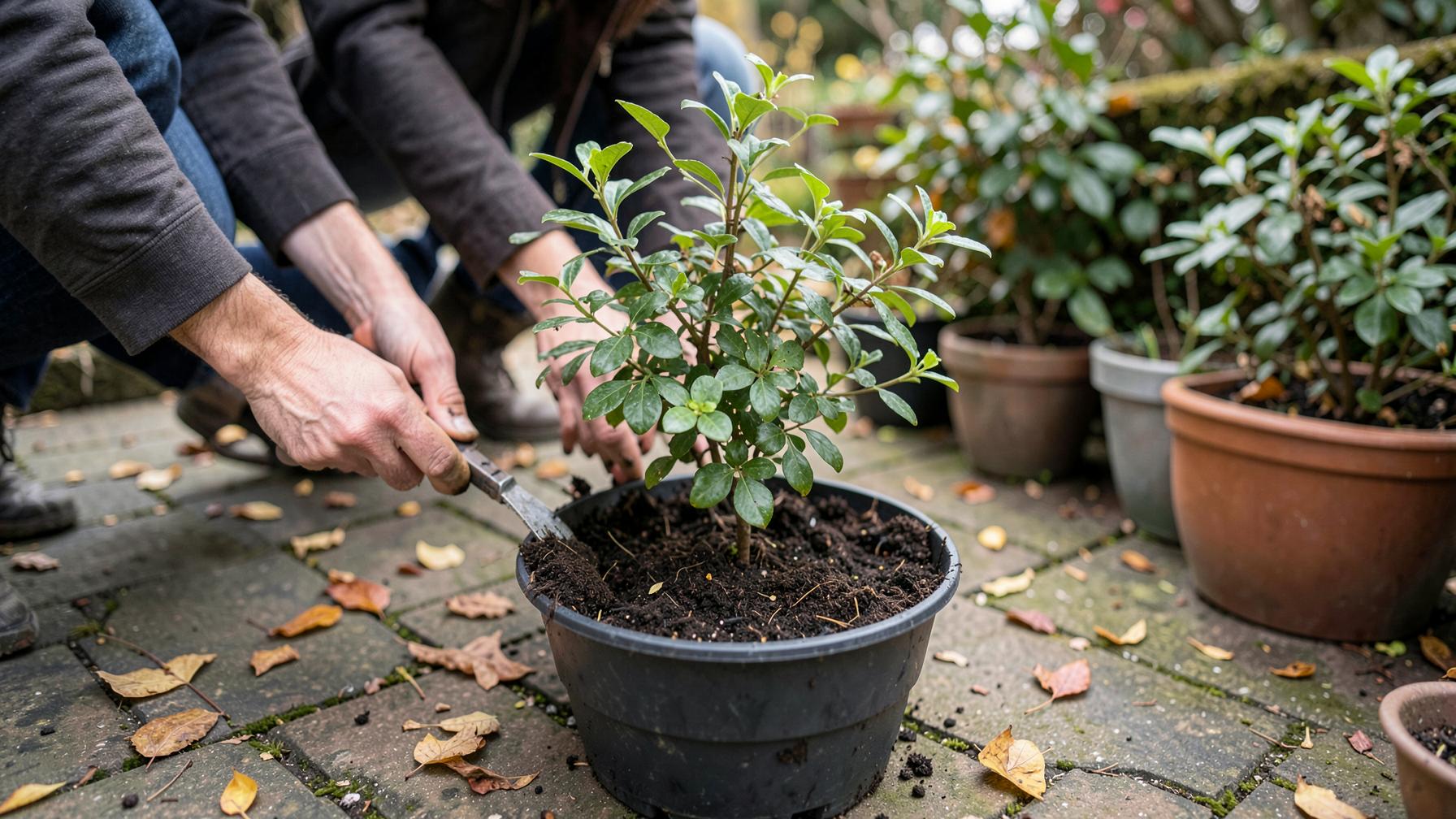
The advice everyone's giving right now
Open a gardening magazine in September and you'll probably encounter some version of the same advice: autumn is one of the best times to plant.
There are good reasons for it. Soil retains warmth after summer while temperatures are falling, and autumn generally brings increasing moisture. Plants can begin establishing without facing the same combination of heat and water demand they might encounter after late-spring planting. The RHS has been actively encouraging gardeners to make more use of autumn planting as hotter, drier summers make establishment harder.
But most of that logic starts with a plant going into the ground.
A pot is a different environment. It contains a finite volume of growing medium, drains differently, exposes roots more directly to temperature changes and remains entirely dependent on the conditions immediately around it. Autumn planting isn't wrong for containers. But the answer is more interesting than simply moving the conventional advice into a smaller space.
The distinction that actually matters
There are two jobs that sound almost identical but shouldn't be treated as the same thing.
The first is planting a new container: taking a plant and establishing it in the pot where you want it to grow.
The second is repotting an established container plant: removing something already growing in a pot, disturbing its rootball and usually moving it into a larger container with additional fresh growing medium.
For permanent container plants, the RHS says early spring is preferable because plants establish more rapidly, but that early autumn is also fine.
For routine repotting, its advice is different. The RHS recommends avoiding autumn and winter where possible, when plant growth slows or stops, because fresh compost around the existing rootball can remain wet.
So "autumn is a good time to plant" doesn't mean "September is a good time to repot everything." That distinction is probably the most useful thing a container gardener can take from the wider autumn-planting advice.
Planting a new container: yes, but spring still has the edge
If you have an empty container and a healthy, appropriately hardy plant ready to go into it, early autumn is a perfectly reasonable time to plant. Temperatures are generally less stressful than during summer, water demand is falling, and roots may have time to begin establishing before winter.
But there's an important qualification. For permanent container plants, the RHS still gives early spring the edge because establishment is faster as plants move into active growth.
That's different from saying autumn planting is second-rate. It simply means we shouldn't take the advantages of autumn planting in open ground and assume they become even greater in a pot.
If the plant is hardy, suitable for container growing and you can give it appropriate drainage and winter conditions, there's no reason to leave an empty pot sitting around until April. If you're deciding whether to buy a plant specifically to establish a permanent container, however, autumn isn't automatically the superior choice.
Repotting an established plant: usually wait
This is where autumn deserves more caution.
Repotting adds fresh growing medium around an existing root system, often after at least some root disturbance. As temperatures and light levels fall, many plants slow their growth and use less water. That means the newly added compost can remain wet for longer than it would during active spring growth. It's one reason the RHS recommends spring as the normal time to repot established container plants rather than autumn or winter.
So if an autumn tidy-up reveals a plant that's becoming congested in its pot, don't assume you need to act immediately. A healthy plant that is simply approaching the point where it needs more room can usually wait until growth resumes.
There are exceptions. A cracked container, a serious root problem or a plant genuinely deteriorating because of its current conditions may justify intervention regardless of the calendar. But that's solving an existing problem, rather than routine seasonal maintenance.
And if you do need to move a plant, avoid giving it a dramatically oversized container. A large volume of growing medium beyond the existing rootball can retain moisture that the plant isn't yet using.
Pots face different winter conditions
Planting into a container in September also means asking what that plant will experience during the next few months. Two things matter particularly: cold and water.
Roots in open ground benefit from the buffering effect of a much larger body of soil. In a container, the root system is separated from cold air by the growing medium and the walls of the pot. The RHS consequently warns that roots of container-grown plants are more exposed to cold than those of plants growing in the ground.
That doesn't mean hardy plants can't spend winter outside in pots; enormous numbers do. It means a plant's hardiness in open ground doesn't tell you everything about how it will perform in a small, exposed container. Pot size, material, local climate and position all influence the conditions around those roots.
Then there is winter wet. Containers can become waterlogged when rainfall increases while plant water use declines. A plant that tolerates Britain's winter perfectly well in free-draining ground may be less happy sitting in saturated compost. That's why drainage deserves more attention when you're planting a permanent pot now than it might during spring.
If you're planting now, get the basics right
Start with the drainage holes. Make sure they're clear and that water can actually escape from the bottom of the container. Where a pot sits flat against paving and drainage may be impeded, raising it slightly on pot feet or suitable supports can help.
Worth knowing: you don't need to create a thick drainage layer of gravel or broken crocks at the bottom of the pot. This is one of the most persistent pieces of gardening advice going, and the evidence doesn't support it. A coarse layer under finer compost actually creates what soil scientists call a perched water table, holding water in the compost above it rather than letting it drain away. The RHS's own chief horticultural adviser has said a crock is likely to worsen drainage by creating a block, and when Which? Gardening tested it properly across 40 pots, crocks made no difference to how well the plants did.
The one genuine exception: if a pot has unusually large drainage holes, more than about 2.5cm across, covering them with a crock or piece of mesh stops compost falling straight through. That's about retaining compost, not improving drainage, which is a different job entirely.
Choose an appropriately sized container rather than jumping several sizes simply because you have the space. Good container growing fundamentals — drainage, pot size and position — matter more in autumn than a layer of crocks ever will.
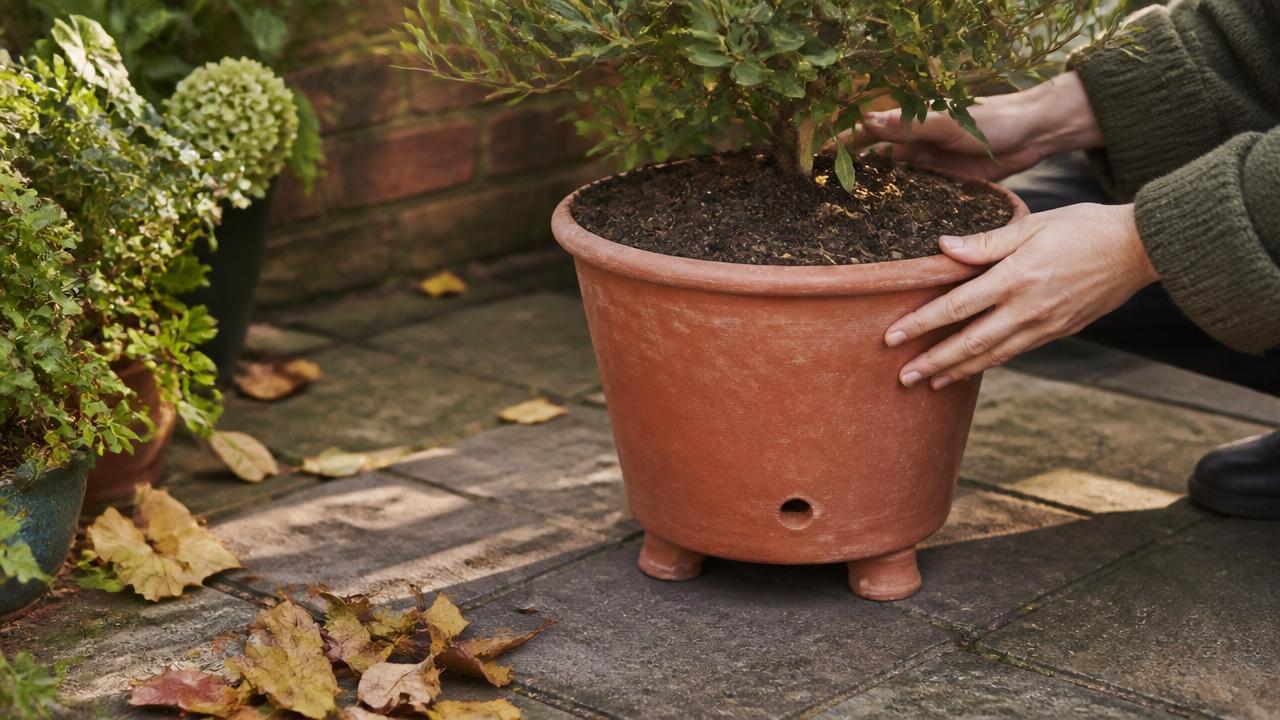
Then think about position. An exposed balcony and a sheltered patio against a house wall can produce very different winter conditions. Some plants that dislike persistent winter wet can benefit from a position protected from the worst of the rain, provided their other requirements are still being met.
Equally, shelter creates another problem container gardeners often overlook: pots beneath eaves and overhangs may receive remarkably little rain. So don't abandon watering simply because autumn has arrived. A newly planted container needs watering in, then monitoring while roots establish. Check the growing medium rather than continuing a summer watering routine or assuming autumn rainfall has done the job. The objective is neither dry nor permanently wet compost.
What makes sense to plant now?
Hardy perennials and shrubs suitable for containers are the obvious candidates for a permanent autumn planting.
Seasonal displays are different again. Violas, pansies and other plants grown specifically for autumn, winter and early-spring interest naturally go into containers around this period. Evergreens can also provide structure when summer displays begin disappearing, provided the particular plant is suitable for the pot and conditions.
Slightly tender plants require more thought. Giving a newly planted tender or borderline-hardy plant its first months in a container during winter may offer little advantage over establishing it when conditions improve in spring. The same caution applies to plants particularly susceptible to winter wet unless you can provide the drainage and shelter they require.
And then there are bulbs. Autumn is the normal planting period for many spring-flowering bulbs, and containers are ideal for them. Daffodils, crocuses and many others can be planted during autumn according to their individual requirements. Tulips are worth holding back; the RHS recommends November as the optimum planting time, since later planting can reduce the risk of tulip fire, caused by Botrytis tulipae.
Container sowing calendars shift quickly through late summer and early autumn — our August sowing guide covers the fast crops that precede this planting window.
So even within one apparently simple job, planting bulbs in autumn, the calendar isn't universal.
So, should you plant that pot now?
If you have a hardy plant suitable for container growing, an empty pot with effective drainage and an appropriate position for winter, early autumn can be a very good opportunity to get it planted.
If you're looking at an established plant and thinking it could probably do with a larger pot, there is usually much less urgency. Routine repotting can wait for spring.
If the plant is tender, particularly vulnerable to winter wet or destined for a small and very exposed container, spring may provide a more forgiving start.
And if it's a packet of tulips you've just brought home from the garden centre, buying them now doesn't mean you need to plant them now.
That's the limitation of the familiar advice that autumn is the best time to plant. For many things in the garden, it's excellent advice. For pots, the first question is what kind of planting you're actually doing.
FAQ
Is September a good time to plant containers?
Yes, for many hardy plants. The RHS says early autumn is suitable for establishing permanent container plants, although it prefers early spring because plants establish more rapidly then.
Should I repot container plants in autumn?
Usually not as routine maintenance. The RHS advises avoiding autumn and winter where possible because growth is slowing and fresh growing medium can remain wet for longer. Spring is generally preferable.
What if my plant is already root-bound?
If it's otherwise healthy, it can often wait until spring. If the plant is actively deteriorating or there is another urgent problem with the roots or container, repotting sooner may be justified.
Do outdoor pots still need watering in autumn?
They can. Newly planted containers still need adequate moisture, and pots beneath eaves, walls or overhangs may receive little rainfall. Check the growing medium rather than watering by calendar.
Should I put gravel in the bottom of a pot for drainage?
No. A coarse layer beneath finer compost creates a perched water table that holds water above it rather than improving drainage, and proper testing has found it makes no difference to plant performance. Effective drainage holes and an appropriate growing medium matter far more. Covering unusually large drainage holes with a crock or mesh is a separate matter, done to stop compost falling out rather than to aid drainage.
Can I plant spring bulbs in containers now?
Many spring-flowering bulbs are planted during autumn. Tulips are generally planted later, with the RHS recommending November as the optimum time.
RELATED POSTS
Robin is a small-space grower writing for everyone working with a courtyard, balcony, window box, patio or sunny sill. Edible and leafy, both kept alive in the kind of light real small spaces actually get.
✦ Free with the newsletter — the small-space starter sheet
Grow Anywhere — a free weekly email.
The Potted Club newsletter. A short note from Robin — what to sow, one plant problem solved, and the best new guide.
FREE WEEKLY EMAIL · NO SPAM · UNSUBSCRIBE ANYTIME