Don't Repot Your Houseplants This Autumn. You Can Do This Instead
The bigger pot feels like an upgrade. For a plant that's slowing down for winter, it usually isn't. Why repotting is a spring job, and the exceptions that genuinely can't wait.
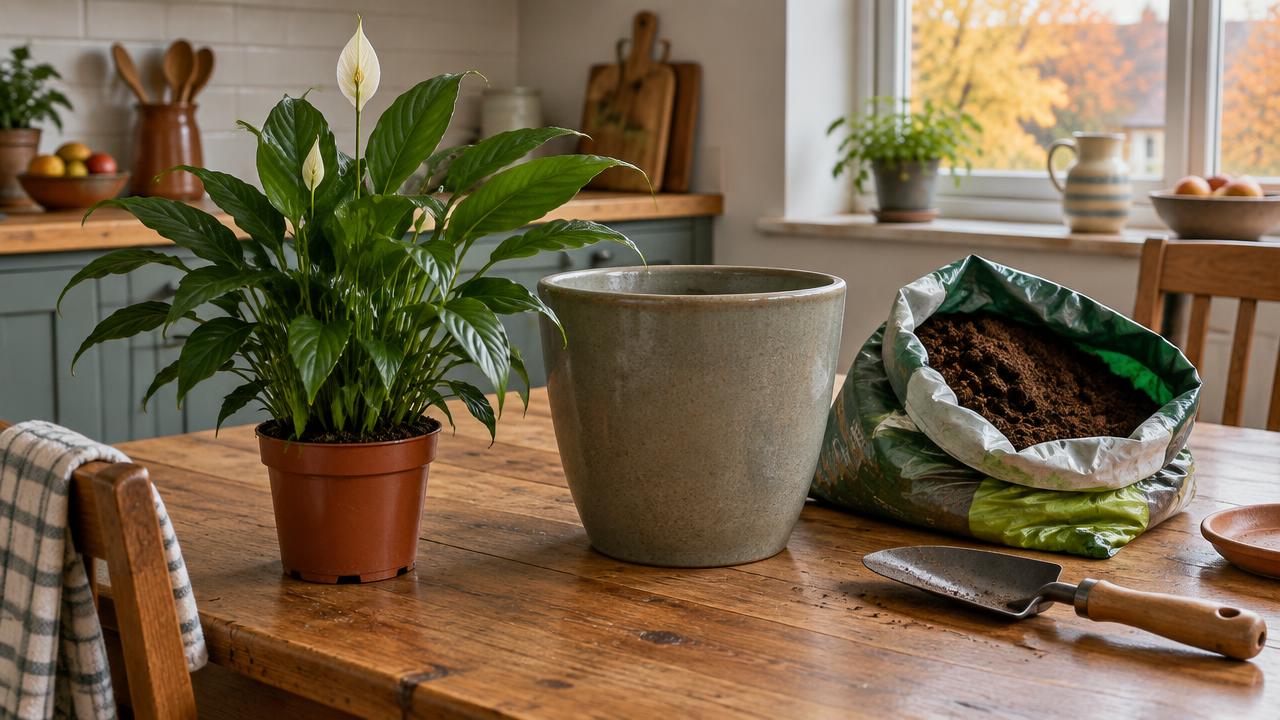
September has a way of making every plant look as though it needs sorting out. Your houseplants probably don't need a bigger pot. In fact, this is one job that's usually better left until spring.
The urge is the problem
There's a particular kind of September energy that makes you look at a houseplant you've walked past for six months and decide it needs intervention. The pot looks small. The plant looks tired. There's a bigger pot in the shed and a half-used bag of compost under the sink.
Resist it. Or at least, interrogate it first.
Repotting is one of the few houseplant jobs with a genuinely seasonal answer, and the answer is spring. The RHS is direct about this: spring, as plants start into growth, is generally the best time to repot, with early to midsummer also suitable. It's best to avoid repotting in autumn or winter, when plant growth slows or completely stops, because this increases the risk of fresh compost sitting too wet.
Why wet compost is the whole problem
The mechanism is worth understanding, because once you see it the seasonal rule stops feeling arbitrary.
Fresh compost holds a lot of water. In a plant that's actively growing, that's fine: roots push out into the new compost within weeks, drinking the water and drying it out as they go. The plant is also losing water through its leaves at a decent rate, which pulls more up from the roots. The whole system moves water through and the compost never sits saturated for long.
A plant in autumn isn't doing much of that. Growth has slowed, water uptake has dropped, and the roots are colonising new compost far more slowly. So the fresh compost you've just added can stay wet for considerably longer, wrapped around a rootball that isn't using it. Roots need oxygen as well as moisture, and compost that remains wet week after week doesn't provide it. That's how you get rot in a plant you were trying to help.
The seasonal logic still applies indoors
Outdoor plants slow down in autumn largely because of falling temperatures. Houseplants in a heated home aren't cold, which makes people assume the seasonal rules don't apply to them.
They generally do, though light is doing much of the work. Shorter days and a weaker, lower sun mean even a bright windowsill delivers a fraction of what it did in June, and many tropical foliage plants respond by slowing into a semi-dormant rest. Temperature, species and the conditions in a particular room all play a part too, but the outcome is usually the same: a plant in a warm living room in November is still a plant that isn't growing much.
Central heating then adds a complication rather than solving one, as we covered in our piece on autumn watering. It dries the air, which can make the compost surface look ready for water while the rootball underneath stays wet. Repot into a large pot in October and you've built exactly the conditions where that confusion does damage.
The bigger pot is rarely the upgrade it feels like
There's a second problem sitting underneath the first, and it's the one that catches people out year-round.
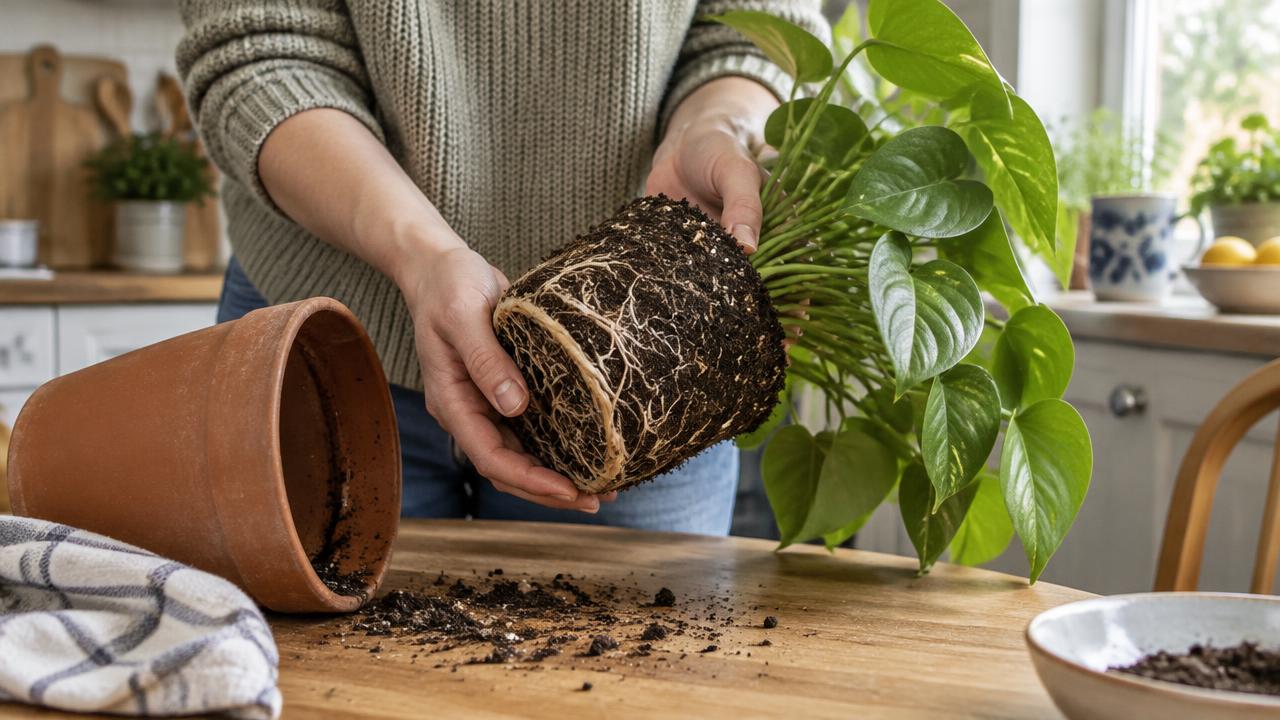
A larger pot feels generous. More room, more compost, more growing. In practice, a pot that's too big is a well-documented way to kill a plant, and the RHS gives it its own name: overpotting. The small root system can't use the water held in all that surrounding compost, so a wet zone sits permanently around the rootball and the roots rot in it.
The symptoms are the cruel part. Yellowing, wilting and general decline look exactly like underwatering, so the usual response is to water more, which makes it considerably worse. Our guide to yellowing leaves is useful if you're trying to separate root trouble from simple thirst.
The RHS's rule when potting on is that the new container should be no more than a third larger than the current one. That's a modest step up, and it's deliberate: the plant needs to be able to fill the new space reasonably quickly.
So even in spring, when repotting is the right call, restraint is still the right approach. In autumn, when the plant can't fill anything, going large is compounding two mistakes at once.
The exceptions that genuinely can't wait
This isn't an argument for leaving a plant to suffer until March. Some situations are worse than the risk of repotting at a bad time.
Badly congested roots. A few roots appearing through a drainage hole aren't an emergency, and a root can simply find its way out of a hole. But if you slide the plant out and find a dense mass of circling roots with very little usable compost remaining, water management can become difficult. If the plant is genuinely severely pot-bound and struggling, waiting until spring may be the worse option.
Compost that's failed. If the compost has broken down to the point where it's compacted and airless, or it's become badly waterlogged and won't dry, the growing medium is now the problem. Fresh compost is the fix regardless of the month.
Root problems you've discovered. If you've tipped a plant out and found rot, or the vine weevil grubs worth checking for at this time of year, dealing with it now is better than leaving it.
A broken pot. Obviously.
In all of these, the approach is the same: move up only one modest pot size, disturb the roots as little as the situation allows, water sparingly afterwards, and keep the plant somewhere with the best light you can offer. You're doing a rescue, not a routine upgrade. The full repotting guide covers the technique in more detail.
What to do instead
If the plant is fine but you want to do something, there's a genuinely useful job that carries none of the risk.
Refresh the top few centimetres of compost. The RHS notes that where repotting isn't necessary, you can simply refresh some of the compost, since the organic material in it breaks down over time and the level in the pot drops. Scrape away the top layer, avoiding the roots, and replace it with fresh. You get new nutrients and better structure at the surface without disturbing the rootball or adding a large volume of wet compost.
While you're there, check the drainage holes aren't blocked, tip out any water sitting in the decorative outer pot, and wipe the dust off the leaves. Dust genuinely reduces the light a plant can use, which matters more in October than it did in June. If you're checking pot structure more broadly, the container growing fundamentals guide explains why drainage and compost volume matter so much in small spaces.
Then make a note of which plants want repotting, and do it in spring when the plant can actually make use of it.
FAQ
When is the best time to repot houseplants?
Spring, as plants come into growth, with early to midsummer also suitable. The RHS advises avoiding autumn and winter, when slower growth means fresh compost is more likely to stay too wet.
Why does repotting in autumn cause problems?
A plant that isn't growing much takes up less water and colonises fresh compost more slowly, so that compost can remain wet for longer around the rootball. Roots need oxygen as well as water, and compost that stays wet week after week can lead to rot.
My houseplant is indoors and warm. Do seasonal rules still apply?
Generally yes. Falling autumn light slows growth in many houseplants even in a heated room, so the plant still can't make good use of a large volume of fresh compost.
How much bigger should the new pot be?
RHS guidance is that a new container should be no more than a third larger than the current one. Going considerably bigger risks overpotting, where surrounding compost stays wet because the roots can't reach it.
What if my plant is really root-bound?
That's a legitimate exception, but check properly first. A few roots through a drainage hole aren't an emergency. Slide the plant out and look: if it's a dense mass of circling roots with almost no usable compost left, and the plant is struggling, move up one modest size, water sparingly afterwards and give it the best light you can.
Is there anything useful I can do instead?
Refresh the top few centimetres of compost, which gives fresh nutrients without disturbing the roots or adding a large volume of wet compost. Also check drainage, empty any standing water from outer pots, and clean dust off the leaves.
READ THE FULL GUIDE
The Complete Guide to Repotting →
RELATED POSTS
Robin is a small-space grower writing for everyone working with a courtyard, balcony, window box, patio or sunny sill. Edible and leafy, both kept alive in the kind of light real small spaces actually get.
✦ Free with the newsletter — the small-space starter sheet
Grow Anywhere — a free weekly email.
The Potted Club newsletter. A short note from Robin — what to sow, one plant problem solved, and the best new guide.
FREE WEEKLY EMAIL · NO SPAM · UNSUBSCRIBE ANYTIME