Should You Deadhead, or Let It Go to Seed
Deadheading isn't automatically the right move for every flower. Which plants genuinely want it, which are better left to seed for wildlife, self-sowing or next year's plants for free, and how to tell the difference.
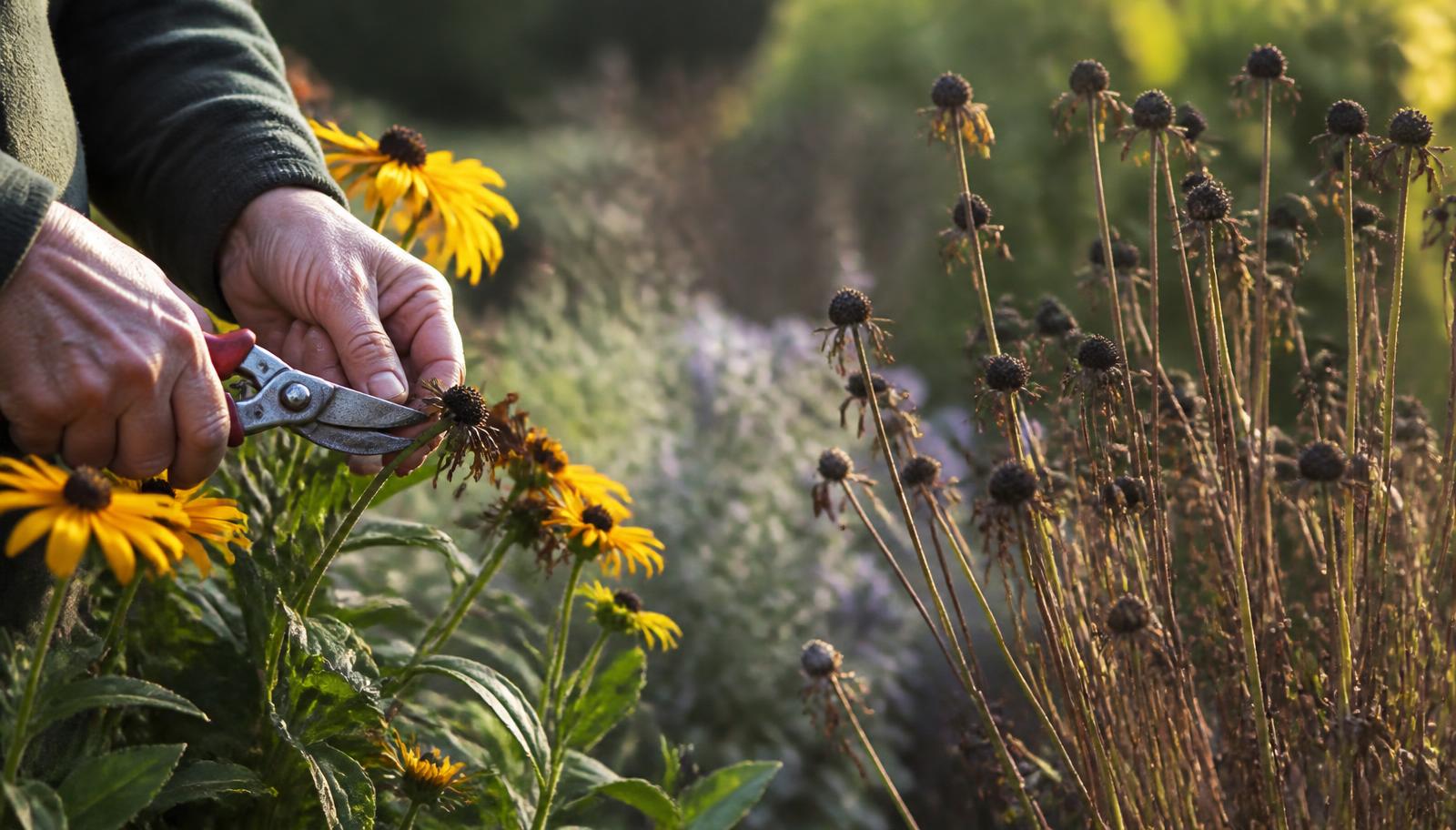
Deadheading isn't automatically correct
Deadheading, snipping off spent flowers before they set seed, gets treated as a universal good habit in a lot of gardening advice, and for many plants it genuinely is. But it's worth being clear about what it actually does: it tricks a plant into producing more flowers rather than switching its energy into seed production, which is exactly what you want from a rose or a dahlia bred to bloom for months.
It is not automatically what you want from every flowering plant in a small garden, and treating it as a blanket rule means missing out on genuine benefits further down the line.
When deadheading is clearly the right call
For a specific category of plants, deadheading is straightforwardly worth doing, right through summer and into early autumn.
Repeat-flowering annuals like cosmos, sweet peas and most bedding plants will keep producing new blooms for months if you keep removing the spent ones, and will noticeably slow down or stop if you don't. Dahlias respond the same way, often dramatically, rewarding regular deadheading with continuous flowering right up until the first frost. Roses, as covered in our piece on midsummer rose care, want ongoing deadheading through the season too, with the exception of once-flowering old varieties. Bedding violas, petunias and similar container annuals all benefit from the same regular attention.
The common thread: these are plants bred or selected specifically for a long flowering season, and deadheading is what keeps that season going rather than letting it end early.
When letting it seed is the better move
This is the part most general advice skips, and it's where a bit of judgement genuinely improves a small garden rather than just keeping it tidy.
Feeding wildlife through autumn and winter. Seed heads left on plants like teasel, echinacea, rudbeckia and many ornamental grasses provide a genuine food source for finches and other seed-eating birds right through the colder months, at exactly the point natural food becomes scarce. As covered in our piece on helping garden birds in a heatwave, growing plants that feed birds directly is increasingly the preferred approach over supplementary feeding, and leaving seed heads standing is one of the simplest ways to do it.
Free plants next year. Many popular garden plants self-seed readily if you let them, including poppies, foxgloves, honesty, nigella and verbena bonariensis. Letting a few spent flowers set and drop seed costs nothing and often produces a scattering of new seedlings the following spring exactly where conditions suit them, which is frequently a better result than anything you'd have planned deliberately.
Saving your own seed. A fully seeded plant gives you free seed for next year's sowing, provided it wasn't an F1 hybrid variety, which won't come true from seed. This is the same principle covered in our piece on why plants bolt in heat, where letting a bolted coriander or rocket plant finish flowering and seeding gives you a free supply for the next sowing, alongside feeding pollinators in the meantime. The RHS guide to collecting and storing seed covers the drying and storage side properly.
Winter structure and interest. Seed heads on many ornamental perennials and grasses look genuinely good through autumn and winter, especially with frost on them, adding shape and texture to a garden that would otherwise look bare. Sedum, ornamental grasses, alliums and echinacea are all classic choices left standing specifically for this reason, cut back in late winter rather than as soon as flowering finishes.
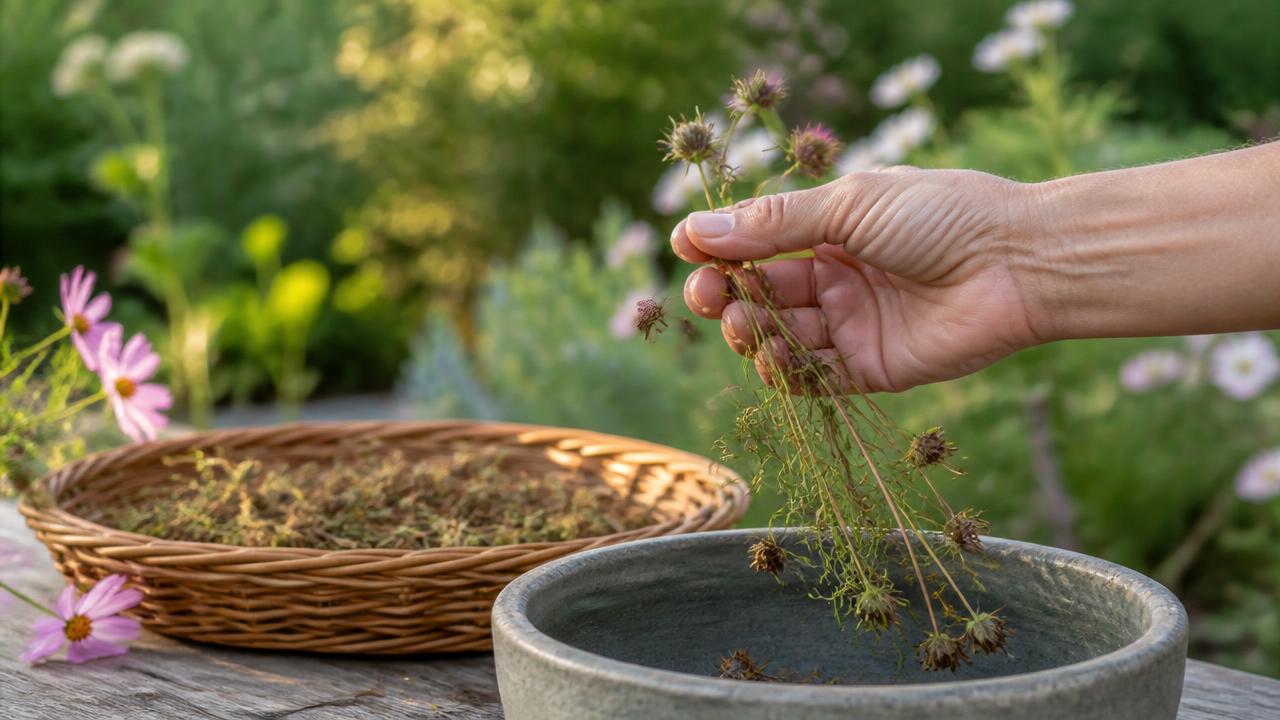
How to decide, plant by plant
A rough guide for common small-space plants, though personal preference (do you want the seedlings, do you have room for winter structure) genuinely matters too.
| Plant | Deadhead or let seed | Why |
|---|---|---|
| Dahlias | Deadhead | Repeat-flowers reliably until frost with regular deadheading |
| Cosmos | Deadhead, mostly | Repeat-flowers well; leave a few late blooms for self-seeding if wanted |
| Sweet peas | Deadhead | Stops seed pod formation, which otherwise ends flowering early |
| Roses (repeat-flowering) | Deadhead | Covered in depth in our roses piece |
| Roses (once-flowering, or if you want hips) | Let seed | Produces autumn hips for wildlife and colour |
| Poppies | Let seed | Reliable, welcome self-seeder in most gardens |
| Foxgloves | Let seed | Biennial; needs to seed to appear again next year |
| Verbena bonariensis | Let some seed, deadhead some | Self-seeds readily; can become a bit much if left entirely unchecked |
| Echinacea | Let seed | Seed heads feed birds and look good through winter |
| Rudbeckia | Let seed | Same as echinacea |
| Sedum | Let seed | Winter structure, frost-tolerant seed heads |
| Ornamental grasses | Let seed | Winter structure and texture |
| Coriander, rocket (if bolted) | Let seed | Feeds pollinators, gives free seed for next sowing |
| Bedding annuals (violas, petunias) | Deadhead | Bred for continuous flowering; rarely worth seed-saving |
Technique, briefly
For plants where deadheading is the right call, the method is straightforward: follow the faded flower stem down to the first proper set of leaves or the first strong bud, and cut just above it with clean secateurs, or simply pinch it off by hand for softer-stemmed plants. The RHS deadheading guidance covers the variations for specific plant types.
Doing this regularly, every few days through the height of flowering, matters more than doing it perfectly. A plant checked over briefly and often stays in bloom far better than one deadheaded thoroughly but rarely.
When to stop deadheading for the season
Even the most committed repeat-flowerers naturally wind down as days shorten and temperatures drop in early autumn. There's little point continuing to deadhead once a plant has clearly stopped producing meaningful new buds. At that point, either let the last flowers finish and seed if you want them to, or simply leave the plant be until its proper cutback time, which for many perennials and shrubs is late winter rather than autumn, as covered in our piece on what to cut back and when.
Container growers: a slightly different calculation
Self-seeding works differently in a pot than in open ground, and it's worth knowing before you let something seed on a balcony or patio expecting free plants to appear.
In open ground, seed drops, overwinters in the soil, and germinates where conditions suit it the following spring, often at some distance from the parent plant. In a container, seed mostly drops straight back into the same compost it came from, which means self-sown seedlings tend to appear directly in the pot rather than spreading anywhere useful, and can end up overcrowding whatever else is already growing there.
If you want the self-seeding benefit in a small space, the more reliable approach is deliberate: let a plant seed, then collect and store the seed properly once it's dry, rather than hoping it finds its own way to a good spot. This gives you the free-plants benefit without the container simply filling up with unplanned seedlings competing for the same limited compost and nutrients, a constraint our guide to container growing fundamentals goes into in more detail.
The wildlife and winter-interest benefits of leaving seed heads standing apply just as much to container plants as to open-ground ones, so there's no reason to deadhead a pot of echinacea or ornamental grass purely because it's in a container rather than a border.
Common mistakes
Deadheading spring bulb foliage too early, confusing it with the flower. Only the spent flower stem should come off a daffodil or tulip once it's finished; the leaves need to stay and die back naturally to feed the bulb for next year.
Deadheading a plant you actually wanted seed from. If you've decided to save seed or let something self-sow, mark it or remember which plants you've left, so a tidying session doesn't accidentally remove exactly what you were hoping to keep.
Letting an aggressive self-seeder run entirely unchecked. Verbena bonariensis, poppies and a few other enthusiastic self-seeders can become a genuine nuisance if left entirely to their own devices in a small space. Deadhead most of the flowers and deliberately leave only a few to seed, rather than an all-or-nothing approach.
Treating deadheading as universally tidy and correct. As this whole piece argues, a border of nothing but neatly deadheaded plants misses out on winter interest, wildlife food, and free plants that a bit of deliberate untidiness would have provided.
FAQ
Does deadheading really make plants flower more?
Yes, for repeat-flowering types. Removing spent flowers before they set seed redirects the plant's energy back into producing more blooms rather than completing its reproductive cycle. It doesn't work this way for once-flowering or biennial plants, which have already finished their flowering for the year or need to seed to continue their life cycle.
Which plants should I never deadhead?
Biennials like foxgloves need to set seed to reappear the following year. Plants you're growing specifically for winter seed heads, such as echinacea, rudbeckia and ornamental grasses, are also better left alone once they've finished flowering.
Will letting my flowers seed make a mess of my garden?
Not necessarily, though a few enthusiastic self-seeders (verbena bonariensis, poppies) can spread further than intended if left entirely unchecked. Deadheading most flowers and deliberately leaving a few to seed gives you the benefit without the garden getting away from you.
Can I save my own seed from deadheaded flowers?
Only from the flowers you deliberately leave to seed rather than deadhead. Let the flower fully fade and the seed head dry on the plant before collecting, and check the variety isn't an F1 hybrid, which won't reliably come true from saved seed.
Do birds really benefit from seed heads left standing?
Yes, genuinely. Seed-eating birds rely on natural seed sources like teasel, sunflowers, echinacea and ornamental grasses particularly through autumn and winter, when other food is scarcer. This is now considered a more reliable way to support garden birds than supplementary feeding alone.
How do I know when to stop deadheading for the season?
Once a plant has clearly stopped producing meaningful new buds as days shorten in early autumn, further deadheading achieves little. At that point, let remaining flowers finish naturally or leave the plant until its proper cutback time.
RELATED POSTS
Robin is a small-space grower writing for everyone working with a courtyard, balcony, window box, patio or sunny sill. Edible and leafy, both kept alive in the kind of light real small spaces actually get.
✦ Free with the newsletter — the small-space starter sheet
Grow Anywhere — a free weekly email.
The Potted Club newsletter. A short note from Robin — what to sow, one plant problem solved, and the best new guide.
FREE WEEKLY EMAIL · NO SPAM · UNSUBSCRIBE ANYTIME