
What Should You Cut Back in October — and What Should You Leave?
Which plants to cut back now, which to shorten and which to leave until spring, with roses, lavender, rosemary, hydrangeas, perennials and plants in pots.
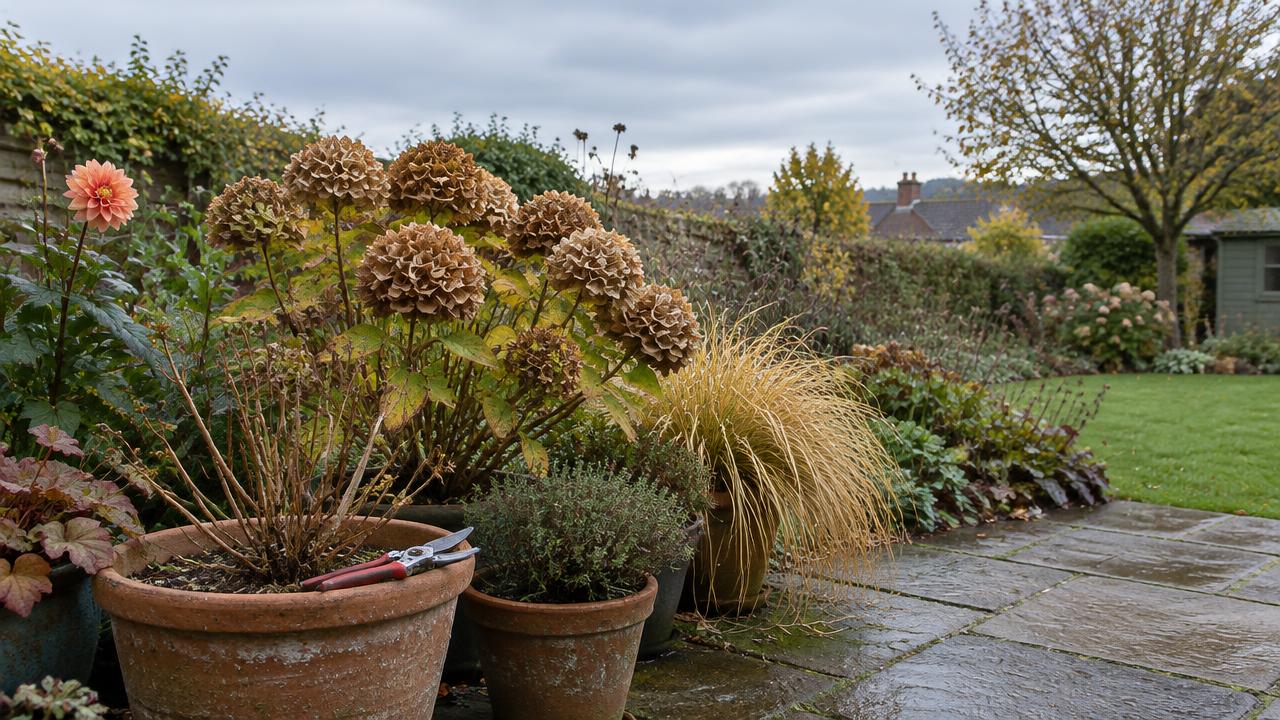
The autumn cut-back is two jobs that usually get done as one. Some plants want cutting or shortening now, and others are better left alone until spring, including a few that look as though they are asking for it.
Start with what is still flowering
The calendar is a poor reason to cut down a plant that is still performing. Dahlias are the obvious case. The RHS advice is to wait until the first frosts have damaged the foliage, and only then to cut the stems down and either lift the tubers to store somewhere frost-free or, in milder regions and free-draining soil, leave them in the ground under a thick mulch. Until that frost arrives there is nothing to cut, and the RHS advises deadheading regularly throughout the flowering season.
That guidance is written for dahlias in the ground. A dahlia in a pot gives you a second option, which is to cut it down after the frost and move the whole container somewhere frost-free, without lifting the tubers at all. Whichever you choose, the tubers need to stay dry over winter. The RHS stores only dried tubers and warns that a very wet winter causes losses, so a pot left standing in the rain is the thing to avoid.
Salvias need sorting by type before you touch them. Hardy herbaceous salvias can be cut back once their top growth has died, but in a cold or exposed garden leaving sound stems until spring gives the crown more protection. Shrubby salvias are normally tidied in spring rather than cut hard now. Tender salvias should come under cover before frost and are best left unpruned over winter.
Dying back or unhealthy?
The RHS recommends a selective cut in autumn, keeping dried flowerheads worth keeping and removing anything showing decay or fungal growth. That depends on telling the two apart, and colour is not the test. A peony whose leaves are yellowing, or a grass turning the colour of straw, is dying back as it should. Foliage that is rotting against the crown, or marked with the leaf spots, mildew or rust the RHS lists, is a different matter. This is easy to misread in a pot, where the change can look abrupt.
Take the unhealthy material off now. The RHS advises keeping diseased material out of a home compost heap; council green waste is the safer route where it is accepted. Compost the healthy material, apart from ripening seedheads you want to retain. Our small-space pest and disease reference explains how to distinguish infection from an ordinary growing problem. Perennials that grow from below soil level, such as crocosmia and peonies, can also be cut to soil level once the foliage has died back, though sound stems can equally wait until spring. Where a plant is already showing new shoots at the base, as asters and Sedum spectabile often are, the RHS advises a lighter cut that stops just above them.
What to shorten now — and what to save for spring
The RHS October advice is that shrubs normally pruned hard in spring, such as Buddleja davidii, lavatera and roses, can be shortened now to stop the wind rocking the roots and making the plants unstable. For bush and shrub roses, roughly a third to a half is enough: the RHS gives half in October and a third in its November jobs list. Climbers and ramblers are on a different timetable, and the same RHS advice says they can be pruned now.
The reason matters, because it tells you how much to do. Autumn shortening is not meant to shape the plant or to encourage growth and flowers. It simply reduces the amount of stem exposed to winter wind, and the structural prune still belongs in spring.
Penstemons are better left standing over winter. Their old stems help protect the crown from frost, so restrict October work to deadheading and removing anything diseased or collapsed. Make the main cut after the risk of frost has passed, usually in April or May, trimming to just above the lowest new shoots.
What to leave until spring
The main pruning of borderline-hardy perennials is best left until spring. Penstemons are a good example. Leave their old growth intact to help protect the crown through winter. The RHS says the main cut should wait until the risk of frost has passed, usually April or May. The RHS spring advice puts hardy fuchsias in the same group.
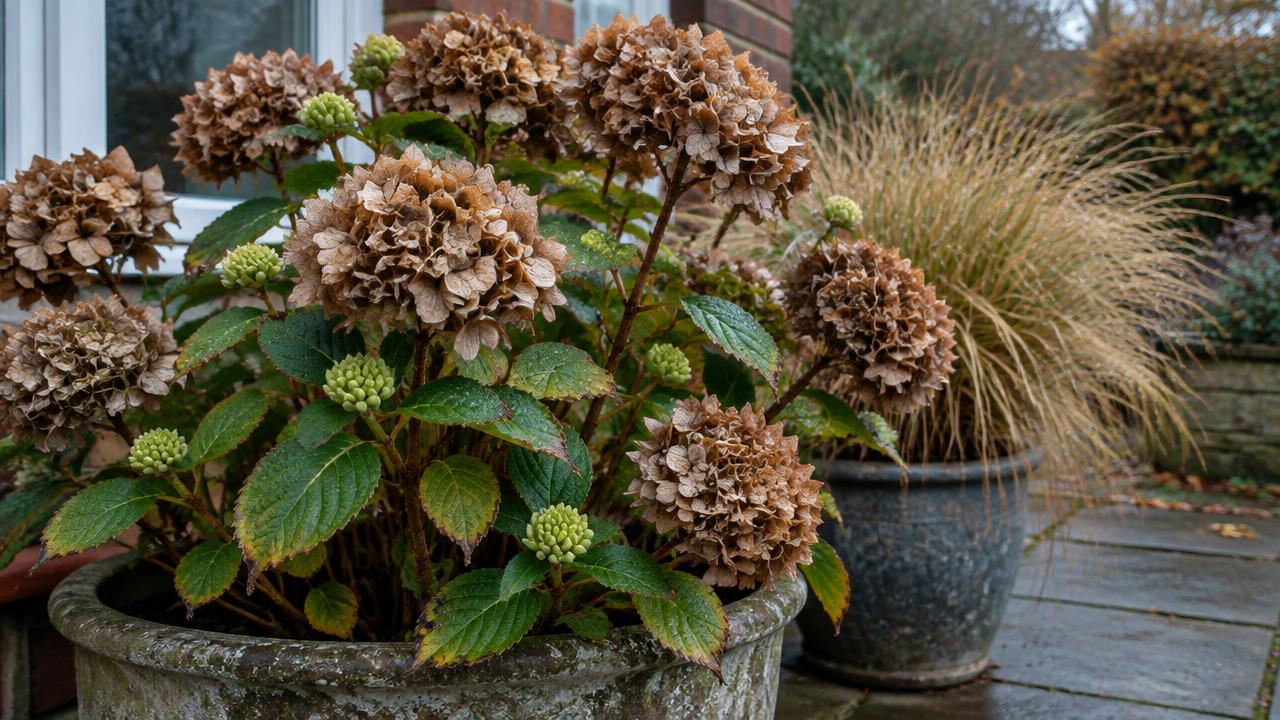
Mophead hydrangeas look finished and are not. The RHS says it is best to leave the faded blooms on over winter to give some frost protection to the tender buds below, and to remove them in early spring, cutting to the first strong pair of buds. Lacecaps are hardier, and the RHS says their faded heads can be cut after flowering.
Ornamental grasses stay as well. The RHS advice is to leave deciduous grasses standing over winter and to cut them to the base in spring, before the new shoots emerge. Evergreen grasses and sedges are treated differently. They usually need only the dead material combed out, and the RHS notes that they do not always respond well to hard pruning.
Lavender and rosemary
The RHS times lavender pruning to late summer, just after flowering, taking off the spent stalks and about 2.5cm of leaf growth. It warns against cutting into the woody stems, because lavender does not break new growth easily from old wood. A missed trim is no reason to cut hard now. The RHS allows a tidy in spring if the foliage is untidy or frost-damaged, and our piece on what to do with lavender after flowering covers the main trim.
Rosemary is similar. The RHS advice is to trim rosemary lightly each year, avoiding old wood. Snipping a few shoots for the kitchen is a different thing from structural pruning, and can carry on. For a rosemary in a pot, shelter does more good than secateurs at this time of year. The RHS says pots are especially vulnerable to winter cold, and suggests grouping them, wrapping them or moving them somewhere sheltered.
Seedheads worth keeping, and the ones that are not
The RHS says attractive dead stems and flowerheads can be left until early spring, and names sea holly among its examples. It also lists sea holly among the plants that self-seed readily, which sums up the difficulty in a small space. Seedlings that would be welcome in a border are less welcome in the next pot, the gravel and the joints of the paving.
Leaving the garden standing does not mean letting every plant spread. The RHS gives preventing self-seeding as one of the reasons to deadhead, and names lady's mantle and common valerian alongside sea holly. Aquilegias are another, and the RHS says they will self-seed unless cut back after flowering. Take off the seedheads you do not want and keep the stems and heads that are worth having.
When a plant is simply in the way
In a small garden, the urge to prune is often a space problem and not a plant problem. A sprawling perennial blocks the path, or a tall shrub in a pot starts to lean into the seating as the wind picks up. Before cutting, see whether moving the pot, tying in the growth or supporting loose stems would solve it. Cutting at the wrong time to win back a little room can cost next year's flowers, or remove growth that was protecting the plant.
Pots sharpen the other arguments too. A container leaves roots and crown more exposed to cold than open ground does, so protective top growth is worth more on a potted penstemon, fuchsia or hydrangea than on one in a border. A tall rose or buddleja in a pot can also go over altogether in a gale, which makes the autumn shortening more useful still. Where stems are a real hazard, shorten selectively, and leave the rest.
At a glance
| Plant | In October | In spring |
|---|---|---|
| Anything still flowering | Leave, and keep deadheading | — |
| Dahlias | Wait for frost, then cut down and lift or move the pot under cover | — |
| Diseased or rotting growth | Remove, with diseased material going to green waste | — |
| Crocosmia, peonies | Can be cut to soil level once died back | Cut then if left standing |
| Bush and shrub roses, buddleja, lavatera | Shorten by roughly a third to a half against wind rock | Main prune |
| Climbing and rambling roses | Can be pruned now | — |
| Penstemons | Leave standing; only remove diseased or collapsed growth | Cut to just above the lowest new shoots after frost risk |
| Hardy fuchsias | Leave | Cut back after the frosts |
| Mophead hydrangeas | Leave the faded heads on | Cut to the first strong pair of buds |
| Deciduous grasses | Leave standing | Cut to the base before new shoots |
| Lavender | Leave | Tidy if untidy or frost-damaged |
| Rosemary | Leave, but keep picking | Trim lightly once the flowers fade |
The spring half
Most gardeners start cutting back from March, according to the RHS, and it takes more care than the autumn job because new shoots are already coming. Cut old stems close to the crown without removing new growth. Where a plant is shooting from higher up its old stems, the RHS says to shorten them to just above a healthy leaf, branch or bud.
FAQ
Should I cut back all my perennials in autumn?
No. The RHS gives the timing as autumn until spring and recommends a selective cut, removing decayed or diseased growth and leaving attractive stems and seedheads.
Should I cut the dead flowers off my hydrangea now?
Not on a mophead. The RHS says it is best to leave the faded heads on over winter to protect the buds below. Lacecaps are hardier and can be deadheaded after flowering.
Is it too late to prune lavender?
For the main trim, yes. The RHS times it to late summer and warns against cutting into woody stems. It allows a tidy in spring.
READ THE FULL GUIDE
Container Growing Fundamentals →
RELATED POSTS
Robin is a small-space grower writing for everyone working with a courtyard, balcony, window box, patio or sunny sill. Edible and leafy, both kept alive in the kind of light real small spaces actually get.
✦ Free with the newsletter — the small-space starter sheet
Grow Anywhere — a free weekly email.
The Potted Club newsletter. A short note from Robin — what to sow, one plant problem solved, and the best new guide.
FREE WEEKLY EMAIL · NO SPAM · UNSUBSCRIBE ANYTIME