How to Help Garden Birds in a Heatwave: Water First
The RSPB changed its bird-feeding advice this year, and it matters more in a heatwave than most people realise. What to put out, what to stop putting out until autumn, and why water is far more urgent than food right now.
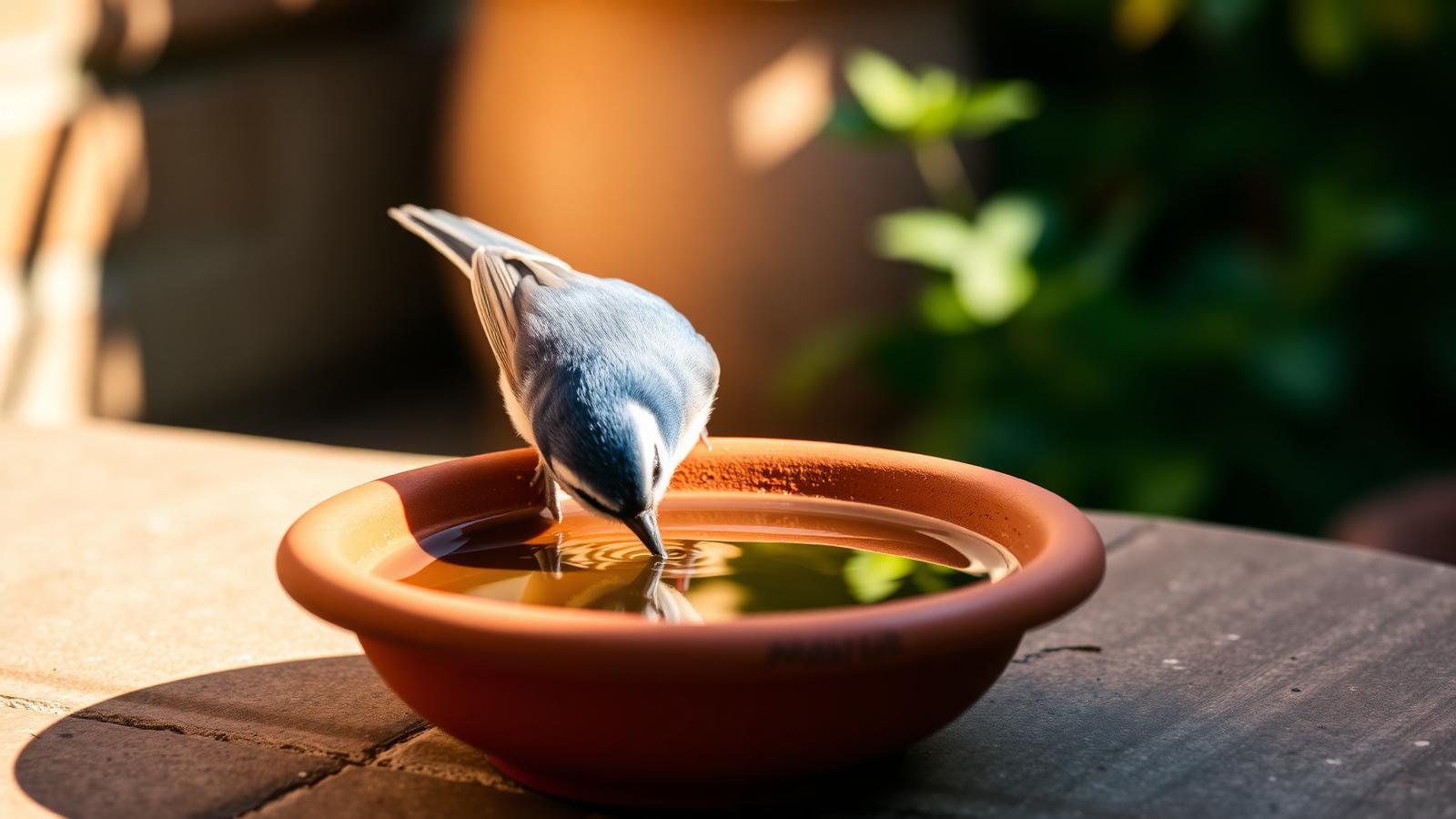
Why this is urgent
A garden bird in this heat is under considerably more pressure than any of your plants. It can't move somewhere cooler, it can't wait for the weather to break, and it can't survive long without water. In extreme heat, a wild bird may die of dehydration within a matter of hours, not days, particularly the smaller species. Puddles, streams and ordinary garden water sources dry up fast in a serious dry spell, and finding fresh water becomes a genuine daily crisis for wildlife that most of us won't see happening in front of us.
That's why bird care is a properly urgent job in a heatwave, in a way that lawn care simply isn't. And you don't need a garden to help. A saucer on a balcony, a shallow dish on a windowsill, a small bowl on a courtyard flagstone: all of these matter right now.
Water matters more than food
The single most useful thing you can do for garden birds this week is put out fresh water. Not fancy bird food, not a bird table, not an expensive feeder. Just water.
The rules are simple, and they're the same whether you've got a proper bird bath or a repurposed plant saucer:
- Use fresh tap water. Not rainwater from a butt (which can grow bacteria in warm weather), not water that's been sitting around.
- Change it every single day through a heatwave. Warm, still water becomes a bacterial soup within hours; birds drinking from it can pick up infections they wouldn't otherwise.
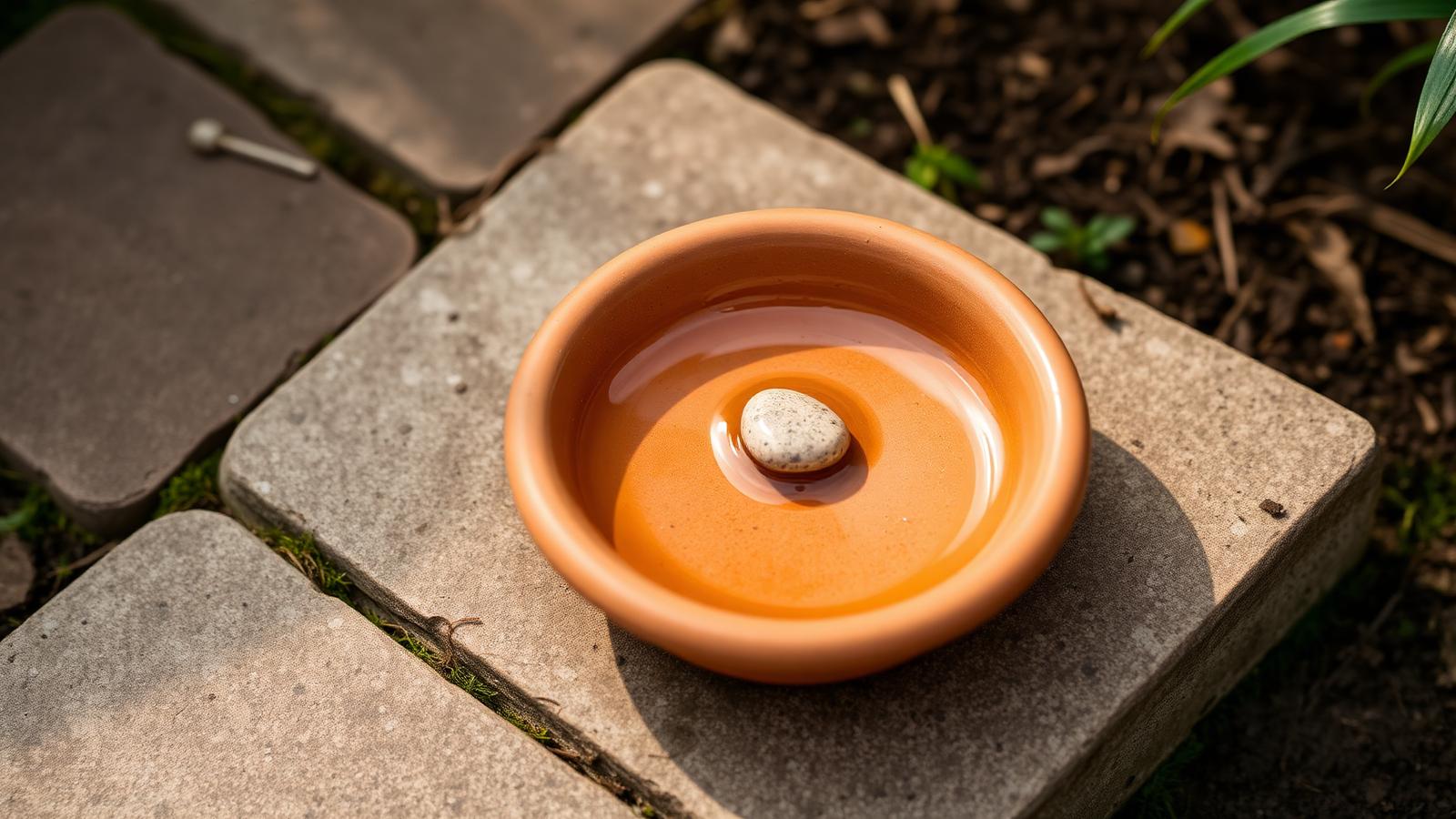
- Keep it shallow. No more than 2-3cm deep, so smaller birds can wade in to drink and bathe safely without risk of drowning. A shallow terracotta saucer, an old plate, a plastic tray: any of these work.
- Give it a rough surface if you can. A stone or two placed in the water gives birds something to grip and helps insects escape if they fall in.
- Position it away from cover. Bird bathing makes them vulnerable to cats, so put water somewhere they can spot approaching danger. Not right next to a bush a cat can hide in.
- Put out more than one dish if you can. Different species prefer different heights: ground-level for blackbirds and thrushes, raised for tits and sparrows.
Clean the container properly once a week: hot soapy water, then a mild disinfectant (a diluted bleach solution works, or a specialist bird-safe cleaner), rinsed thoroughly and dried. Weekly cleaning matters more in a heatwave than it does in cooler weather, since heat accelerates every kind of microbial growth.
What the RSPB now says about feeding
Bird-feeding advice has genuinely changed. In 2026, following a 67% decline in greenfinch numbers since 1979, the RSPB updated its official guidance on what to put out and when. Most people won't have caught this yet.
The key change: pause seeds and peanuts between 1 May and 31 October. These are the foods most linked to the spread of trichomonosis, a parasitic disease affecting the throat and gullet of seed-eating finches, which is the primary driver of the greenfinch collapse.
Between May and October, the RSPB now recommends:
- Do put out, in small amounts: mealworms (soaked in water in dry weather), suet, and fatballs. Animal protein helps chick survival through the breeding season, and these foods carry a lower disease risk than seeds.
- Don't put out, until 1 November: seeds, seed mixes, peanuts.
- Retire any bird table or flat-surfaced feeder. Recent research confirmed a higher disease risk on flat surfaces where contaminated food collects. Hanging feeders with small ports or mesh are safer.
- Grow plants that support wildlife directly. Sunflowers, teasels and ivy provide natural seed and attract insects that birds can eat. This matters more than any commercial feed for supporting garden birds long-term.
Come 1 November, seed feeders can go back out for the winter, when natural food is scarcer and disease risk lower.
Feeder hygiene matters more in heat
Regardless of what you're putting out, hygiene has become the single most important factor in whether garden feeding helps birds or harms them. Warm weather makes this worse, not better.
Clean feeders at least once a week with hot soapy water, followed by a non-toxic disinfectant (mild bleach solution or a specialist bird-safe product), then rinse and dry thoroughly. Move feeders to a different spot in the garden every few weeks if you can, so droppings and dropped food don't accumulate underneath.
If you see a sick-looking bird at your feeder — puffed up, slow, struggling to swallow — take feeders down for a couple of weeks, clean them thoroughly, and let birds disperse. Concentrating them at a single food source when disease is present makes the problem dramatically worse.
Small spaces: how to help without a garden
If you're reading this without a garden, you can still genuinely help. A flat, a balcony, a windowsill: all of these can host something useful for local birds right now.
- A shallow dish of water on a balcony floor, a windowsill, or a flat roof, changed daily. This is the single highest-impact thing you can do. Position it somewhere safe from your own cat if you have one, and where local cats can't ambush from cover.
- A small hanging feeder with suet or fatballs (not seed) attached to a balcony rail, a wall bracket, or a strong hook. Position it where you can watch it from indoors and where droppings won't cause problems for neighbours below.
- Bird-friendly plants in pots. A pot of nasturtiums, sunflowers or a small ivy against a wall provides insects, seeds and shelter without needing an ounce of soil. See the container growing fundamentals guide for what actually thrives in a pot.
- Don't overdo it. Small amounts of food, regularly cleaned setups, and a genuine focus on water rather than seed is the best contribution most small-space growers can make.
The biggest small-space contribution honestly isn't feed at all: it's fresh, clean, shallow water, put out every day of a heatwave.
Common mistakes
- Leaving water out for days. Warm, still water grows bacteria within hours. Change it daily in this weather, weekly is not enough.
- Filling seed feeders in summer. The 2026 RSPB advice is clear: pause seeds and peanuts through summer to reduce disease spread. Mealworms and fat are the summer alternatives.
- Using rainwater from a butt. Rainwater can carry organisms that are safe on plants but risky for birds to drink, particularly if it's been sitting warm and still. Use tap water instead.
- Putting water right next to a hedge or dense shrub. Birds bathing are especially vulnerable to ambush. Water needs some open ground around it so approaching threats can be seen.
- Deep water for small birds. A dish more than 2-3cm deep is a genuine drowning risk for smaller species. Shallow is essential, and a stone in the middle helps.
- Keeping flat bird tables. These were standard equipment for decades but current research links them to disease spread. Hanging feeders with small ports are considerably safer.
What to grow for birds in a small space
If you'd like to move beyond feeding altogether — which is genuinely the direction the RSPB is pointing — a few pot-friendly plants provide food, shelter and insect habitat for garden birds:
- Sunflowers. Even a single sunflower in a large pot produces seeds that birds will strip through autumn.
- Ivy. Grown up a wall or trellis in a pot, ivy provides shelter, nesting sites, and late berries that support birds through winter.
- Teasel. A biennial that self-seeds; its distinctive seed heads are a favourite of goldfinches.
- Native shrubs in a large container. A single dwarf hawthorn, holly or pyracantha in a big pot supports considerably more wildlife than any feeder.
- Any flowering plants. Insects feed birds, and flowers feed insects. A small window box of nasturtiums, lavender or salvias contributes to the food chain in a way no bag of seed can match.
Growing for birds is a slower, quieter contribution than filling a feeder — and, according to current research, a considerably more effective one.
Further reading
FAQ
Should I really stop feeding birds seeds in summer?
Yes, if you can. The RSPB updated its advice in 2026 recommending a pause on seeds and peanuts between 1 May and 31 October, in response to a 67% decline in greenfinch numbers linked to trichomonosis. Mealworms, fatballs and suet remain fine in small amounts through summer.
What's the best thing to put out for garden birds in a heatwave?
Water, before food. Fresh tap water in a shallow dish, no more than 2-3cm deep, changed daily. A wild bird can die of dehydration in a serious heatwave within hours, and water is often much harder for them to find than food during a dry spell.
Is rainwater safe for birds to drink?
Not ideally. Rainwater from a butt or barrel can grow bacteria in warm weather that's fine for plants but risky for birds. Use fresh tap water for anything birds will drink from, and change it every day.
How often should I clean a bird bath or feeder in a heatwave?
Rinse water containers daily. Clean feeders and water baths thoroughly at least once a week with hot soapy water and a mild disinfectant. Weekly cleaning matters more in heat than at any other time of year.
Can I feed birds if I only have a balcony?
Yes. A shallow dish of water on the balcony floor, changed daily, is genuinely the most useful thing you can do. A small hanging feeder of suet or fatballs on the rail also works, as long as it's positioned considerately for neighbours below.
Are bird tables really a problem?
Current RSPB research indicates that flat feeding surfaces do carry a higher disease-spread risk than hanging feeders with small ports, particularly for trichomonosis. If you have a bird table, hanging feeders on stands or brackets are a safer alternative going forward.
What about my cat?
Position water and feeders where cats can't approach unseen. Open ground around a water source lets birds spot approaching danger. Keeping cats indoors during peak bird activity (early morning and early evening) also helps considerably, if that's practical.
When can I put seed feeders back out?
From 1 November, once the disease-risk period has passed. Continue with mealworms, suet and fatballs through summer, and reintroduce seeds and peanuts for the winter months when natural food is scarcer and birds most need supplementary feeding.
RELATED POSTS
Robin is a small-space grower writing for everyone working with a courtyard, balcony, window box, patio or sunny sill. Edible and leafy, both kept alive in the kind of light real small spaces actually get.
✦ Free with the newsletter — the small-space starter sheet
Grow Anywhere — a free weekly email.
The Potted Club newsletter. A short note from Robin — what to sow, one plant problem solved, and the best new guide.
FREE WEEKLY EMAIL · NO SPAM · UNSUBSCRIBE ANYTIME