HOME / GUIDES / GETTING STARTED
Soil and Compost pH, Explained
When does a container gardener actually need to care about pH? How ericaceous compost, hard water, alkalinity and plant symptoms fit together.
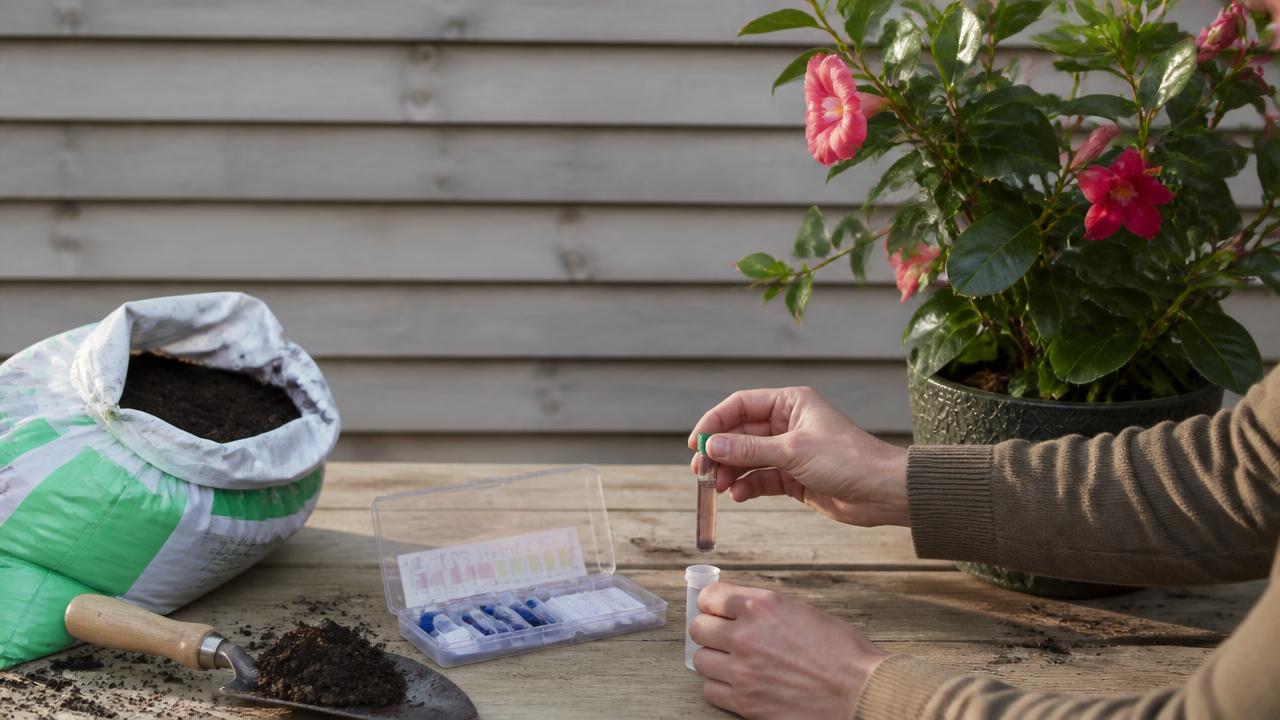
When does pH actually matter?
Most gardeners have encountered pH before they know why they should care about it.
Blueberries need acid soil. Hydrangeas can change colour. Camellias turn yellow if conditions are wrong. Coffee grounds are supposed to make compost acidic. Hard tap water is supposedly bad for certain plants.
Before long, pH can start to sound like another measurement that every gardener ought to be monitoring.
For container growers, the reality is much simpler. You have one enormous advantage over somebody gardening directly in unsuitable soil: you choose the growing medium.
That means most of the time you don't need to spend your weekends measuring pH and adjusting chemistry. You need to put the right plant in the right growing medium and then avoid slowly undoing that decision.
The useful question isn't "what is the pH of every pot I own?" It's "when does pH actually matter enough for me to do something about it?"
What pH actually means
pH describes how acidic or alkaline something is.
The familiar scale runs from 0 to 14. A pH of 7 is neutral. Values below 7 are acidic and values above 7 are alkaline.
The scale is logarithmic, which means a change of one whole pH unit represents a tenfold change in hydrogen ion activity. You don't need that calculation to grow a blueberry, but it explains why apparently small changes in the number can represent substantial chemical differences.
The important gardening point is that plants evolved in different root environments. Some tolerate a broad range. Others perform best within a narrower one.
For many ordinary garden plants, mildly acidic to neutral conditions work well. The RHS uses around pH 6.5 as a useful general reference point for garden soil because a wide range of nutrients remain available around that level.
But there is no single "perfect pH" for every plant. And for container gardeners, chasing one universal number is usually less useful than choosing an appropriate growing medium for what you're actually growing.
Why pH matters to plants
The simplest explanation is nutrient availability.
Plants require nutrients including nitrogen, phosphorus, potassium, magnesium, iron and manganese. But having a nutrient physically present in soil or compost doesn't automatically mean that roots can take it up efficiently.
Root-zone pH affects the chemical form and availability of several nutrients.
Iron is one of the best-known examples. In alkaline conditions, iron and manganese can become less available to plant roots. Acid-loving plants grown in unsuitable conditions can therefore develop chlorosis: leaves become pale or yellow, often while veins remain noticeably greener. The RHS specifically identifies iron and manganese availability as a problem for ericaceous plants in alkaline conditions.
That doesn't mean pH works only through nutrients. Root-zone chemistry and biology are more complicated than that. But for the home gardener, nutrient availability is the most useful way to understand why pH can matter.
It also explains something initially confusing: a plant can show what looks like nutrient deficiency while sitting in a growing medium that contains those nutrients. Adding more general fertiliser may not solve the problem if the plant cannot access what is already there, which is why our feeding guide treats diagnosis as the first step rather than the last.
Soil pH and compost pH are different gardening problems
Most traditional pH advice is about garden soil. There, you inherit the conditions.
Underlying geology plays a major role. Gardens over chalk or limestone tend towards alkalinity. Other soils may naturally be acidic. Changing that can be difficult, temporary or impractical.
Containers are different. A bagged potting medium is a manufactured root environment. The ingredients and nutrient regime have been selected for particular uses, and pH forms part of that formulation. Our container growing fundamentals guide covers why that manufactured root zone behaves so differently from open ground.
That gives small-space gardeners a genuine advantage. If your native garden soil is too alkaline for an acid-loving plant, you don't necessarily need to change the garden soil at all. You can grow the plant in a container of ericaceous growing medium instead, an approach the RHS explicitly recommends for acid-loving plants where soil conditions are unsuitable.
The trick is then maintaining reasonably suitable conditions inside that pot.
What does "ericaceous" actually mean?
"Ericaceous" appears on bags of compost everywhere, but the word itself isn't particularly helpful if nobody explains it.
It derives from the heather family, Ericaceae, and in gardening is used more broadly for plants that require acidic growing conditions. Common examples include rhododendrons, azaleas, camellias, blueberries, pieris and many heathers.
These are often called "lime-hating" plants. That phrase is useful shorthand, but don't interpret it too literally. The important problem is that higher-pH root conditions can reduce the availability of nutrients such as iron and manganese. It isn't simply that the presence of calcium is poisonous to the plant.
For container growing, the solution is straightforward: start with a growing medium designed for acid-loving plants.
And it does not need to contain peat. The RHS recommends peat-free growing media and notes that specialist peat-free ericaceous mixes are formulated at a lower pH for acid-loving plants.
Peat-free products can behave differently from the peat-based composts some gardeners grew up using, particularly in watering and feeding, so pay attention to the particular mix rather than assuming every bag behaves identically. But there is no requirement to use peat in order to grow an ericaceous plant successfully.
Do you actually need to test the pH?
Usually, no.
If a healthy plant is growing successfully in a commercial growing medium intended for it, regularly testing the pot is unlikely to change what you do. The manufacturer has already done much of the formulation work.
Testing becomes useful when you have a reason to suspect that something is wrong. For example:
- an ericaceous plant is developing persistent chlorosis or disappointing growth
- you suspect it was planted in the wrong growing medium
- a long-established acid-loving container has received hard mains water for years
- you're dealing with garden soil or a raised bed containing native soil rather than a bagged potting medium
- you're preparing your own specialist mix and genuinely need to know its properties.
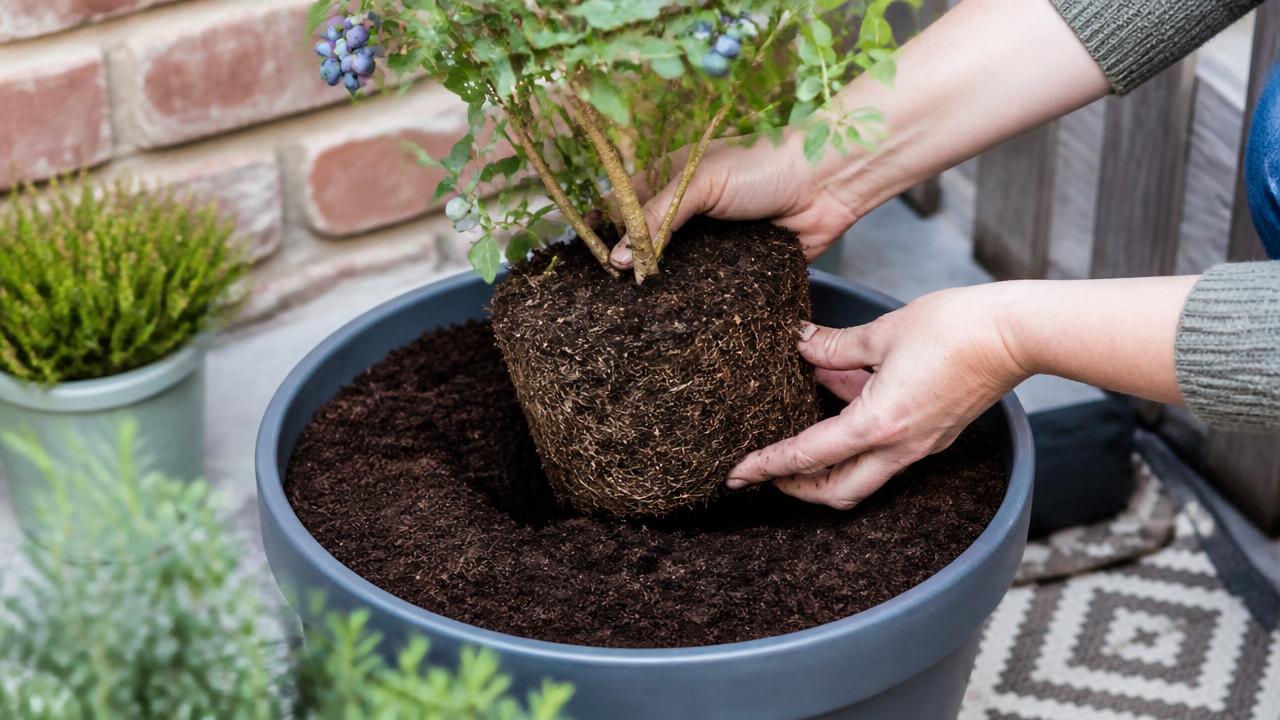
Simple home pH kits can give a useful indication. The RHS also advises that soil testing immediately after additions such as lime, fertiliser or organic matter may give misleading results, so context matters when interpreting a reading.
For container growers, there's another important rule: test the growing medium you're trying to diagnose. Testing your tap water and discovering that its pH is 7.6 does not tell you that the compost is pH 7.6. And it doesn't tell you the most important thing about how that irrigation water may affect the pot over time.
For that, we need to talk about alkalinity.
Hard water: the distinction that matters
This is where a lot of otherwise sensible gardening advice becomes muddled.
People often say that hard water is a problem because it is "alkaline" and then use water pH as evidence. But water pH and water alkalinity are different measurements.
pH tells you the current acid or alkaline state of the water.
Alkalinity describes the water's capacity to neutralise acids, its acid-neutralising or buffering capacity. In mains water this is associated particularly with dissolved bicarbonates and carbonates.
Why does that matter? Because two samples of water can have similar pH values yet have very different abilities to change the pH of a growing medium over repeated irrigation.
A moderately high-pH water with relatively little alkalinity may exert limited long-term influence. Water carrying substantial alkalinity can repeatedly neutralise acidity in the root zone and gradually push substrate conditions upward.
So simply testing your tap water's pH is not enough to predict what it will do to a pot over several years. That is the key distinction.
Why containers make this more relevant
The effect matters especially in containers because you are dealing with a relatively small and finite root zone.
A permanent camellia or blueberry may stay in much the same volume of growing medium for years. Every watering adds whatever dissolved material is present in the water, while drainage and plant uptake gradually change the root-zone chemistry.
This does not mean hard water ruins potting compost after a few waterings. The effect is cumulative.
That's why the issue is most relevant to long-term acid-loving container plants rather than a pot of summer bedding that will be emptied in October. For ordinary container plants growing successfully in ordinary potting media, there's rarely a reason to become preoccupied with your water chemistry. For a five-year-old camellia, rhododendron or blueberry in a hard-water area, it becomes considerably more relevant.
The RHS consequently recommends using rainwater for ericaceous plants in hard-water areas wherever practical, with tap water available as a backup when necessary.
Does rainwater really make a difference?
For acid-loving plants in hard-water areas, yes.
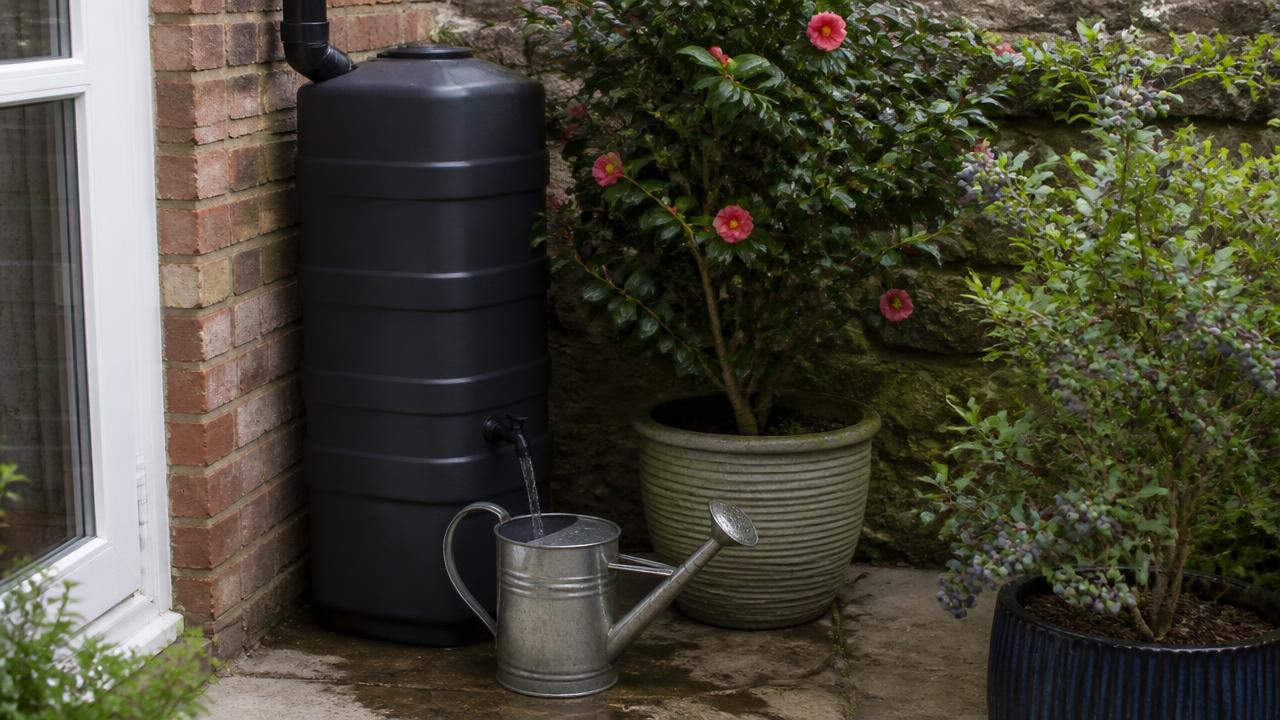
Collected rainwater is naturally soft and low in the dissolved minerals associated with hard mains water. The RHS describes rainwater as the best option for general garden watering and specifically recommends it for acid-loving plants. Our piece on making the most of rainfall covers how to actually collect a useful amount of it.
That makes a water butt particularly useful if you grow rhododendrons, camellias, blueberries or similar plants in containers. If you only collect a limited amount, prioritise those pots — the same triage logic as watering with just a can.
But don't turn this into an unnecessarily rigid rule. If your stored rainwater runs out during a hot dry spell, using mains water temporarily is far better than allowing an established container plant to become severely drought stressed. We're talking about long-term management, not a single watering.
And for a balcony or roof terrace, remember the physical reality of storing water: one litre weighs approximately one kilogram. Large water stores need a structure and position suitable for the load.
What about softened water?
This one deserves its own answer because "soft" sounds as though it should be ideal for acid-loving plants.
Domestic water softening generally works by removing calcium and magnesium ions and replacing them with sodium ions. That stops the water behaving as "hard" water around your kettle and plumbing. It does not make it equivalent to rainwater.
More importantly for plants, it introduces sodium. The RHS says softened water is acceptable for short-term garden use but is not recommended over the longer term, because sodium can build up and adversely affect plant nutrition and, in soils, structure. The same caution applies to reusing household water, as covered in can you water plants with bath water.
So if your indoor supply is softened but an outside tap bypasses the water softener, use the unsoftened supply for plants when rainwater isn't available.
And don't assume that a domestic water softener has solved the alkalinity question simply because the water no longer leaves limescale in the same way. "Hardness" and "alkalinity" overlap in many UK water supplies, but they are not identical measurements.
Before you change the pH, ask whether pH is actually the problem
This is probably the most useful section of the whole guide.
A plant looks unhappy. Its leaves are yellow. You search for the symptoms, discover chlorosis, and suddenly you're considering acidifying the compost.
Sometimes that diagnosis is right. But yellow foliage is not a pH test, as our guide to yellowing leaves sets out in detail.
In containers, very similar symptoms can result from:
- prolonged waterlogging
- severe or repeated drying
- damaged or unhealthy roots
- nutrient depletion
- root restriction
- pest damage
- poor light
- natural ageing of older foliage.
The RHS notes that nutrient-deficiency-like symptoms can arise because plants cannot access or use nutrients properly, not simply because those nutrients are absent.
So start with context.
Is this actually an acid-loving plant? A camellia or blueberry gives you a reason to think about pH. A random yellow lower leaf on a pelargonium gives you far less reason.
What is it planted in? An acid-loving plant sitting in ordinary multi-purpose growing medium makes an unsuitable root-zone pH much more plausible.
What's happening with the roots? If the compost is permanently saturated, adjusting pH won't repair oxygen-starved roots. If the plant has become badly pot-bound, it may need attention for reasons unrelated to acidity.
How long has it been in the same pot? A long-established container has had years for its root environment to change.
What have you been watering it with? Years of hard mains water in an ericaceous pot is much more relevant than a fortnight of tap water during a summer drought.
Diagnosis first. Chemistry second.
Lime-induced chlorosis: what you're actually looking for
The classic pH-related symptom in acid-loving plants is lime-induced chlorosis.
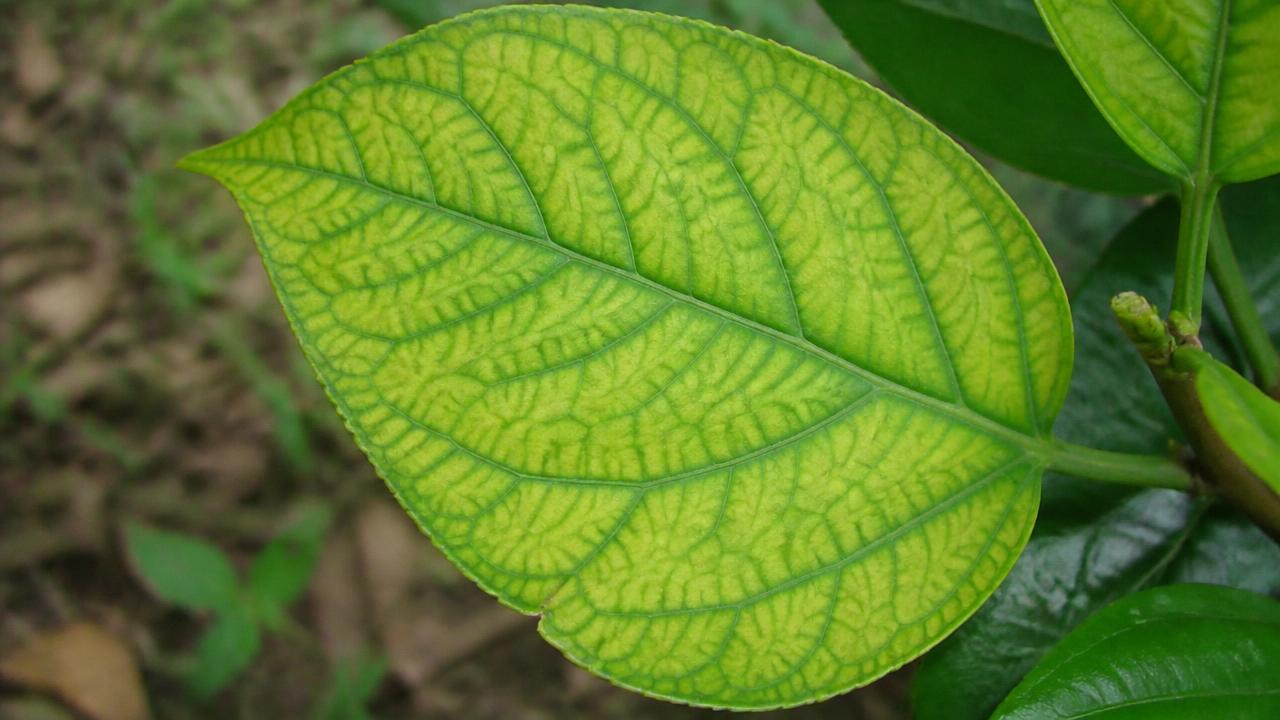
Leaves become yellow or pale while the veins can remain greener, often giving the leaf a networked appearance. Iron and manganese become less available as conditions become too alkaline, even though the growing medium may contain them.
Newer leaves are often particularly noticeable because iron is relatively immobile within the plant.
But again: don't diagnose from one photograph alone. Patterns, plant species, growing medium, watering history and root condition all matter.
If a camellia in ordinary compost has increasingly yellow new leaves, pH deserves serious consideration. If a houseplant has one ageing yellow leaf at its base, it probably doesn't.
Does compost pH change over time?
Yes. A pot is not chemically static.
Repeated irrigation changes what's entering and leaving the growing medium. Fertilisers can affect root-zone chemistry. Organic components continue to break down. Plants themselves remove nutrients. Water passing through drainage holes carries soluble materials away.
This is one reason a permanent container that has performed well for several years may eventually need attention even though it was originally planted correctly.
But "the pH may have changed" doesn't mean "start adding acids". Look at the container as a system.
Does it need repotting? Can the surface growing medium be refreshed? Has the plant outgrown the root space? Is the drainage still working? Has the growing medium collapsed physically? Does the plant need appropriate feeding? Has the irrigation water changed?
pH is one variable among several.
Can you acidify compost in an established pot?
This is where advice for open ground is often copied into container growing without enough caution.
Elemental sulphur is a recognised way to reduce the pH of garden soil. Soil microorganisms convert it into acidifying compounds over time.
But the RHS's acidification guidance explicitly applies to soils and not to potting media. That distinction matters. A container contains a comparatively small volume of formulated growing medium, so dosing it with soil-acidifying materials is less forgiving and harder to predict.
For an acid-loving plant growing in unsuitable or exhausted potting medium, the cleaner home-gardening solution is usually to repot it into an appropriate ericaceous growing medium when repotting is otherwise sensible.
For a plant too large to repot easily, management becomes more nuanced: rainwater, suitable feeding, replacing some accessible growing medium and monitoring symptoms may all be more appropriate than improvising with sulphur.
The important point is that "add sulphur" is soil advice, not a standard Potted Club treatment for pots.
Can you raise the pH with lime?
Lime is used to increase the pH of acidic garden soils.
Again, container gardeners usually have a simpler solution. If a plant requires a different root environment, start with a growing medium formulated for that purpose.
Commercial potting media are already designed around the intended plants. Continually pushing a container mix up and down the pH scale with lime and acidifying products is rarely simpler or more reliable than using the right product from the beginning.
There are specialist growing situations where growers actively manipulate pH. Most patio pots are not one of them.
The home remedies, assessed
pH is particularly attractive to garden folklore because everybody has acidic and alkaline substances in the kitchen. Unfortunately, being able to change the pH of a cup of liquid is not the same thing as safely controlling the root-zone chemistry of a living plant.
Coffee grounds. Coffee grounds are repeatedly recommended for blueberries, camellias and hydrangeas because coffee is acidic. But most of that argument disappears once the coffee has actually been brewed. Extension research finds that used coffee grounds do not have a reliably acidic pH and should not be treated as a dependable soil acidifier. Their pH changes during decomposition, and experimental measurements range from mildly acidic to alkaline. Coffee grounds can be included sensibly in a composting system. That's completely different from adding them to a blueberry pot as a pH treatment. Large quantities can also change the physical properties of the growing medium and may inhibit plant growth, so more is certainly not better. Verdict: compost ingredient, not container acidifier.
Vinegar. Vinegar is acidic, so adding it to water will lower the pH of that water. That doesn't make it a sensible way to manage a container. How an acid affects irrigation water depends partly on the water's alkalinity. How that treated water then affects the root zone depends on the buffering capacity and chemistry of the growing medium. Commercial horticulture can acidify irrigation water because growers measure those variables and dose accurately. Guessing with household vinegar is not the same process. An over-concentrated solution can damage roots, while a small arbitrary amount may have little useful long-term effect. Verdict: don't use it as a DIY pH treatment.
Ericaceous feed. This is different. A fertiliser formulated for ericaceous plants is a genuine horticultural product designed for plants with particular nutrient requirements. It can help supply nutrients, often including forms of iron that remain accessible under challenging conditions. But feeding and changing the underlying pH are not identical jobs. If a plant is fundamentally growing in the wrong medium, repeatedly feeding it doesn't turn ordinary compost into properly formulated ericaceous compost. Verdict: useful for feeding the right plants, not a substitute for the right root environment.
Aluminium sulphate. Aluminium compounds are used in some hydrangea-blueing products because aluminium availability plays a role in blue flower colour. But this is not a general-purpose way to acidify container compost. The RHS also cautions about aluminium sulphate as a soil acidifier because excessive use can cause problems. Verdict: specialist use, not a routine pH correction.
Pine needles and similar acidic mulches. Fresh pine needles are acidic, which has helped create the belief that mulching with them will reliably acidify a root zone. Once organic material decomposes within a much larger soil or potting system, the effect is far less straightforward. Use suitable organic materials because they make sense as mulch or compost ingredients, not because you expect them to engineer a precise pH. Verdict: mulch, not pH control.
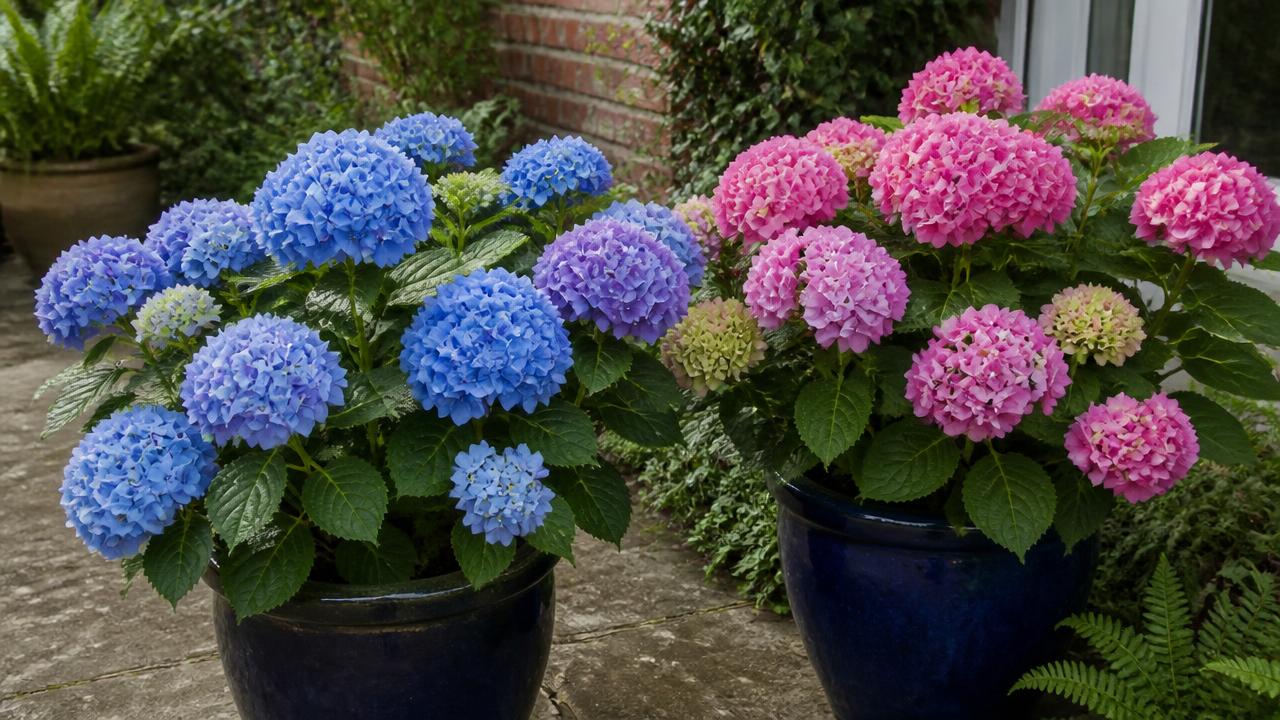
What about hydrangea colour?
Hydrangeas are probably the plant most closely associated with pH because the effect is visible. But even here, "acid soil makes hydrangeas blue" is an incomplete explanation, as our piece on why hydrangeas turn pink explores.
In suitable mophead and lacecap hydrangeas, blue flower colour depends on the plant being able to take up aluminium. Lower pH makes aluminium more available. Higher-pH conditions tend to produce pinker flowers because aluminium is less available.
Genetics still matter. A hydrangea that isn't genetically capable of producing blue flowers will not become blue simply because you pour something acidic around it, and white-flowered hydrangeas don't follow the same simple colour shift.
In a container, the sensible route for someone deliberately trying to maintain a blue-capable hydrangea is again to start with an appropriate acidic growing medium rather than repeatedly improvising with household treatments.
Plant health comes first. Flower colour is secondary.
A simpler way to think about pH in pots
After all that chemistry, container gardeners can reduce the subject to four questions.
What does this plant actually need? If it's an ordinary bedding plant, herb, perennial or shrub with no specialist pH requirement, use an appropriate general container growing medium. If it's ericaceous, treat that requirement seriously.
Did I start with the correct growing medium? This is much easier than trying to fix the chemistry afterwards. For acid-loving plants, use peat-free ericaceous growing medium.
Is the plant genuinely showing evidence of a pH problem? Persistent chlorosis on an acid-loving plant deserves investigation. A single yellow leaf doesn't. Check watering, roots, feeding, light and general plant condition first.
Has long-term watering changed the root environment? This is where pH becomes particularly relevant for permanent container plants. Years of hard mains water can gradually work against the acidic conditions an ericaceous plant prefers. Prioritise rainwater where possible, and remember that domestic softened water isn't a long-term substitute.
That's really it. pH matters. But it matters most when the plant itself tells you that it matters.
FAQ
What pH is best for plants?
There is no single ideal pH for every plant. Many plants grow happily in mildly acidic to neutral conditions, while ericaceous plants require a more acidic root environment. Match the growing medium to the plant rather than aiming for one universal number.
What does ericaceous mean?
In gardening, ericaceous describes acid-loving plants such as rhododendrons, camellias, blueberries, pieris and many heathers. They grow best in acidic conditions and are usually planted in specialist ericaceous growing medium when kept in containers.
Do I need to test the pH of every pot?
No. If your plants are healthy and growing in an appropriate commercial growing medium, routine testing is unlikely to add much. Testing becomes useful when diagnosing persistent symptoms or managing plants with particular pH requirements.
Does hard tap water raise the pH of compost?
Repeated irrigation with water carrying appreciable alkalinity can gradually make the root zone more alkaline. Water pH alone doesn't predict this well; alkalinity, or acid-neutralising capacity, is the more useful concept.
Is rainwater better for acid-loving plants?
Yes, particularly in hard-water areas. Rainwater is soft and low in dissolved minerals, and the RHS recommends it for ericaceous plants such as rhododendrons and camellias where practical.
Can I use softened tap water on plants?
Not routinely over the long term. Domestic water softeners commonly replace calcium and magnesium with sodium, and the RHS warns that sodium can accumulate and adversely affect plant health.
Why is my camellia turning yellow?
If newer leaves are yellow between greener veins, lime-induced chlorosis is one possibility. But check the growing medium, watering, root health and feeding before assuming pH is the cause.
Do coffee grounds make compost acidic?
Not reliably. Used coffee grounds can vary in pH as they decompose and should not be treated as a dependable acidifier.
Can I use vinegar to lower the pH of a pot?
It's not a sensible home treatment. Safely acidifying irrigation water requires knowledge of water alkalinity and controlled dosing. Using household vinegar by guesswork can either achieve little or damage roots.
Should I add sulphur to an ericaceous plant in a pot?
Not as a routine treatment. RHS sulphur recommendations are for acidifying garden soil, not potting media. For container plants, using or replacing the growing medium with an appropriate ericaceous mix is generally the more controlled approach.
FURTHER READING
- Getting Started
Container Growing Fundamentals
- Getting Started
How to Water Plants Properly
- Getting Started
The Complete Guide to Repotting
Robin is a small-space grower writing for everyone working with a courtyard, balcony, window box, patio or sunny sill. Edible and leafy, both kept alive in the kind of light real small spaces actually get.
✦ Free with the newsletter — the small-space starter sheet
Grow Anywhere — a free weekly email.
The Potted Club newsletter. A short note from Robin — what to sow, one plant problem solved, and the best new guide.
FREE WEEKLY EMAIL · NO SPAM · UNSUBSCRIBE ANYTIME