
What to Plant for Drier Summers and Wetter Winters in Britain
How to choose plants for a British garden that will face drier summers and wetter winters, with RHS-backed choices for sun, dry shade, clay and small spaces, and how to plant them so they establish.
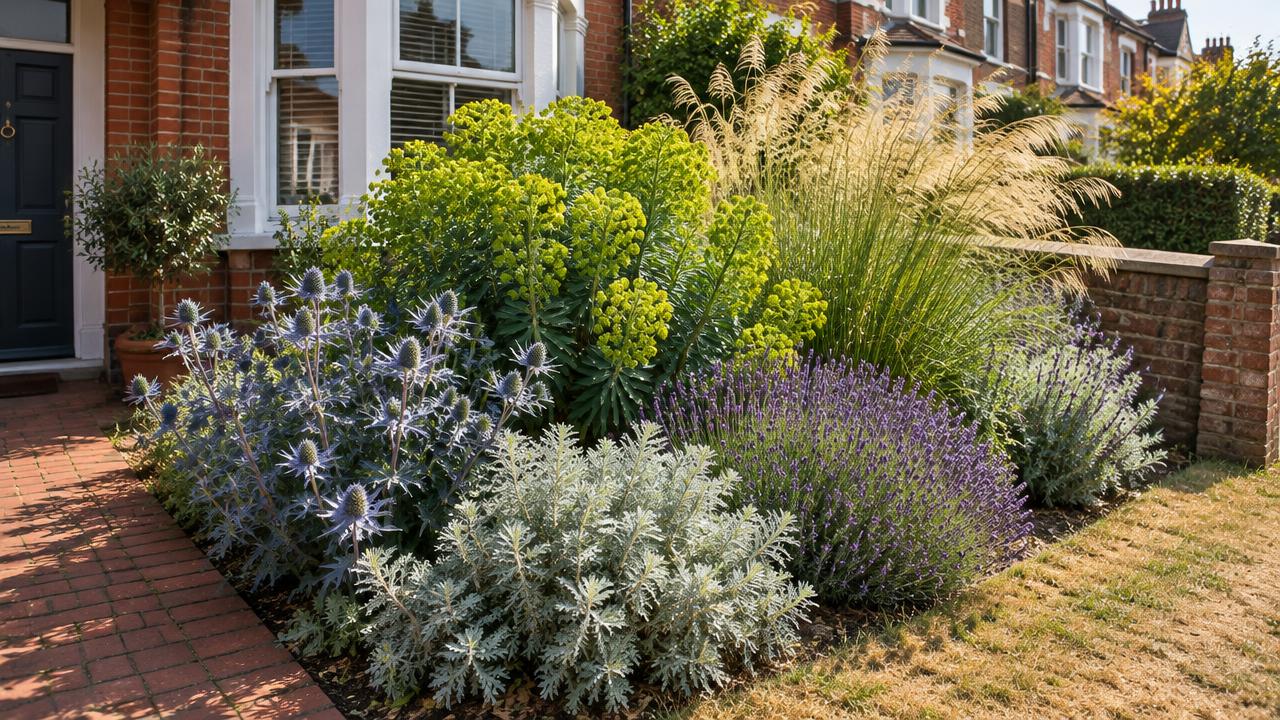
The usual advice for a drier climate is to plant lavender and hope. The Met Office projections point to something harder, with summers that are drier and hotter but winters that are wetter, so the plants that will do well in British gardens are the ones that can cope with both. This guide explains what to look for, which plants the RHS recommends for sun, dry shade and heavy soil, and how to plant them so they establish well enough to need little water later.
What a drier British climate actually means
The Met Office's UK Climate Projections give a range of outcomes rather than a forecast, and the figures most often quoted come from the high-emissions scenario, in which emissions keep rising. On that basis, by 2070 and compared with 1990, summers could be between 1 and 6°C warmer and up to 60 per cent drier depending on the region, while winters could be between 1 and 4.5°C warmer and up to 30 per cent wetter. The Met Office also expects rain to fall more heavily when it does come, in winter and in summer. These are not a prediction that every summer will be dry or every winter wet, and how much changes depends on future emissions, location and natural variation in the weather.
For gardeners, the important part is that both halves arrive together. A garden that spends July cracked and dusty may spend January waterlogged, and a plant chosen only for summer can drown in winter. Lavender is a good example. The RHS warns that it will not thrive in heavy clay or in any soil that becomes waterlogged, and that young plants are vulnerable to rotting in cold, wet soil.
None of this is a distant problem. On 15 October 2026 the Environment Agency declared severe drought, its highest drought status, in parts of Cornwall, Devon, Dorset, Somerset, East Sussex and West Sussex, and said that 82 per cent of England remained in drought, with hosepipe restrictions still tightening. A garden planted with both extremes in mind is simply a garden that copes better with the weather we already have.
How to recognise a plant that will cope with drought
The RHS points to a few features that help plants hold on to water. Treat them as clues rather than a guarantee, because performance still depends on the species and where it grows. Silver or grey-green leaves reflect sunlight. A coating of fine hairs on leaves or stems traps moisture around the plant's tissues. Succulent leaves and stems store water for dry spells. In dry shade, the RHS also notes that the waxy surface of leaves such as those of spotted laurel helps reduce moisture loss to heat and wind.
Where a plant comes from is the other clue. The RHS says that many drought-resilient garden plants originate in Mediterranean regions, central Asia and the Himalayas, and that some are UK natives or cultivars of them. Thrift and stinking iris, both British natives, are on its drought-resistant list.
There is one caution. The RHS notes that some cultivars are less resilient than the species they were bred from, and that plants are rarely highly tolerant of both very wet and very dry conditions. Treat any list, including this one, as a starting point, and expect some trial and error in your own garden.
Drought tolerance and low water use are not the same
The RHS has since gone further with its Plants for Water Resilience work, more than 300 plants chosen by its scientists and an expert panel and sorted by job, including plants for soil that is dry in summer and waterlogged in winter, plants with low water use and plants that help absorb heavy rain. It describes the lists as indicative rather than definitive, because site, soil, weather and how established a plant is all affect how much water it needs.
The RHS also makes a distinction worth keeping in mind. Low water use is not the same as drought tolerance. A plant with low water use needs relatively little extra watering once established, which saves effort in a normal summer, while a drought-tolerant plant is one that comes through a long dry spell. A garden built for drier summers and wetter winters needs plants that cope with the extremes, not only the average.
Some plants appear on more than one RHS list, which makes them especially useful. Euphorbia characias subsp. wulfenii, Cyclamen hederifolium, Stipa gigantea and Verbena bonariensis are all on its drought-resistant list and also on an earlier RHS list of plants tolerant of both wet and dry soils.
Start with your soil and your site
Before choosing a single plant, it is worth knowing which kind of dry you have. Sandy soil drains quickly and suits a wide range of drought-tolerant plants, and chalky soil behaves in a similar way, which is why many sun-loving Mediterranean plants do well on it. Clay is the awkward one. It holds water in winter, sets hard and cracks in summer, and the RHS describes it as slow to improve, recommending organic matter added over several years.
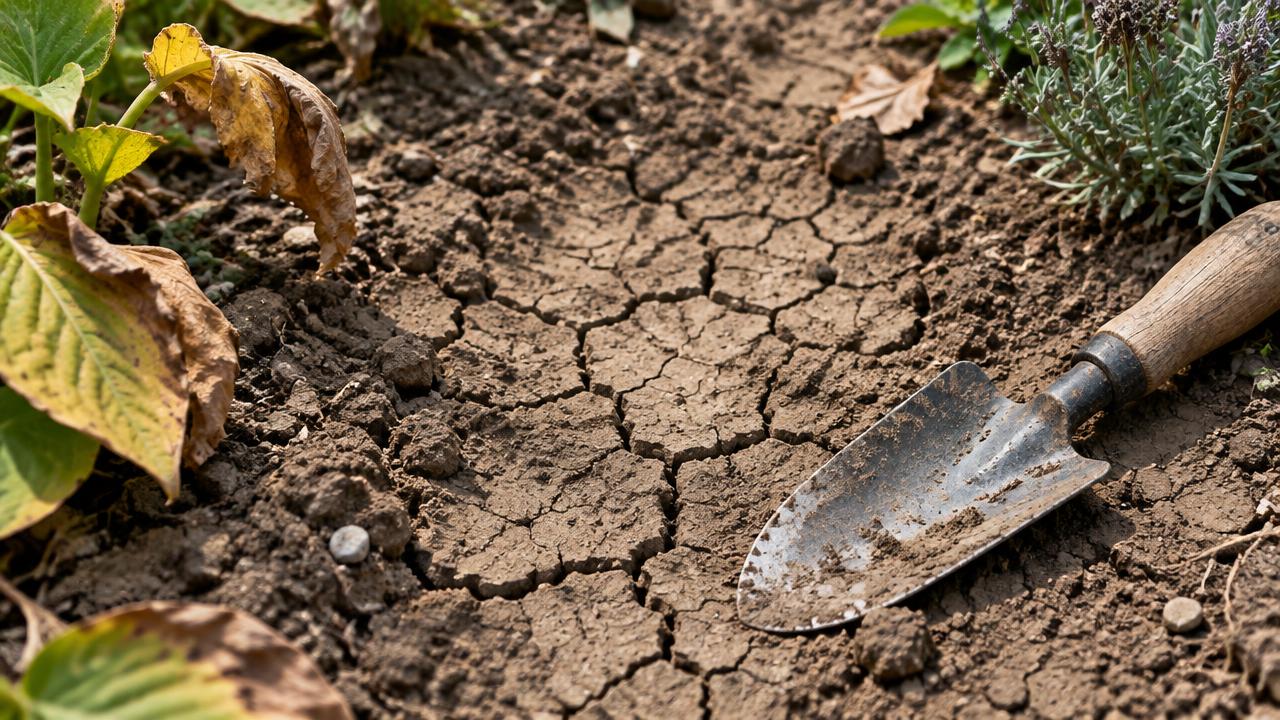
The RHS calls organic matter the single most important part of preparation, whatever your soil type. Garden compost or well-rotted manure helps sandy soil hold water and helps clay drain, so it evens out both extremes. It recommends using those rather than bagged potting compost, which is made for containers. On clay, it also suggests avoiding digging and adding compost to the surface each year instead.
Then look at the site itself. The RHS suggests checking for shade, wind, exposure and heat-reflecting surfaces such as paving, which can make one corner of a small garden far drier than the rest. In winter, notice how long water lies after rain and where it lies. A spot that stays wet for days in January needs different plants from one that drains within hours, even if both bake in August.
Plants for hot, sunny, free-draining spots
All of the plants below are on the RHS drought-resistant list. Lavender, santolina and Artemisia 'Powis Castle' belong here too and are covered in our guide to drought-tolerant plants for pots, although the RHS notes that 'Powis Castle' is reliably hardy only in mild coastal areas.
For shrubs in a small garden, ceanothus brings blue flowers, Helianthemum 'Wisley Pink' (rock rose) forms a low mat of pink flowers, and Potentilla fruticosa 'Primrose Beauty' is a compact shrub with pale yellow flowers. Salvia 'Blue Spire', formerly known as Perovskia and still often sold as Russian sage, grows to about 1.2m with silvery stems and blue flower spikes, and Ozothamnus rosmarinifolius 'Silver Jubilee' gives silver foliage on a shrub of 2 to 3m.
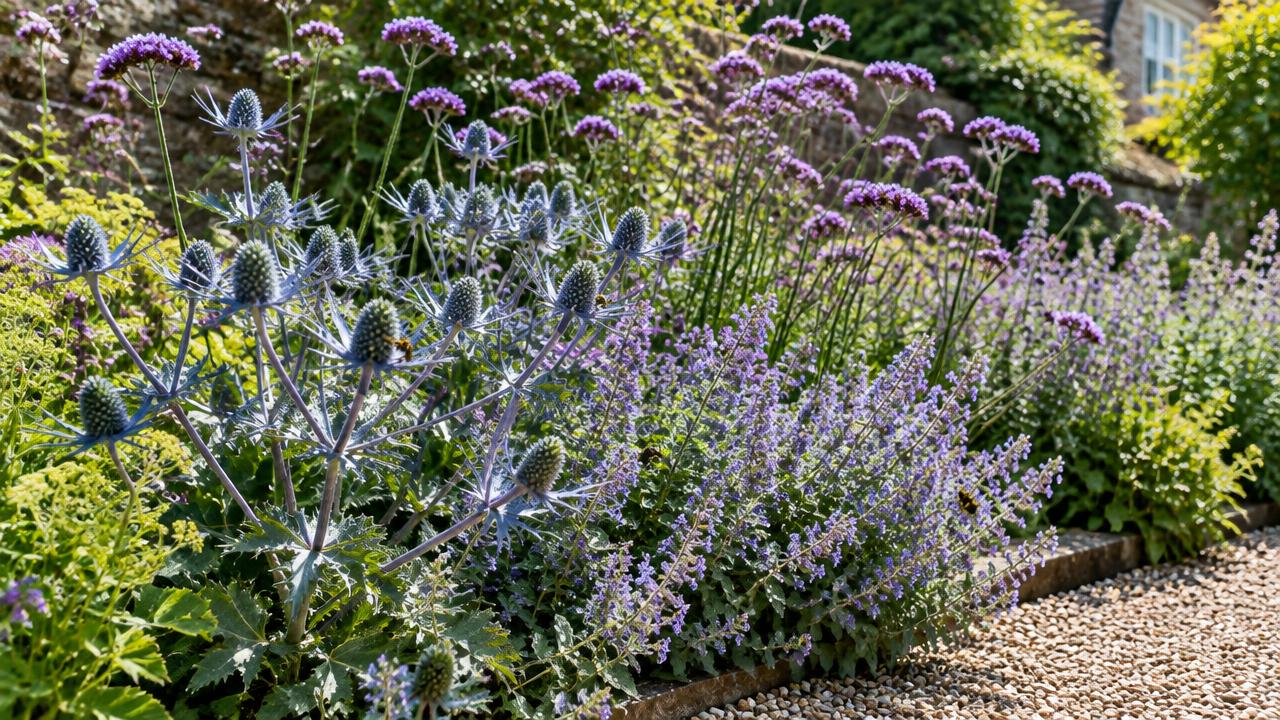
Among the perennials, sea holly (Eryngium) and globe thistle (Echinops) give a border strong shapes, and sea holly is one of the plants the RHS now recommends growing more of for pollinators. Euphorbia characias subsp. wulfenii makes a large evergreen mound with lime-green flowerheads in spring, and the RHS rates euphorbias highly for pollinators too. Verbena bonariensis adds height without bulk, catmint (Nepeta) and spiked speedwell (Veronica spicata) fill the front of a border, and thrift (Armeria maritima) suits the hottest, thinnest soil you have.
Grasses move and catch the light without needing much from you. Stipa gigantea sends up golden oat-like flowerheads to about 2.5m but stays see-through, so it suits even a small space. Panicum virgatum reaches about a metre, Pennisetum alopecuroides has soft bottlebrush flowers, and quaking grass (Briza media) is a native for the front of a border.
For quick colour while slower plants establish, the RHS lists several annuals that cope with dry conditions. They include cosmos, California poppy, love-in-a-mist, pot marigold, nasturtium, poached egg plant and honeywort.
Plants for dry shade
Dry shade is the hardest spot in many small gardens, found under trees and in the rain shadow of walls, fences and buildings. The RHS notes that plants not suited to it tend to become stunted and fail to flower.
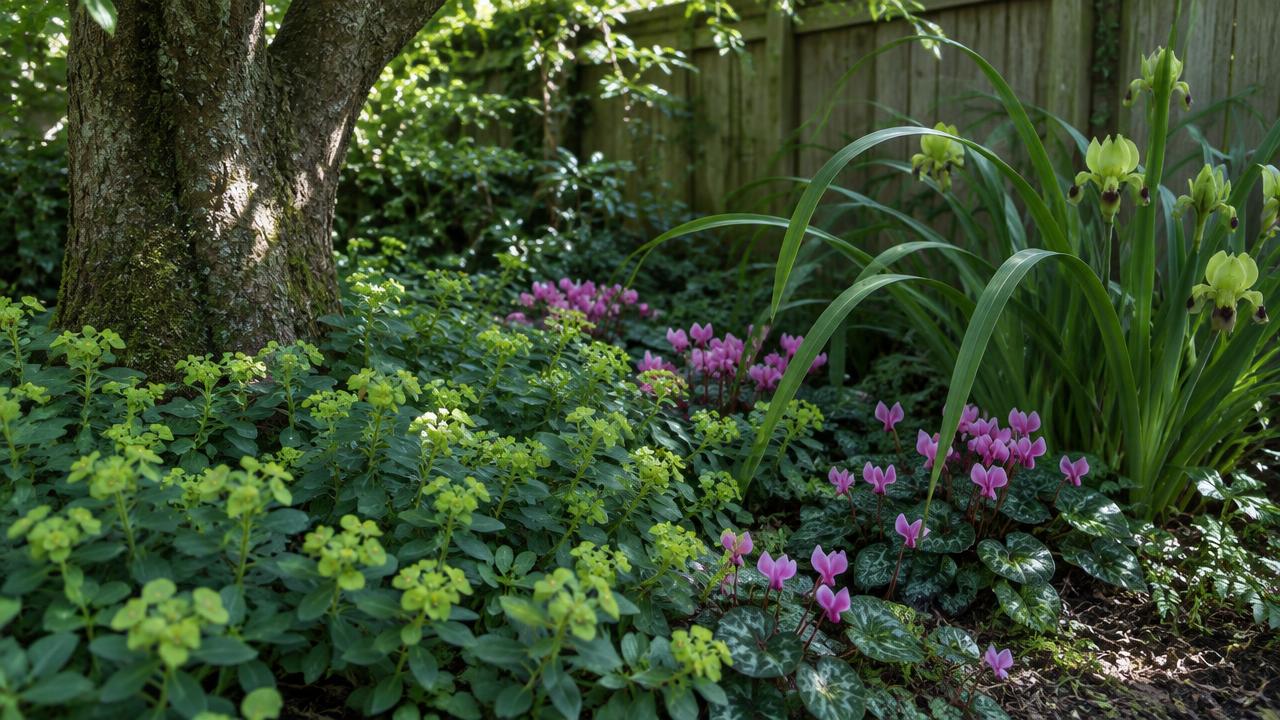
The RHS recommends Cyclamen hederifolium for dry shade beneath large trees, where its pink autumn flowers and marbled leaves appear when little else is happening. Euphorbia amygdaloides var. robbiae is a spreading evergreen that forms ground cover with yellow-green spring flowers. Geranium macrorrhizum 'Ingwersen's Variety' has aromatic, semi-evergreen leaves and pale pink flowers, and Epimedium × versicolor 'Sulphureum' gives primrose-yellow flowers in late spring above low evergreen foliage. Stinking iris (Iris foetidissima), butcher's broom (Ruscus aculeatus) and lesser periwinkle (Vinca minor) are all natives on the RHS drought-resistant list. Spotted laurel (Aucuba japonica) will fill a larger gap.
Plants under established trees face competition from the tree's roots as well as reduced rainfall, so the RHS advises monitoring and watering even shade-adapted plants through their first spring and summer. Ground cover is especially useful here. The RHS notes that low, spreading plants protect bare soil, cut evaporation from the surface and suppress weeds, which is exactly what a dry, shady patch needs.
Plants for soil that is wet in winter and dry in summer
If your garden is on clay, this is the section that matters most. The RHS advice is that plants that like clay are often well suited to wet winters and dry summers, because they are used to soil that swings between the two.
Its suggested plantings for these conditions include the red-stemmed dogwood Cornus alba 'Sibirica', the dark-leaved ninebark Physocarpus opulifolius 'Diabolo', the rugosa rose 'Rugspin', and the hydrangeas 'Annabelle' and Hydrangea paniculata 'Floribunda'. For perennials it names Astrantia major 'Claret', Bistorta officinalis 'Superba', which forms a semi-evergreen mat that protects the soil, Geranium Rozanne and the grass Miscanthus sinensis 'Flamingo'. Verbena bonariensis appears here too, since it grows on most soils, although it is short-lived and relies on self-seeding. For a small tree, the RHS pictures Amelanchier canadensis 'Spring Glory'.
The RHS is careful about what these lists promise. It says such plants may tolerate both conditions without always thriving, and will not necessarily suit every site or tolerate permanent waterlogging. Coping with a swing between wet and dry is also different from coming through a long drought. The RHS suggests putting more sensitive plants where the soil stays more evenly moist, and hydrangeas and astrantias are better there than in the driest bed, with water in a long dry spell while they are young.
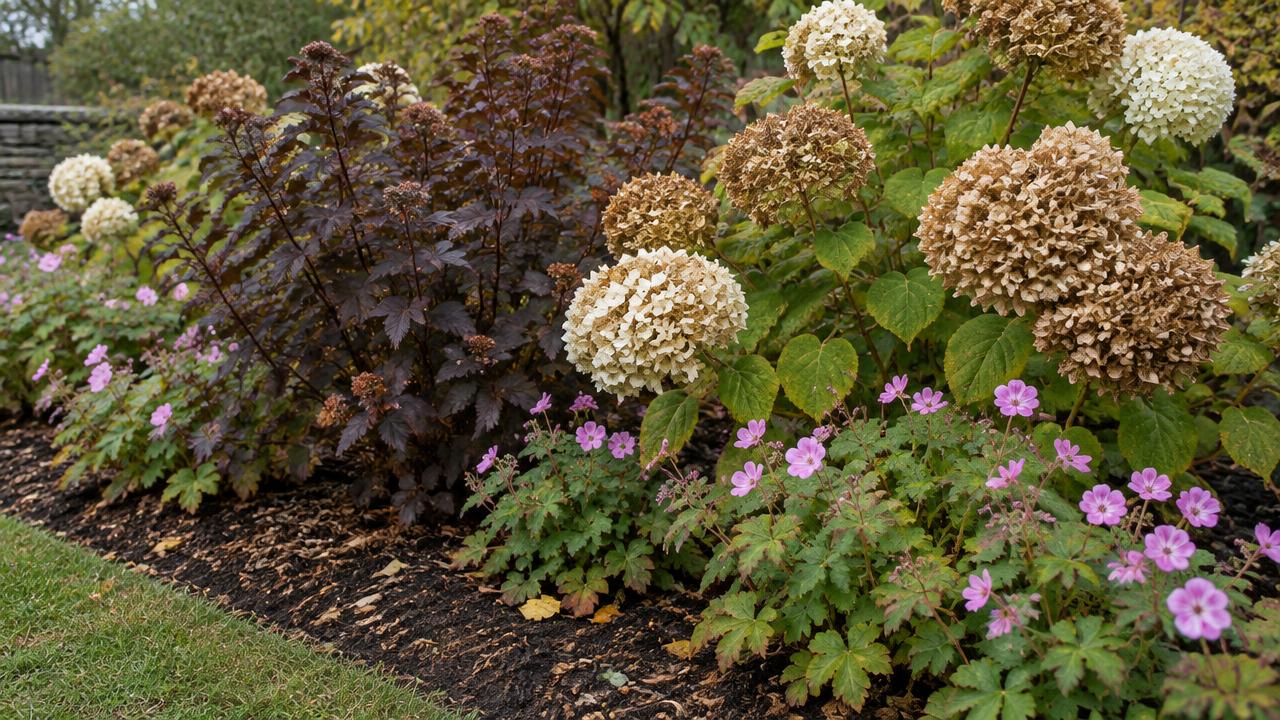
The RHS also suggests changing the ground rather than only the plants. Raised beds need only be about 20cm high to lift roots above wet soil, and for trees, planting on a mound about 25cm high at its centre can improve drainage a great deal. That is also how it recommends growing lavender on heavy ground, on a mound, ridge or raised bed 20 to 30cm high. One thing that does not work is digging gravel into wet clay, which the RHS says will not improve drainage. That is different from building a raised bed or mound filled with free-draining material, which lifts the roots clear of the wet rather than trying to change the clay beneath. Where the water table is high, only installed drainage will help. It also advises keeping tender plants out of sites that are both wet and cold.
Climbers and trees, if you have the room
Several climbers on the RHS drought-resistant list suit dry walls and fences, but most are vigorous. Chilean glory flower (Eccremocarpus scaber) reaches 3 to 5m and is the most manageable for a small fence. The potato vine Solanum crispum grows to around 6m, while passion flower (Passiflora caerulea), trumpet vine (Campsis) and common jasmine (Jasminum officinale) can all reach 10m or more.
The trees on the list are larger than they look at the garden centre, and the RHS heights are at maturity. The strawberry tree (Arbutus unedo) is evergreen and can eventually reach 8m. The Judas tree (Cercis siliquastrum) has pink spring flowers on bare branches and can reach 10m, as can the golden rain tree (Koelreuteria paniculata). Whitebeam Sorbus aria 'Lutescens' is also on the list. Check the eventual size against your space, and remember that being drought tolerant once established does not make a vigorous climber or tree suitable for a small pot.
Favourites that struggle in a dry summer
After the dry first half of 2025, the RHS reported that oxeye daisy, rudbeckia and phlox reached around half their average size, and that some flowers faded quickly in the heat, which meant less nectar for pollinators. That is not a reason to stop growing them, but they belong where the soil stays moister, or near the water butt, rather than in the hottest bed. The same RHS update to its Plants for Pollinators list called for more sea holly, euphorbia, helianthus and marjoram, a useful overlap with the plants that cope best with dry summers.
How to plant so they establish
"Drought tolerant" describes a plant once its roots are settled, not on the day you buy it. The RHS says new trees, shrubs and perennials need regular watering, especially in their first year, and larger trees for up to three years.
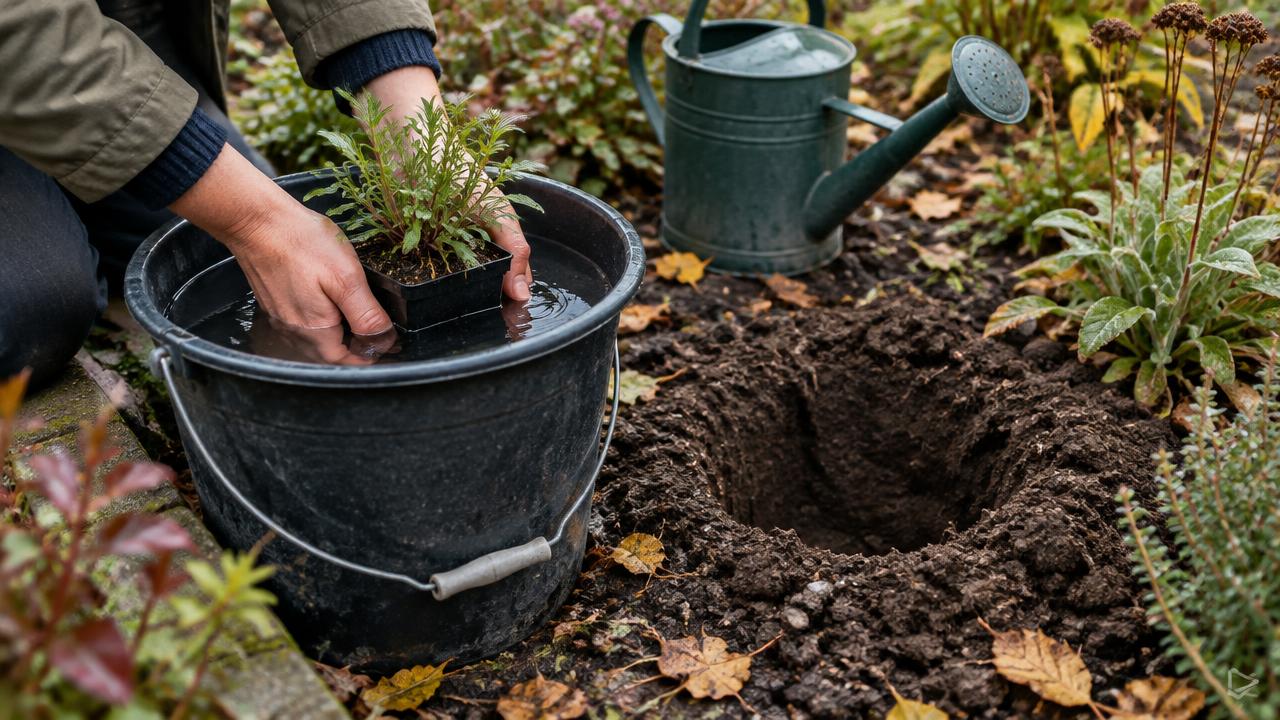
Start small. The RHS recommends perennials in 9cm pots and small trees and shrubs, which establish faster. Before planting, soak each pot in a bucket of water until the bubbles stop, then water the soil thoroughly after planting so the moisture reaches the root zone and encourages roots to go down. Mix organic matter into the planting area, but leave out fertiliser, which the RHS says encourages soft, lush growth that dries out easily and may flop in summer.
Timing depends on the plant. The RHS gives March and September as the best months for planting in dry gardens, recommends spring for silver-leaved and Mediterranean plants so they establish before their first winter, and says lavender should be planted in April or May and never in winter. For seasonally wet and dry soils, however, its advice favours autumn planting, while roots can still grow before the winter wet and the next summer's drought. In practice, that means hardy shrubs and perennials for heavier soil can go in now while the ground is workable, and the silver-leaved plants are better bought next spring.
Mulch finishes the job. The RHS recommends a layer at least 5cm thick, applied between November and February while the soil is moist. Garden compost suits most planting. For Mediterranean plants, the RHS suggests a 5 to 7.5cm layer of gravel instead, or a gravel garden. Once plants are established, its advice for seasonally wet and dry soils is to water only when really necessary.
Warmer winters on average do not rule out hard frosts, and wet roots, cold wind and a sudden frost together can still do damage. After one bad winter, the RHS linked widespread plant damage to a long, wet, mild autumn followed by a sudden plunge well below freezing, before plants had acclimatised. Good drainage and shelter from cold winds both help.
In pots and on balconies
The RHS is blunt that plants in containers need watering more often than the same plants in the ground. With drought-tolerant plants in pots, the aim is to reduce how much water they need rather than stop watering, and a pot in full summer sun may still need water even when it is planted with lavender or sedum. Our guide to drought-tolerant plants for pots covers the plants. This section is about making a pot that copes with both a dry summer and a wet winter.
The RHS says drainage holes are essential (more in Container Growing Fundamentals), and recommends standing containers on bricks or pot feet so they drain freely. Larger containers dry out more slowly than small ones, but it warns against putting a single plant in an overly large pot, where the extra compost can easily become waterlogged, so match the pot to the rootball. Use peat-free compost, with a loam-based mix for plants that will stay in the same pot for years. In summer, water early or late in the day at the compost rather than the leaves, and with drought-tolerant plants the RHS suggests waiting until they show the first signs of stress.
Winter is when pots most often fail. The RHS advice is to remove saucers before winter, check that drainage holes have not blocked, and in very wet spells move pots under cover or into the rain shadow of a wall if the compost becomes sodden. Keep checking evergreens at least weekly and water if needed, aiming for compost that is moist but never soggy, and avoid watering when frost is forecast. Grouping pots near a house wall helps protect roots from freezing, which the RHS calls the main winter danger for container plants.
Lawns and lawn alternatives
The RHS says established lawns rarely need watering (see our lawn guide and lawn repair after drought) and recover after rain, so the lawn is the last thing to water in a dry spell. If you want one that copes better, it suggests alternatives such as clover, thyme and wildflowers, which need less watering and support more wildlife.
A quick guide to choosing
| Growing condition | Strong candidates | Main caution |
|---|---|---|
| Sunny, free-draining soil | Lavender, sea holly, catmint, Euphorbia characias | Winter waterlogging, especially on clay |
| Dry shade | Geranium macrorrhizum, Cyclamen hederifolium, Euphorbia robbiae | Root competition from trees while plants establish |
| Clay that is wet in winter and dry in summer | Red-stemmed dogwood, ninebark, Geranium Rozanne | Seasonal wet is not the same as permanent waterlogging |
| Sunny pots and balconies | Lavender, sedum, houseleeks | Limited root space and winter drainage |
| Room for a small tree | Amelanchier | Eventual height and spread |
FAQ
What is the most drought-tolerant plant for a small British garden?
There is no single answer, because it depends on your soil and light. For a sunny, free-draining spot, sea holly, euphorbia and lavender are reliable. For dry shade, *Euphorbia amygdaloides* var. *robbiae* and *Geranium macrorrhizum* are good starting points. On heavy clay, a clay-loving plant such as *Geranium* Rozanne or *Astrantia* will usually outlast a Mediterranean one.
Can I plant drought-tolerant plants in October?
Hardy shrubs and perennials, especially those for heavier soil, can go in during autumn while the ground is still workable, and the RHS favours autumn planting for seasonally wet and dry soils. Silver-leaved Mediterranean plants such as lavender are better planted in spring, because young plants can rot in cold, wet soil over winter.
Do drought-tolerant plants need watering?
Yes, until they are established. The RHS advises regular watering through the first year for new shrubs and perennials, and up to three years for larger trees. After that, the RHS advice is to water only when really necessary.
Will adding grit or gravel help my clay soil drain?
Not in the way people hope. The RHS says digging gravel into the soil does not improve drainage in waterlogged ground. Organic matter added over several years, raised beds and planting on mounds are more effective, and only installed drainage helps where the water table is high.
FURTHER READING
- Getting Started
How to Water Plants Properly
- Getting Started
Container Growing Fundamentals
- Getting Started
Starting and Repairing a Lawn
RELATED POSTS
Robin is a small-space grower writing for everyone working with a courtyard, balcony, window box, patio or sunny sill. Edible and leafy, both kept alive in the kind of light real small spaces actually get.
✦ Free with the newsletter — the small-space starter sheet
Grow Anywhere — a free weekly email.
The Potted Club newsletter. A short note from Robin — what to sow, one plant problem solved, and the best new guide.
FREE WEEKLY EMAIL · NO SPAM · UNSUBSCRIBE ANYTIME