Drought-Tolerant Plants for Pots
With hosepipe restrictions expected to run into autumn, the easiest way to cut your watering workload isn't a better routine. It's growing plants that need less water in the first place.
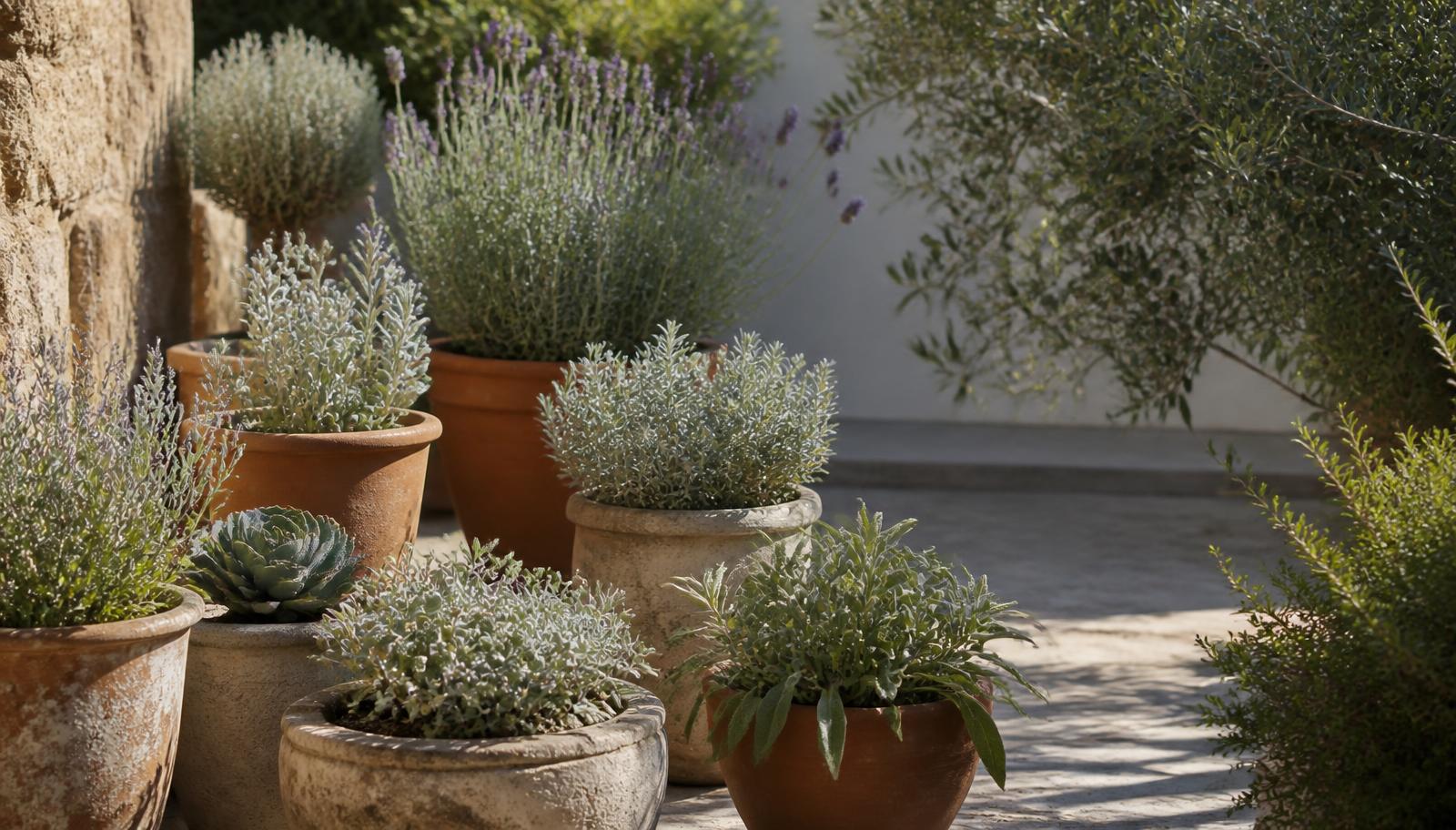
Reduce the workload, not just the routine
Most advice about gardening through drought concentrates on what to do once you have thirsty plants: water early, prioritise containers, collect rainwater, reuse bath water. All useful.
But with Thames Water now expecting its hosepipe restrictions across London and the Thames Valley to remain until towards the end of the year, there's another question worth asking. What if your plants simply needed less water in the first place?
That's particularly relevant to anyone gardening on a balcony or patio. Container plants will always need more attention than equivalent plants in the ground because their roots are confined to whatever moisture is available inside the pot. But some cope with that limitation considerably better than others.
The RHS has made the distinction particularly useful this summer. In July it published a new selection of drought-tolerant plants specifically suited to containers, drawing on planting seen at the 2026 RHS Sandringham Flower Show.
So rather than taking a generic list of plants that survive dry garden borders and assuming they'll work in a pot, we now have some genuinely container-specific choices.
What actually makes a plant drought tolerant?
In open ground, deep or extensive roots can help a plant find moisture long after the surface has dried. A pot largely removes that advantage, which makes a plant's other drought adaptations particularly important.
Silver or grey leaves often have fine hairs that reflect sunlight and help reduce water loss. Lavender and artemisia are classic examples.
Small or narrow leaves have less surface area from which to lose moisture. Think thyme and rosemary.
Thick, fleshy leaves store water within the plant itself. Sedums and houseleeks use this strategy.
Waxy or leathery surfaces can also reduce moisture loss.
None of these features guarantees that a plant can be abandoned on a hot balcony for weeks. But they're useful clues when you're standing in a garden centre trying to distinguish something genuinely adapted to dry conditions from something that will collapse the first time you miss a watering.
Established, not establishing
There's one important catch. Drought tolerance doesn't mean a newly planted specimen doesn't need water.
A plant that's just been moved into a container hasn't yet established a functioning root system throughout its new compost. It needs regular attention while those roots develop. How long that takes depends on the plant, time of year, pot and weather.
So don't buy a lavender, put it into a pot in August and immediately treat it as maintenance-free because the label says "drought tolerant." The lower-water routine comes once the plant has settled in. Our guide to watering properly covers how to judge that.
Mediterranean herbs
This is probably the easiest place to start. Lavender, rosemary and thyme all evolved in environments where hot, dry periods and relatively lean soils are normal. Their narrow or small leaves help limit water loss, and all three prefer good drainage rather than sitting permanently wet.
They're also unusually useful for a small garden. Lavender gives you flowers and scent, while rosemary and thyme give you something to cook with as well. A sunny window box containing thyme will generally be far more forgiving of a missed watering than one filled with basil.
Lavender is similarly well suited to a sunny patio pot, although container-grown plants still need checking during prolonged heat, as covered in our piece on what to do with lavender after it flowers. The bigger danger with all three is often winter rather than summer: cold, saturated compost can be much more troublesome than an occasional dry spell.
Succulents and houseleeks
If low maintenance is the priority, this group is difficult to beat. The familiar upright plants once commonly called sedums are now generally classified as Hylotelephium. Their thick leaves store water, allowing them to cope with periods of dryness that would quickly affect softer-leaved plants. The RHS's new container list specifically includes Hylotelephium 'José Aubergine', with dark foliage and pink flowers appearing from late summer into autumn.
Then there are Sempervivum, or houseleeks. These compact rosettes are among the few succulents hardy enough to live outside through a typical UK winter and work particularly well in shallow containers where larger plants would be impractical. They're ideal for a sunny windowsill, small patio table or narrow balcony.
Both groups want excellent drainage. Sitting in cold, wet compost is a much greater threat than being allowed to dry between waterings.
Silver-leaved plants
Lavender isn't the only plant using silver foliage to its advantage. Artemisia 'Powis Castle' appears on the RHS's new drought-tolerant container list and gives a pot soft, feathery silver foliage rather than relying on flowers for interest. It works particularly well alongside purple flowers and ornamental grasses.
Santolina, or cotton lavender, is another useful compact Mediterranean shrub with silver foliage and a preference for sunny, well-drained conditions.
These are particularly useful plants if you want containers to look deliberate even when nothing is in peak flower. One caveat with artemisia: 'Powis Castle' is less hardy than several of the other plants here, so a sheltered position is sensible in colder parts of the country.
Long-flowering choices
Drought-tolerant planting doesn't have to mean a collection of grey shrubs and succulents. The RHS's new list includes Salvia 'Nachtvlinder', a hardy salvia with dark purple flowers that works well in sunny containers. Salvias are particularly useful because many flower for a long period, giving you considerably more colour than their relatively modest water demands might suggest.
Then there's Erigeron karvinskianus, Mexican fleabane. Its tiny daisy-like flowers spill over the edge of pots and soften larger plants. The RHS recommends it for sun or partial shade and specifically suggests allowing it to froth beneath other plants and over container edges. That makes it particularly good for small spaces: rather than devoting an entire pot to it, erigeron can fill the lower level of a larger container.
For a bigger statement pot
Agapanthus gives you something drought-tolerant plants don't always provide: height. The large blue or white flower heads rise above strap-like foliage without the plant occupying an enormous footprint, making it useful on a patio or balcony where floor space is limited.
Agapanthus appears on the RHS's new drought-tolerant container list, but this one comes with an important qualification. Don't interpret that as permission to let a potted agapanthus become bone dry throughout summer; agapanthus is generally understood to resent drying out completely, which can affect flowering the following year. It's a good example of what drought tolerance really means in a pot: greater resilience, not independence from water.
And for straightforward summer colour
Pelargoniums deserve a mention because they're already among Britain's most familiar container plants. Often sold simply as geraniums, pelargoniums have somewhat fleshy stems and leaves and cope with drying considerably better than many softer bedding plants. That makes them useful for window boxes and summer balcony containers where watering isn't always perfectly consistent.
They're not hardy through a normal British winter, though. Treat them as seasonal plants or move them somewhere frost-free if you want to keep them.
The pot matters almost as much as the plant
Choosing drought-tolerant plants won't compensate for a badly chosen container, as our container growing fundamentals guide explains in more detail.
Size matters. A large pot contains more compost and therefore a larger reservoir of water. It will generally dry more slowly than a tiny container sitting in exactly the same position. Three substantial pots can consequently be much easier to keep watered than a collection of fifteen small ones.
Material is more complicated. Terracotta suits lavender, thyme, succulents and other plants that dislike persistently wet roots because it's porous and allows moisture to escape. But that same property means a terracotta pot can dry faster during a heatwave. So terracotta isn't automatically "better" for drought-tolerant plants; it's a trade-off, excellent drainage but potentially more frequent watering during very hot weather.
Compost should also drain freely. These plants generally don't want the permanently damp conditions you might deliberately create for something thirstier.
And then there's position. A plant on an exposed fifth-floor balcony can face far more wind than the same plant on a sheltered patio. Brick, paving and glass can add reflected heat too. "Drought tolerant" is therefore never a guarantee. It's a head start.
Don't put thirsty and drought-tolerant plants in the same pot
This is one of the easiest mistakes to avoid.
A lavender and a hydrangea may happen to look good together. Their preferred watering regimes don't. The same applies to combining drought-tolerant plants with thirsty bedding such as busy lizzies.
Whatever watering schedule keeps the thirsty plant happy risks leaving the dry-loving one sitting in persistently wet compost. Let the container dry sufficiently for the lavender and the thirstier plant may wilt.
Instead, group plants with similar needs. A sunny container might combine a salvia for height and flowers, erigeron spilling over the edge and a compact Hylotelephium lower down. They look different, but broadly agree about where and how they want to live. That's much easier than trying to negotiate a watering compromise every day.
Drought tolerant doesn't mean no water
This is the bit plant labels don't always communicate particularly well.
Every plant in a container ultimately depends on the finite reservoir of water inside that pot. Even a houseleek will eventually suffer if conditions become extreme enough. The RHS's own drought and watering advice makes the same point: efficient watering still matters, whatever you grow.
The difference is one of frequency and forgiveness. A drought-adapted plant can tolerate its compost becoming drier and generally gives you a much larger margin for error than a plant that expects consistent moisture.
Choose the right plant, establish it properly, give it enough root space and put it somewhere appropriate, and you'll spend considerably less time carrying a watering can around. You just won't be able to throw the watering can away.
FAQ
What are the easiest drought-tolerant plants for pots?
Houseleeks, Hylotelephium, thyme and lavender are good starting points for sunny, well-drained containers. The RHS's 2026 container recommendations also include salvia, erigeron, artemisia and agapanthus.
Do drought-tolerant plants still need watering?
Yes. Newly planted specimens need regular watering while they establish, and established container plants will still require water during sufficiently long dry periods.
Are terracotta pots best for drought-tolerant plants?
Not necessarily. Terracotta provides excellent drainage and suits plants that dislike wet compost, but its porous sides also allow water to evaporate more quickly. That can mean more frequent watering during hot weather.
Can drought-tolerant plants survive a UK winter?
Many can. Houseleeks, Hylotelephium, thyme and many hardy salvias can live outside year-round. For several drought-adapted plants, good winter drainage is just as important as cold tolerance.
What's best for a hot, sunny balcony?
Lavender, thyme, houseleeks, Hylotelephium, salvias, erigeron and pelargoniums are all worth considering. The final choice depends on how exposed the balcony is, the size of the containers and whether you can protect tender plants over winter.
READ THE FULL GUIDE
How to Water Plants Properly →
RELATED POSTS
Robin is a small-space grower writing for everyone working with a courtyard, balcony, window box, patio or sunny sill. Edible and leafy, both kept alive in the kind of light real small spaces actually get.
✦ Free with the newsletter — the small-space starter sheet
Grow Anywhere — a free weekly email.
The Potted Club newsletter. A short note from Robin — what to sow, one plant problem solved, and the best new guide.
FREE WEEKLY EMAIL · NO SPAM · UNSUBSCRIBE ANYTIME