
What Can You Still Plant and Sow in Mid-October?
What is still worth sowing and planting in mid-October, organised by where you grow, and which of it will give you something this winter and which is for next year.
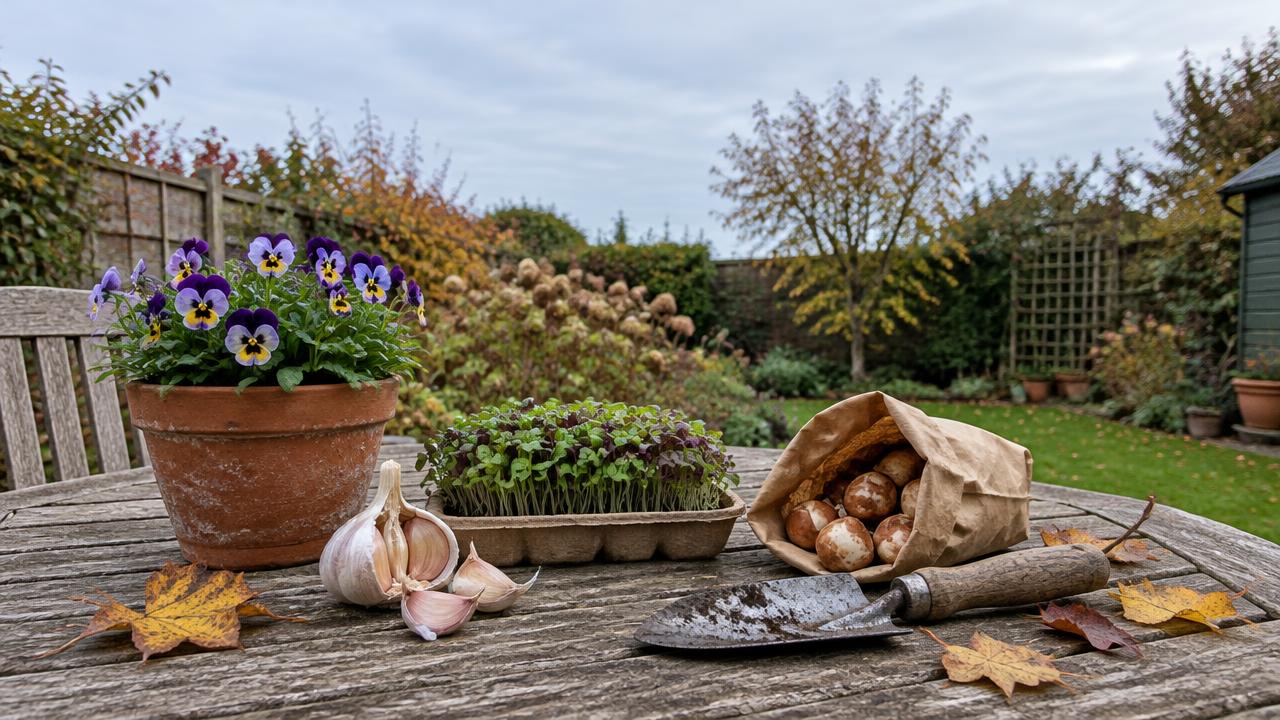
There is still plenty to sow and plant in mid-October, and most of it will give you nothing until next year. Knowing which is which saves a good deal of disappointment, so this goes through what is worth starting now by where you grow it, and says plainly when each will pay you back.
Most of what you start now is for next year
It helps to sort October's options into two piles before buying anything. The first is small, and holds the things that will give you a harvest or some colour between now and February. The second is much larger. It holds everything that sits through the winter and performs next spring or summer, which includes almost every crop sown outdoors this month.
Where you live changes the second pile. Several of the RHS recommendations for October are limited to mild areas or to plants under cover, and a sowing that makes sense in a sheltered courtyard in the south may not be worth attempting on an exposed balcony further north. Those limits are given with each crop below.
On a windowsill or under protection
This is where the winter harvests are, and light decides what works. A windowsill in October is warm enough to germinate most things, but warmth is not the constraint. The RHS says artificial light is useful for plants that need more intensity than indoor daylight provides in the UK, especially on short winter days, and lists winter salad leaves among the crops grown under lights.
Without grow lights, microgreens and pea shoots are worth trying in a bright position. The RHS suggests microgreens as a winter project, grown in a small tray or recycled food container, and recommends seeds including coriander, radish, Greek cress, purple basil and the beetroot 'Bull's Blood'. Its pea-shoot activity says the shoots can be ready within two weeks. Both crops are harvested young, which makes them more practical indoor projects than growing full-sized salad plants through winter. They still need enough light, however, and the RHS notes that plants grow poorly where it is insufficient, so a dim windowsill is unlikely to give a worthwhile crop.
Salad leaves grown on to a useful size are a different proposition. For those the RHS points to horticultural lighting, and says ordinary domestic bulbs are not intense enough. That is a real commitment for a bowl of leaves, and worth knowing before you fill a windowsill with lettuce seed.
Outdoor protection gives a different result again. The RHS says a winter lettuce such as 'Winter Density' can be sown in September or October in a greenhouse, or in mild areas under cloches or in a cold frame, and that this sowing is for a spring harvest. Lettuce to cut in winter needed to be planted under glass in late summer or early autumn.
In pots outside
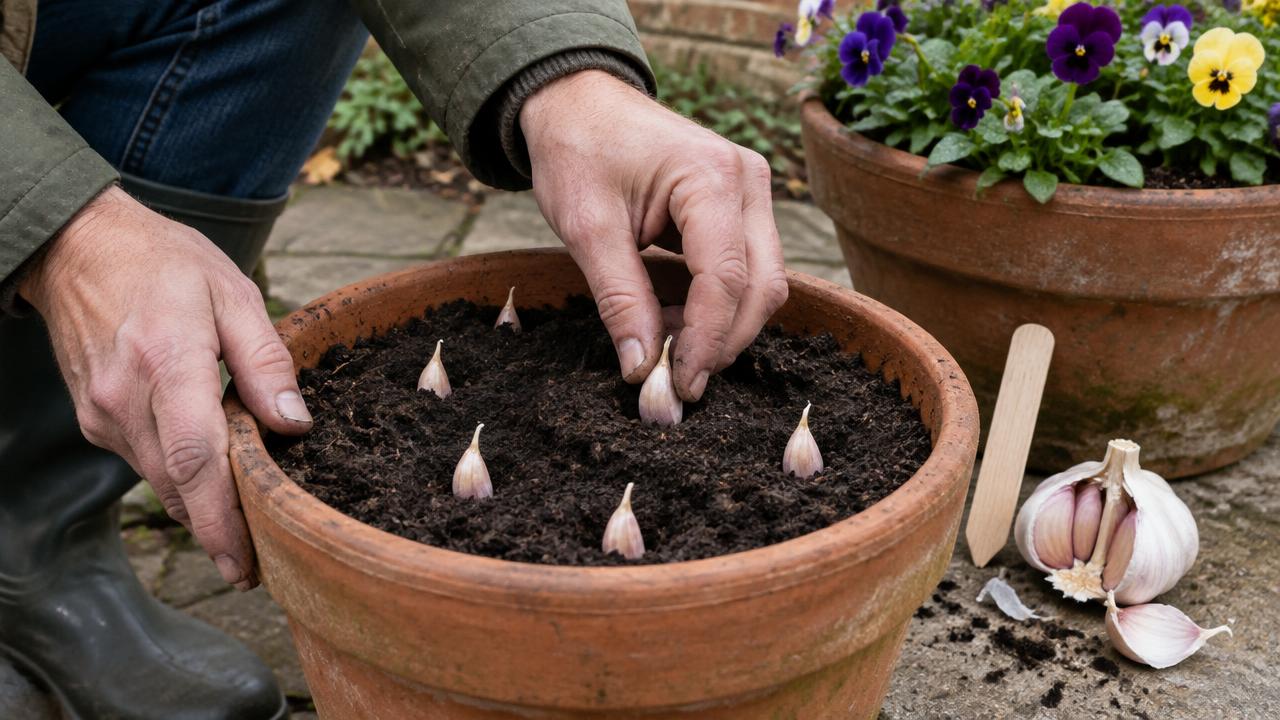
Garlic is the pick of the October crops for a container. The RHS gives the planting time as mid-autumn to early winter, because most varieties need one to two months below about 10°C to form good bulbs. It recommends a pot at least 25cm deep filled with peat-free multipurpose compost, with the cloves 15cm apart and their tips about 2.5cm below the surface. It also advises against planting supermarket garlic, which may not suit the British climate and can bring in disease, so buy named varieties.
Broad beans are possible, with conditions. The RHS says October and November sowings suit milder parts of the UK and very sheltered sites, especially where drainage is good, and names 'Aquadulce Claudia' as a good variety for autumn sowing. Dwarf varieties, which reach about 50cm, are the ones it suggests for containers, in pots at least 40cm wide. Damp conditions can rot the seed, and in cold spells young plants need a cloche or fleece.
Sweet peas are another October sowing, provided you have somewhere suitable to overwinter the seedlings. The National Sweet Pea Society recommends sowing in pots in October or November in the south and the Midlands, and waiting until January or February further north, with autumn-sown seedlings kept in a cold frame or cold greenhouse over winter. It says this gives hardy plants that can go out around mid-March, about a month ahead of spring sowings. The seedlings want cool, bright conditions and not a warm living room, so without protected space a spring sowing is the simpler option.
The quickest return outdoors comes from planting, not sowing. The RHS October advice is to plant wallflowers, forget-me-nots, bellis, primulas and violas, including winter pansies, in the ground or in pots. For winter containers it suggests winter pansies, violas, primulas and polyanthus, which flower intermittently during mild spells, alongside foliage plants such as skimmia, heuchera and carex. Cyclamen can also provide colour, but check which type you are buying. The RHS notes that Cyclamen persicum, the florist's cyclamen commonly sold for winter displays, is not fully hardy, so it needs protection in severe cold. Its most useful tip is that plants grow very little in winter, so start with good-sized plants and enough of them to fill the pot.
Spring bulbs belong in the same containers. The RHS says to keep planting them this month and suggests putting them in beneath winter bedding for a second display. Our guide to planting bulbs has the depths and spacings.
Autumn planting reduces the watering burden, but it does not remove it. Check newly planted containers while their roots establish, particularly pots sheltered from rain by a wall or roof. Equally, don't keep compost permanently wet simply because the plants have just gone in. Keep drainage holes clear, raise pots on feet and remove saucers that would leave them standing in water.
In a small bed or border
If you have open ground, a few more crops come into play, each with a limit attached. Overwintering onion sets give a crop in early to mid-summer, and the RHS wording for October is to finish planting them, so this is the end of the window. It advises against autumn planting on heavy soil that waterlogs in winter, where the sets are likely to rot, and suggests netting or fleece until they root, because birds pull them up.
Spring cabbages can be planted out now, and the RHS says to net them against pigeons. Overwintering peas are another October sowing, but only in mild areas, and the RHS names 'Douce Provence' and 'Meteor' as varieties for it. Hardy annual flowers come with the same restriction, with outdoor sowing now suggested only where winters are mild.
Perennials are the easier win. The RHS calls new herbaceous perennials a good choice for October, because the soil is still warm and holds more moisture than it does in summer. Pot-grown fruit can be planted now as well. For plants going into containers and not into the ground, the considerations are a little different, and our piece on autumn planting in pots covers them.
What can wait
Not everything in the garden centre has to go in this weekend. The RHS's standard bulb-planting guidance puts tulips in November, although another RHS seasonal guide gives a wider September-to-December window. Tulips bought now can therefore sit in a cool, dry place for a few more weeks while you deal with the bulbs and plants that will not wait; later planting can also reduce the risk of tulip fire. Our September bulb article goes through the order.
Bare-root plants are also a job for later. The RHS says bare-root trees, shrubs, roses and hedging start to become available towards the end of October for planting between November and March, and suggests ordering fruit now. The exact timing depends on dormancy and growing conditions and not on a fixed date. Its general advice on planting trees and shrubs is to avoid soil that is frozen or waterlogged, so a spell of frost delays planting without ending the season.
What is too late to start?
Most summer vegetables have passed their outdoor sowing window. Tomatoes, courgettes, French beans and basil need warmth, light and enough growing time, none of which an ordinary British October reliably provides. Winter brassicas such as kale and Brussels sprouts, along with leeks, may still be growing or ready to harvest, but they were generally sown much earlier in the year. A crop appearing on an October harvesting calendar is not necessarily one worth sowing now.
At a glance
| What | Where | When it pays back |
|---|---|---|
| Microgreens, pea shoots | Bright spot indoors | This winter, within weeks |
| Salad leaves | Indoors under grow lights | This winter |
| Violas, pansies, primulas, evergreens | Pots outside | This winter, in mild spells |
| Winter lettuce such as 'Winter Density' | Greenhouse, or cloches in mild areas | Next spring |
| Spring bulbs | Pots or ground | Next spring |
| Wallflowers, forget-me-nots, bellis | Pots or ground | Next spring |
| Spring cabbage | Bed, netted | Next spring |
| Broad beans, overwintering peas | Mild areas, or under cloches | Late spring |
| Sweet peas | Pots, then a cold frame or cold greenhouse | Flowers next spring or summer |
| Garlic | Pots at least 25cm deep, or ground | Next summer |
| Overwintering onion sets | Free-draining bed | Early to mid-summer |
| Perennials, pot-grown fruit | Ground or large pots | Next year onwards |
FAQ
Is it too late to sow anything in October?
No, but most outdoor sowings now are for next year. For a harvest this winter, the realistic options are microgreens and pea shoots in a bright spot indoors, or salad leaves under grow lights.
Can I grow garlic in a pot?
Yes. The RHS recommends a pot at least 25cm deep, with cloves 15cm apart and the tips about 2.5cm below the surface, planted from mid-autumn to early winter.
Should I sow broad beans now?
Only in a mild area or a very sheltered spot. The RHS limits October and November sowing to those conditions, recommends a hardy variety and suggests cloches or fleece in cold spells.
READ THE FULL GUIDE
Container Growing Fundamentals →
RELATED POSTS
Robin is a small-space grower writing for everyone working with a courtyard, balcony, window box, patio or sunny sill. Edible and leafy, both kept alive in the kind of light real small spaces actually get.
✦ Free with the newsletter — the small-space starter sheet
Grow Anywhere — a free weekly email.
The Potted Club newsletter. A short note from Robin — what to sow, one plant problem solved, and the best new guide.
FREE WEEKLY EMAIL · NO SPAM · UNSUBSCRIBE ANYTIME