The Bulbs to Plant Now, and the Ones That Should Wait
Daffodils, crocus and hyacinths can go in now. Tulips can wait. What to plant this September, and the bulbs with a genuine deadline.
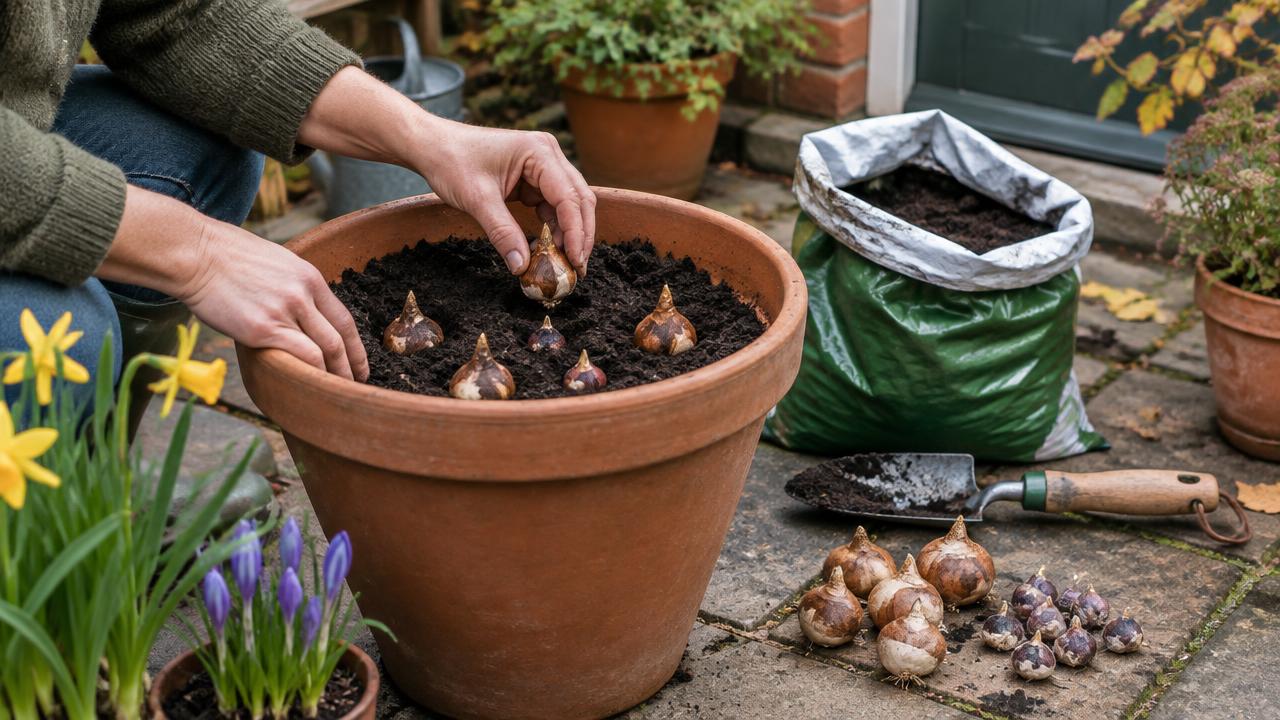
The bulb aisle makes everything look as though it needs planting now. It doesn't. Daffodils, crocus and hyacinths can go in this month, tulips are better left until later, and prepared hyacinths for Christmas really are running out of time.
This is the month to open the bulb bags
There are gardening jobs that tolerate procrastination remarkably well. Planting most spring bulbs isn't one of them. September and October are the main planting months for the bulbs that will provide the first proper colour next year, while the soil still retains some warmth and there's time to establish roots before winter. The RHS spring bulb guidance gives that autumn window, with earlier planting especially useful for some bulbs.
But there isn't one universal deadline. Daffodils benefit from going in early. Crocus and hyacinths can go in now. Alliums have a little longer. Tulips are better left until later in autumn. And snowdrops are peculiar enough to deserve their own rules.
So if the bags you bought at the garden centre are still sitting by the back door, don't simply plant everything this weekend. Sort them first.
Plant now: daffodils
If there's one bulb worth prioritising in September, it's the daffodil. The RHS recommends planting daffodils in September where possible, although later planting can still succeed.
For a small space, don't automatically reach for the tall yellow trumpets familiar from verges and parks. Dwarf narcissus are often better container plants. Narcissus 'Tête-à-tête' is the obvious example, compact enough for pots and window boxes and far less vulnerable to being flattened by wind on an exposed balcony. There are plenty of other smaller narcissus too, including scented varieties, which is worth considering when your entire garden is a few metres from the back door.
Plant now: crocus
Crocus are among the easiest ways to make February and March look less bleak. They're small, inexpensive and useful in containers because they don't demand much depth, which also makes them good companions for larger bulbs planted deeper in the same pot.
Plant enough to make an impact: six scattered around a large container disappear visually, while a concentrated group looks deliberate. And because the flowers sit so low, they're best in pots close to where you'll see them, on steps or beside a door rather than at the far end of a garden.
Plant now: hyacinths
Outdoor hyacinths can also go in now, and their main advantage in a small space isn't colour but scent. A container beside a door or seating area can perfume a surprisingly large area in spring, which makes them a good example of choosing plants for the space you actually have rather than recreating a border in miniature.
They're substantial bulbs, so give them adequate depth and don't leave them in waterlogged compost through winter. There's also a completely different type of hyacinth worth buying now, and more on that shortly.
Plant now: the small bulbs
Muscari, scilla, chionodoxa and Iris reticulata are all worth considering this month, and they have two particular advantages for small spaces. First, they're short: Iris reticulata flowers at roughly ankle height, which makes it far less vulnerable to wind than a tall daffodil or ornamental allium.
Second, small bulbs can occupy the upper part of a container while larger bulbs sit below. You don't need a complicated bulb lasagne to benefit from that. A simple pot of dwarf narcissus with crocus planted above them gives you more than one flowering moment from the same footprint. The same space-saving logic is covered in more detail in The Complete Guide to Planting Bulbs.
Fritillaries: don't leave them sitting around
Fritillaries are another bulb I'd deal with promptly rather than leaving in a warm cupboard for six weeks, because some don't store well once lifted and deteriorate if allowed to dry excessively.
The familiar snake's head fritillary, Fritillaria meleagris, works well where conditions suit it. It prefers rather different conditions from bulbs that like baking summer dryness, though, so don't assume every bulb wants the same treatment simply because they're sold beside each other. This is where the pot, compost and site have to fit the plant, not the other way round; our container growing fundamentals guide covers that principle more broadly.
Leave the tulips alone for now
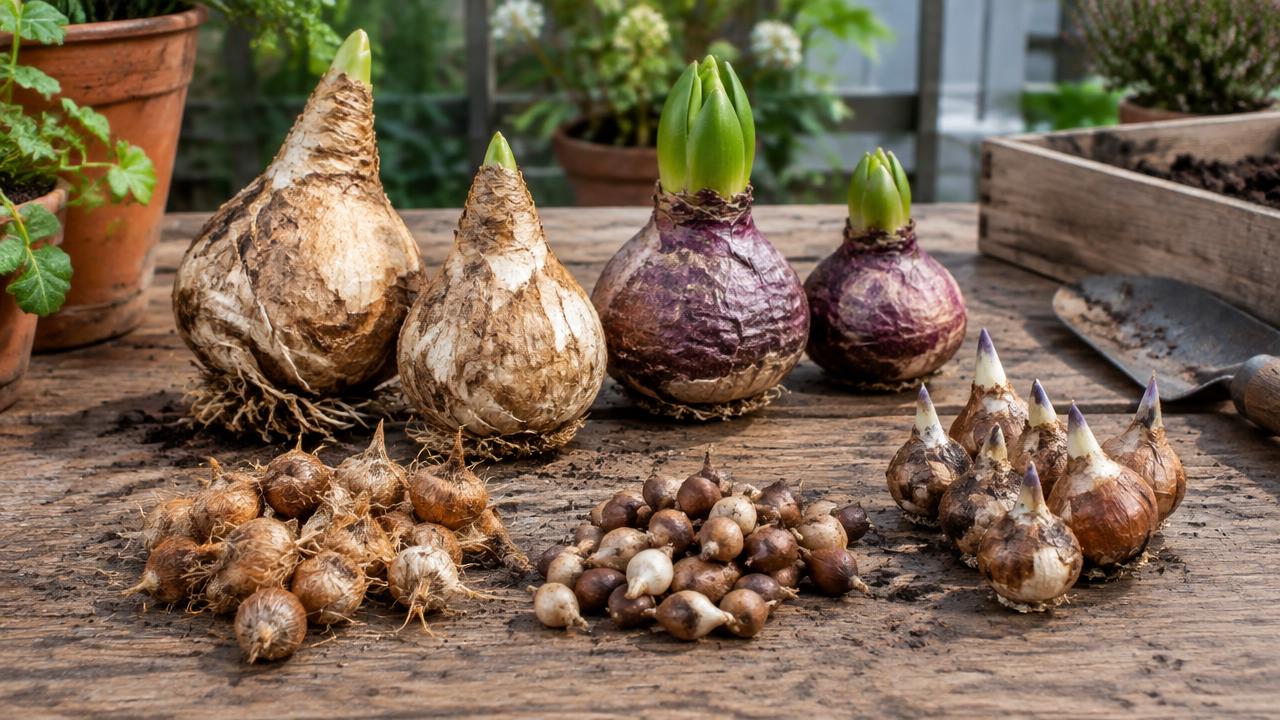
Tulips are the conspicuous exception to the September rush. They can be planted across autumn, but later is generally preferred, partly because of tulip fire, a fungal disease caused by Botrytis tulipae. Later planting into cooler soil can reduce the risk, and RHS tulip guidance gives autumn planting rather than a September-only deadline.
So there is no advantage in racing to get them into the pot this weekend. Buy them while the varieties you want are available, keep the bulbs somewhere cool, dry and well ventilated, then plant them later in autumn, with November the traditional target.
This is particularly convenient in containers, since a pot still carrying late-season colour doesn't need emptying prematurely just because the tulip bulbs have arrived.
Alliums have a little longer too
Alliums appear in the same autumn displays as daffodils and crocus, which makes them feel like another spring bulb. Most ornamental alliums aren't. They're generally classed as hardy summer-flowering bulbs and many flower from May into June, taking over as the spring display finishes. The planting window is more relaxed too, with early to mid-autumn suitable, so September and October both work.
For containers, pay attention to eventual height. The huge architectural alliums look spectacular but become top-heavy in a small pot. Shorter ornamental alliums give you the same distinctive spherical flowers without needing a large, heavy container to stay upright.
Snowdrops play by different rules
You will see dry snowdrop bulbs for sale in autumn, and you can plant them. But that doesn't make autumn the best way to buy them.
Snowdrop bulbs deteriorate when allowed to dry out, so the condition of a packet of dormant bulbs matters enormously. The RHS regards freshly lifted snowdrops, planted as their foliage dies back in late spring, as the best method of establishment. Buying plants in the green, shortly after flowering while they still have leaves, is another well-established approach. Both avoid relying on a bulb that may have spent too long out of the ground.
So September isn't your only chance. Waiting until late winter or spring and buying actively growing plants can be the more reliable option.
The bulb with an actual deadline
There is, however, one bulb job that genuinely is running out of time: prepared hyacinths for Christmas.
Prepared bulbs have been specially treated by the grower to flower earlier than ordinary garden hyacinths, and the RHS advises planting them in September, since they need 10 to 12 weeks to develop roots and shoots. The precise date depends on the cultivar: the RHS gives 24 September for 'Pink Pearl' and 12 October for the quicker 'Anna Marie' in its hyacinth growing advice, so check the packet rather than assuming.
Plant them in containers, give them the cool rooting period, then bring them gradually into warmer, brighter conditions as growth develops. And make sure the packet actually says prepared. An ordinary outdoor hyacinth from the same display hasn't had the treatment needed to hit the Christmas timetable.
A few rules if they're going into pots
We'll cover this properly in The Potted Club Guide to Spring Bulbs in Pots, but a few things are worth getting right before you start.
Give them drainage, because bulbs rot in persistently waterlogged compost. You don't need a layer of gravel or broken pots in the bottom; that old advice doesn't improve container drainage. Use a free-draining growing medium and make sure excess water can actually leave the container. If you're planting for autumn and winter, is autumn really the best time to plant a pot? explains why winter wet matters so much in containers.
Plant at roughly two to three times the bulb's own height, though individual bulbs differ and the instructions for the cultivar take precedence. For a one-season display, RHS bulbs-in-containers guidance suggests a peat-free multipurpose compost with added grit; for bulbs staying put longer, a loam-based peat-free compost with grit suits better. If you're trying to work out when compost choice really matters, soil and compost pH, explained is a useful companion.
Containers allow denser planting than open ground, but every bulb still needs room. If you're layering, offset them rather than stacking one directly above another.
Choose bulbs for the space you have
A catalogue photograph doesn't tell you what a plant will be like on a fifth-floor balcony in March. Height matters: tall daffodils and large ornamental alliums can be vulnerable to wind, while dwarf narcissus, crocus, muscari and Iris reticulata sit much lower and suit exposed containers better.
Scent matters too, and hyacinths and scented narcissus make disproportionately good use of a small patio because you're close enough to appreciate them.
Don't dismiss a space simply because it isn't good enough for summer sun-lovers, either. Many spring bulbs complete much of their visible growth before deciduous trees have fully leafed out, so a spot too shaded for a tomato in July may still produce a perfectly good spring display.
One job for next spring
Whatever you plant now, remember this when the flowers finish: leave the leaves alone.
Bulb foliage continues photosynthesising after flowering, replenishing the reserves the bulb needs to flower again, so cutting green leaves off because they look untidy removes that opportunity. Wait until the foliage has yellowed and died back naturally.
Containers make this easier. Once the display is over, you can move the pot somewhere less conspicuous while the leaves finish their job.
What to do this weekend
Find the bulb bags and sort them into three groups. Plant now: daffodils, crocus, outdoor hyacinths and most of the smaller spring bulbs. Plant this autumn: alliums. Leave for later: tulips.
And if you want hyacinths flowering indoors for Christmas, that's the job with the real deadline.
The rest can wait its turn, and knowing which is which is most of the job. If you're buying as well as planting, what's actually worth buying at the garden centre this Bank Holiday is a useful filter for avoiding the seasonal panic-buy.
FAQ
Which bulbs should I plant in September?
Daffodils, crocus, hyacinths and many smaller spring-flowering bulbs can all be planted now. September is particularly useful for getting daffodils established.
Do spring bulbs have to be planted by the end of September?
No. RHS guidance generally gives September and October as the main planting period for spring-flowering bulbs, although earlier planting is useful for some, particularly daffodils.
Should I plant tulips now?
You can plant tulips during autumn, but later planting is generally preferred and can reduce the risk of tulip fire. November is a useful target.
When should I plant alliums?
Most ornamental alliums can be planted in early to mid-autumn, making September and October useful planting months.
Should I buy dry snowdrop bulbs?
They can grow, but snowdrop bulbs are susceptible to drying out. Freshly lifted plants or snowdrops bought in the green are generally more reliable ways to establish them.
Can I still grow hyacinths for Christmas?
Yes, but buy bulbs labelled prepared and check the cultivar's timing. The RHS gives 24 September for 'Pink Pearl' and 12 October for the quicker 'Anna Marie'.
Do I need gravel in the bottom of a bulb pot?
No. Concentrate on clear drainage holes and a suitable free-draining growing medium rather than adding a coarse drainage layer.
READ THE FULL GUIDE
The Complete Guide to Planting Bulbs →
RELATED POSTS
Robin is a small-space grower writing for everyone working with a courtyard, balcony, window box, patio or sunny sill. Edible and leafy, both kept alive in the kind of light real small spaces actually get.
✦ Free with the newsletter — the small-space starter sheet
Grow Anywhere — a free weekly email.
The Potted Club newsletter. A short note from Robin — what to sow, one plant problem solved, and the best new guide.
FREE WEEKLY EMAIL · NO SPAM · UNSUBSCRIBE ANYTIME