
HOME / GUIDES / GETTING STARTED
The Complete Guide to Planting Tulips
When to plant tulips, how deep, which ones come back and which are best treated as one-season bedding, with RHS-backed advice on tulips in pots, borders, aftercare and the problems to watch for.
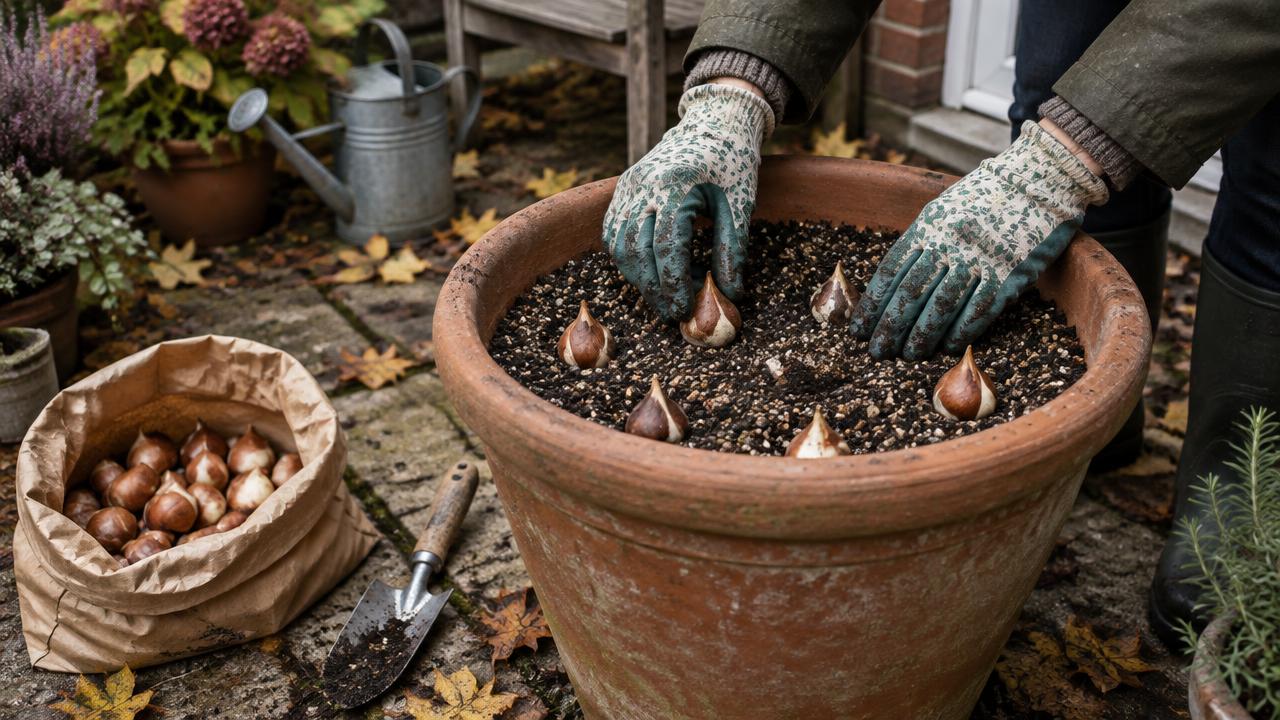
Tulips are planted later than almost every other spring bulb, and they behave differently once they flower. Many of the showiest are at their best in their first spring and then fade, while others come back reliably for years. This guide covers when and how deep to plant, how to get a good display from a pot, which tulips are worth keeping, and what to do once the flowers are over, using the RHS guidance throughout.
Why tulips are different from other spring bulbs
Most spring bulbs go in during early autumn, and many of them settle in and come back year after year with very little attention. Tulips break both habits. They are planted later, and a large proportion of the tulips sold in garden centres are bred for one spectacular spring rather than a long life.
That is not a flaw so much as a choice you need to make before you buy. If you want a pot that looks extraordinary next April, the big border tulips are the ones to grow, and you can treat them like bedding and plant fresh bulbs each autumn. If you want something that comes back, you need different tulips and slightly different conditions. Our complete guide to planting bulbs covers the general principles. This guide goes into the detail that tulips need on their own.
When to plant tulips
The RHS advises planting dry tulip bulbs in autumn, from September to November, while they are dormant, and its seasonal planting advice extends that to December. In practice, there is no need to rush. November is the traditional month for tulips, partly because later planting into cooler soil is thought to reduce the risk of tulip fire, a fungal disease caused by Botrytis tulipae. Planting time is only one part of avoiding it, though. Healthy bulbs, good drainage and room for air to move between plants matter at least as much, and the section on problems below covers what the RHS advises.
Planting very late has its own cost. The RHS notes that short stems can be caused by late planting or mild winters, so aim for November rather than leaving bulbs in the bag until the new year. If you have bought bulbs and cannot plant them straight away, the RHS advice is to store them somewhere cool and dry until you are ready.
Buying tulip bulbs
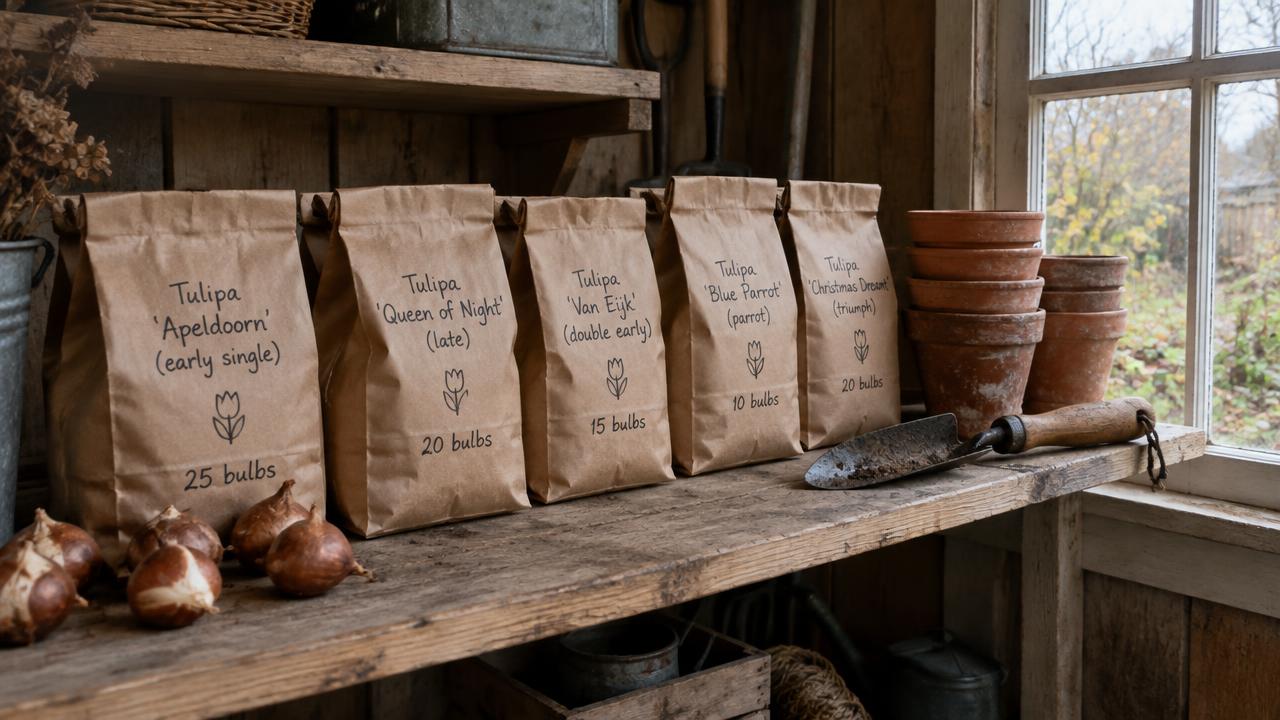
Buy the varieties you want while they are in stock, even if you will not plant them for a few weeks, and keep them somewhere cool, dry and well ventilated rather than in a warm kitchen or a sealed plastic bag. When choosing, look for firm bulbs with no soft patches or mould, the same checks the RHS suggests when sorting bulbs you have lifted yourself. Its tulip fire advice also says to inspect bulbs carefully and discard any with signs of decay or with small black sclerotia, the resting bodies of the fungus, on the outer scales. The RHS growing guide adds that the largest bulbs give the best results, so if you are buying for a pot by the front door, the bigger sizes are worth the extra cost.
If you miss autumn altogether, there is a fallback. The RHS says tulips bought already growing in pots from garden retailers in spring can be planted straight away and will flower within weeks. It is a more expensive way to get a display, but it works for a balcony that was bare all winter.
Border tulips and specialist tulips
The RHS divides garden tulips into two broad kinds, and knowing which you are buying matters more than any other choice.
Border tulips are the large, showy tulips in almost every colour and form, including singles, doubles, lily-flowered, fringed, parrot and viridiflora types. The RHS says these usually flower reliably only in their first year, which is why many gardeners treat them as bedding and replace them each autumn. Some return better than others. The RHS notes that Darwin hybrids and Kaufmanniana cultivars are more likely to flower again, and it keeps a list of longer-lasting cultivars.
Specialist tulips are smaller and are either wild species or closely related to them. The RHS says they often multiply in gardens and pots, given the right conditions, but many need very good drainage and full sun. Some, such as Tulipa sylvestris and Tulipa sprengeri, are different again and will grow in part shade on moisture-retentive soil, even naturalising in grass.
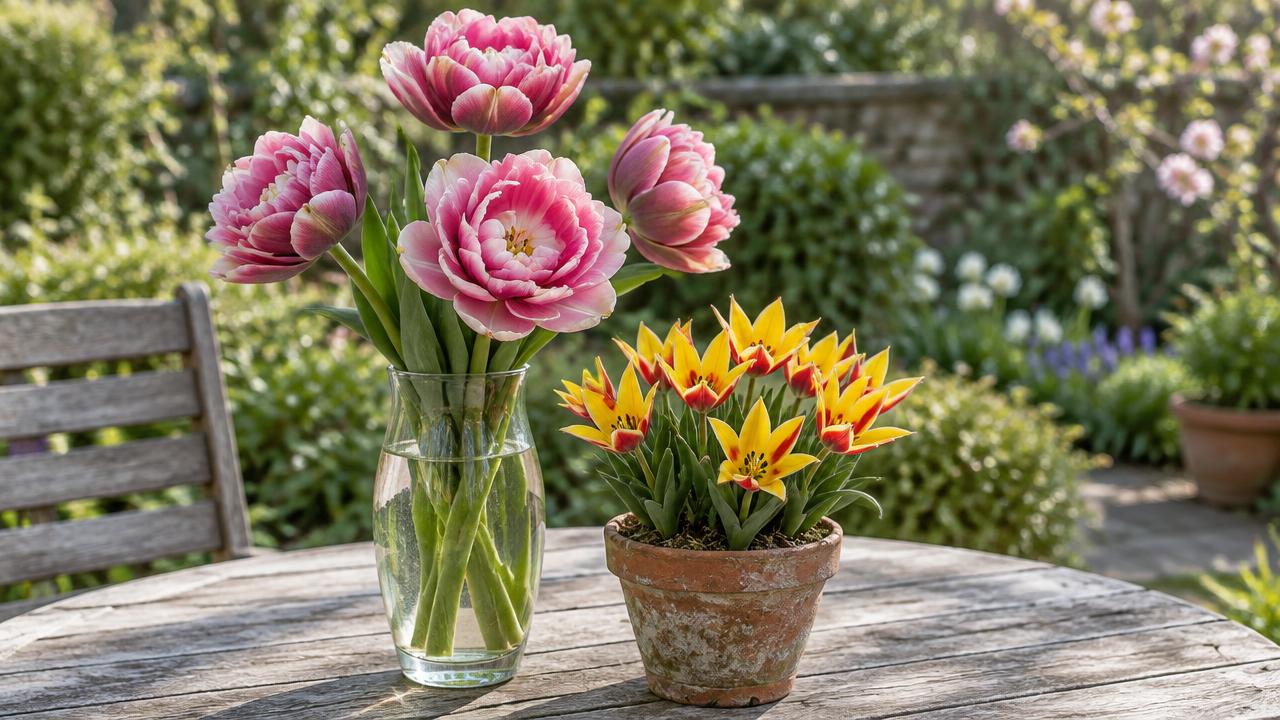
One group to avoid is the old Rembrandt or English Florists' tulips, with their flamed and feathered petals. The RHS explains that the streaking is caused by tulip breaking virus and does not recommend growing them at home. It suggests 'Olympic Flame' for a similar look without the virus.
Choosing tulips for pots and small spaces
Almost any tulip can be grown in a pot, but height matters more in a small space than in a border. The RHS says smaller tulips are particularly suitable for pots and containers, and that they are less likely to be damaged by spring gales than taller types, which is a real consideration on a balcony or an exposed patio.
Its list of award-winning tulips for pots gives a good starting point. All of them are between about 12 and 30cm tall. 'Little Princess' reaches around 12cm with coppery orange flowers and is scented. 'Red Riding Hood', a Greigii tulip, grows to about 20cm with scarlet flowers and purple-marked leaves. 'Toronto' carries three to five pinkish red flowers per stem, and the RHS notes it does well in containers. Tulipa praestans 'Fusilier' produces up to six vivid red flowers per stem and is useful in smaller pots. 'Purissima', a Fosteriana tulip with fragrant white flowers, grows to about 30cm and is worth placing near a door or seat where you will notice the scent.
Among the species tulips, Tulipa tarda is a good choice for a small, sunny pot. The RHS describes it as growing to about 15cm, with clusters of up to six fragrant, star-shaped white and yellow flowers in early spring, and rates it fully hardy throughout the UK.
Several on the list, including Tulipa kolpakowskiana, 'Bright Gem' and the Whittallii Group, need full sun and good drainage, so give them the brightest spot you have. The RHS notes that 'Bright Gem' closes its flowers in shade.
Flowering times differ too, which is useful if you have several pots. The RHS gives 'Purissima' as flowering in March and April, 'Little Princess' in April, and Tulipa kolpakowskiana and the Whittallii Group from April into May. Choosing two or three tulips with different flowering times, rather than one, spreads the display over several weeks instead of a single fortnight.
How to plant tulips in pots
Start with a pot with drainage holes, and the bigger the better within reason, because a larger pot holds more compost and dries out more slowly in spring. For border tulips, the RHS suggests around 12 bulbs in a 45cm wide pot, or up to 20 for a fuller display. That is far closer than in the ground. The RHS advises setting the bulbs about a finger's width apart, then covering them and leaving the compost about 2.5cm below the rim so there is room to water.
CALCULATOR
How many tulip bulbs do I need?
12 bulbs
Based on RHS guidance of around 12 bulbs for a 45cm pot, or up to 20 for a fuller display, and 25 to 50 bulbs per square metre in borders. Pot figures for other sizes are scaled by surface area and are an estimate. Adjust for bulb size and variety.
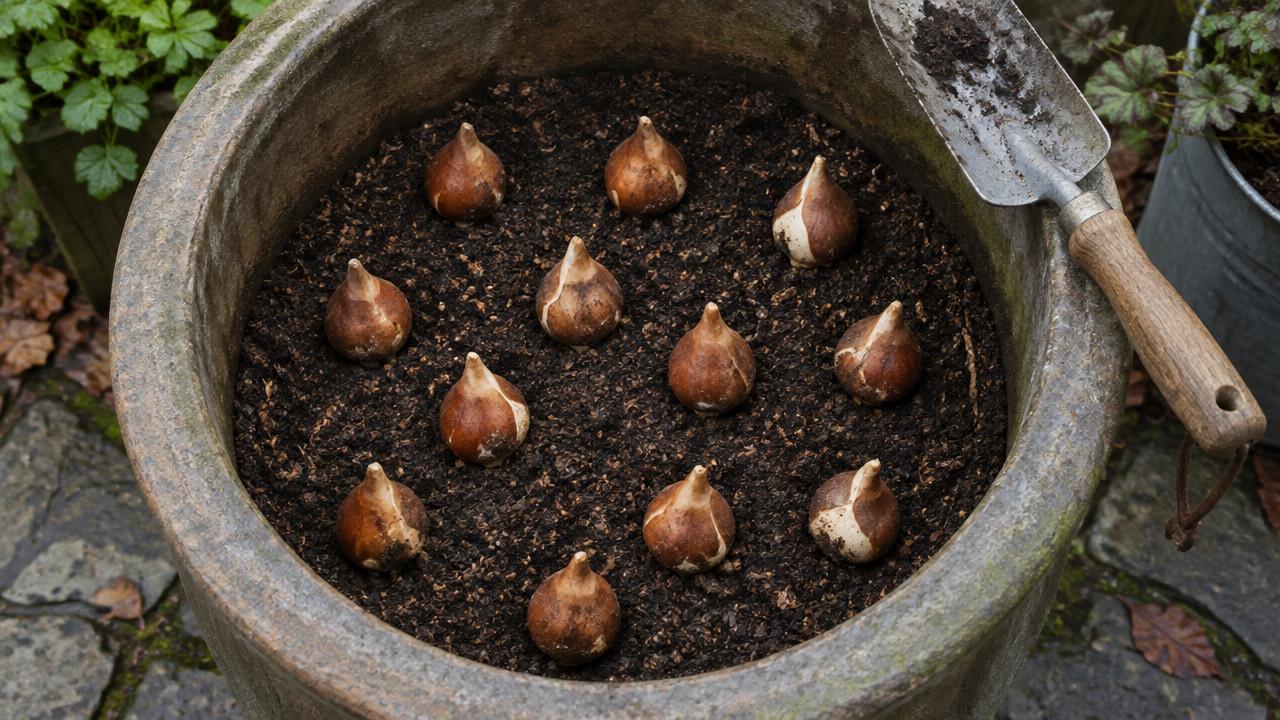
The RHS method for planting bulbs in a pot is simple. Use a container at least 30cm wide and deep with drainage holes in the base, put at least 10cm of compost in the bottom, set the bulbs on it pointed end up, then cover them completely with more compost. Water well afterwards to settle the compost, and stand the pot outside in a sunny spot.
The compost depends on how long you want the display to last. For border tulips treated as one-season bedding, the RHS recommends three parts peat-free multipurpose compost to one part grit. If you plan to keep the tulips in the same pot for more than a season, it suggests three parts peat-free loam-based compost to one part grit. Specialist tulips need sharper drainage again, so the RHS suggests two parts loam-based compost to one part grit, a layer of sharp sand under the bulbs to help prevent rot, and a top-dressing of grit.
Drainage is the part most likely to go wrong over a wet winter. Raise the pot on feet or bricks (see container growing fundamentals) so water can escape, and if the compost becomes sodden in a long spell of rain, the RHS advises moving the pot somewhere sheltered until it dries out. A pot under the eaves or against a house wall usually stays drier than one in the open.
How deep to plant
The RHS rule for tulips is the same as for most bulbs. Plant them at two to three times their own height, pointed end up, and in cold areas a little deeper to protect them from hard frost. In a pot, that usually means a good layer of compost below the bulbs and the same depth or more above them, which is another reason to use a deep container.
There is one wrinkle worth knowing. In its advice on tulips that fail to flower, the RHS says the usual cause is shallow planting, and suggests replanting at least three times the bulb's depth in the ground. If your tulips come up blind, or you want them to last more than one season in a border, err towards the deeper end.
Layering tulips with other bulbs
The RHS suggests layering two or three tiers of bulbs for a fuller pot, often called a bulb lasagne. Tulips usually go in the bottom layer because they are planted deepest and flower relatively late, with smaller, earlier bulbs above them. Our complete guide to planting bulbs explains how to build one and why it is worth offsetting each layer rather than stacking bulbs directly on top of each other.
You can also underplant rather than layer. The RHS suggests forget-me-nots, pansies, wallflowers and primroses as low companions for tulips, which fill the gaps in winter and early spring and hide the tulip foliage as it starts to fade.
Planting tulips in borders
If you have a border or a bed, the same rules apply with more space. The RHS recommends spacing bulbs at least twice their width apart, planting in odd-numbered groups for a natural look, and buying 25 to 50 bulbs for every square metre for a strong display. If you plant 25 or fewer per square metre, it suggests underplanting with spring bedding to avoid gaps.
Tulips prefer neutral to alkaline soil and full sun, and they do not like ground that stays waterlogged. For bedding tulips the RHS says the soil does not need to be perfect, as long as it is not waterlogged, but it notes that waterlogging is common on poorly drained or compacted heavy soil. On heavy clay, a raised bed or a pot is often the easier option. The RHS says that if your soil is below pH 6, lime can be added to raise it. Our guide to soil and compost pH explains how to check. If a patch of ground has had tulips with a bulb rot such as sclerotinia or grey bulb rot, the RHS advises not planting tulips there again for five years, or for at least three years after tulip fire.
Over winter
Once planted, tulips need very little until spring, but there are two things to watch. The first is wet. Pots that stay sodden for long periods risk rotting the bulbs, so check drainage holes are clear and move waterlogged pots under cover.
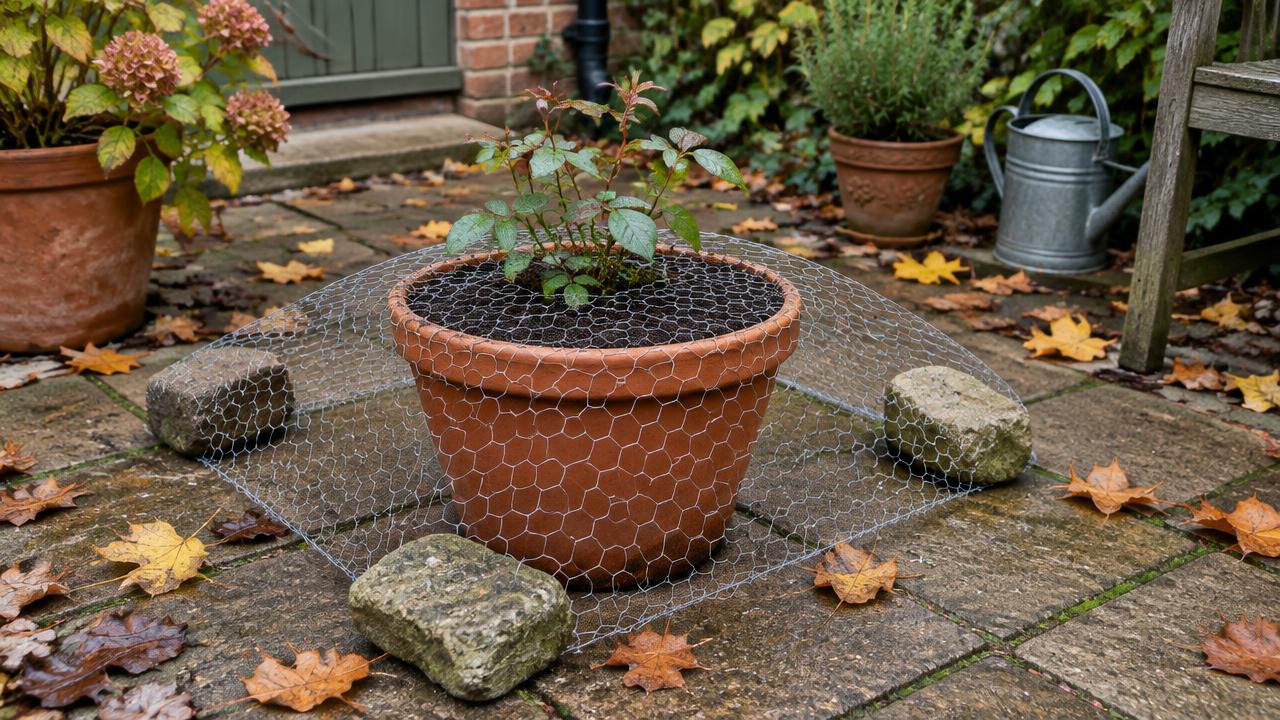
The second is squirrels. They are most likely to dig up tulips soon after planting, while the compost is freshly disturbed. The RHS advises covering pots with chicken wire, and in the ground covering bulbs with chicken wire until the leaves emerge, using sprigs of holly as a deterrent, or interplanting with daffodils, which squirrels avoid. Check any netting regularly so that birds and other animals cannot become trapped in it.
Spring care
From February, or as soon as the leaves appear, keep tulips in pots well watered, because the RHS notes that dry conditions at this stage can reduce flowering. In the ground they need watering only in prolonged dry spells of more than two to three weeks.
Whether to feed depends on your plans. The RHS says tulips grown as bedding, with the bulbs thrown away after flowering, do not need feeding at all. If you want them to flower again, it suggests feeding weekly with a potassium-rich liquid feed, such as tomato feed (more on feeding), from March once growth is under way, and stopping when the leaves begin to yellow. Slugs can damage foliage and flowers in early spring, so keep an eye on young shoots.
If you want tulips for the house, the RHS advises picking border tulips when the buds show colour but have not fully opened.
After flowering: keep, lift or replace
What you do next depends on the decision you made when you bought them. If you are treating border tulips as bedding, enjoy them, then lift and compost them once they finish and plant fresh bulbs in the autumn. If you want to try for a second year, the RHS advice is to deadhead them by cutting off the seedheads just above the leaves, keep feeding, and leave the foliage until it has turned yellow and straw-coloured.
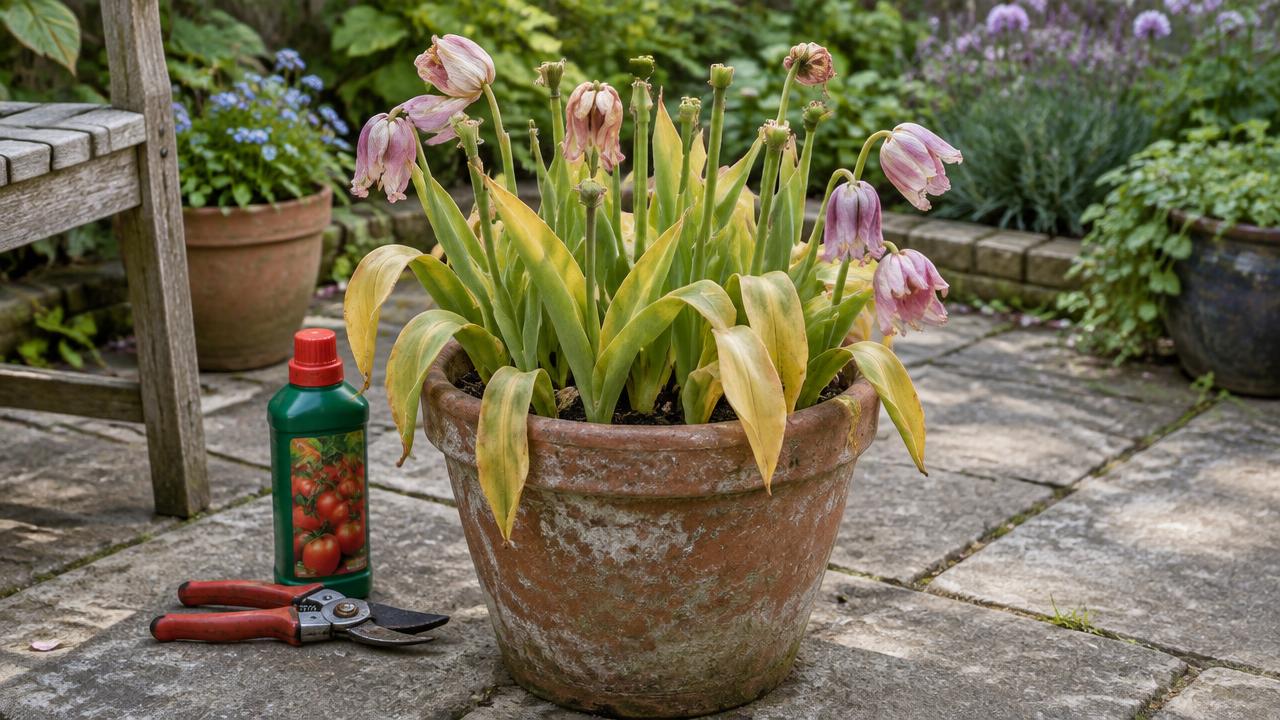
To lift and store bulbs, the RHS suggests waiting until the foliage yellows, about six weeks after flowering. Clean off the soil, discard any bulbs that are damaged, mouldy or soft, and dry the rest until the skins are papery. Store them in trays or net or paper bags in a warm, dark, well-ventilated place at 18 to 20°C, then replant in autumn. The RHS adds that replanted bulbs are best used in less prominent spots, with new bulbs bought for the places where the display matters most.
Specialist tulips are different. In good conditions they can stay where they are, and the RHS notes that you can leave their seedheads to ripen if you want to collect seed. Small offsets taken when lifting can be replanted at least 20cm deep, though the RHS says they may take three to four years to flower.
Common tulip problems
Tulip fire is the one most gardeners meet. The RHS describes leaves that twist and distort soon after emerging, brown spots that can spread until the plant looks scorched, and in damp weather a fuzzy grey mould. The fungus survives in the soil and on the outer scales of bulbs, and spreads between plants on airborne spores, especially in a long, wet spring.
The RHS advice is to inspect bulbs before planting, remove infected plants promptly so the soil is not contaminated, and not to plant tulips for at least three years where tulip fire has occurred. It also advises spacing bulbs adequately in places with good air circulation, avoiding crowded spots by fences where the air stays still and humid. That sits uneasily with packing a pot for display, so if you have had tulip fire before, give pots an open, airy position. Stem and bulb eelworm can cause similar distortion.
Streaking or spotting on the petals may indicate a tulip virus, tulip fire or grey mould, while bulb rots, including sclerotinia and grey bulb rot, mean removing affected plants promptly and keeping tulips out of that spot for five years. Aphids can attack stored bulbs as well as growing leaves, so check bulbs before storing and again before replanting.
If tulips come up with leaves but no flowers, the RHS points to shallow planting as the usual cause and suggests replanting deeper and feeding with tomato fertiliser while they are growing. Short stems are more often down to late planting or a mild winter.
A note on safety
The RHS warns that tulip bulbs can cause skin allergies, so wear gloves if you are sensitive, and that all parts of the plant can cause stomach upset if eaten. Its plant pages also list tulips as harmful to pets. Keep bulbs out of reach of children and pets while you are planting, and do not leave loose bulbs lying around.
FAQ
When is the best time to plant tulips?
The RHS gives September to November, and November is the traditional choice, partly because cooler soil is thought to reduce the risk of tulip fire. Avoid leaving them much later, as very late planting can lead to short stems.
How deep should I plant tulips in a pot?
At two to three times the bulb's height, pointed end up, with compost both below and above the bulbs. Plant a little deeper in cold areas, and use a deep pot so there is room to do it.
How many tulip bulbs go in a pot?
The RHS suggests around 12 bulbs in a 45cm wide pot, or up to 20 for a fuller display, spaced about a finger's width apart.
Do tulips come back every year?
Some do. Large border tulips usually flower well only in their first year, but Darwin hybrids and Kaufmanniana tulips are more likely to return, and species tulips often multiply in the right conditions.
Can I leave tulips in pots after flowering?
Yes, if you deadhead them, keep feeding and let the leaves die back naturally, especially if the pot is filled with loam-based compost and grit. Many gardeners lift them instead, or treat border tulips as bedding and replace them.
Why didn't my tulips flower?
The RHS says shallow planting is the most common cause. Replant deeper and feed with a high-potassium feed while they are in growth.
FURTHER READING
- Getting Started
The Complete Guide to Planting Bulbs
- Getting Started
Container Growing Fundamentals
- Guides
What to Plant for Drier Summers and Wetter Winters in Britain
RELATED POSTS
Robin is a small-space grower writing for everyone working with a courtyard, balcony, window box, patio or sunny sill. Edible and leafy, both kept alive in the kind of light real small spaces actually get.
✦ Free with the newsletter — the small-space starter sheet
Grow Anywhere — a free weekly email.
The Potted Club newsletter. A short note from Robin — what to sow, one plant problem solved, and the best new guide.
FREE WEEKLY EMAIL · NO SPAM · UNSUBSCRIBE ANYTIME