What Should You Do With Lavender After It Flowers
Your lavender looked fantastic in June and July. Now it's grey, leggy and covered in dead flower stalks. What to actually cut, the one place you should never cut, and how a potted lavender needs different treatment to one in the ground.
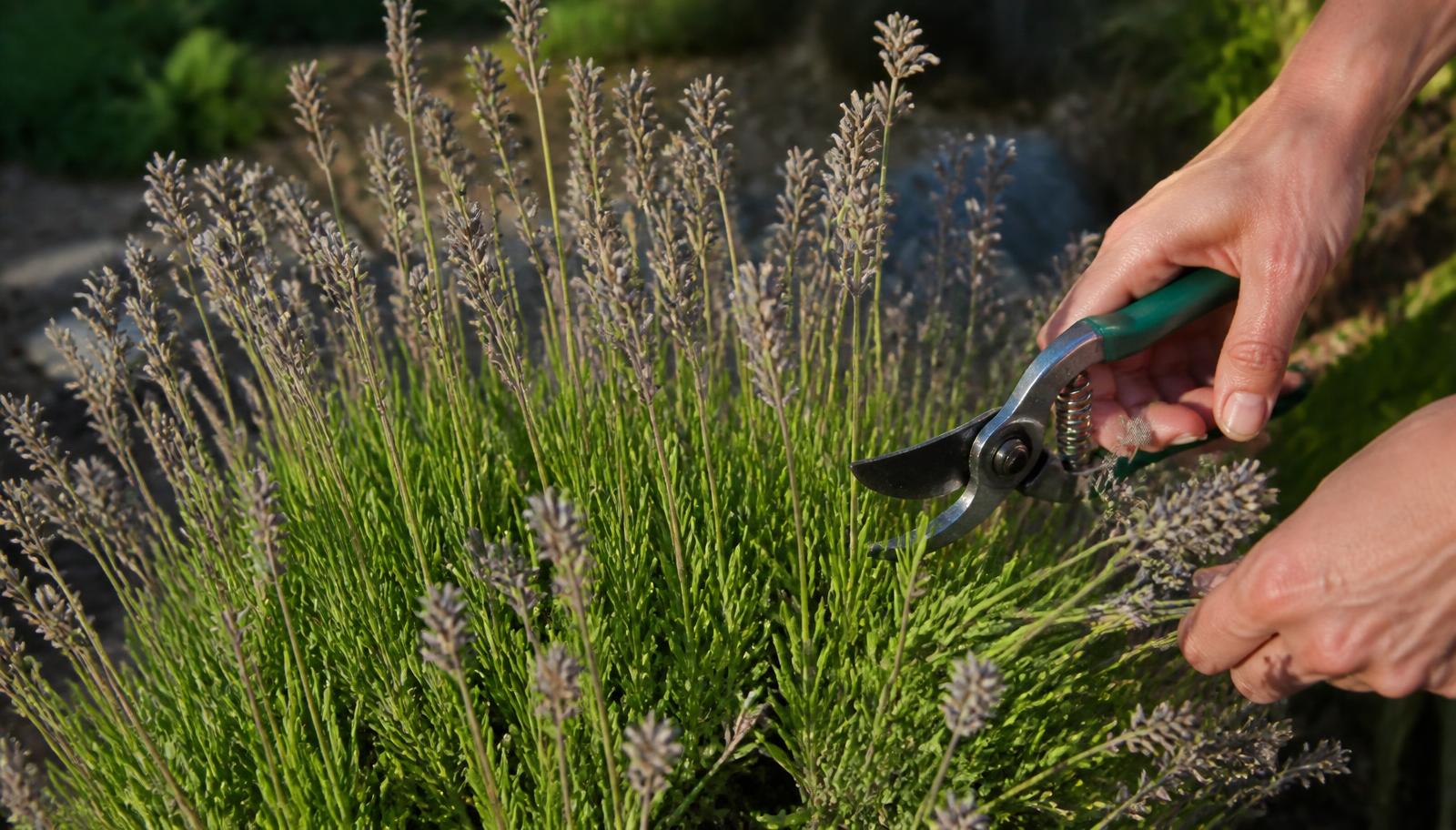
Don't leave it until spring
Your lavender looked fantastic in June and July. Now it's grey, leggy, and covered in dead flower stalks, and it's tempting to leave it until spring and deal with it then. Don't. Late summer, right after flowering finishes, is genuinely the correct time to prune lavender, not a job that can wait for the new year without cost.
Yes, you should prune lavender after flowering
Left unpruned, lavender becomes bare and straggly surprisingly fast, often within just a couple of neglected seasons. Annual pruning keeps the plant compact, encourages the dense, bushy shape that makes lavender worth growing in the first place, and genuinely extends how long the plant stays productive before it gets old and woody. Skipping it for even a year or two makes the eventual correction harder, since more of the plant ends up as unproductive old wood. It sits alongside the other jobs in our list of small-space plants to cut back now.
First, identify your lavender
No need for a botany lesson here, just enough to know which treatment applies.
English lavender (Lavandula angustifolia) is the hardier type, well suited to UK conditions generally, with compact varieties like 'Hidcote' particularly popular for pots. It flowers once, in a single flush through June and July.
French lavender (Lavandula stoechas), recognisable by the little rabbit-ear petals on top of each flower spike, is less hardy and flowers more or less continuously from May through September rather than in one flush.
Lavandin, a hybrid between the two, sits somewhere in between and is generally treated the same way as English lavender.
If your plant flowered once and stopped, treat it as English lavender. If it's been producing flowers on and off all summer, it's more likely French. The RHS lavender pruning advice is a useful cross-check if you've lost the label.
How to prune English lavender
Remove the spent flower stalks plus around 2.5cm of the leafy growth beneath them, across the whole plant. This is a proper all-over trim, not a light tidy, and it should leave the plant looking noticeably smaller and neater than before.
The one place you should never cut
This is the single most important thing to get right. Never cut into the old, bare, woody stems lower down the plant. Lavender doesn't reliably regrow from old wood, so a cut made into brown, woody growth rather than green leafy growth simply leaves a dead stub, with nothing sprouting from that point again. Always keep your cut within the green, leafy part of the plant, and leave the woody base entirely untouched. This one rule is the difference between a lavender that stays full and productive for years and one that ends up patchy and bald in the middle after a single overzealous prune.
What about French lavender?
French lavender wants a lighter touch. Deadhead spent flower spikes as they finish through the season, since it flowers continuously rather than in one burst, and this keeps it tidy and encourages further flowering — the same logic covered in should you deadhead, or let it go to seed. A more general trim, similar in principle to the English lavender approach but generally lighter, is worth doing once its main flowering season has properly wound down for the year. Because French lavender is less hardy, growing it in a container has a real practical advantage: you can move it somewhere more sheltered for winter, which isn't an option for one planted directly in the ground.
Can pruning make lavender flower again this year?
Worth a nuanced answer rather than a promise. For English lavender, the late-summer prune is about shaping the plant and setting it up well for next year's flush, not triggering a second flowering this season; once it's finished for the year, it's finished. French lavender, because it flowers over a longer continuous period, does respond to regular deadheading with continued flowering through the rest of its season, so the lighter, ongoing approach genuinely does encourage more blooms while the season lasts.
What should you do with the cut flowers?
Rather than composting the trimmings, spent lavender flower stalks are genuinely worth hanging in small bunches somewhere dry and dark for a couple of weeks. Once fully dried, they hold their scent for months and make a simple, free addition to a drawer, a small dried arrangement, or a homemade sachet, a nice small return on a job that's otherwise pure maintenance.
Lavender in pots needs different treatment
This is where growing lavender in a container genuinely differs from growing it in open ground, and it's worth taking seriously rather than treating pot-grown lavender identically to a border plant.
- Drainage matters more than almost anything else. Lavender hates sitting in wet compost, and a container concentrates that risk since there's no surrounding soil to help disperse excess moisture. Use a free-draining compost, ideally with some horticultural grit mixed in, and make sure the pot has proper drainage holes — container growing fundamentals covers this in detail.
- Watering should lean toward the sparse side. As covered in our feeding guide and watering guide, lavender is adapted to poor, dry conditions and genuinely prefers being slightly underwatered to being kept consistently moist.
- Container size affects how well the plant copes with both drought and cold; a larger pot buffers temperature and moisture swings better than a small one, so size up if you can, particularly for a plant you intend to keep for several years.
- Exposed balcony positions dry out faster and expose roots to more cold than a sheltered spot, so factor that into both watering frequency and winter planning.
Should you feed lavender after pruning?
Generally, no, or only very lightly. As covered in our feeding guide, lavender is one of the few plants where doing less is genuinely closer to correct. Heavy feeding pushes soft, lush growth at the expense of the tight, compact, well-flowering habit lavender is actually grown for. If you feed a container lavender at all, keep it light and infrequent, well short of what you'd give a hungry edible crop in the same size pot.
Preparing a potted lavender for winter
Shelter and drainage matter more than warmth as such. Move containers to a more sheltered position for winter if you can, against a wall or under some cover, protecting them from the excessive rain that's the real threat to a potted lavender's roots over winter, more so than cold itself. A pot that's constantly saturated through a wet winter is far more likely to lose a lavender plant than one that's simply cold but well drained.
When an old, woody lavender isn't worth saving
Even a lavender pruned correctly every single year eventually becomes straggly, heavily woody, and misshapen, since it's a naturally fast-growing, relatively short-lived plant rather than something that improves indefinitely with age. When a plant reaches that point, replacing it is genuinely often the better option rather than continuing to nurse an increasingly bald, unproductive specimen. Lavender establishes quickly from a young plant, so starting again isn't the setback it might feel like.
FAQ
When should lavender be cut back?
Late summer, immediately after flowering has finished, is the right time for the main annual prune. Don't leave it until spring, since a full year of unpruned growth makes the eventual cutback more severe.
How far can I cut lavender back?
Remove the spent flower stalks plus roughly 2.5cm of leafy growth. Never cut back into the old, bare, woody stems beneath, since lavender rarely regrows from old wood.
What happens if I cut into old wood?
The cut area typically won't regrow, leaving a dead, bare stub. This is the most common way a lavender ends up patchy and bald in the middle over time.
Will lavender flower again after I prune it?
For English lavender, the late-summer prune shapes the plant for next year rather than triggering a second flowering this season. French lavender, deadheaded regularly through its longer flowering period, does respond with continued blooms while its season lasts.
Can lavender survive winter in a pot?
Yes, generally, but it's more vulnerable to cold and especially to wet compost than lavender planted in open ground. Move containers somewhere sheltered and prioritise good drainage over winter.
Why has my lavender gone woody?
Usually a lack of regular annual pruning, or age. Even well-cared-for lavender becomes woody and less productive after several years, and replacing an old, heavily woody plant is often more effective than trying to rejuvenate it.
READ THE FULL GUIDE
Container Growing Fundamentals →
RELATED POSTS
Robin is a small-space grower writing for everyone working with a courtyard, balcony, window box, patio or sunny sill. Edible and leafy, both kept alive in the kind of light real small spaces actually get.
✦ Free with the newsletter — the small-space starter sheet
Grow Anywhere — a free weekly email.
The Potted Club newsletter. A short note from Robin — what to sow, one plant problem solved, and the best new guide.
FREE WEEKLY EMAIL · NO SPAM · UNSUBSCRIBE ANYTIME