Is Your Plant Dead, or Just Protecting Itself From Drought
Wilting isn't the only way a plant defends itself from drought. Curling leaves, dropping fruit, shedding foliage and dormancy can all be survival strategies.
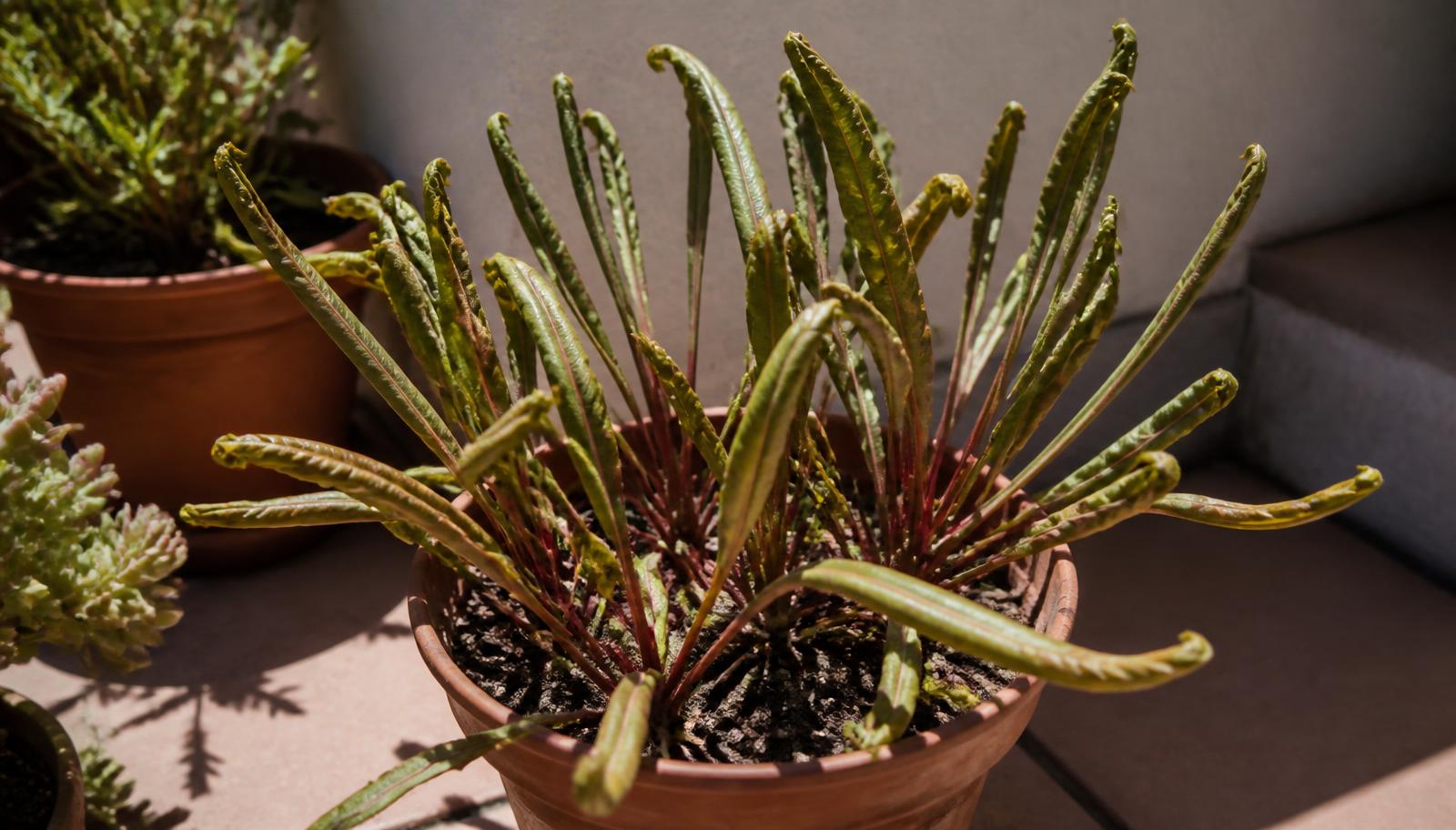
The alarm and the strategy
A brown lawn, a curled-up leaf, a rose dropping its buds mid-bloom, a tomato plant shedding fruit it hasn't finished ripening.
All of these look like failure.
Often, they aren't.
Plants have evolved several ways of responding when water becomes scarce. They can reduce growth, close down water loss, abandon flowers or fruit, shed leaves and, in some cases, effectively stop visible growth altogether until conditions improve.
They're different versions of the same basic strategy: use fewer resources now to increase the chances of surviving until conditions get better.
Knowing what you're looking at matters. Otherwise, it's very easy to give up on something that could recover, or panic and make the real problem worse.
Why plants appear to "give up"
Plants lose water largely through tiny openings in their leaves called stomata. These openings are essential; plants need them to exchange gases with the atmosphere, including taking in the carbon dioxide required for photosynthesis. But opening them also allows water vapour to escape.
When water becomes scarce, one of a plant's first responses is therefore to close its stomata. That reduces water loss but also restricts photosynthesis and slows growth.
If the stress continues, other responses can follow. Depending on the species and conditions, a plant may reduce investment in flowers and fruit, curl its leaves, shed foliage or stop producing visible new growth. Some plants can go considerably further and enter dormancy.
What looks to us like a plant deteriorating can therefore be part of an organised attempt to stay alive.
Five ways drought can show itself
Wilting
This is the obvious one. Leaves and soft stems depend partly on water pressure inside their cells to remain rigid. When a plant loses water faster than its roots can replace it, that pressure falls and the plant begins to wilt.
Temporary wilting during the hottest part of a day isn't necessarily catastrophic. Some plants can recover as temperatures fall and water demand decreases. Persistent wilting is more concerning.
But before reaching for the watering can, check the compost. A waterlogged plant can wilt too. Roots deprived of oxygen or damaged by rot can't take up water properly, meaning the foliage can show symptoms remarkably similar to drought. It's the same finger test that underpins how to water your plants properly.
The symptom tells you the plant isn't moving enough water. It doesn't automatically tell you why.
Leaves curling or rolling
This can look dramatic. Leaves fold, roll inwards or curl along their length, sometimes making a previously lush plant look considerably smaller.
For some plants, that's exactly the point. Reducing the amount of leaf surface exposed to direct sun and drying air can help limit water loss. Some grasses and broad-leaved plants use leaf rolling as part of their response to water stress.
It's therefore possible to see badly curled foliage on a plant that is still very much alive. Again, context matters. Leaf curling has other causes, including pests, disease and heat stress, so dry compost and hot conditions make drought a more convincing explanation than the appearance of the leaf alone.
Yellowing and dropping leaves
Sometimes a plant deals with water shortage by having fewer leaves to support. Drought stress can accelerate leaf yellowing and shedding, reducing the total leaf area from which the plant is losing water.
That doesn't mean every yellow leaf is caused by drought. Overwatering, nutrient problems, natural ageing and other stresses can produce the same symptom — why are my leaves turning yellow walks through reading the pattern. But during a prolonged dry spell, particularly when several older leaves begin yellowing and dropping, water stress belongs high on the list of possibilities.
Even established trees can shed foliage early during severe drought, as we covered in why trees are dying in this heatwave. The individual leaf is lost. The plant may be protecting something more important.
Dormancy
This is perhaps the most convincing impersonation of death. An established lawn can turn almost entirely brown during prolonged dry weather. Many grasses respond to drought by becoming dormant, reducing active growth until sufficient moisture returns — the reason you rarely need to water a lawn in summer. Some herbaceous plants can also die back substantially above ground while retaining living tissue below.
That's why brown doesn't automatically mean dead. But neither should dormancy be treated as invincibility. Severe or sufficiently prolonged drought can cause genuine damage, and container plants have a particularly small reservoir of water available to them.
The important distinction is that absence of visible growth isn't by itself proof that the whole plant has died.
Dropping flowers, buds or fruit
This one can be particularly frustrating. A plant has spent weeks producing flowers or developing fruit, only to drop them during a hot, dry period.
But reproduction requires resources. Under stress, plants can abort flowers, buds or developing fruit rather than continuing to invest water and energy in them.
Tomatoes, peppers and many flowering ornamentals can all respond to environmental stress with flower or fruit drop, although drought isn't the only possible cause. Extreme heat can interfere with pollination and fruit set independently of water availability.
The important point is that losing this year's flowers or fruit doesn't necessarily mean you're losing the plant.
The five responses at a glance
| What you see | What may be happening | What to do |
|---|---|---|
| Wilting | Water loss is exceeding uptake | Check the compost before watering |
| Curled or rolled leaves | The plant may be reducing exposed leaf area | Check moisture, heat and exposure |
| Yellowing and leaf drop | Foliage may be being shed under stress | Correct the underlying water problem and monitor |
| Apparently dead top growth | Some plants may have entered dormancy | Check for viable tissue before removing the plant |
| Flowers, buds or fruit dropping | Reproductive growth may be sacrificed during stress | Restore consistent care rather than trying to force flowering or fruiting |
Your pot may be making the heat worse
For container gardeners, drought stress isn't just about how much water is in the compost. It's also about temperature and exposure.
A pot sitting on paving beside a south-facing brick wall can experience considerably harsher conditions than the temperature on the weather forecast suggests. Dark containers can heat strongly in direct sunshine. Walls and paving radiate stored heat, while an exposed balcony may add persistent drying wind. The root system has nowhere else to go — one of the core points in container growing fundamentals.
So if a plant repeatedly wilts despite the compost containing moisture, consider its environment as well as reaching automatically for more water. Moving a vulnerable container out of fierce afternoon sun during extreme heat can sometimes be more useful than another watering.
How to tell whether it's actually dead
There isn't one infallible test that works for every plant. But there are clues.
Flex the stem. On many plants, living stems retain some flexibility. A stem that is completely dry, brittle and snaps immediately may have died. But remember what you're testing: that stem. A shrub can have dead outer growth while remaining alive further down.
Look at the buds. Viable buds are one of the most reassuring things to find on a woody plant. They may be small and inactive, particularly while the plant is stressed, but their presence can indicate living growth points remain.
Try a careful scratch test. On an appropriate woody stem, lightly removing a tiny amount of the outer bark can reveal the tissue underneath. Green, moist-looking tissue suggests that section is still alive. Dry brown tissue suggests that particular section has died back. Don't repeatedly scrape stems looking for life; one or two small checks are enough. And don't extrapolate too far from the result. Finding a dead twig doesn't mean the roots are dead. Equally, finding green tissue somewhere on a badly stressed shrub doesn't guarantee the entire plant will recover.
Look lower down. If upper growth has died back, inspect the plant closer to its base. Some shrubs and perennials can lose substantial top growth while retaining viable tissue lower down or below ground. This is another reason not to throw a plant away simply because its uppermost stems look terrible.
What not to do
A stressed plant tends to provoke intervention. Sometimes too much of it.
Don't flood it. If the compost is genuinely dry, the plant needs water. It doesn't need punishment. Water thoroughly enough to rehydrate the root ball, then allow excess water to drain rather than leaving the pot indefinitely saturated. And if the compost is already wet, don't add more water simply because the foliage is wilting. The RHS drought and watering advice makes the same point: slow, thorough soaking beats frequent light sprinklings.
Don't feed it. Fertiliser isn't medicine. A severely drought-stressed plant isn't asking for rapid new growth. Correct its water and environmental conditions first. Feeding can wait until the plant is actively growing again — feeding plants properly covers when to restart.
Don't immediately cut everything back. Dead material can eventually be removed, but avoid hard pruning simply because the plant looks miserable after a heatwave. Some apparently poor growth may still contain viable tissue. Wait until you're reasonably confident what is dead and what isn't.
Don't give up too quickly. Recovery isn't always immediate. A plant may continue to shed leaves that were already damaged before you corrected the problem, and dormant plants won't necessarily spring visibly back to life after one watering. Look for signs of viable tissue and improving conditions rather than expecting an overnight transformation.
When compost won't take the water
There's another problem that's particularly common in containers.
Potting compost that's been allowed to become extremely dry can shrink away from the sides of the pot and become difficult to re-wet. You pour water onto the surface. Seconds later, it appears at the bottom. It looks as though you've watered thoroughly, but much of the water may simply have travelled around the outside of the dry root ball.
Apply water gradually and give the compost time to absorb it. For smaller containers that have become severely dry, temporarily standing or immersing the pot in water can help rehydrate the root ball properly — the same approach as rescuing plants that dried out while you were away. Once it has taken up moisture, allow it to drain.
If the problem keeps returning, the plant may have become root-bound or the compost may need refreshing. At that point, you're dealing with a container problem as much as a drought problem, and the complete guide to repotting is the better place to start.
When it really is dead
Unfortunately, drought protection has limits.
If stems are brittle and dead progressively down the plant, there's no viable tissue where you'd reasonably expect to find it, the crown or root system has deteriorated, and appropriate watering and improved conditions produce no evidence of recovery, the plant may genuinely have died. That's particularly possible in a small container where the root ball has been allowed to dry completely during extreme heat.
The aim isn't to assume every brown plant is secretly fine. It's to avoid assuming that brown means dead before you've actually checked.
A plant under drought stress can sacrifice a surprising amount above ground and still retain what it needs to recover. Sometimes the best rescue technique isn't another product, another feed or another intervention. It's water, better conditions and a little patience.
FAQ
How do I know if my plant is dormant or dead?
Look for viable tissue rather than relying on appearance alone. On woody plants, flexible stems, living buds and green tissue immediately beneath the bark can all provide clues. Some plants can lose their visible top growth while remaining alive lower down.
Why are my plant's leaves curling?
Drought and heat stress can cause some plants to curl or roll their leaves, helping reduce exposed leaf area and water loss. But pests and disease can also cause curling, so check the plant and compost rather than diagnosing drought from the leaf shape alone.
Should I water a plant that's dropping flowers or fruit?
Check the compost first. If it's dry, restore consistent watering rather than flooding the plant. Flower and fruit drop can occur under drought or heat stress, but there are other possible causes too.
Should I feed a drought-stressed plant?
Not immediately. Correct the water problem first and allow the plant to recover. Feeding is better resumed once healthy active growth returns.
Can a completely brown plant come back?
Sometimes. Dormant lawns and some herbaceous plants can look entirely brown above ground while retaining viable tissue. Woody plants may also die back partially rather than completely. Check for living tissue before deciding the plant is lost.
READ THE FULL GUIDE
How to Water Plants Properly →
RELATED POSTS
Robin is a small-space grower writing for everyone working with a courtyard, balcony, window box, patio or sunny sill. Edible and leafy, both kept alive in the kind of light real small spaces actually get.
✦ Free with the newsletter — the small-space starter sheet
Grow Anywhere — a free weekly email.
The Potted Club newsletter. A short note from Robin — what to sow, one plant problem solved, and the best new guide.
FREE WEEKLY EMAIL · NO SPAM · UNSUBSCRIBE ANYTIME