Why Are My Leaves Turning Yellow
Yellow leaves are a symptom, not a diagnosis, and they can mean almost opposite things depending on the pattern. How to actually work out whether it's watering, light, feeding, pests, or nothing to worry about at all.
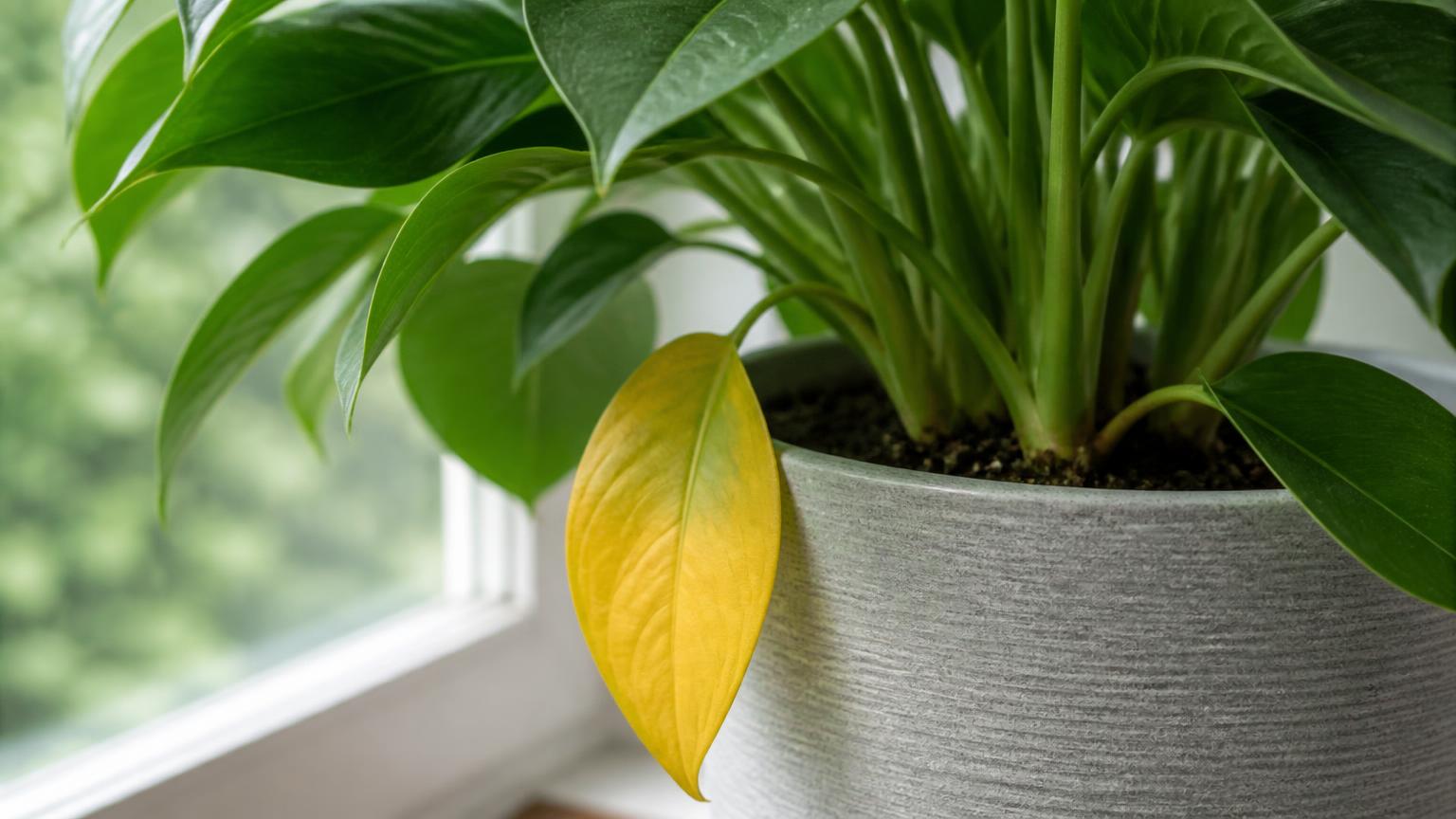
A symptom, not a diagnosis
Yellow leaves are probably the single most common plant complaint there is, and also one of the least useful on its own, because almost every major thing that can go wrong with a plant can show up as yellowing. Too much water and too little water both cause it. Too much light and too little light both cause it. A missing nutrient causes it. Simple old age causes it. Treating "yellow leaves" as if it names one problem is how a lot of well-meaning fixes end up making things worse, most often by adding more water to a plant that's already drowning.
The genuinely useful question isn't "why are my leaves yellow," it's "where on the plant, and in what pattern." That's what actually narrows things down.
Check location and pattern first
Old, lower leaves only, one or two at a time. This is very often completely normal. Plants naturally shed older leaves as they age, redirecting resources to new growth. A single lower leaf yellowing and dropping occasionally on an otherwise healthy, actively growing plant isn't a problem to solve.
Lower leaves yellowing more broadly, several at once, often soft or mushy. This points toward overwatering. Roots sitting in consistently wet compost can't take up nutrients properly, and the plant sheds lower leaves as a stress response.
New growth pale or yellow, older leaves fine. Points toward a nutrient issue, most commonly nitrogen, or occasionally insufficient light.
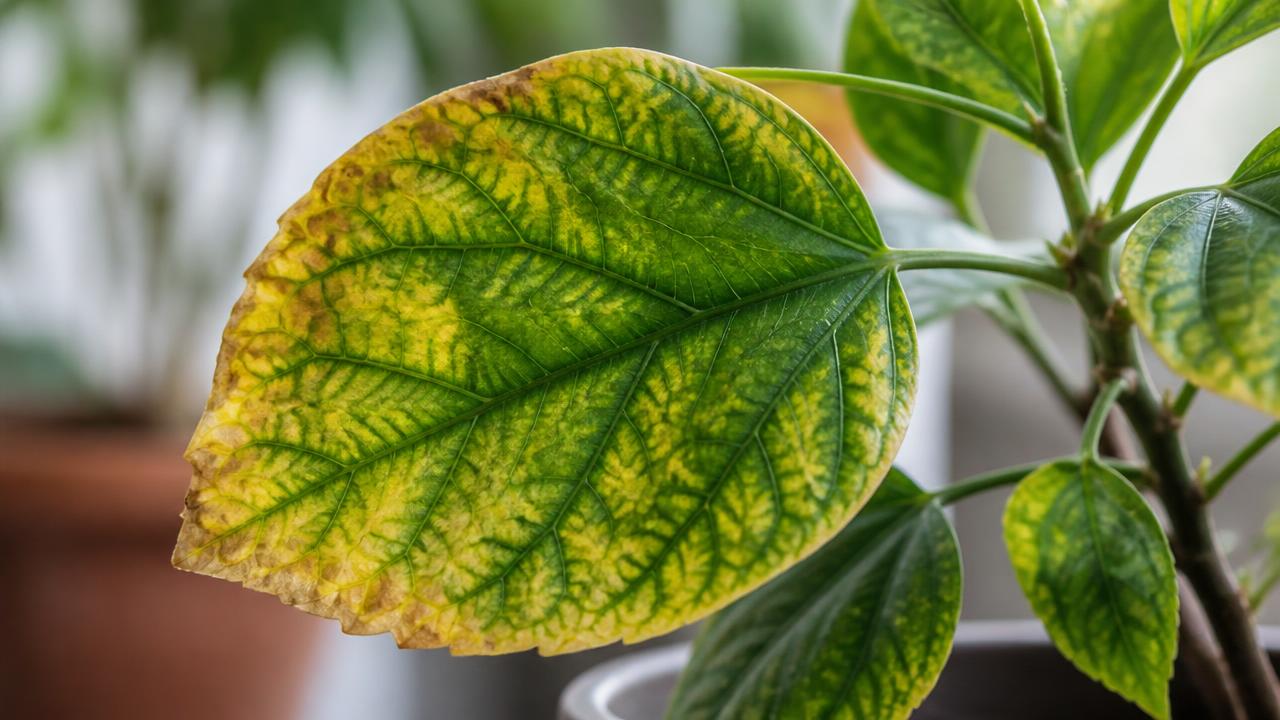
Yellowing between the leaf veins, with the veins themselves staying green. A distinctive pattern called chlorosis, usually caused by an iron or trace element deficiency, often linked to the plant being in the wrong soil pH for what it needs, particularly common on acid-loving plants like camellias or blueberries grown in ordinary compost rather than ericaceous.
The whole plant yellowing evenly, all at once. Can point toward a serious watering problem (either extreme), root rot, or a sudden environmental shock like a cold draught or a recent house move.
Yellowing combined with crispy, dry leaf edges. Points toward underwatering or heat and light stress rather than a watering-too-much or nutrient problem.
The main causes, properly explained
Overwatering is the single most common cause of yellow leaves, more common than underwatering despite the instinct running the other way. Roots need air as well as water, and compost that stays constantly wet suffocates them, eventually causing rot. An overwatered plant often looks thirsty (wilting, yellowing) which triggers more watering, making things worse. Always check the compost before adding water; if it's still damp, the plant doesn't need more, whatever the leaves look like. Our watering guide covers this trap in full.
Underwatering, by contrast, tends to produce yellowing combined with dry, crispy, curling leaves, and compost that's visibly pulled away from the sides of the pot. The fix here is straightforward once correctly diagnosed: a thorough, proper watering, ideally by standing the pot in water briefly if the compost has dried out hard enough to repel water poured on top.
Nitrogen deficiency produces general, even pale yellowing, usually starting with older leaves as the plant redirects its limited nitrogen to newer growth. As covered in our feeding guide, this is straightforwardly fixed with a balanced or nitrogen-leaning feed, and is more likely if a plant hasn't been fed in some time or is a fast-growing, hungry type. For houseplants specifically, how often to feed is a more common source of confusion than what to feed with.
Iron or trace element deficiency (chlorosis) shows the distinctive veins-stay-green pattern described above, and is often less about the compost lacking iron entirely and more about pH: at the wrong soil pH, a plant simply can't access iron that's present in the compost. This is particularly common with acid-loving plants (camellias, blueberries, rhododendrons) grown in ordinary rather than ericaceous compost. The fix is switching to the right compost type or using an iron supplement formulated for this specific problem. The RHS notes on chlorosis go into more detail on the pH side of it.
Insufficient light causes new growth to emerge pale, small, and sometimes yellow, alongside a generally leggy, stretched appearance as the plant reaches for more light. Moving the plant somewhere brighter, gradually rather than into sudden direct sun, resolves this over the following weeks.
Too much direct light and heat, covered in depth in our piece on houseplants in a heatwave, produces yellowing combined with scorched, crispy patches, usually on the side of the plant facing the strongest sun. Moving the plant back from direct glass or harsh sun is the fix, not treating it as a watering or feeding problem.
Transplant shock, as covered in our repotting guide, can cause some yellowing and leaf drop in the one to two weeks after repotting, which usually resolves on its own as the plant settles into fresh compost. It becomes a concern only if it continues well beyond that window.
Pests, particularly spider mites and scale insects, can cause yellowing alongside other telltale signs (fine webbing, small immobile bumps on stems, a generally dull or stippled look to leaves). Our pests and diseases guide covers diagnosing and treating these properly; check the underside of leaves and along stems if yellowing doesn't fit any of the watering, light or feeding patterns above.
Root rot, usually the end stage of prolonged overwatering, causes widespread, often sudden yellowing across the whole plant, sometimes with a sour smell from the compost. If you suspect this, tip the plant out and check the roots: healthy roots are firm and pale; rotten roots are dark, mushy, and often smell unpleasant. Badly affected roots need trimming away, and the plant repotted into fresh, well-draining compost, with watering scaled right back afterwards.
Right now specifically: this has been a genuinely record-breaking summer, with the UK recording 35°C or higher in three separate months for the first time on record. If leaves have started yellowing only in the last few weeks, on a plant that was fine before, heat and light stress is a strong candidate before you assume anything else, particularly for anything sitting close to a sun-facing window or against a hot wall outdoors. Check for the specific pattern first: yellowing combined with crispy or scorched patches, worst on the side facing the sun, points to heat rather than a watering or feeding problem, and the fix is moving the plant, not treating the compost. Our guide to watering in the heat covers the other half of this.
Diagnostic table
| Pattern | Most likely cause | What to do |
|---|---|---|
| Single lower leaf, occasional, plant otherwise healthy | Normal ageing | Nothing; this is expected |
| Several lower leaves, soft or mushy, damp compost | Overwatering | Let compost dry out, check drainage |
| Yellowing with dry, crispy, curling leaves | Underwatering | Water thoroughly, check more often |
| New growth pale, older leaves fine, slow growth | Nitrogen deficiency | Switch to a balanced or nitrogen-leaning feed |
| Yellow between veins, veins stay green | Iron or pH-related deficiency | Check compost type; use ericaceous compost or iron supplement if needed |
| Pale, leggy new growth, stretching toward light | Insufficient light | Move to a brighter spot gradually |
| Yellowing plus scorched or crispy patches, sun-facing | Too much heat or direct light | Move back from direct glass or harsh sun |
| Mild yellowing 1-2 weeks after repotting | Transplant shock | Usually resolves on its own; keep conditions stable |
| Yellowing with webbing, stippling, or visible pests | Pest infestation | Diagnose and treat the specific pest |
| Sudden, widespread yellowing, sour-smelling compost | Root rot | Check roots, trim affected ones, repot and reduce watering |
Common mistakes
Watering more because leaves are yellow. The single most common mistake, since overwatering is actually the more frequent cause. Always check the compost before adding water, regardless of how the leaves look.
Treating every yellow leaf as an emergency. One lower leaf yellowing occasionally on a healthy plant is normal turnover, not a symptom requiring intervention.
Feeding a plant that's actually overwatered or root-bound. Feeding doesn't fix a watering or root problem, and can add further stress to roots that are already struggling.
Ignoring the pattern. Reaching for the same fix (usually more water, or more feed) regardless of where on the plant the yellowing appears, rather than reading the specific pattern for what it actually points toward.
Not checking the roots when yellowing is severe and sudden. Widespread yellowing that comes on quickly is worth investigating at the root level, not just treating the leaves you can see.
FAQ
Should I remove yellow leaves once I see them?
Yes, generally. A yellow leaf won't turn green again, and removing it lets the plant redirect energy elsewhere rather than trying to maintain a leaf that's already failing. Cut or gently pull it away close to the stem.
Is one yellow leaf a sign something is seriously wrong?
Not usually, especially if it's an older, lower leaf on a plant that's otherwise healthy and growing well. This is normal leaf turnover. Multiple yellowing leaves, or yellowing on new growth, is more worth investigating properly.
Why do my plant's leaves turn yellow even though I water it regularly?
Regular watering can still mean overwatering, if the plant is watered on a fixed schedule rather than checked first. Check the compost with a finger before assuming watering is fine; consistently damp compost, even from "regular" watering, is still overwatering if the plant doesn't need it yet.
How can I tell if yellow leaves mean too much or too little water?
Check the compost and the leaf texture together. Damp compost with soft, yellowing leaves points to overwatering. Dry compost with crispy, yellowing, curling leaves points to underwatering. The compost check is the more reliable of the two signals.
Why is my acid-loving plant's leaves yellow between the veins?
This is likely iron chlorosis, caused by the plant being unable to access iron at the wrong soil pH, commonly because it's growing in ordinary compost rather than the ericaceous compost acid-loving plants need. Repotting into the correct compost type usually resolves it over time.
Can cold cause yellow leaves?
Yes, a sudden cold draught or temperature drop, particularly for tropical houseplants, can cause yellowing and leaf drop as a stress response. Keeping plants away from draughty windows or doors, especially in winter, helps prevent this.
READ THE FULL GUIDE
Pests and Diseases: A Small-Space Reference →
RELATED POSTS
Robin is a small-space grower writing for everyone working with a courtyard, balcony, window box, patio or sunny sill. Edible and leafy, both kept alive in the kind of light real small spaces actually get.
✦ Free with the newsletter — the small-space starter sheet
Grow Anywhere — a free weekly email.
The Potted Club newsletter. A short note from Robin — what to sow, one plant problem solved, and the best new guide.
FREE WEEKLY EMAIL · NO SPAM · UNSUBSCRIBE ANYTIME