Watering With Just a Can: What to Prioritise
Can you fill a watering can with a hose during a ban? It depends who supplies your water. How often to water by hand realistically, which plants to prioritise, and how to reduce the burden altogether.
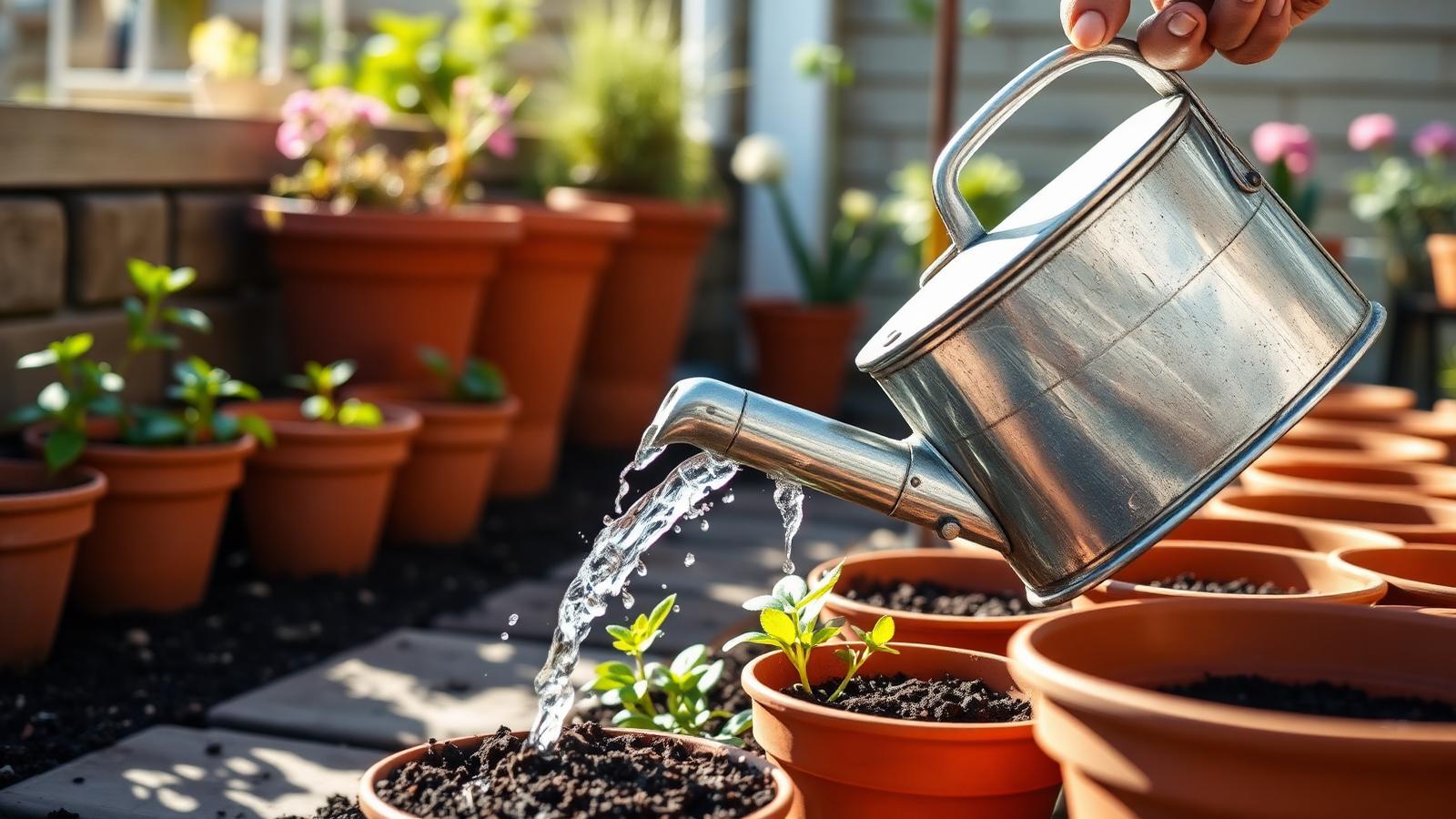
Can you use a hose to fill a watering can?
This is a genuinely common question during a hosepipe ban, and the honest answer is: it depends who supplies your water, and it's worth checking rather than assuming.
Thames Water's own published rules say yes, specifically, with a size limit: a short hose of no more than 30cm can be used to fill a watering can. That's an unusually precise rule, and it's there because Thames Water draws a distinction between a hose being used briefly to fill a container (fine, low water use) and a hose being used to irrigate a garden directly (exactly what the ban targets).
Anglian Water takes a stricter line. Their guidance is direct: not with a hosepipe at all. Fill your can from a bucket or straight from an outside tap instead.
Other companies vary in between, and the safest approach if you're not sure is to check your own supplier's website, which is required to publish its current rules clearly. In practice, filling directly from an outdoor tap or indoor sink, using a jug or the can's own spout held under the flow, works for everyone regardless of company and avoids the question entirely.
How much time does hand-watering actually take?
Less than people fear, once you've got a rhythm. For a modest patio of a dozen or so pots, hand-watering thoroughly takes roughly 10 to 15 minutes in ordinary weather, checking each pot rather than watering all of them automatically. In a genuine heatwave, when small pots may need checking daily or even twice daily, budget closer to 15 to 20 minutes, since some pots will need water and others won't, and working out which is part of the job.
The habit that saves the most time is checking before watering rather than watering everything on principle. Push a finger into the compost of each pot; only water the ones that are actually dry a few centimetres down. This alone usually cuts the number of pots you actually need to water on any given day by a third or more, since not everything dries out at the same rate. Our guide to watering plants properly covers the finger test and what "thoroughly watered" actually looks like in more detail.
What to prioritise when time or water is limited
Not every plant needs equal attention, and knowing the genuine hierarchy means a limited amount of can-carrying effort goes where it actually matters.
| Priority | What | Why |
|---|---|---|
| 1 (most urgent) | Seedlings and anything sown or planted in the last month | Shallow roots, no reserves, can die within a day if missed in heat |
| 2 | Container trees, patio fruit trees, citrus in pots | Behave like permanently young trees; a pot has no depth to fall back on |
| 3 | Hanging baskets and small pots (under 20cm) | Smallest volume of compost, dries out fastest of anything established |
| 4 | Flowering and fruiting edibles in larger containers (tomatoes, peppers) | Inconsistent watering causes blossom end rot and fruit splitting, not just wilting |
| 5 | Established shrubs and perennials in open ground | Deep roots reach moisture a lawn or pot can't; rarely need intervention once settled |
| 6 (least urgent) | The lawn | Goes dormant and browns off on purpose; watering it is largely wasted effort and does more harm than good |
This ordering matches the logic already covered across the site: a lawn left brown will recover fully within weeks once rain returns, while a newly sown tray of seedlings given no water for a single hot day may not recover at all. Container trees and patio fruit sit high on the list for the same reason a pot dries faster than open ground. If you can only get to half your garden in a given evening, work from the top of this list down, not by whatever's nearest the door.
Technique that makes a can go further
A few habits genuinely stretch the water you're carrying and the time you're spending, without any extra equipment.
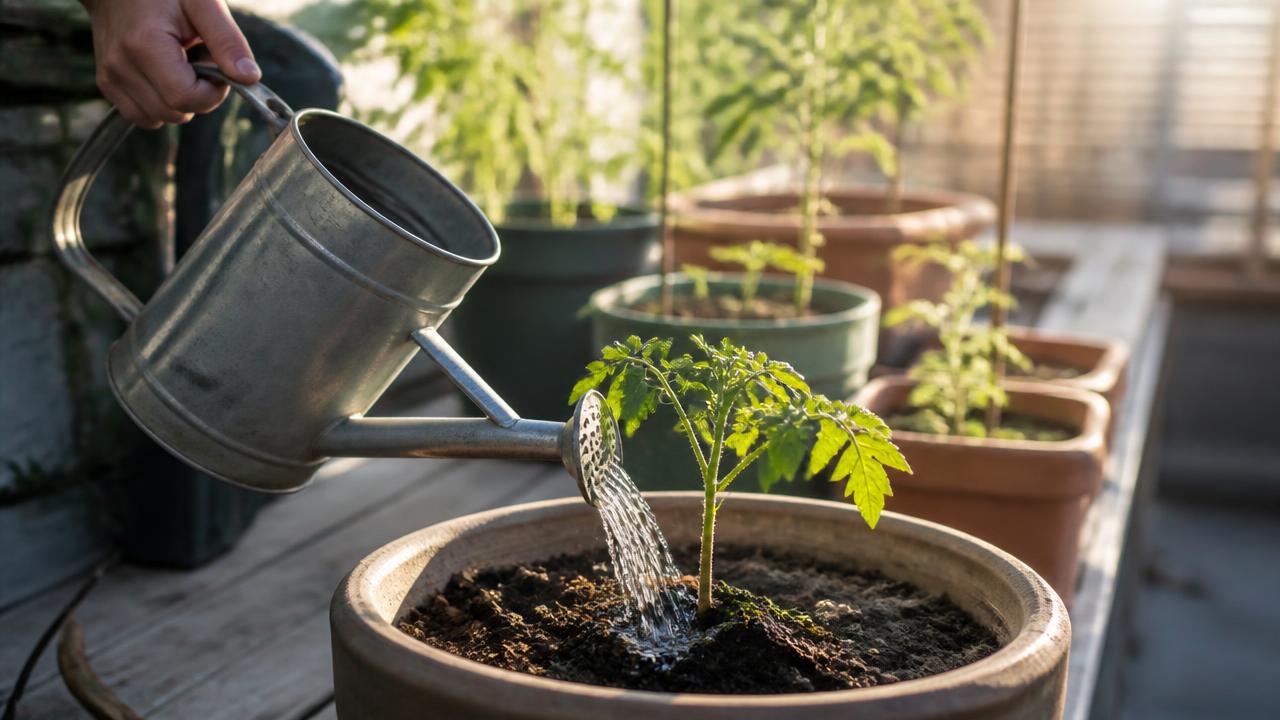
Water at the base, not over the leaves. Almost nothing sprinkled over foliage reaches the roots, and wet leaves invite disease. Aim the spout directly at the compost.
Water deeply rather than little and often. A thorough soak that runs through and out of the drainage holes trains deeper, more resilient roots. A light daily splash that only wets the surface trains shallow roots that dry out and struggle faster, the opposite of what you want.
Water in the morning or evening, never the middle of the day. A large proportion of water applied in strong midday sun evaporates before it reaches the roots at all, so the same watering can effort achieves less.
Group thirsty pots together. Grouped containers shade each other and create a slightly more humid pocket of air around themselves, reducing how often the group as a whole needs a top-up. The same principle helps houseplants through a heatwave indoors.
Rehydrate a bone-dry pot properly. If compost has dried out so hard water runs straight off the top rather than soaking in, stand the pot in a shallow tray of water for 15 to 20 minutes instead, letting it soak up from below. This uses roughly the same amount of water as a normal watering but actually gets it into the rootball, rather than watering the patio floor.
Reuse water you're already using indoors. A washing-up bowl of grey water, a cooled saucepan of vegetable cooking water, water from rinsing produce, all of these can go straight onto ornamental plants, saving a trip with the can entirely. Avoid grey water on edibles if it contains much soap residue.
Hanging baskets need their own attention
Hanging baskets deserve a section of their own, because they dry out faster than almost anything else in a garden and get missed more often precisely because they're awkward to reach and easy to walk past without noticing.
A basket's compost is exposed to air and sun from every side, not just the top, which means it loses moisture at a rate a standing pot of the same size simply doesn't. In genuine heat, a small hanging basket can dry out completely within a single day, sometimes twice in one day if it's in full afternoon sun.
A few things make a real difference. Line the basket with a moisture-retentive liner rather than plain moss alone, since moss dries out and lets water run straight through. Mixing water-retaining gel granules into the compost at planting time, following the product's instructions, genuinely extends how long a basket holds moisture between waterings, sometimes by a day or more. And check baskets by feel, not by sight, lifting slightly to gauge weight: a light basket is a dry basket, even if the surface compost still looks reasonable. Our container growing fundamentals guide covers compost choice and pot size, both of which change how fast anything dries out.
If a basket is genuinely too high or awkward to water properly by hand each day, a long-spouted watering can, or a simple lance attachment on a can, makes reaching it considerably easier without needing a hosepipe at all.
Choosing plants that reduce the burden altogether
The other honest option, alongside watering technique, is reducing how much watering the whole setup actually needs in the first place. This matters most for anyone finding can-only watering through a long dry spell genuinely tiring rather than just inconvenient.
Mediterranean herbs (rosemary, thyme, sage, oregano) and drought-tolerant ornamentals (sedums, most alpines, many grasses) are built to cope with far less frequent watering than the average bedding plant or leafy vegetable. As covered in our feeding guide, these plants are adapted to poor, dry conditions in the wild, and the same toughness that makes them forgiving on feed makes them forgiving on water too. A pot of thyme or a container of sedums can often go several days longer between waterings than a pot of bedding begonias or a tray of lettuce seedlings, without any visible stress at all.
This isn't an argument to abandon thirstier plants entirely, particularly edibles you actually want to eat. But if a hosepipe ban or a run of hot summers is making the daily can-carrying feel like a genuine chore, swapping a few of the highest-maintenance ornamental pots for tougher Mediterranean or drought-adapted alternatives is a legitimate, permanent way to lighten the load, rather than something to feel you have to push through with sheer effort every single day.
What "watering with just a can" actually rules out
To be clear about the boundary: this whole approach is exactly what's still allowed under every current UK hosepipe ban, regardless of company. A watering can, filled by whatever means your supplier permits, used to water anything by hand, isn't restricted anywhere. The ban targets a hose or sprinkler left running or connected to irrigate an area automatically, not the physical act of carrying water to a plant.
So switching to can-only watering during a ban isn't really a downgrade in what you can grow or how well you can look after it. For most container and small-space gardening, it's close to how the watering was always being done anyway.
FAQ
Can I fill my watering can with a hosepipe during a ban?
It depends on your water company. Thames Water explicitly allows a short hose, maximum 30cm, for this purpose. Anglian Water says no, use a bucket or fill directly from the tap. Check your specific supplier's published rules if you're not sure, since this varies genuinely company to company.
How long does it take to hand-water a small garden or patio?
Roughly 10 to 15 minutes for a dozen or so pots in ordinary weather, up to 15 to 20 minutes in a genuine heatwave when more pots need checking and some need watering twice. Checking the compost before watering, rather than watering everything by default, keeps this manageable.
What should I water first if I don't have time for everything?
Seedlings and anything planted in the last month come first, since they have no root reserves and can die within a single hot day if missed. Container trees and small pots come next. Established borders, mature shrubs, and the lawn can be left almost entirely alone.
Should I water my lawn if I only have a can?
No. A lawn left brown in a heatwave is dormant, not dying, and will recover within a few weeks once rain returns. It's the lowest priority on the list, and watering it by hand is generally not a good use of limited time or water.
Is grey water safe to use in a watering can?
Yes, for ornamental plants and most of the garden. Water from washing up or cooking (once cooled) works well. Avoid using grey water with heavy soap residue directly on edible crops.
How can I make hanging baskets easier to keep watered?
Line them with a proper moisture-retentive liner rather than moss alone, mix in water-retaining gel granules at planting, and check by weight rather than by sight, since baskets dry from all sides and can look fine on the surface while being bone dry underneath.
Does hand-watering achieve the same results as a hosepipe or sprinkler?
For most container and small-space growing, yes, arguably better, since a can encourages deeper, more targeted watering at the base of each plant rather than a broad, shallow sprinkle. Sprinklers in particular waste a great deal of water to evaporation and overspray that a can simply doesn't.
RELATED POSTS
Robin is a small-space grower writing for everyone working with a courtyard, balcony, window box, patio or sunny sill. Edible and leafy, both kept alive in the kind of light real small spaces actually get.
✦ Free with the newsletter — the small-space starter sheet
Grow Anywhere — a free weekly email.
The Potted Club newsletter. A short note from Robin — what to sow, one plant problem solved, and the best new guide.
FREE WEEKLY EMAIL · NO SPAM · UNSUBSCRIBE ANYTIME