Can You Water Plants With Bath Water
Yes, for most ornamental plants. What RHS research found, what in your bath water matters, and how to reuse grey water safely.
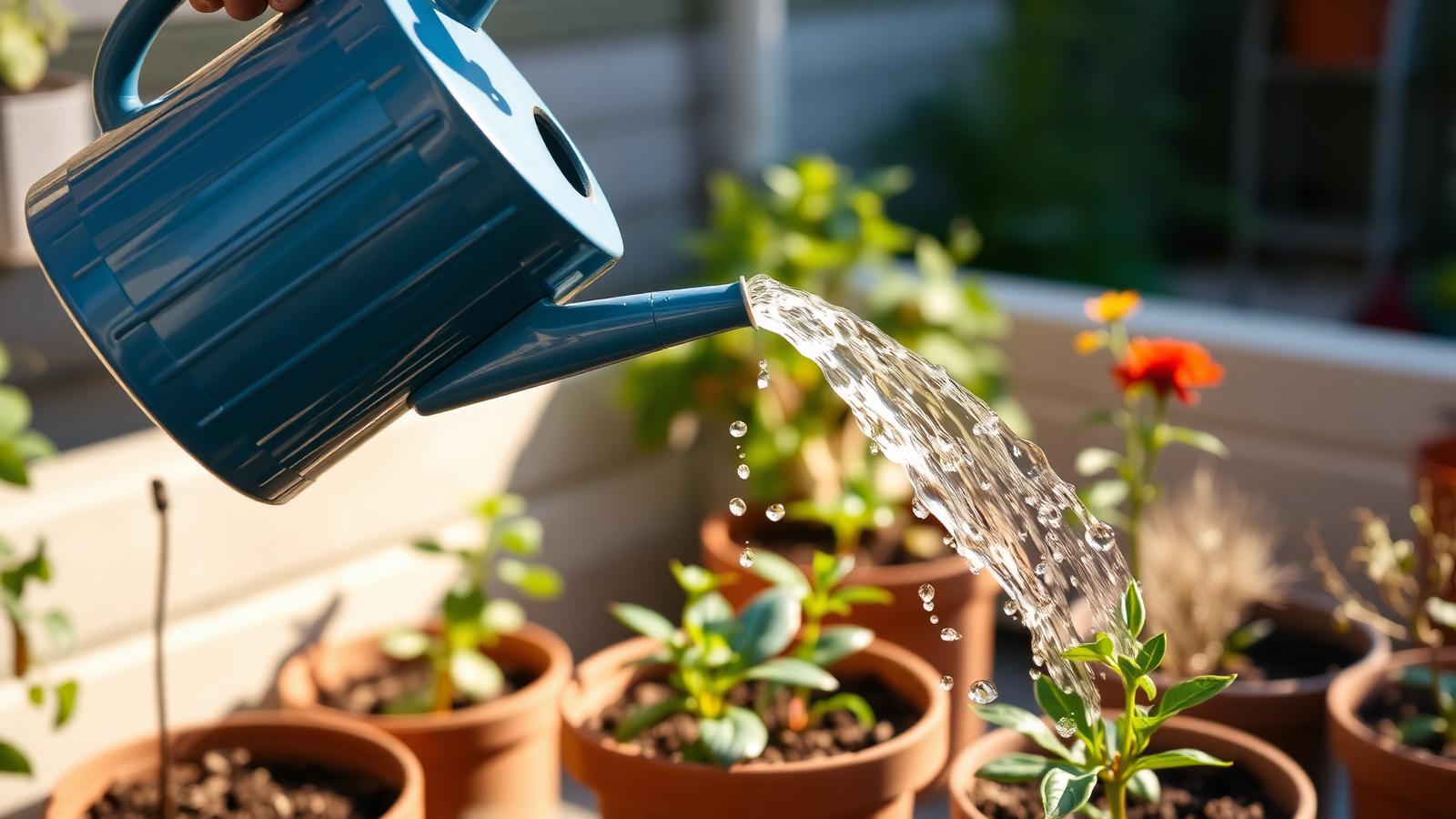
Yes, mostly
For more than 10 million Thames Water customers across London and the Thames Valley, the hosepipe ban that began in July is starting to look considerably less temporary.
Despite the recent rain, Thames Water's strategic water resources director Nevil Muncaster said this week that, realistically, he expects restrictions to remain until towards the end of the year. London reservoir storage is currently around 74%, well below where it would normally be at this point in the summer.
For anyone gardening entirely in pots, that's particularly relevant.
A lavender or hydrangea confined to a container can't send its roots deeper into the ground looking for moisture. A small pot on a sunny balcony can dry remarkably quickly, particularly when wind and reflected heat are added to the equation.
Which raises an obvious question every time a bath empties down the plughole: can you use that water on your plants instead?
The answer, for most established ornamental plants, is yes.
What the RHS actually found
Water from baths, showers, kitchen sinks and washing-machine rinse cycles is collectively known as grey water.
It can contain soap, shampoo, detergent, skin oils and other residues, which makes the idea of pouring it over plants sound slightly questionable.
But the Royal Horticultural Society has actually tested it.
In RHS experiments, grey water was applied to a selection of popular border perennials and sub-shrubs for several weeks over summer. Researchers found that it did not significantly affect plant function.
Soil and potting compost are effective at filtering some of the contaminants contained in grey water, and the RHS notes that residues can sometimes act as a mild fertiliser.
That doesn't mean bath water is better than clean water, or that it should replace your normal watering indefinitely.
There's an important second part to the research.
After six weeks, some of the plants were beginning to show signs of salt stress and benefited from being rinsed through with tap water.
That's the useful conclusion from the experiment: ordinary household grey water can be a perfectly reasonable way to keep established ornamental plants going through a dry spell, but it is better thought of as a supplementary water source than a permanent replacement.
Keep it away from anything you're going to eat
This is the main exception.
The concern with using grey water on edible plants isn't primarily the soap. Household grey water can contain pathogens, creating a potential contamination risk.
The RHS therefore says small-scale grey-water use is suitable for plants during summer drought except on edible crops.
For Potted Club, the rule is straightforward:
Use bath and shower water on your ornamental pots. Save rainwater or clean mains water for anything you're planning to eat.
That means the window box of pelargoniums is a reasonable destination. The lettuce, rocket, basil and tomatoes aren't.
There are more nuanced approaches to using grey water around some edible crops, but for a small container garden there's very little reason to complicate it.
What's actually in your bath water matters
The water itself isn't really the issue. It's what you've put into it.
An ordinary bath containing a modest amount of soap is quite different from one containing a bath bomb, oils, salts and several other products.
Ordinary soap, shampoo and shower gel: small diluted quantities aren't generally a problem for short-term use on established ornamental plants.
Bath salts: avoid them. Salt accumulation is one of the genuine risks associated with repeated grey-water use, so deliberately adding a bath containing a large quantity of salts to a pot makes little sense. That includes an Epsom-salt bath. Magnesium sulphate has legitimate horticultural uses in particular circumstances, but emptying a bath's worth over your containers isn't one of them.
Bath oils and bath bombs: a small trace isn't necessarily disastrous, but heavily oiled, fragranced or additive-rich bath water isn't worth saving for your plants.
Bleach and disinfectant: don't use it. The RHS specifically advises avoiding grey water containing bleach, disinfectants and harsh cleaners.
You don't need to rescue every litre of household water. Use the easy water. Discard the questionable stuff.
Don't store it
Grey water isn't rainwater.
Bath and shower water contains organic material and microorganisms. Leave it standing and bacteria can multiply.
The RHS recommends using grey water promptly and storing untreated water for no longer than 24 hours, unless it passes through an appropriate treatment or filtration system.
So don't empty tonight's bath into a water butt for next week. Use it that evening or the following morning.
How to use it properly
Use a watering can.
The RHS recommends this because grease and fibres contained in household grey water can clog irrigation systems.
Apply it directly to the compost around the base of the plant rather than pouring it over the foliage.
And don't assume that because you've suddenly acquired a bath full of reusable water, every plant needs it. Check the compost first. A dry surface doesn't necessarily mean the entire root ball is dry, and overwatering a container can be just as damaging as allowing it to become too dry. If it needs water, water it properly rather than giving it a token splash.
There's one problem to watch for after prolonged hot weather. Very dry potting compost can sometimes shrink away from the sides of the container. Water then races down the gap and out of the drainage holes without properly re-wetting the root ball. If that happens repeatedly, you may be dealing with a pot or compost problem rather than simply a thirsty plant.
Why pots need extra care
This is where general grey-water advice needs adapting for a small-space garden.
A garden border contains an enormous volume of soil compared with a plant pot. A balcony plant might have its entire root system confined to 10 or 20 litres of compost. Anything you repeatedly add, nutrients, minerals, detergent residues or salts, is therefore being concentrated within a much smaller environment.
That's why occasional grey-water use during drought is quite different from using bath water for every watering throughout an entire summer. If you're using it regularly, alternate with rainwater or clean mains water when possible. The RHS recommends doing this to reduce the build-up of mineral salts.
Pot size matters too. A mature shrub in a 50-litre container has far more growing medium around its roots than a small plant in a 15cm terracotta pot. Terracotta also loses moisture through its porous walls, so those pots can dry particularly quickly in hot weather. Add a sunny balcony, wind and reflected heat from brick, paving or glass and the difference can become considerable.
Sometimes the answer isn't finding more water. It's a larger pot, temporary shade or a plant better suited to the conditions.
What about houseplants?
We'd be more conservative indoors.
Houseplants can remain in the same relatively small amount of compost for years. Unlike outdoor pots, they don't receive rainfall that periodically flushes accumulated minerals through the growing medium. Clean water is therefore preferable for routine watering.
There is, however, a much easier way to reuse bathroom water. Put a bucket under the shower while you're waiting for it to warm up. That water hasn't encountered shampoo, conditioner or soap. You've simply prevented perfectly clean mains water from disappearing down the drain.
For houseplants, balcony pots or window boxes, it's probably the easiest water-saving habit in this entire article.
What about washing-up water?
It can be used on ornamental plants, including those growing in containers, according to the RHS.
But we'd put it below bath and shower water. A washing-up bowl may contain detergent, grease, salt and food residues. If bleach, disinfectant or strong cleaners have been added, don't use it. If you have relatively clean bath or shower water available, that's the simpler option.
What about the lawn?
Grey water can be used on ornamental garden areas, but an established lawn shouldn't be your priority during drought.
Grass can become dormant during prolonged dry periods, turning brown before recovering when wetter weather returns. The RHS specifically advises allowing lawns to brown during heat and drought rather than using scarce water to maintain their colour.
Container plants have far less room for manoeuvre. Their roots can't travel deeper in search of moisture, and a small pot can move from adequately watered to severely dry surprisingly quickly. If water is limited, prioritise your pots, young plants and anything genuinely vulnerable.
A better source is already coming out of your shower
Before finding increasingly elaborate ways of recycling used water, capture the clean water you're already wasting.
Think about how long your shower runs before it gets hot. Put a bucket underneath while you're waiting and you've collected clean mains water before any soap or shampoo has entered it. For someone with six pots on a balcony, that may be enough to make a meaningful contribution to the day's watering.
Rainwater remains better still. The RHS considers it the best option for garden watering because it's naturally soft and low in minerals.
But small-space gardeners don't necessarily need enormous water-storage systems. When you're watering six pots rather than six acres, saving a few litres at a time adds up.
Common mistakes
Using it on edible plants. Keep grey water for ornamentals and use clean water or rainwater for anything you're going to eat.
Storing it for days. Untreated grey water should be used within 24 hours.
Assuming soap makes it fertiliser. Some residues contain nutrients, but bath water isn't a substitute for appropriate plant feeding.
Using water containing bleach or disinfectant. Don't.
Emptying a heavily salted bath over your pots. Salt accumulation is one of the genuine risks associated with repeated grey-water use.
Using grey water for every watering. Alternate with rainwater or clean water where possible.
Why it matters now
The Thames Water announcement makes what might otherwise be a niche water-saving habit rather more relevant.
Recent rain hasn't solved the underlying problem, and the company now expects restrictions affecting more than 10 million customers to remain until towards the end of the year.
For a large garden, carrying bath water around may rapidly become impractical. For a balcony, patio or collection of containers, the arithmetic is different. One watering can may be enough for several pots.
Bath water isn't a gardening hack and it isn't better than rainwater. It's simply water you've already used once that, in the right circumstances, can be useful a second time.
FAQ
Is it safe to water plants with bath water?
For most established ornamental plants, short-term use is reasonable. RHS research found no significant effect on plant function when grey water was used on several perennial and sub-shrub species for a number of weeks.
Can I use bath water on vegetables?
We wouldn't. The RHS identifies edible crops as the exception to its recommendation for short-term grey-water use because of the potential for pathogen contamination.
How long can I store bath water?
No more than 24 hours unless you have an appropriate treatment system. Bacteria can multiply in untreated grey water while it's stored.
Does soap in bath water harm plants?
Ordinary diluted residues aren't generally a problem during occasional short-term use. Repeated grey-water use can contribute to salt accumulation, however, which is why alternating with fresh water is sensible.
Can I water houseplants with bath water?
Occasionally, but clean water is preferable for routine use. Clean water captured while you're waiting for the shower to warm is an even better option.
Is bath water better than tap water for plants?
No. The benefit is simply that you're using the same water twice rather than consuming additional mains water. Rainwater remains the preferred option where it's available.
READ THE FULL GUIDE
How to Water Plants Properly →
RELATED POSTS
Robin is a small-space grower writing for everyone working with a courtyard, balcony, window box, patio or sunny sill. Edible and leafy, both kept alive in the kind of light real small spaces actually get.
✦ Free with the newsletter — the small-space starter sheet
Grow Anywhere — a free weekly email.
The Potted Club newsletter. A short note from Robin — what to sow, one plant problem solved, and the best new guide.
FREE WEEKLY EMAIL · NO SPAM · UNSUBSCRIBE ANYTIME