Should I Feed My Houseplants?
Yes, but far less often than most people assume, and not through winter at all. When to start feeding a new houseplant, how often through the year, and the signs you've overdone it.
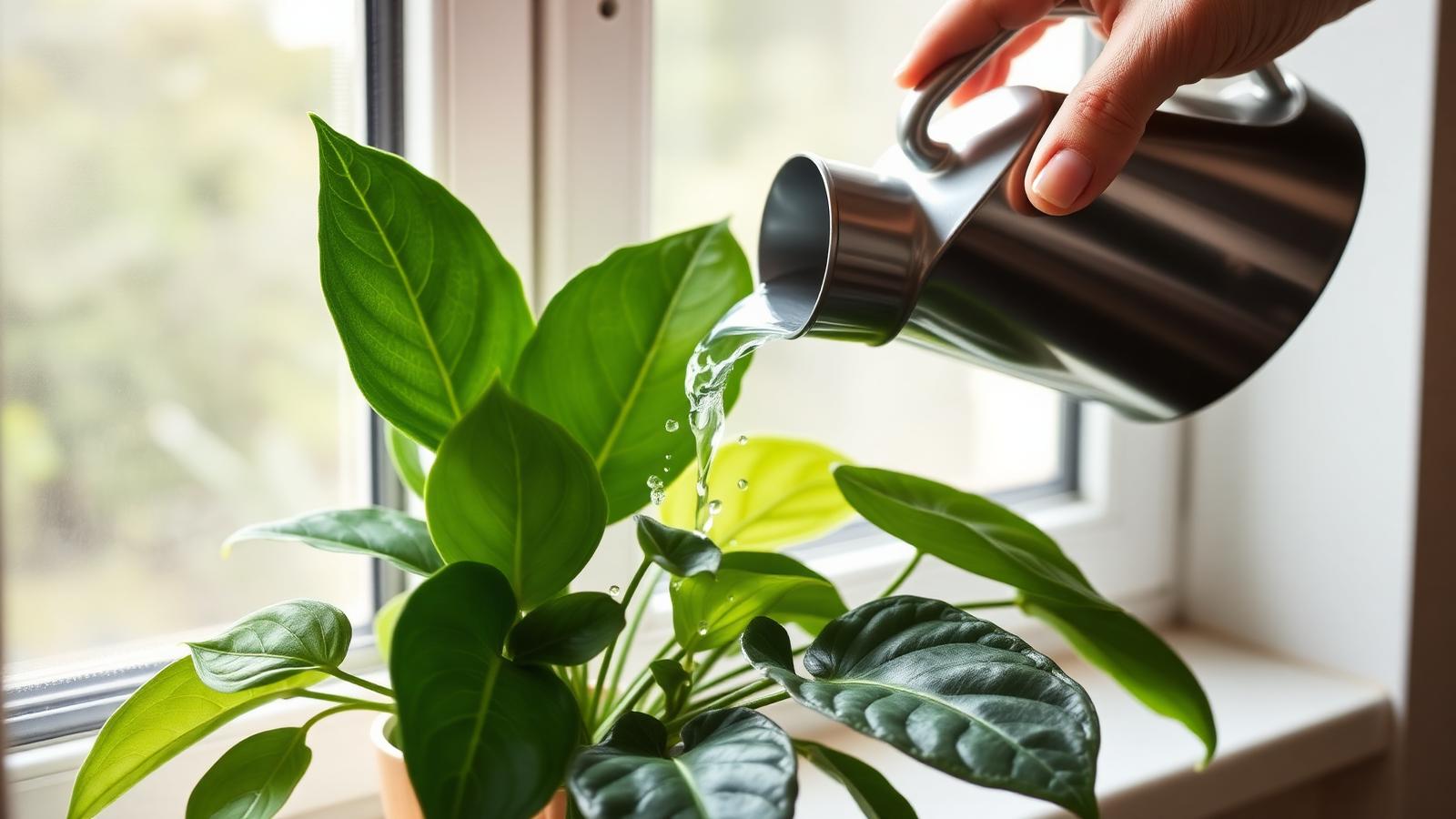
Yes, but less than you'd think
Houseplant compost holds enough nutrients to support healthy growth for roughly six weeks. After that, whatever feed was mixed in when it was potted is used up, either taken in by the plant or rinsed out through the drainage holes each time you water. From that point on, an unfed houseplant is running on an empty tank: growth slows, leaves lose some of their colour, and the plant becomes generally less resilient to the ordinary stresses of indoor life.
So the honest answer is yes, most houseplants benefit from regular feeding. The much more common mistake, though, isn't skipping feed altogether. It's overdoing it, or feeding on the wrong schedule entirely, which causes its own problems and is arguably more common than genuine underfeeding in houseplants specifically. Our full guide on feeding plants: what they actually need covers the underlying principles in more depth.
Don't feed a brand new plant straight away
If you've just brought a houseplant home from a garden centre or had one delivered, it's very likely growing in fresh compost that already has feed mixed into it. Feeding again immediately effectively doubles up, and can tip a young, still-settling plant into the overfeeding problems covered further down.
Wait roughly six weeks from when you bought it, or from when you last repotted it into fresh compost, before starting any feeding routine. This gives the existing nutrients time to be used up properly and lets the plant settle into its new environment first.
How often, by season
This is where the real mistake happens, and it's almost always the same one: feeding right through the year on a flat, unchanging schedule, including winter.
Houseplants, like every other plant, largely stop actively growing over winter as light levels drop, even indoors in a heated room. A dormant or resting plant has very little use for extra nutrients, and feeding one anyway mostly just builds up unused mineral salts in the compost rather than doing the plant any good, alongside occasionally forcing weak, out-of-season growth that struggles in low winter light.
The straightforward seasonal rhythm that works for almost every houseplant:
- Spring and summer (roughly March to September), while the plant is actively putting on new growth: feed every two weeks with a diluted liquid feed.
- Autumn, as growth visibly slows and new leaves appear less often: taper off, feeding monthly at most.
- Winter: stop feeding entirely. Resume once you see genuine new growth starting again in spring.
Watch the plant rather than the calendar if you can. New leaves appearing is the clearest sign it's actively growing and ready for regular feed; a plant that's sitting still, producing nothing new, doesn't need it regardless of what month it is.
What feed to actually use
Most houseplants aren't fussy about feed type, but a few groups have genuinely different needs worth knowing.
Leafy foliage houseplants (pothos, monstera, philodendron, most ferns, snake plants, ZZ plants) want a balanced or slightly nitrogen-leaning liquid feed, since nitrogen is what drives the leafy growth you're actually growing them for. Our list of best indoor plants for beginners covers most of these.
Flowering houseplants (African violets, orchids, peace lilies, anthuriums) do better on a potassium-leaning feed, particularly once buds start forming, since potassium drives flowering rather than leaf growth. A feed labelled for flowering plants, or a diluted general flowering feed, works well.
Succulents and cacti want considerably less feed than almost any other houseplant category, and considerably less often. These are plants adapted to poor, nutrient-scarce conditions in the wild, and overfeeding them produces soft, stretched, unnaturally lush growth that's both unattractive and structurally weak. A light feed once or twice through the growing season, at half the usual dilution, is genuinely plenty. If in doubt with a succulent or cactus, skip the feed rather than add it; this is one of the few houseplant categories where doing less is closer to correct.
Orchids specifically want a dedicated orchid feed rather than an ordinary houseplant feed, since their nutrient needs and preferred concentration are genuinely different, and a standard feed used at standard strength can damage their roots. The RHS guidance on houseplant feeding is a useful cross-check if you're unsure.
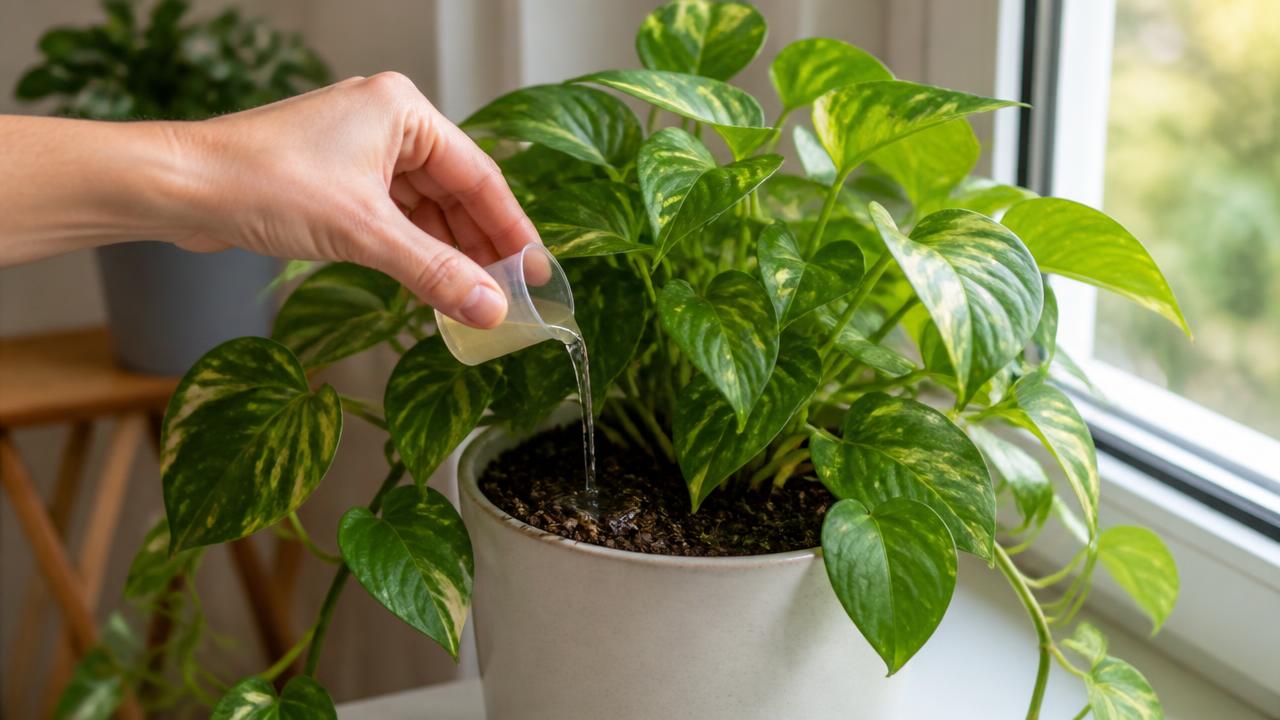
Signs your houseplant actually needs feeding
- Slower than usual growth through what should be an active growing season.
- Paler, less vibrant leaf colour than when the plant was healthy.
- Smaller new leaves than the plant has previously produced.
- A flowering plant that's putting on healthy leafy growth but producing few or no flowers, which can point to a nitrogen-heavy feed suppressing flowering rather than a lack of feed altogether; check which feed you're using before assuming it simply needs more.
Signs you've overfed it
This is genuinely the more common problem indoors, not the less common one, and it's worth taking seriously rather than assuming more feed is always safer.
- A white, crusty build-up on the compost surface or around the pot rim. This is mineral salt accumulation from repeated feeding without enough plain watering in between to flush it through. Flush the pot thoroughly with plain water until it runs freely from the drainage holes, then resume feeding at a reduced rate.
- Scorched, browning leaf tips or edges, particularly appearing shortly after a feed. Often a sign the feed was applied too concentrated, or applied to compost that was already dry.
- Weak, leggy, floppy new growth that doesn't hold itself up well. A sign of too much nitrogen relative to what the plant can actually use.
- A succulent or cactus that's grown soft, elongated, and uncharacteristically lush. Almost always overfeeding (sometimes combined with too little light), and the fix is to stop feeding and let the plant settle back into its normal, more compact growth pattern.
Common mistakes
Feeding a stressed or wilting plant. As covered in our piece on houseplants in a heatwave, a plant that's struggling with heat, drought, or general stress has the least spare capacity to use extra nutrients productively. Feeding it in the hope of reviving it faster usually does more harm than good; let it recover first.
Feeding straight after repotting. Fresh compost already contains feed, and a recently repotted plant is also dealing with root disturbance. Wait the same six weeks you'd wait for a brand new plant before starting to feed again. The container growing fundamentals guide covers what fresh compost is actually doing in the first place.
Feeding through winter out of habit. The single most common houseplant feeding mistake. If growth has genuinely stopped, so should the feed.
Assuming a poorly plant needs feeding. A struggling houseplant is far more often dealing with a watering problem, wrong light levels, or pest issue than a nutrient deficiency. Feed is rarely the right first response to a plant that suddenly looks unwell; check the basics before reaching for the bottle.
Using full-strength feed "to be sure." Always dilute to the rate stated on the packaging. Concentrated feed applied directly is one of the most reliable ways to scorch roots rather than help a plant along.
FAQ
How often should I feed my houseplants?
Roughly every two weeks through spring and summer while the plant is actively growing, tapering off in autumn, and not at all through winter. Watch for genuine new growth as the best sign a plant is ready for regular feeding again.
Do I need to feed a houseplant I've just bought?
Not straight away. New compost already contains feed, so wait roughly six weeks from purchase, or from your last repotting, before starting a feeding routine.
Should succulents and cacti be fed the same as other houseplants?
No, they want considerably less. A light feed once or twice a year at half strength is generally plenty; more than that produces soft, weak growth that isn't typical or healthy for these plants.
What happens if I feed my houseplant too much?
Overfeeding shows up as scorched leaf tips, weak leggy growth, a white salt crust on the compost surface, and sometimes fewer flowers rather than more. It's a genuinely common mistake, particularly when feeding continues through winter or at too concentrated a dose.
Can I feed a houseplant that looks unwell to help it recover?
Generally no. A struggling plant is more often dealing with a watering, light, or pest problem than a lack of nutrients, and feeding a stressed plant can make things worse rather than better. Address the underlying issue first.
Do flowering houseplants need a different feed to foliage plants?
Yes, ideally. Flowering houseplants like African violets and orchids do best on a potassium-leaning feed that supports blooms, while leafy foliage plants do better with a balanced or slightly nitrogen-leaning feed that supports leaf growth.
Why has my orchid stopped flowering even though I feed it regularly?
Check which feed you're using. An ordinary balanced or nitrogen-heavy houseplant feed can push leafy growth at the expense of flowers. Switch to a dedicated orchid feed, used at the concentration stated on the packaging, which is typically weaker than standard houseplant feeds.
READ THE FULL GUIDE
Feeding Plants: What They Actually Need →
RELATED POSTS
Robin is a small-space grower writing for everyone working with a courtyard, balcony, window box, patio or sunny sill. Edible and leafy, both kept alive in the kind of light real small spaces actually get.
✦ Free with the newsletter — the small-space starter sheet
Grow Anywhere — a free weekly email.
The Potted Club newsletter. A short note from Robin — what to sow, one plant problem solved, and the best new guide.
FREE WEEKLY EMAIL · NO SPAM · UNSUBSCRIBE ANYTIME