Looking After Tomatoes Through the Rest of Summer
Your tomatoes are flowering or fruiting now, which changes what they need. Feeding, watering consistency, pinching out side shoots, and what to do about splitting, blossom end rot, and fruit that won't ripen.
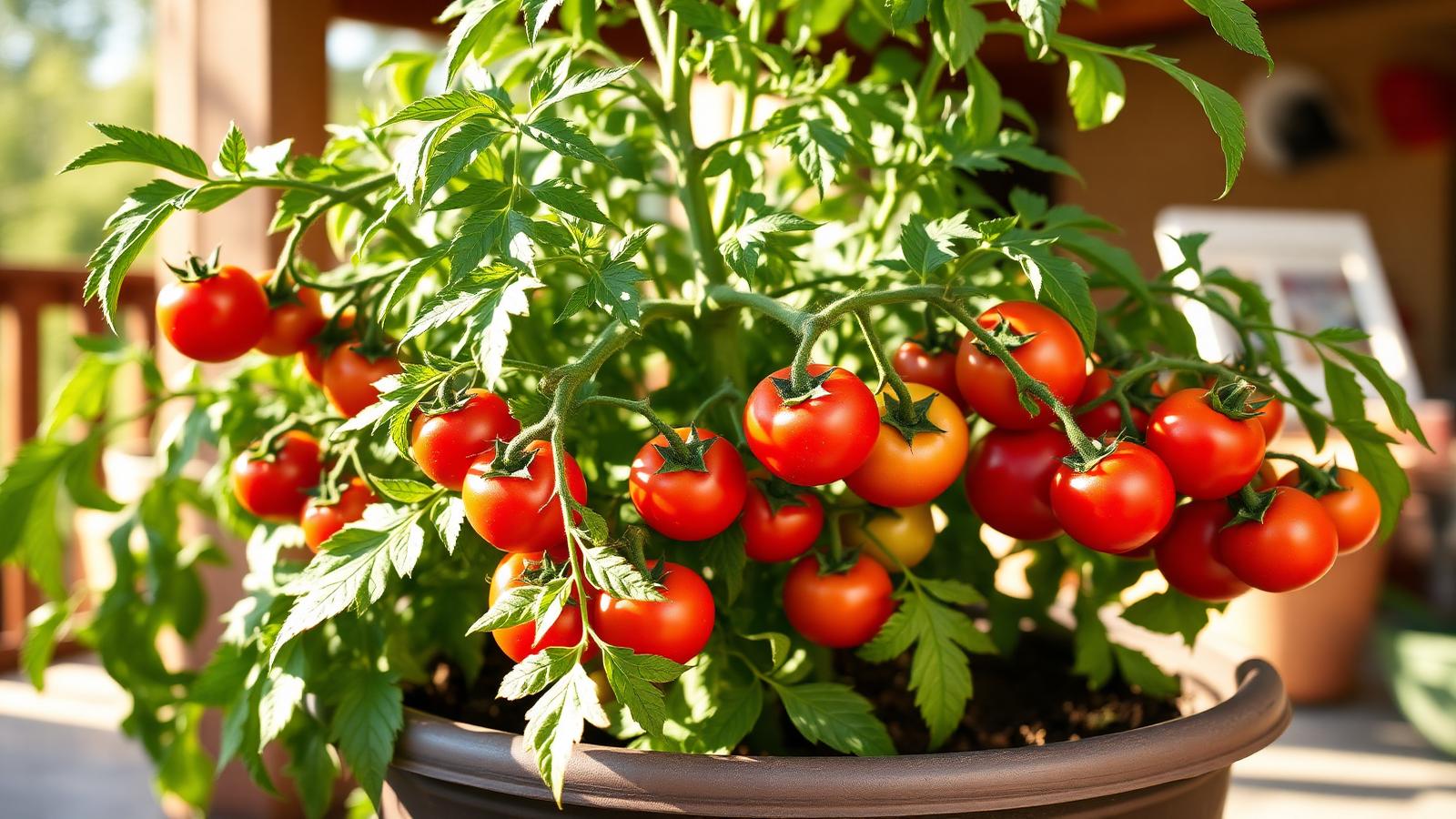
Where your tomatoes should be right now
By this point in summer, most container tomatoes sown or planted in spring should be well established, flowering steadily and setting fruit, with the earliest trusses already ripening or close to it. This is a different stage of care to getting a plant started, and it comes with a different set of priorities: feeding changes, watering consistency becomes the single most important thing you do, and ongoing maintenance (pinching out, tying in) keeps a plant productive rather than sprawling and unproductive.
Switch to a proper tomato feed
Once flowering starts, a tomato plant's needs shift from building leafy growth to supporting flowers and fruit, and the feed should shift with it. As covered in our feeding guide, this is exactly what a high-potassium tomato feed is designed for: potassium drives flowering and fruiting rather than leaf growth, in a way a general balanced feed doesn't prioritise.
Feed weekly once the first flowers appear, following the dilution rate on the packaging rather than going stronger "to help it along." Tomatoes are genuinely hungry plants and a container has no reserve of its own to fall back on, so a missed week or two of feeding, particularly once a plant is carrying several trusses of fruit, shows up fairly quickly as smaller fruit and a plant that looks generally tired.
Watering: the single biggest lever right now
If there's one thing worth getting properly right at this stage, it's this. Inconsistent watering, not a lack of any particular nutrient, is the direct cause of the two most common tomato complaints: blossom end rot and split fruit.
Blossom end rot shows as a dark, sunken, leathery patch at the base of the fruit, away from the stem. It happens because uneven watering disrupts the plant's ability to move calcium into the developing fruit, even when there's plenty of calcium in the soil or compost. Feeding calcium supplements rarely fixes it; consistent watering does. The RHS guidance on blossom end rot says the same.
Splitting happens when a dry spell is followed by a sudden heavy watering, or a burst of rain. The fruit's flesh swells faster than the skin can stretch to accommodate it, and the skin splits. This is especially common with container tomatoes, since a pot's compost dries out and rehydrates faster and more dramatically than open ground — one of the trade-offs covered in container growing fundamentals.
The fix for both is the same: water on a consistent schedule rather than letting compost swing between bone dry and saturated. In settled summer weather, that typically means daily watering for a container tomato, sometimes twice daily in genuine heat, always checking the compost rather than watering on autopilot. Our guide to watering plants properly covers how to check properly, and watering in the heat covers the timing side of it. If you know rain is coming after a dry spell, a light top-up beforehand reduces the shock of a sudden heavy soak on top of parched compost.
Mulching the surface of the compost with a layer of well-rotted organic matter or bark helps buffer these swings too, holding moisture more evenly between waterings. If you're watering with a can only, a fruiting tomato is near the top of the priority list.
Pinching out side shoots (cordon types only)
This matters enormously for cordon (vine, indeterminate) tomatoes and not at all for bush (determinate) varieties, so it's worth knowing which type you're growing before doing anything.
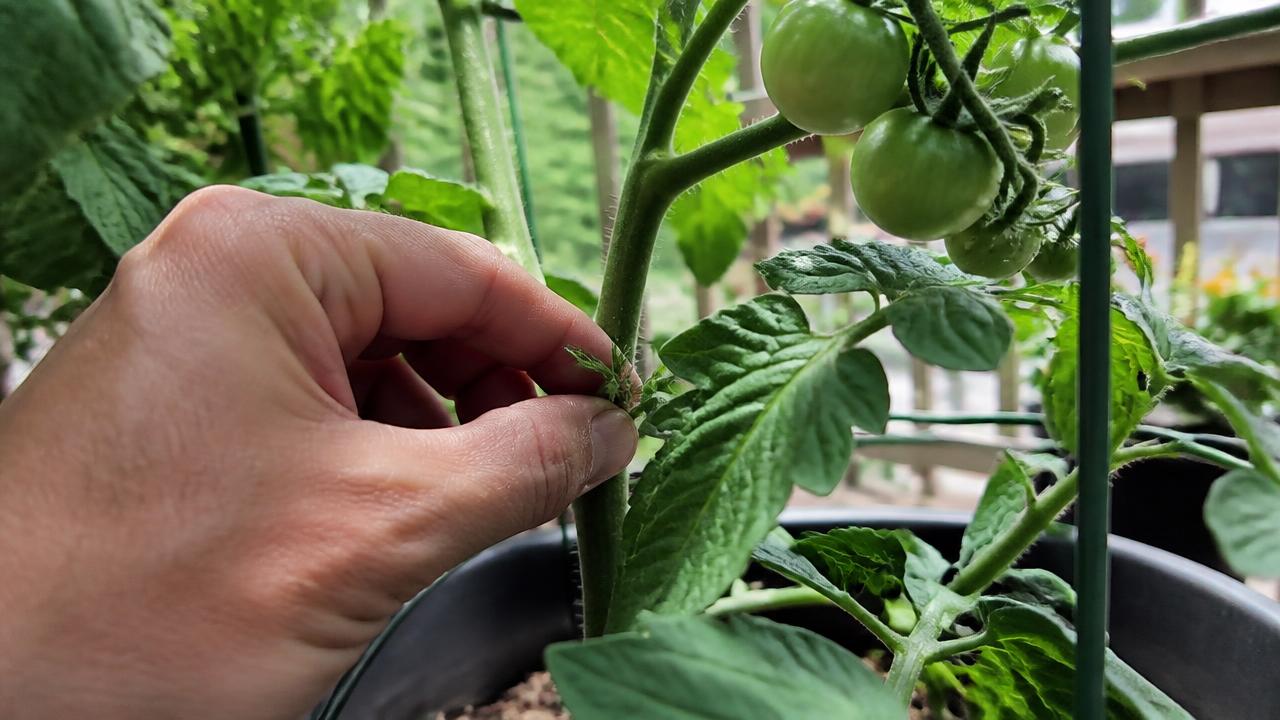
Cordon tomatoes grow as a single main stem, and left alone, they produce side shoots in the joint between the main stem and each leaf. Left unchecked, these side shoots grow into full stems of their own, turning a tidy single-stemmed plant into a sprawling, tangled one that puts energy into leafy growth rather than fruit, and makes airflow and disease control considerably harder.
Pinch these side shoots out while they're still small, ideally with finger and thumb, snapping them cleanly at the base. Check the plant every few days through summer, since new shoots appear constantly while the plant is actively growing. This single ongoing task does more for a cordon tomato's productivity than almost anything else you can do.
Bush varieties are bred to branch naturally and shouldn't have their side shoots removed; doing so on a bush type simply reduces the crop for no benefit. The RHS tomato growing notes are a good place to check which type a variety is if the label isn't clear.
Supporting and tying in
A tomato plant loaded with ripening fruit is genuinely heavy, and stems that looked perfectly sturdy in June can bend, snap, or pull free of their supports by August under that weight.
Check ties regularly and add new ones as the main stem grows taller, using soft garden twine or purpose-made tomato ties rather than anything that can cut into the stem as it thickens. For a particularly heavy truss of fruit, a small individual support or sling can take pressure off the main stem joint, which is a common point of breakage.
If a stake or cane is looking marginal for the weight the plant is now carrying, reinforce or replace it now rather than waiting for it to actually fail, since a snapped main stem partway through the season can cost you the rest of that plant's crop.
Common problems at this stage
Beyond blossom end rot and splitting, a few other issues turn up regularly once tomatoes are established and fruiting.
Leaves curling upward, without other symptoms, is often just a response to heat and bright light rather than a disease, and usually isn't a cause for concern on its own. Curling combined with yellowing or a general unwell appearance is more likely a watering or feeding issue, worth checking properly rather than assuming leaf curl alone means trouble.
Whitefly, small white insects that flutter up when the plant is disturbed, are a genuinely common tomato pest. Yellow sticky traps and a proper insecticidal soap, rather than washing-up liquid, are the standard non-chemical response; see our pests and diseases reference for more detail on treating this and other common problems properly.
Fruit that won't ripen, particularly toward the end of the season as light levels start to drop, is covered in the section below.
Poor fruit set in extreme heat. Above roughly 32°C, pollen can become non-viable and flowers may drop without setting fruit at all, even on an otherwise healthy plant. There's little to actively do about this beyond waiting for a cooler spell; the plant isn't unhealthy, the conditions are simply too hot for pollination to succeed. Heat pushes other crops off course in similar ways — see why lettuce, spinach and coriander bolt.
Helping fruit ripen as the season winds down
As summer moves toward autumn and light levels drop, a container tomato can end up carrying a lot of fruit that's slow to turn from green to red. A few things genuinely help.
Removing some of the lower leaves, particularly those shading developing fruit, lets more light reach the trusses directly and can speed ripening. Don't strip a plant bare, since it still needs leaves to photosynthesise and support the fruit, but thinning congested lower foliage is a reasonable trade.
Pinching out the growing tip of a cordon plant once it's carrying four to six trusses, particularly from midsummer onward, redirects the plant's energy into ripening the fruit already set rather than continuing to grow taller and set new flowers that won't have time to mature before the season ends.
Picking fruit while it's still green, once it's reached full size, and ripening it indoors on a sunny windowsill or in a drawer with a ripe banana (which releases ethylene, the ripening hormone) is a genuinely reliable way to salvage a late crop as autumn approaches and outdoor ripening slows right down.
FAQ
Why do my tomatoes have a dark patch on the bottom?
That's blossom end rot, caused by inconsistent watering disrupting the plant's calcium uptake, not a lack of calcium in the soil itself or any pest or disease. Watering on a consistent schedule, rather than letting compost swing between dry and saturated, is the actual fix.
Why are my tomatoes splitting?
Splitting happens when a dry spell is followed by sudden heavy watering or rain, causing the fruit to swell faster than its skin can stretch. Watering consistently, and giving a light top-up before an expected downpour after a dry patch, reduces this considerably.
Do I need to pinch out side shoots on all tomato varieties?
No, only cordon (vine, indeterminate) types. Bush (determinate) varieties are bred to branch naturally and shouldn't have side shoots removed, since doing so simply reduces the crop.
How often should I feed my tomatoes?
Weekly, once flowering starts, with a proper high-potassium tomato feed rather than a general balanced feed. Container tomatoes have no reserve of their own to draw on, so regular feeding matters more than for a plant growing in open ground.
My tomato leaves are curling. Is that a problem?
Curling alone, especially in hot, bright weather, is often just a heat response and not usually a concern. Curling combined with yellowing or general poor health is more likely a watering or feeding issue worth investigating properly.
How can I help green tomatoes ripen before the season ends?
Remove some lower leaves to let more light reach the fruit, pinch out the growing tip once a cordon plant is carrying several trusses, and pick fully sized green fruit to ripen indoors, ideally alongside a ripe banana, if outdoor ripening slows down as autumn approaches.
Why aren't my tomato flowers turning into fruit?
In very hot weather, above roughly 32°C, tomato pollen can become non-viable, and flowers may drop without setting fruit even on a healthy plant. This resolves once temperatures moderate; there's little to actively do about it in the meantime.
READ THE FULL GUIDE
Container Growing Fundamentals →
RELATED POSTS
- Seasonal
How to Water Your Plants in a Heatwave
- Getting Started
Watering With Just a Can: What to Prioritise
- Plant Problems
Why Your Lettuce, Spinach and Coriander Keep Bolting
Robin is a small-space grower writing for everyone working with a courtyard, balcony, window box, patio or sunny sill. Edible and leafy, both kept alive in the kind of light real small spaces actually get.
✦ Free with the newsletter — the small-space starter sheet
Grow Anywhere — a free weekly email.
The Potted Club newsletter. A short note from Robin — what to sow, one plant problem solved, and the best new guide.
FREE WEEKLY EMAIL · NO SPAM · UNSUBSCRIBE ANYTIME