HOME / GUIDES / GETTING STARTED
How to Propagate Plants
Stem cuttings, leaf cuttings, division and layering explained: which method suits which plant, when to do it, and how to turn one plant into several.
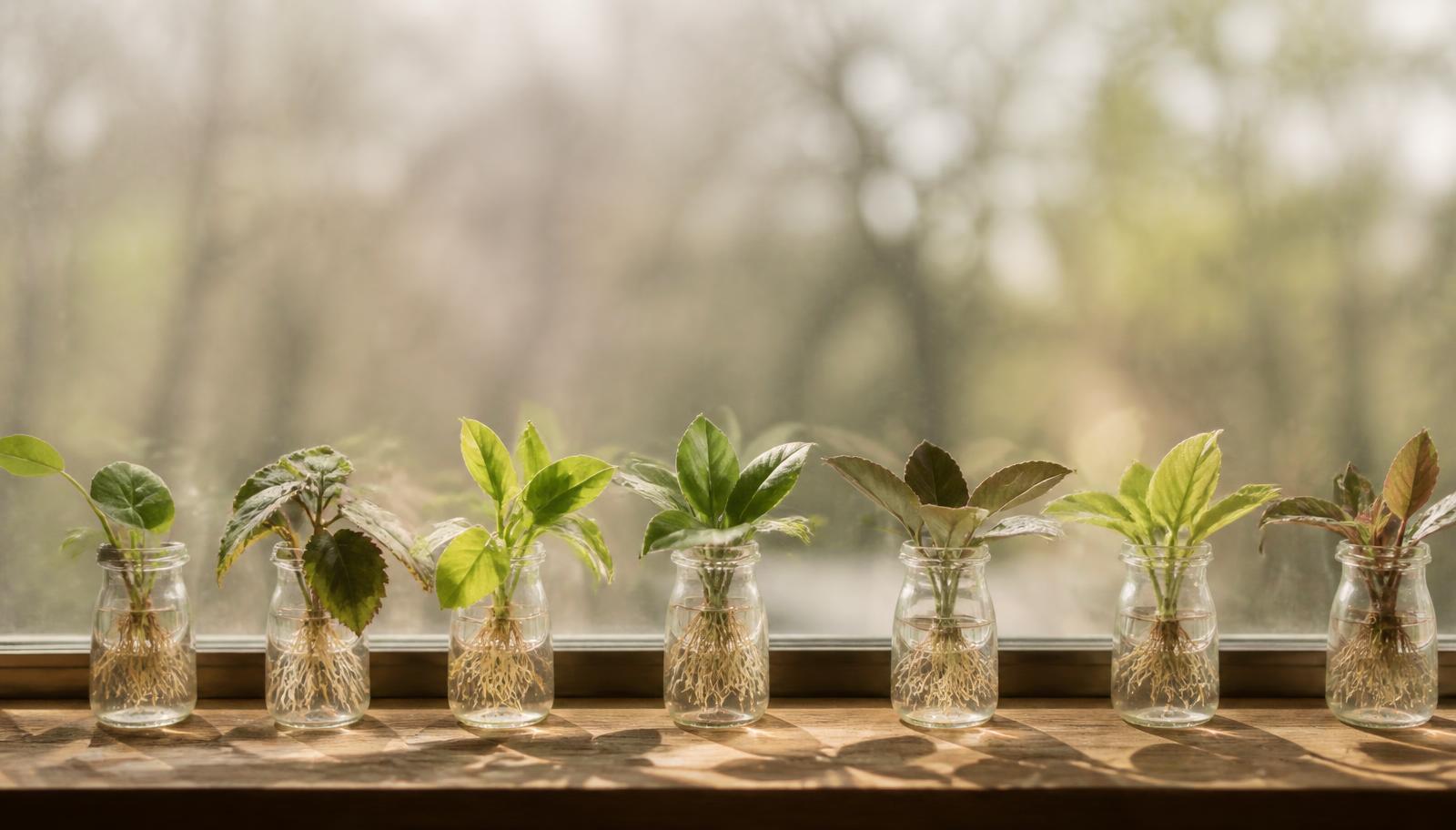
One plant becomes several
Propagation sounds considerably more technical than it is.
Take a piece of the right plant, under the right conditions, and it can produce roots of its own. Split another plant in two and both halves continue growing. Bend a stem onto some compost and it can develop roots while remaining attached to its parent.
The result is the same: more plants without buying more plants.
For a small-space gardener, that's particularly useful. One good pelargonium can provide plants for several window boxes. A congested perennial can be divided between two pots. A strawberry produces its own replacements. A houseplant can become several smaller plants for other rooms.
Propagation also gives you insurance. If you particularly like a plant, creating another one means the original isn't your only copy.
There are several ways to do it. The important bit isn't mastering all of them. It's choosing the right one for the plant in front of you.
The main ways to propagate plants
Stem cuttings. Cut off a section of healthy stem and encourage it to develop roots of its own. This works for a huge range of plants, including many herbs, houseplants, climbers, pelargoniums and shrubs.
Leaf cuttings. Some plants can produce an entirely new plant from a leaf or even part of one. Succulents are the familiar example, but begonias, streptocarpus and snake plants can also be propagated this way.
Division. An established plant is split into two or more sections, each retaining roots and growing points. This suits plants that naturally form clumps, including many herbaceous perennials, ornamental grasses and some houseplants.
Layering. A stem is encouraged to produce roots while it remains attached to the parent plant. Once those roots are established, the new plant can be separated. This is particularly useful for shrubs and climbers that aren't as cooperative when propagated from ordinary cuttings.
Runners and offsets. Some plants almost propagate themselves. Strawberries send out runners carrying young plants. Spider plants produce plantlets. Many succulents produce offsets around the parent. In these cases, you're mostly helping the plant finish something it has already started.
How to take a stem cutting
Stem cuttings are the most useful place to start because they work with so many plants.
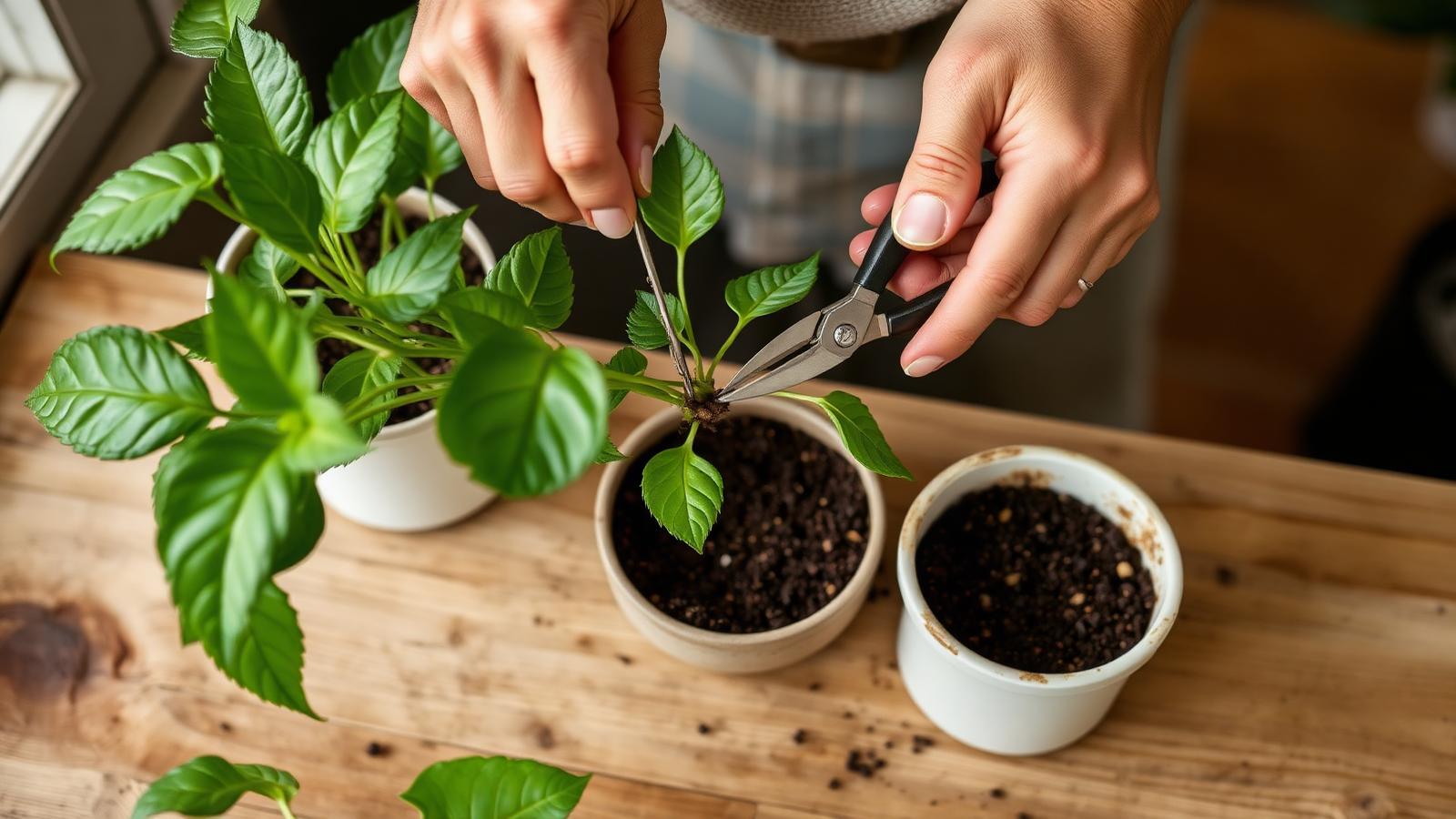
Choose healthy growth from a healthy parent plant. Avoid obviously diseased, damaged or badly stressed material.
Where possible, choose a non-flowering shoot. A vigorously growing stem is generally more useful for propagation than one concentrating its resources on producing flowers.
Use clean, sharp secateurs or a knife. For many plants, taking the cutting immediately below a node, the point where leaves or shoots emerge from the stem, provides a reliable starting point. Nodes are active areas of plant growth and many species root readily around them.
There's no universal cutting length, but for many common plants something around 8-15cm gives you enough stem to work with without leaving a large amount of foliage unsupported by roots.
Remove the leaves from the lower section. Leave enough foliage at the top for the cutting to photosynthesise, but not so much that it loses water rapidly before roots have formed. If the cutting carries flowers or flower buds, remove those too.
Then either place it into an appropriate growing medium or, for plants that root readily this way, water.
Water or compost?
This is one of the first questions most people encounter with propagation. The answer is: it depends on the plant.
Rooting in water is wonderfully straightforward because you can actually see what's happening. Soft-stemmed plants such as tradescantia and mint can root readily in water, as can several familiar climbing houseplants. Place the lower part of the stem in clean water while keeping the remaining leaves above the surface. Put it somewhere warm with bright but indirect light, and change the water periodically if it becomes cloudy or stale. Once the cutting has developed a modest root system, move it into a small pot of suitable compost, keeping it reasonably evenly moist at first while the newly potted cutting adjusts, using the same check-before-watering approach you'd use for any young plant. Don't wait for the jar to become an enormous tangle of roots; the objective is to start a plant, not maintain it permanently in a drinking glass.
Rooting directly in compost is, for many plants, just as easy and avoids the later transition from water to a growing medium. Use a clean container and a free-draining propagation mix, adding perlite or horticultural grit to improve drainage where appropriate. Make a small hole, insert the cutting and gently firm the compost around it. Water sufficiently to settle everything, then aim for appropriate moisture rather than keeping the compost saturated, which is particularly important before a substantial root system exists, since permanently soggy compost reduces oxygen around the developing roots and encourages rot.
Do you need rooting powder?
Usually, no. Many easy-to-propagate plants will root perfectly well without rooting hormone. Products containing rooting hormones can be useful with some species and more reluctant material, and may improve the consistency of rooting under suitable conditions, but they don't turn a poor cutting into a good one. Healthy material, appropriate timing, moisture, temperature and light matter more. If you're starting with something easy such as mint or tradescantia, there's little reason to make propagation more complicated than necessary.
Leaf cuttings
Some plants don't even require a stem.
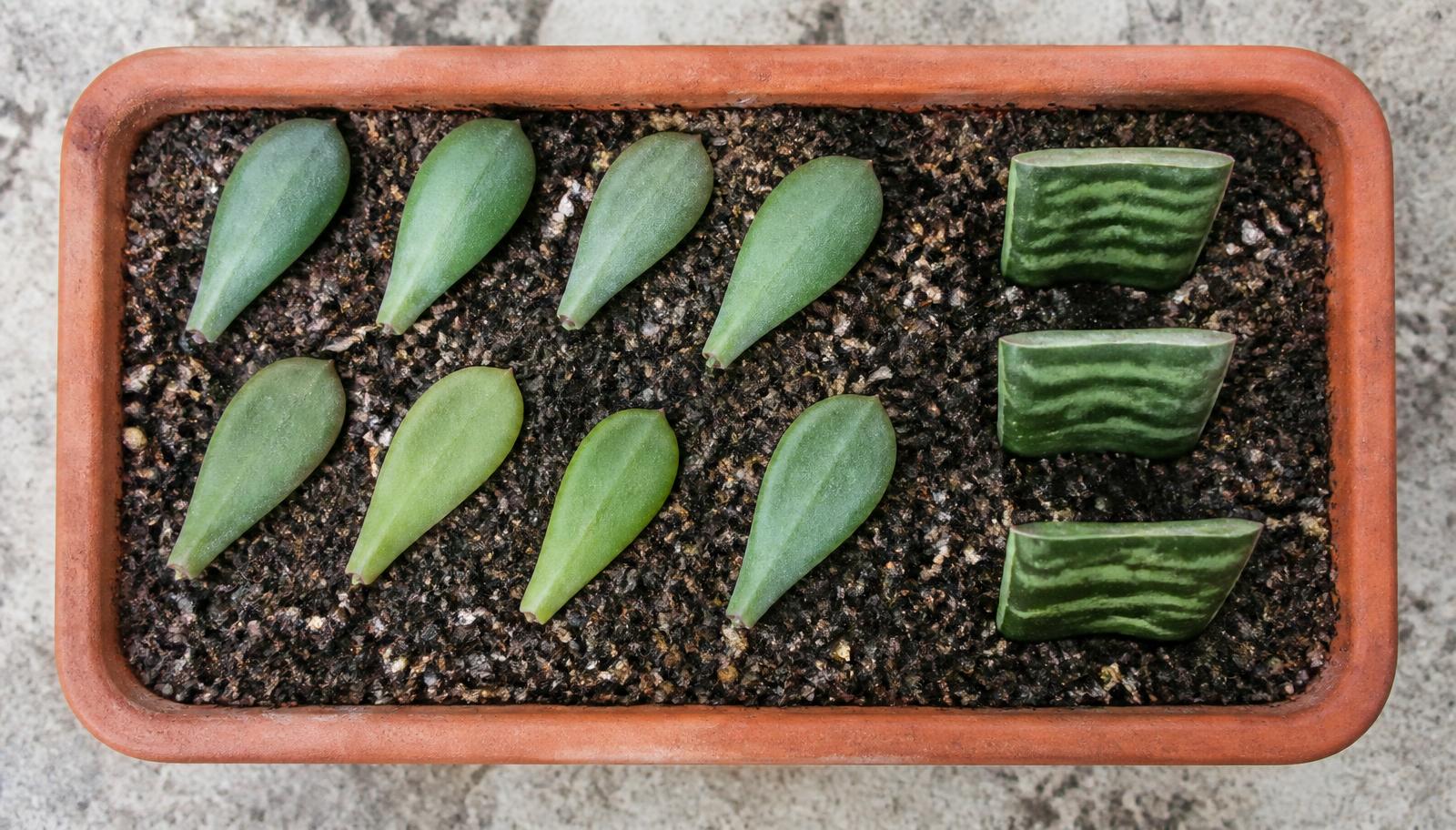
Succulents. For succulents that propagate successfully from leaves, remove a healthy leaf cleanly rather than leaving part of it torn on the parent plant. Allow the cut surface to dry and callus; exactly how long this takes depends on the plant and conditions, so look at the cutting rather than the clock. Once dry, place it onto an appropriate free-draining growing medium, avoiding burying the whole leaf. Given time, roots and eventually a small new plant can develop around the base. Don't keep succulent leaf cuttings permanently wet; their existing fleshy tissue already contains stored water, and excessive moisture makes rot more likely.
Snake plants. The snake plant, now botanically classified as Dracaena trifasciata but still widely sold under its old Sansevieria name, can be propagated from sections of leaf. Cut a healthy leaf into sections and keep track of which end originally pointed downwards, then insert the lower end of each section into free-draining compost. There's one interesting catch: variegated snake plants propagated from leaf sections can lose their original variegation and produce green plants. If retaining the exact variegation matters, division is usually the better approach.
Streptocarpus can produce multiple new plants from sections of a single leaf, a good demonstration of just how strange propagation can initially seem: a piece of leaf with no conventional stem can eventually become an independent flowering plant.
Division: probably the easiest propagation method
If taking cuttings feels fiddly, division is much harder to get wrong with a suitable plant. It's particularly useful when a perennial or houseplant has become congested and needs more room anyway, which often overlaps with repotting.
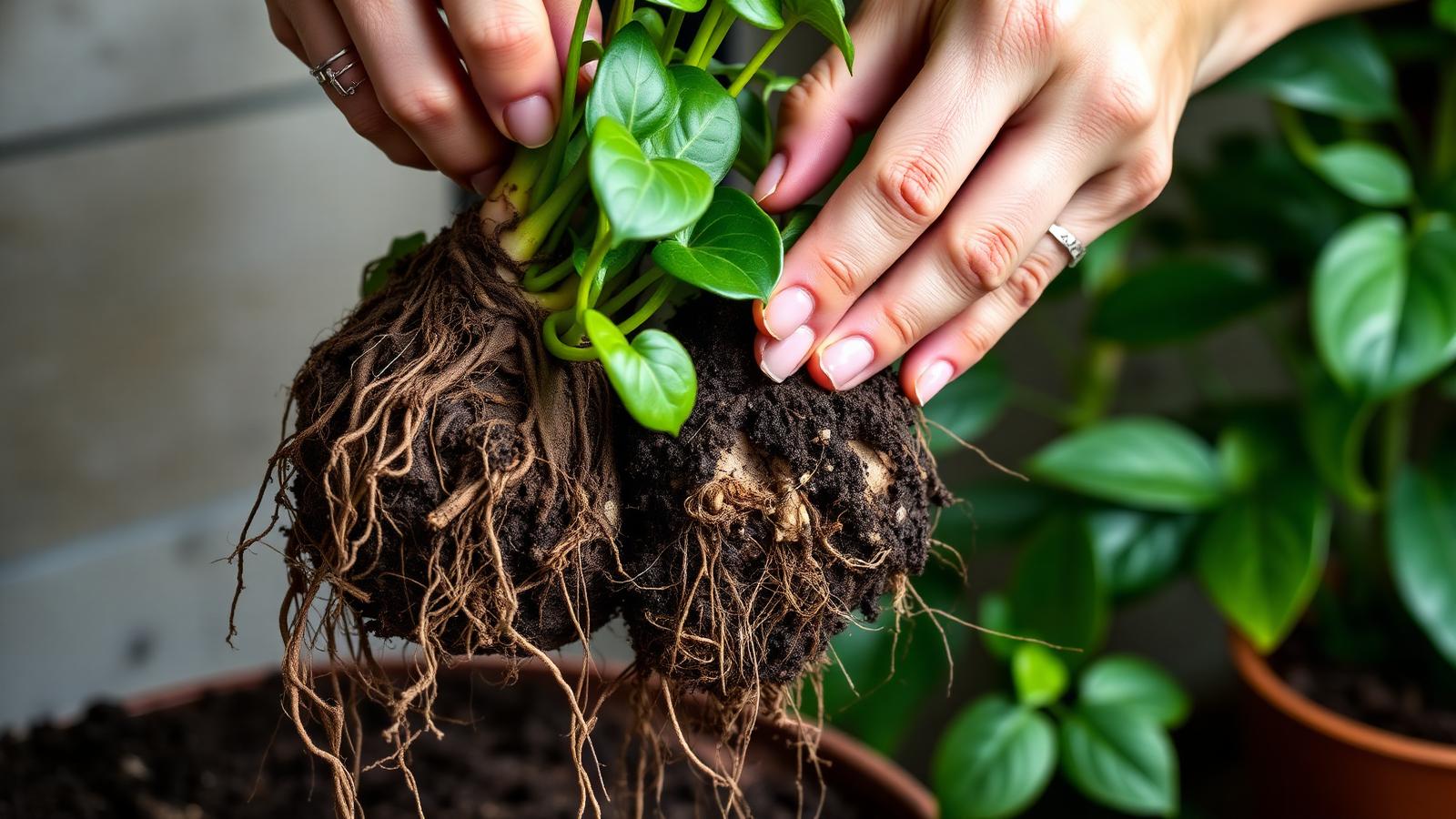
Remove the plant from its pot and look at how it grows. If it forms a collection of separate crowns, shoots or clumps with roots attached, it may be possible to separate these gently by hand. More congested plants may need to be divided with a clean knife or spade. The important thing is that each new section retains healthy roots and viable growing points. Pot the divisions separately into fresh compost and water them in.
Spring is a useful time to divide many plants as active growth begins. Autumn can also suit many hardy perennials, provided conditions aren't extremely cold, waterlogged or otherwise hostile to establishment. Avoid unnecessarily dividing plants during extreme heat or drought; propagation is already a disturbance, and there's little advantage in adding environmental stress at the same time.
Layering: let the parent plant do the work
Layering deserves more attention because it solves one of the biggest problems with cuttings. With a normal cutting, you remove the stem from the parent before it has roots. With layering, you encourage it to grow roots first.
Choose a healthy, flexible stem low enough to reach either the ground or a nearby pot. Bend part of the stem down and place a section in contact with moist compost or soil, leaving the growing tip exposed. Depending on the plant, lightly wounding the underside of the buried section can encourage rooting. Pin or weigh the stem down so it remains in contact with the growing medium, then leave it attached to the parent plant.
Once a useful root system has formed, cut the connection to the parent and allow the new plant to grow independently. It's slower than sticking mint into a glass of water, but for suitable shrubs and climbers it's an extremely useful technique, because the developing plant continues receiving water and resources from its parent while roots form.
When the plant propagates itself
Sometimes your job is largely administrative.
Strawberry runners. After fruiting, established strawberry plants often send out long stems called runners, with small plantlets appearing at intervals along them. Place one of these plantlets onto a small pot of compost while leaving it attached to the parent, pinning it in place if necessary. Once it has established roots of its own, sever the runner and you have another strawberry plant. There's more on the rest of that job in our piece on what to do with strawberry plants after fruiting.
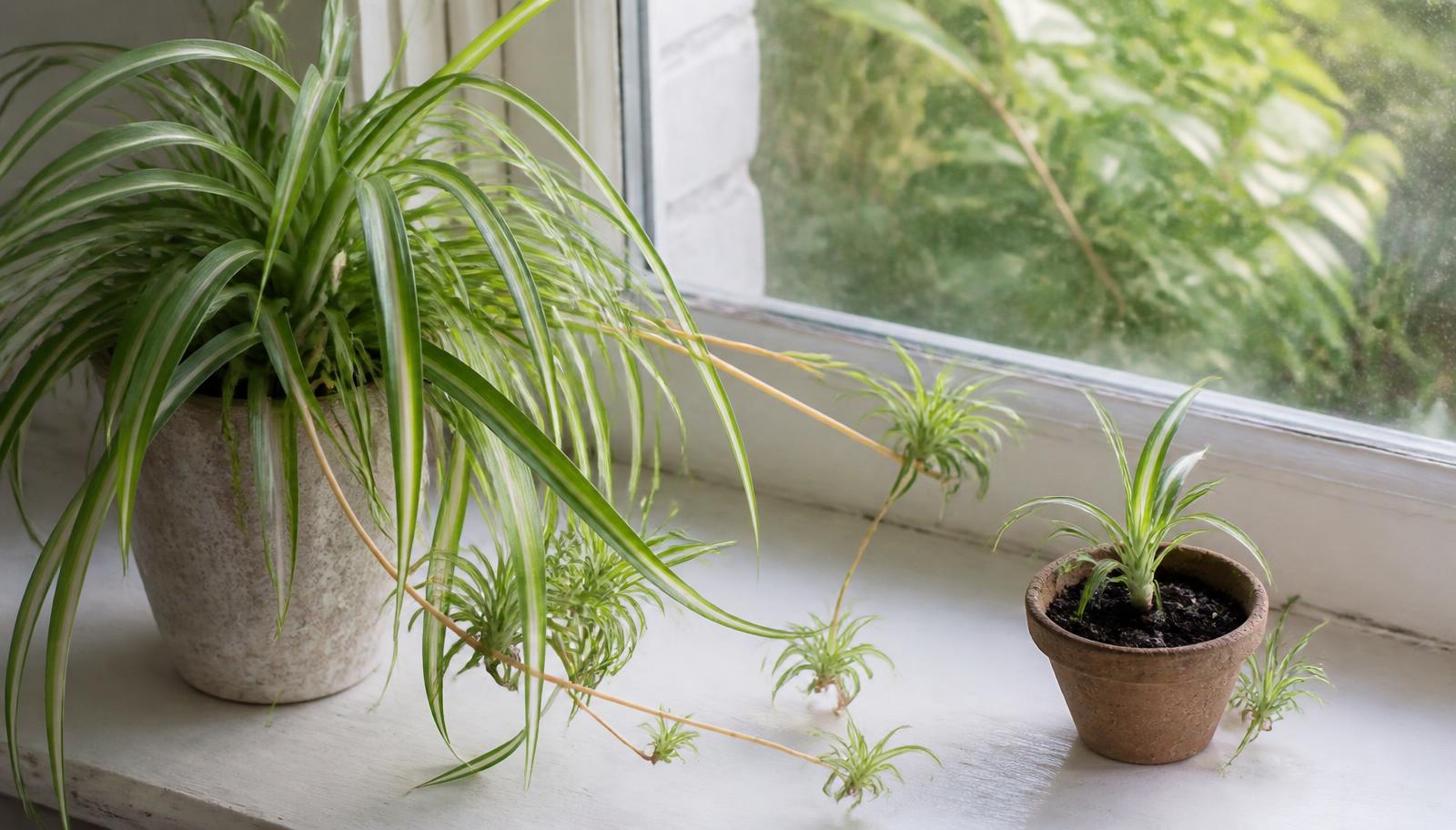
Spider plant plantlets. Spider plants produce miniature plants on long arching stems. These can often be rooted while still attached to the parent or removed and established separately once sufficiently developed.
Offsets. Many succulents and other plants produce small offsets around their base. If an offset has developed roots of its own, it can often be separated carefully from the parent and potted independently. This is usually more reliable than trying to persuade a plant to propagate using a method it doesn't naturally favour.
A seasonal shortcut: tomato side shoots
If you're growing cordon tomatoes, you may already be removing side shoots from the junction between the main stem and leaves, as covered in our piece on looking after tomatoes through summer. Don't automatically throw them away.
Tomato stems are capable of producing adventitious roots readily under suitable warm conditions, which means a healthy side shoot can become another tomato plant. Remove a reasonably substantial, healthy shoot and place it either in water or directly into moist compost. Once it has developed a functioning root system, treat it as a young tomato plant.
Whether it's worth doing depends on the time of year. A late propagation experiment may not have enough of the British growing season left to produce a worthwhile crop outdoors. But earlier in summer, it can be a useful way to create a spare copy of a variety you particularly like. And if nothing else, it's an excellent first propagation experiment, because the material would otherwise have gone onto the compost heap.
Timing makes a difference
You can propagate something at the wrong time and still succeed. You're simply making life harder for yourself.
Softwood cuttings come from young, flexible growth produced during the current season. They're commonly taken in spring and early summer when plants are growing strongly and the material roots relatively readily. The trade-off is that soft growth also loses water easily, so these cuttings need careful aftercare.
Semi-ripe cuttings. By mid to late summer, some of the season's new growth has begun to firm at the base while remaining softer towards the tip. This semi-ripe material is useful for many shrubs and Mediterranean plants, including lavender and rosemary.
Hardwood cuttings use mature woody growth and are generally taken during the dormant season. They're slower but useful for various deciduous shrubs and fruit plants.
Division. Many plants divide well in spring as growth begins, while others can be tackled in autumn. Rather than obsessing over a date, think about what the newly divided plant will face afterwards. Moderate conditions and enough time to establish are preferable to frozen soil, saturated winter compost or the middle of a heatwave.
Aftercare: the bit that decides whether it works
Taking the cutting is only half the job. A fresh leafy cutting has a problem: its leaves can continue losing water before it has developed enough roots to replace it. That's why aftercare matters.
Give it bright, indirect light. Fresh cuttings generally need light, but strong direct sunshine can increase water loss and overheat them. A bright windowsill out of harsh midday sun is often more appropriate than the hottest spot in the house.
Manage humidity where appropriate. For leafy cuttings that lose water readily, higher humidity can reduce moisture loss while roots form. A propagator or loosely fitted clear covering can help with suitable plants. But this is not universal advice: succulents and other plants prone to rotting in stagnant, humid conditions generally need a much airier approach. If you're using a cover, ventilate it and watch for excessive condensation or fungal growth.
Don't overwater. Rootless doesn't mean thirsty compost. Keep the growing medium appropriately moist for the plant you're propagating, but don't assume more water means faster roots; developing roots need oxygen as well as moisture.
Don't feed yet. A fresh cutting doesn't need a dose of fertiliser. Wait until it has rooted and begun active growth, at which point it can gradually be treated as a young established plant.
Look for growth rather than repeatedly checking. New shoots or leaves are encouraging signs that a cutting is beginning to establish. Visible roots are even better if you're propagating in water or a transparent setup. Avoid repeatedly pulling or tugging at cuttings to see whether they've rooted; newly forming roots are delicate and don't benefit from being tested every few days.
Why cuttings fail
Even experienced gardeners lose cuttings. Propagation works with biology, not guarantees. But several mistakes make failure considerably more likely.
- Starting with unhealthy material. Choose vigorous, pest-free growth where possible.
- Leaving excessive foliage. A rootless cutting can lose water through every leaf it retains.
- Using the wrong conditions. Direct sun, excessive heat or cold can all work against rooting.
- Keeping compost saturated. Moisture is necessary; stagnant, waterlogged compost isn't.
- Treating every plant the same. A succulent leaf and a soft mint cutting want very different conditions.
- Ignoring the season. Working with the plant's natural growth cycle generally improves your chances.
- Constantly interfering. Propagation contains quite a lot of waiting. Once the conditions are right, give the plant a chance to do the rest.
Which method should you use?
| Plant | Best starting method | Useful timing | Difficulty |
|---|---|---|---|
| Tradescantia | Stem cutting, water or compost | Spring-summer | Very easy |
| Mint | Stem cutting, water or compost | Spring-summer | Very easy |
| Tomato side shoots | Stem cutting | During active summer growth | Easy |
| Pelargonium | Stem cutting in compost | Spring-late summer | Easy |
| Lavender | Semi-ripe stem cutting | Mid-late summer | Moderate |
| Rosemary | Stem cutting | Spring-summer | Moderate |
| Roses | Stem or hardwood cuttings, depending on type | Summer or dormant season | Moderate |
| Many succulents | Leaf or stem cutting | During active growth | Easy |
| Snake plant | Leaf cutting or division | Spring-summer | Easy |
| Streptocarpus | Leaf cutting | Spring-summer | Moderate |
| Hostas | Division | Spring or autumn | Easy |
| Ornamental grasses | Division | Usually spring | Easy |
| Strawberries | Runners | Summer-early autumn | Very easy |
| Many shrubs and climbers | Layering | During active growth | Easy but slow |
Five easy plants to start with
If you've never propagated anything before, don't begin with something notoriously reluctant. Start with a plant that's keen to cooperate.
- Mint roots readily and gives you a useful plant at the end.
- Tradescantia is one of the easiest houseplants to propagate from stem cuttings.
- Spider plant often produces the new plant for you.
- Strawberry: pin down a runner and let it establish before separating it.
- Sempervivum: offsets can often simply be separated and replanted.
Success with one of those teaches you most of the basic principles without requiring specialist equipment. If you'd rather let some plants finish their own cycle instead, our piece on whether to deadhead or let it go to seed covers the other route to free plants.
FAQ
What's the easiest way to propagate a plant?
For a beginner, try a stem cutting from something easy such as mint or tradescantia, or root a strawberry runner while it's still attached to the parent. Both are forgiving ways to learn the basic process.
Is it better to propagate in water or compost?
Neither is universally better. Many soft-stemmed plants root readily in water, while other plants are better established directly in a free-draining growing medium. Use the method suited to the species.
Do I need rooting powder?
Usually not. Many straightforward cuttings root without it. Rooting hormone can be useful for some more reluctant plants, but good propagation material and suitable growing conditions matter more.
Why are my cuttings rotting?
Excess moisture, poor airflow, unsuitable material and overly humid conditions can all contribute. Check that the compost isn't saturated and that you're using a propagation method appropriate for the plant.
Can every plant be propagated from a cutting?
No. Some plants are much easier to propagate through division, runners, offsets, layering or seed. Choosing the right technique is one of the most important parts of propagation.
When can I pot up a cutting?
Once it has developed a useful root system and is beginning to establish. For water-rooted cuttings, you can see this directly. For compost-grown cuttings, new healthy growth can be a useful sign that roots are functioning.
Why has my variegated snake plant turned green?
Leaf propagation of variegated snake plants can produce plants without the parent plant's variegation. If keeping the pattern matters, propagate by division instead.
FURTHER READING
- Getting Started
The Complete Guide to Repotting
- Getting Started
Container Growing Fundamentals
- Getting Started
How to Water Plants Properly
Robin is a small-space grower writing for everyone working with a courtyard, balcony, window box, patio or sunny sill. Edible and leafy, both kept alive in the kind of light real small spaces actually get.
✦ Free with the newsletter — the small-space starter sheet
Grow Anywhere — a free weekly email.
The Potted Club newsletter. A short note from Robin — what to sow, one plant problem solved, and the best new guide.
FREE WEEKLY EMAIL · NO SPAM · UNSUBSCRIBE ANYTIME