Can You Save Plants That Dried Out While You Were on Holiday
You come home to a wilted, crisp-edged balcony and assume the worst. Before you flood everything, here's how to tell what's actually salvageable, and how to rehydrate a plant properly rather than making things worse.
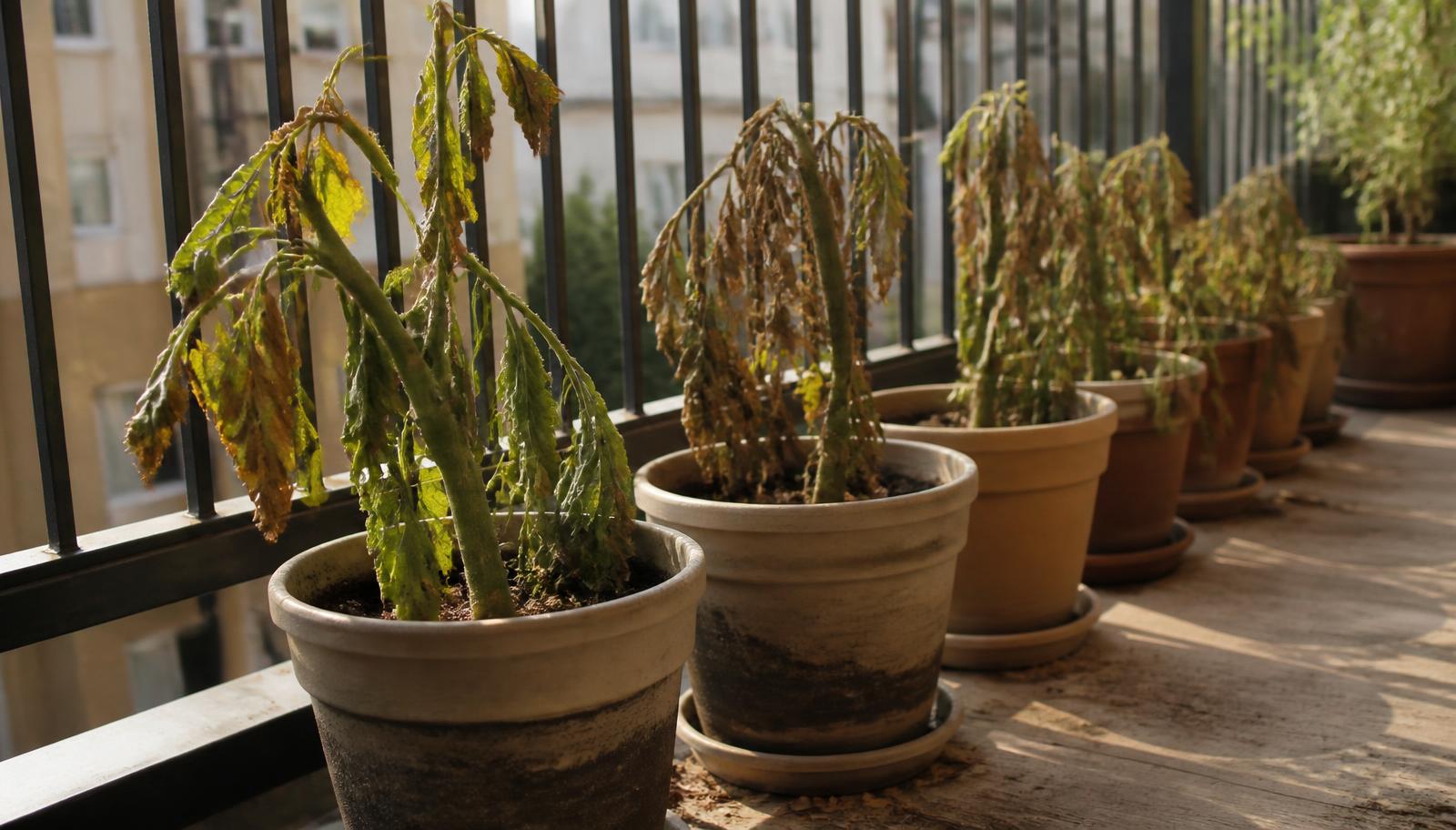
Come home, don't panic
Leaves down, flowers crisp, compost pulled away from the edge of every pot. It's a genuinely dispiriting sight to come home to, and the instinct is to reach straight for the hose and flood everything. Worth resisting that instinct for five minutes, because how you respond in the first hour back matters more than how much water you use.
Don't assume it's dead
Plants respond to drought in stages, and the stage that looks the most alarming isn't necessarily the one that's fatal. Wilting during the day that recovers by evening or the next morning is temporary stress: the plant is losing water through its leaves faster than its roots can currently replace it, but there's enough moisture available that it bounces back once demand eases. It's only when wilting persists even in the cool of morning, with no recovery at all, that you're looking at genuine permanent damage, and even then, some tissue can be salvaged while other parts of the same plant are lost.
Prolonged drought does eventually cause irreversible tissue damage, but "wilted and awful-looking" and "already dead" are two very different things, and a lot of what looks catastrophic on day one is still recoverable.
Check the compost before doing anything
This is the step that actually determines what you do next, and it's worth doing properly rather than assuming. Push a finger a few centimetres into the compost. If it's bone dry, that confirms drought stress and tells you rehydration is the right move.
But here's the genuinely useful bit of myth-busting: wilting doesn't automatically mean drought. A plant sitting in compost that's still wet, perhaps from rain while you were away, or from a well-meaning neighbour who overdid it, can wilt for the opposite reason. Waterlogged roots are starved of oxygen and simply stop functioning properly, producing exactly the same drooping, defeated look as a genuinely dry plant. If you check the compost and find it's still damp or wet, the plant isn't thirsty at all, and watering it further will make things considerably worse.
This single check, dry or wet, is what separates the right response from a mistake that compounds the original problem. It's the same finger test that underpins how to water your plants properly at any time of year.
How to tell whether a plant is still alive
Beyond the compost check, it's worth assessing the plant itself before deciding how urgent the situation is. Gently flex a stem; if it's still pliable rather than dry and snapping, there's life in it. Scratch a tiny sliver of bark from a woody stem with a fingernail, and green tissue underneath is a good sign, though be gentle and selective with this on delicate or thin-stemmed plants, since an overzealous scratch test can do its own damage. Look for any buds or new growth points, even tiny ones, which are a strong sign the plant still has active life to build from.
Rehydrate slowly and properly
If the compost is confirmed dry, resist the urge to drown it all at once. Compost that's dried out completely often becomes slightly hydrophobic, meaning water poured on top runs straight off the surface and out of the drainage holes rather than soaking in, giving the illusion of a thorough watering while the rootball underneath stays dry. Water slowly, in stages, giving the compost time to actually absorb each pour rather than one large dump. The RHS drought and watering advice makes the same point: slow, thorough soaking beats frequent light sprinklings.
When soaking the pot helps
For smaller containers particularly, standing the whole pot in a few centimetres of water for fifteen to thirty minutes, letting it soak up from below, is often more effective than top-watering a bone-dry pot. This gets moisture evenly through the entire rootball rather than leaving a dry core, which a hurried top-watering can easily miss.
Don't immediately drown it
Once you've done a proper rehydration, whether by slow top-watering or soaking, stop. The instinct after finding a badly dried-out garden is to keep watering heavily over the following days out of anxiety, and this is exactly how a plant that was suffering from drought ends up suffering from waterlogging instead. Water it properly once, then go back to checking the compost before watering again, rather than compensating with a run of heavy waterings. If you're rationing under a hosepipe ban, our guide to watering with just a can covers what to prioritise first.
Should you cut off dead leaves?
Remove leaves and stems that are clearly, unambiguously dead: crisp, brown, with no flexibility or green tissue anywhere. Beyond that, hold off. A plant that's already under severe stress has limited capacity to cope with a second stress event, and heavy, speculative pruning on top of drought recovery can do more harm than leaving slightly ropey-looking but still-living material in place for now. Tidy the obviously dead, leave the uncertain, and revisit once the plant has had time to show what it's actually capable of.
Don't feed it
Water and fertiliser are not the same intervention, and a stressed, recovering plant can't productively use feed while it's dealing with drought recovery. Feeding now can scorch already-damaged roots and adds a demand the plant has no spare capacity to meet. Hold off until it's clearly settled and showing genuine new growth — our guide to feeding plants properly covers when to restart.
Move it out of fierce sun temporarily
If a badly dried-out plant is sitting in strong, direct sun, moving it somewhere with some shade for the first few days reduces further water loss while it recovers, giving it a better chance to stabilise before being asked to cope with full exposure again. The same logic applies to houseplants in a heatwave.
Give it 24 to 72 hours
Real recovery isn't always instant, and judging a plant too soon after rehydrating it can lead to giving up on something that would have come good. Over the first day or two, look for stems firming back up and any new, even tentative, growth. Genuine improvement in this window is a good sign; a plant that's still visibly deteriorating despite proper rehydration is more concerning. If yellowing sets in as it recovers, why are my leaves turning yellow will help you read the pattern.
When the plant really is dead
Some honest signs recovery isn't happening: stems that are dry and snap cleanly rather than bending, no green tissue anywhere when gently checked, and no improvement at all after several days of correct rehydration and stable conditions. At that point, it's reasonable to accept the loss and start again, rather than continuing to nurse something that's genuinely gone. If an empty pot needs filling, what to plant in pots in August has the realistic options.
How to stop this happening next holiday
A few genuinely effective habits, several of them explicitly recommended for exactly this situation:
- Group pots together before you leave. Clustered containers shade each other and create a slightly more humid microclimate, both of which slow moisture loss considerably compared with pots standing alone and exposed.
- Give everything some temporary shade for the duration, particularly anything in a small pot, rather than leaving containers in the most exposed, sun-baked spot they normally occupy.
- Use larger pots or add a water reservoir where you can. More compost volume simply holds more moisture for longer, buying real time before a plant becomes critically dry — one of the core points in container growing fundamentals.
- Consider self-watering containers or a simple drip irrigation system on a timer for anything you're regularly leaving unattended, which removes the guesswork and the risk entirely for future trips.
- Ask someone to check in, even briefly, rather than leaving everything entirely unattended for a week or more, particularly during a genuine heatwave.
- Move small, vulnerable pots away from exposed balcony edges or the hottest wall-facing spots before you go, since these dry out disproportionately faster than anything more sheltered.
FAQ
Can a completely wilted plant recover?
Often, yes, provided the wilting is still temporary rather than permanent damage. Check the compost and the stems for signs of remaining life before assuming the worst; a lot of dramatic-looking wilting is recoverable with proper rehydration.
How long does recovery take?
Typically 24 to 72 hours to see genuine signs of improvement, sometimes longer for more severely affected plants. Give it that window before judging the outcome.
Should I soak a dry plant in water?
For smaller containers, yes, standing the pot in a few centimetres of water for fifteen to thirty minutes is often more effective than top-watering alone, since it rehydrates the whole rootball evenly rather than leaving a dry core.
Should I remove brown leaves?
Remove clearly, unambiguously dead material, but avoid heavy speculative pruning on top of an already stressed plant. Leave anything uncertain in place until the plant has had time to show what it can recover.
Should I fertilise it?
No, not straight away. A recovering plant can't productively use extra feed, and it can scorch already-stressed roots. Wait until it's clearly settled and showing genuine new growth.
Why does water run straight through dry compost?
Compost that's dried out completely can become slightly hydrophobic, repelling water rather than absorbing it, which is exactly why a single top-watering often isn't enough. Soaking the pot, or watering slowly in stages, addresses this properly. The same principle comes up when repotting into fresh compost, covered in our repotting guide.
READ THE FULL GUIDE
How to Water Plants Properly →
RELATED POSTS
- Houseplants
Keeping Houseplants Alive When Your Home Hits 30 Degrees
- Getting Started
Watering With Just a Can: What to Prioritise
- Plant Problems
Why Is My Plant Drooping After Repotting
Robin is a small-space grower writing for everyone working with a courtyard, balcony, window box, patio or sunny sill. Edible and leafy, both kept alive in the kind of light real small spaces actually get.
✦ Free with the newsletter — the small-space starter sheet
Grow Anywhere — a free weekly email.
The Potted Club newsletter. A short note from Robin — what to sow, one plant problem solved, and the best new guide.
FREE WEEKLY EMAIL · NO SPAM · UNSUBSCRIBE ANYTIME